所屬科目:研究所、轉學考(插大)◆分子生物學
1. Which of following codons would not be recognized by release factors during translation? (A) AUG (B) UAG (C) UAA (D) UGA (E) none of the above.
2. Which of the following is the best definition of translation? (A) a process by which pre-mRNA is transformed into mature mRNA (B) the process by which pre-mRNA is translated by ribozymes to produce proteins (C) a process by which a gene is converted into mRNA (D) a process by which a gene is converted into a protein (E) the process by which ribosomes read the genetic message to produce a protein
3. In the Meselson and Stahl experiment, what percentage of the DNA is labeled with light nitrogen after three generations of replication? (A) 25% (B) 50% (C) 75% (E) None of the above. (D) 100%
4. If Hershey and Chase found in progeny phages rather than , their experiment would have demonstrated that (A) proteins contain phosphorus. (C) phage DNA enters the host cell. (E) None of the above. (B) DNA contains sulfur. (D) phage protein enters the host cell.
5. In which of the following organisms is trans-splicing of mRNA known to occur? (A) trypanosomes (C) bacteria (E) plants (B) yeast (D) mammals
6. Which of the following mammalian cell DNA polymerases is not correctly matched with its function? (A) DNA Pol E-DNA repair (B) DNA Pol 8-ligation of DNA strands (C) DNA Pol y-elongation of both strands (D) DNA Pol B-DNA repair (E) DNA Pol a-priming DNA synthesis
7. The probe used in chromatin immunoprecipitation is _____ to select the target chromatin fragments. (A) DNA (B) RNA (C) protein (D) antibody (E) gRNA
8. The polyA. tail of eukaryotic mRNA is approximately _____ nucleotides in length (A) 1000 (B) 250 (C) 100 (D) 25 (E) 5
9. Please put the following steps of Cap synthesis in the correct order.
(1) N of the capping guanine is methylated.
(2) The terminal phosphate is removed from the pre-mRNA.
(3) A capping GMP is added to the pre-mRNA.
(4) The 2'-O-methyl group of the penultimate nucleotide is methylated. (A) 1, 2, 3, 4(B) 1, 4, 3, 2 (C) 2, 4, 1, 3(D) 2, 3, 1, 4 (E) 4, 3, 2, 1
10. Which of the following is not needed for mammalian cell polyadenylation of pre-mRNA? (A) RNA polymerase (B) RNA polymerase II (C) PAP (D) CPSF (E) PABII
11. In human global genome nucleotide excision repair (GG-NER), which products are correct for the "incision" function? (A) XPF and XPG (B) XPB and XPD (C) ХРА and XPC (D) XPA and XPB
12. Choose a right statement on Telomerase or Telomere (A) Telomerase was first observed in Tetrahymena micronuclei extracts. (B) Telomerase is a unique enzyme in that it is composed of only RNA. (C) Without telomeres, linear eukaryotic chromosomes would get shorter and shorter with each round of DNA replication (D) All organisms must protect their telomeres from nucleases and double strand break repair enzymes.
13. Select one of the choices below to indicate whether it is a characteristic of miRNA or siRNA. (A) miRNAs function to silence gene expression primarily by blocking transcription of targeted mRNAs. (B) siRNA induces degradation of the target mRNA. (C) miRNAs usually base-pair perfectly with target mRNA (D) siRNAs are formed by cleavage from a stem-loop RNA.
14. Which following statement is right during homologous recombination? (A) RecBCD has a DNA exonuclease activity (B) RecA and RecB are involved in branch migration of a Holliday junction (C) RuvC could bind to and resolve Holliday junctions (D) Spo11 creates single strand breaks in DNA in baker yeast.
15. Which of the following statements is true about a lac operon with this genotype? (a mutant repressor gene whose product cannot bind to the lac operator) (A) The operon is repressible. (B) The operon is nonrepressible. (C) The mutation is recessive. (D) The mutation is trans-dominant. (E) None of the choices is correct.
16. Which of the following statement is correct regarding the sigma-factor? (A) Subregions 2.4 and 4.2 are involved in operator recognition. (B) It determines rifampicin sensitivity or resistance. (C) Interaction with the core enzyme unmasks the DNA-binding region. (D) The 2.4 region has a B-sheet domain. (E) It can bind to the up element.
17. Which of the following factors is involved in proofreading during transcription? (A) NusA (C) sigma-factor (E) GreB (B) RecA (D) rho-factor
18. Which of the following is the best way to determine the base content of DNA? (A) gel electrophoresis (B) spectrophotometry (C) x-ray diffraction (D) density gradient centrifugation (E) deoxyribonuclease treatment
19. In which of the following situations is a silent mutation least likely? (A) change in a sequence in the 5' UTR. (B) change in a sequence in the 3' UTR. (C) change in a sequence in an exon. (D) change in the sequence in the promoter. (E) change in a sequence in an intron.
20. During an experiment to study the rate of infection of bacteria with λ phage, the bacterial cultures were accidentally exposed to a UV light source. Which of the following would be expected for this exposure? (A) Coprotease activity in RecA protein is activated. (B) recA gene is turned off. (C) Coprotease activity in repressor is activated. (D) Lysogenic cycle is induced. (E) SOS response is turned off.
21. Which of the following statement is true ? (A) Eukaryotic RNA polymerase III makes tRNAs and snRNAs (B) Rpbl of yeast RNA polymerase is homologous to alpha-subunit of bacterial RNA polymerase (C) Rpb5 of yeast RNA polymerase II is also a component of RNA polymerase I and III (D) Zipper is a protein loop within eukaryotic RNA polymerase II and is involved in initiating dissociation of the RNA-DNA hybrid (E) Yeast RNA polymerase contains 10 apparent subunits and four of them are phosphorylated
22.Which of the following statement is not true for eukaryotic gene promoters? (A) For the promoters recognized by RNA polymerase II (class II promoters), TATA-less promoters are commonly found in housekeeping and developmentally regulated genes (B) Initator is required for optimal transcription of some class II promoters; one classic example is the adenovirus major late promoter (C) Class I promoters (the promoters recognized by RNA polymerase I) are quite variable in sequence across species, while they all contain a conserved AT-rich initator (rINR) (D) Some of the class I promoters are located entirely within the genes themselves, one example is the 5S rRNA gene (E) Some of class III promoters (the promoters recognized by RNA polymerase III) resemble those found in class II genes, one example is the 7SL gene
23. Please predict the possible consequence of blocking the action of TFIIF , a general transcription factor of RNA polymerase II. (A) The TFIIDAB complex will not form (B) Polymerase may not bind to the DAB complex (C) TFIIA will not bind to TFIID (D) The TFIIDAB complex will not form and TFIIA will not bind to TFIID (E) Transcription elongation is enhanced by limiting nucleotide misincorporation
24. Which of the following statement is true ? (A) TFIID is the factor enhances transcription elongation by limiting transcription arrest (B) TFIIA is the general transcription factor of RNA polymerase II that can determine the start site and direction of transcription (C) TFIIH is the general transcription factor of eukaryotic RNA polymerase II that contains the helicase activity and involves in promoter clearance (D) TFIIF is a main component of TFIID with a saddle-like shape (E) TAFII250 is one of the human TATA binding protein (TBP)-associated factors and contains a phosphotase activity to dephosphorylate TFIIE
25. Dr. Roger Komberg (Stanford University) used structural basis to reveal the mechanism of nucleotide selection in the posttranslocation state of eukaryotic RNA polymerase II. Which of the following statement is not true ? (A) The study reveals two distinct nucleotide-binding sites, the E and A sites, at the active center of RNA polymerase II (B) The E site is the location where incoming nucleotide first encounters (C) The A site is the location where phosphodiester bonds form (D) Rotation of nucleotide between the E and A sites may be helpful for base specificity (E) Rotation of nucleotide between the E and A sites may be affect the specificity for deoxyribonucleotides as opposed to ribonucleotides
26. Which of the following statement related to the nuclear receptor is not true ? (A) Thyroid hormone receptor belongs to type I receptors, which stay in the cytoplasm in the absence of its ligand (B) Type III receptors are "orphan" receptors whose ligands are not yet identified (C)In the presence of ligand, the glucocorticoid receptor (GR) can form a homodimer within the nucleus (D)In the absence of ligand, GR exists as an inactive form in cytoplasm complexed with the heat shock protein 90 (Hsp90) (E) Nuclear receptors interact with different endocrine-signaling molecules and activate gene expression via its binding to hormone response DNA elements
27. Predict the consequence of treating the 70S ribosomal with urea: (A) the RNA portion would be degraded. (B) the unit would be undisturbed. (C) the protein component would be degraded. (D) the unit would dissociate RNA and protein components. (E) the treatment would lead to tighter association between RNA components.
28. Which of the following is not part of the 30S initiation complex? (A) IF1, IF2, and IF3 (B) 5S rRNA (C) 16S rRNA (D) amino-acyl tRNA (E) mRNA
29. Picornavirus mRNAs are not capped, yet they can still out compete host mRNAs for binding to the ribosome by (A) having a stronger affinity for the ribosome. (B) degrading host mRNA. (C) inactivating host Cap binding protein, eIF4F. (D) inactivation of host RNases. (E) inactivation of host Cap binding protein, eIF2B.
30. EF-Tu is an important protein in cells whose function is to (A) properly fold proteins. (B) ensure proper ribosome assembly. (C) escort aminoacyl-tRNA to the ribosome. (D) protect rRNA from degradation by RNases. (E) stabilize mRNA within the ribosome.
III. 問答題
31. Distinguish functions and locations on DNA methylation and histone methylation.
32. Describe mRNA processing to remove an intron between 2 exons in eukaryotes. points)
33. Please give chemical structures and describe "Adenosine deamination" for RNA editing.
34. Describe DNA replication on beta clamp cycles in lagging strand. (4 points)
35. Draw diagrams of the lac operon that illustrate (and also include the explanation) negative control and positive control of this operon. (8 points)
36. Use a diagram and explain the result of a DNase footprinting experiment that shows that A repressor dimers bind cooperatively to two operators separated by an integral number of DNA double-helical turns, but noncooperatively to two operators separated by a nonintegral number of turns.
37. You are asked to use S1 mapping to locate the 5’-end of a given RNA transcript in cells at a given time. What does S1 mean? (2 points) Please describe how S1 mapping work (5 points)
38. Please explain what an insulator is? Also, describe and explain two possible models how multiple insulators act?
39. What is a CpG island? Why have CpG sequences tended to disappear from the human genome?
 阿摩線上測驗
登入
 in progeny phages rather than
 , their experiment would have demonstrated that (A) proteins contain phosphorus. (C) phage DNA enters the host cell. (E) None of the above. (B) DNA contains sulfur. (D) phage protein enters the host cell.
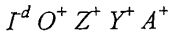 (a mutant repressor gene whose product cannot bind to the lac operator) (A) The operon is repressible. (B) The operon is nonrepressible. (C) The mutation is recessive. (D) The mutation is trans-dominant. (E) None of the choices is correct.