所屬科目:中山◆電機◆工程數學乙
(1.2) For what w does the sinusoidal solution of have the biggest amplitude? (A)2(B)1(C)(D)(E)1/2.
(1.3) Consider the ODE , where x is a real function. (A) This is a time-invariant ODE. (B) This ODE is nonlinear. (C) This ODE has two equilibria. (D) The equilibria of this ODE are -1 and 1. (E) All of the above are TRUE.
(1.4) For what value of (a, b) will the solutions to exhibit oscillatory behavior ? (A) (1,2) (B) (1,0) (C) (1,-1) (D) (2,1) (E) All of the above
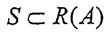
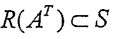
(3.1) What are the possible relationships associated with S and S⊥? (6%) (A) (B) (C)(D) (E)
(3.3) Now let (λ,v) be an eigenpair of matrix A withλ≠0. Then from the definition of A, it can be shown that y lies in certain subspace of Rn and λ is an eigenvalue of another matrix, denoted by with m=rank(A).Please (i) (2%) indicate the subspace of Rn where the eigenvector v lies, and (ii)(6%) use vectors x, ly, and z to describe the matrix B.
(4.2) Let's define an inner product for P2 by <p(x),q(x),for arbitrary and γ≠I an undecided parameter. Find the orthonormal basis, denoted by F := [f1, f2], of P2, generated from basis E given above to satisfy the subspace equality constraints Span(f1)=Span(I) and Span(f1,f2)=Span(1,x). (8%)
(4.3) Let B denote the matrix representation of transformation L with respect to the ordered bases F computed in (4.2) and F'=for P2 and R2 , respectively. Find the matrix B. (6%)
(4.4) Now suppose a = and β =0. Find all possible values of γ such that the set ofeigenvalues of B is.(6%)
(a)(7%)Let f(2) be a complex function defined by where denotes the complex conjugate of the complex variable z. Does the function f(z) satisfy the Cauchy-Riemann equations? Give your reason (no credit will be given if there is no explanation).
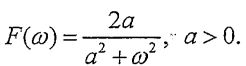
6.(15%) Using the theory of Residues, compute the inverse f(t), -∞<t <∞, of the Fourier transform
 阿摩線上測驗
登入
 F(S)(C) If L[f(t)] = F(s) , then L
 = SF(s) - f(0).
(D) If L[f(t)] = F(s) and L[g(t)] = G(s), then L[f* g(t)] = F(s)G(s), where *
denotes the convolution integral.
(E) All of the above statements are TRUE.
 have the biggest
amplitude?
(A)2(B)1(C)
 (D)
 (E)1/2.
 , where x is a real function.
(A) This is a time-invariant ODE.
(B) This ODE is nonlinear.
(C) This ODE has two equilibria.
(D) The equilibria of this ODE are -1 and 1.
(E) All of the above are TRUE.
 exhibit oscillatory
behavior ?
(A) (1,2) (B) (1,0) (C) (1,-1) (D) (2,1) (E) All of the above
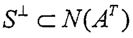 (B)
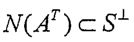 (C)
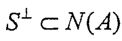 (D)
 (E)
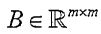 with m=rank(A).Please (i) (2%)
indicate the subspace of Rn where the eigenvector v lies, and (ii)(6%) use vectors x,
ly, and z to describe the matrix B.
 such that matix A becomes singular. (5%)
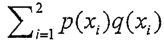 ,for arbitrary
 and γ≠I an undecided parameter. Find the orthonormal basis, denoted by F := [f1, f2], of P2, generated from basis E given above to satisfy the subspace equality constraints Span(f1)=Span(I) and Span(f1,f2)=Span(1,x). (8%)
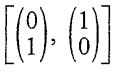 for P2 and R2 , respectively. Find the matrix B. (6%)
 and β =0. Find all possible values of γ such that the set ofeigenvalues of B is
 .(6%)
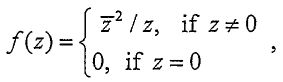 where
 denotes the complex conjugate of the complex variable z. Does the function f(z) satisfy the Cauchy-Riemann equations? Give your reason (no credit will be given if there is no explanation).