所屬科目:研究所、轉學考(插大)◆基礎分子生物學
1. If you want to use genetically engineered bacteria for the production of human growth hormone, you need the following ingredients. (A) A cDNA obtained by the reverse transcription of growth hormone mRNA (B) Endoproteinases (C) Genomic DNA of the growth hormone gene (D) A DNA sequence that codes for a bacterial ribosome-binding sequence (E) A bacterial promoter sequence
2. The oncogenes of the human papillomavirus (A) Activate cyclin-dependent kinases by direct binding to the catalytic subunit (B) Bind and inactivate to the retinoblastoma (C) Bind to the host cell DNA, stimulating the transcription of antiapoptotic genes (D) Bind and inactivate to the p53 protein (E) Activate growth factor receptors in the absence of the normal ligand
3. Select the sequences of the two 12-residue primers that could be used to amplify the following DNA segment by PCR.
(A) ATAGCGATAGGC (B) GGCGTCGGTCAG (C) CTGACCGACGCC (D) TATCGCTATCCG (E) ATAGCGCTGACC
4. In order to compare the expression of a large number of genes in rhabdomyosarcoma cells with gene expression in normal skeletal muscle, you have isolated mRNA from the two sources by affinity chromatography on an oligi-dT column. The most common method to compare the two mRNA patterns would be (A) Expression cloning (B) In situ hybridization (C) cDNA microarrays (D) RNA interference (E) Nothern blotting
5. Which statement(s) is suitable to describe antisense nucleic acids? (A) Can be used to silence a pathologic gene in patients. (B) Can be produced by an inverted gene. (C) Hybridize with DNA only but not with RNA. (D) Enhance the translation when bind to messenger RNA. (E) Can be used as probes to detect a stretch of DNA in the genome.
6. Which statement(s) is suitable to describe ubiquitin? (A) An isopeptide bond forms between the C-terminus of ubiquitin and the e-amino group of the modified lysine residue. (B) Ubiquitination always leads the modified proteins to degradation. (C) ATP is required for activation of ubiquitin. (D) Multiple ubiquitin molecules can be covalently linked together to form a polyubiquitin chain on the modified protein. (E) The N-terminal amino acid of the modified protein is one determinant of its half-life.
7. Which statement(s) is suitable to describe DNA replication? (A) 3' to 5' polymerase activity is used to synthesize both strands of DNA. (B) DNA replication is semiconservative. (C) A short strand of RNA is always used as the primer for DNA replication in all organisms. (D) Many specialized DNA polymerases exist to govern DNA replication in different situations. (E) Native DNA polymerases usually contain so called "proof-reading" exonuclease functions.
8. Which statement(s) is suitable to describe transposons? (A) Transposons usually contain short inverted terminal repeat sequences. (B) Being named as retrotransposons if RNA intermediates are involved in the transposition. (C) Transposons can cause spread of antibiotic resistance within a bacteria population. (D) Only exist in metazoan genomes. (E) Transposase is not necessarily encoded in the transposon.
9. Which of the following is the DNA binding motif generally found in DNA binding protein? (A) helix-loop-helix (B) high mobility group box(HMG-box) (C) homeodomain (D) leucine zipper (E) zinc finger
10. Which of the following are true? (A) All genetic material must contain DNA. (B) No two amino acids are specified by the same codon. (C) One function of mRNA is to recognize codons. (D) Methionine can be specified by only one codon. (E) None of above is true.
11. Which of the following methods can be used to detect protein-DNA interaction? (A) chromatin immunoprecipitation assay (B) fluorescence in situ hybridization (C) DNase footprinting (D) polymerase chain reaction (E) Northern blot
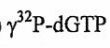
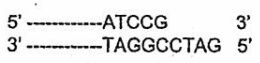
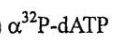
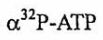
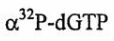
12. Which of the following can be used to label the DNA below by filling 3'-end?
(A) (B)(C)(D) (E)
13. What are the proteins that can bind to TATA box? (A) c-fos (B) TATA binding protein (C) Zinc finger protein (D) sigma factor (E) TFIID
14. What are the enzymes that possess RNA-dependent DNA polymerase activity? (A) Pol I (B) Klenow fragment (C) helicase (D) reverse transcriptase (E) telomerase
15. What are the mRNA codons that can be recognized by the anticodon 5'-AUG-3' of tRNA? (A) 5'-AUG-3' (B) 5'-UAC-3' (C) 5'-UAU-3' (D) 5'-GUA-3' (E) 5'-CAU-3'
16. Which methods can be used in measuring mRNA level? (A) dot-blot analysis (B) Northern blot analysis (C) real-time PCR (D) ChIP assay (E) comet assay
17. The oxo and amino groups of purines and pyrimidines exhibit (A) lactam-lactim tautomerism (B) keto-enol tautomerism (C) amide-imidic acid tautomerism (D) amine-imine tautomerism (E) all are right.
18. Which of the following characteristics of histones are right? (A) H1 histones are the ones least tightly bound to chromatin (B) H3 and H4 histones form a tetramer containing two molecules of each (H3-H4)2 (C) H2A and H2B histones form dimers (H2A-H2B). (D) H2A, H2B, H3, and H4 are core histones of nucleosomes (E) H1, H2, H3, and H4 histones associate to form the histone octamer.
19. During DNA synthesis, (A) The nascent DNA is always synthesized in the 5' to 3' direction, as DNA polymerases can add a nucleotide only to the 3' end of a DNA strand (B) The initiation of DNA synthesis upon a primer of DNA and the subsequent attachment of the second deoxyribonucleoside triphosphate (C) On the lagging (forward) strand, the DNA is synthesized continuously (D) On the leading (retrograde) strand, the DNA is synthesized in short (1-5 kb) fragments, the so-called Okazaki fragments (E) An enzyme capable of polymerizing DNA in the 3' to 5' direction does not exist in any organism.
20. During cell cycle, (A) The cyclins are a family of proteins whose concentration increases and decreases throughout the cell cycle (B) If DNA damage is detected in either the G1 or the G2 phase of the cell cycle, cells still can progress through the M phase of the cycle. (C) Different cyclin-dependent protein kinases (CDKs) that phosphorylate substrates essential for progression through the cell cycle (D) DNA synthesis occurs during the GO phase of the cell cycle (E) If DNA damage cannot be repaired, such cells undergo programmed cell death.
21. Gene transcription is a multi-step process. Which of the following statement(s) is (are) NOT correct? (A) Repressors direct histone deacetylation at specific genes thereby prevent the transcriptions of genes (B) Activators are composed of DNA binding domain and transactivating domain, which directs histone acetylation or other co-activators to promote gene transcriptions. (C) Purified RNA polymerase II cannot initiate gene transcription without the assistance from general transcription factors that position RNA polymerase II at the start site (D) Enhancers are the transcription-control regions on the genomic DNA. Enhancers contain binding sites for transcription factors (E) None of the above is correct
22. Pre-mRNA is subjective to processing after transcription. Which of the following statement(s) is (are) correct? (A) The 5' cap is added to nascent RNA shortly after transcription initiation. Capping could promote transcription elongation by stimulating phosphorylation of RNA polymerase C-terminal domain (B) Alternative splicing is one of the processing mechanisms. It reduces the number of final protein products encoded by a given region of genomic DNA. (C) Polyadenylation is a process of adding 100-250 adenines at the end of transcripts. It helps to stabilize mature (processed) mRNAs (D) RNA splicing involves two transesterification reactions, which produce excised lariant intron and spliced exons. (E) Splicing involves protein machineries called spliceosome to make the cut and ligation.
23. Which of the following processes regulate the efficient translation of mRNA into protein (A) micro-RNA (B) cytoplasmic polyadenylation of mRNA (C) phosphorylation of 4E-BPs by mTOR (D) nonsense-mediated decay (NMD) that cause rapid degradation of mRNA with a stop codon before the last splice junction. (E) None of above
24. Genome contains not only genes encoding functional proteins but also (A) LTR retrotransposons (B) DNA transposons (C) None-LTR retrotransposons, such as LINEs and SINEs in mammalian genomes (D) regions encoding long non-coding RNA (E) pseudogene sequences
25. Gene targeting technologies have many applications, including (A) inactivation of a gene locus by targeting gene disruption. (B) replacing a wild type allele of a gene at one chromosome with a desirable mutant allele. (C) to fuse a green fluorescent protein DNA sequence in frame after a gene of interest. The expression of resulting GFP fusion protein could be used to study how the gene of interest is regulated in vivo. (D) to express Cre recombinase in a tissue specific manner by inserting Cre recombinase coding sequence downstream to a tissue specific enhancer sequence in genome (E) none of above
26. The functionality of a protein is closely related to its 3D conformation. The 3D structure of a protein can be deduced by (A) X-ray crystallography of a protein sample (B) NMR spectroscope (C) Yeast two hybrid system (D) Cryoelectron microscopy (Cryo-EM) (E) surface plasmon resonance
27. Modifications of histone tails control chromatin configurations and functions. Which of the following statement(s) about histone modifications is/are correct? (A) Histone H3 and H4 can be acetylated at multiple lysine sites (B) lysine acetylations of Histone H3 and H4 correlate with open chromatin configuration called euchromatin and favor active gene transcription. (C) Histone H3 and H4 can be mone-, di-, or tri-methylated at multiple lysine sites (D) Methylations of histone tails always associate with close chromatin configuration (E) Methylations of histone tails always result in gene silencing. Methylations of histone tails are seen in the promoter and gene body regions of genes that are no longer active in differentiated cells during development.
28. There is an electric potential across the plasma membrane of a living animal cell. Which of the following statement(s) about membrane potential is/are correct? (A) There are many open K+ channels but not so many open Na+, Cl- or Ca2+ channels on the surface of a living animal cell. (B) Moving K+ outward by K+ channel causes an excess of positive charge outside the cell (C) The drive force for moving K+ ion outward is the K+ concentration gradient across plasma membrane. There is an excess of K+ ion inside the cell (D) Na+/K+ ATPase is needed to maintain an excess of K+ ion inside the cell (E) Therefore, ATP is required to maintain membrane potential in a living animal cell.
29. Many proteins function in conjunction with lipid membrane Which of the following statement(s) about the protein components of biomembrane is/are correct? (A) Transmembrane proteins like ion channels, solute transporters are integrated into lipid bilayers. (B) Lipid anchored membrane proteins such as Ras, and Rab are covalently modified by lipid molecule and thereby associate with biomembrane (C) Peripheral membrane proteins are tethered to membrane by transmembrane proteins or lipid anchored proteins or by binding to lipid head groups. (D) Once proteins are associated with lipid membrane, they tend to stay within a fixed area, not moving laterally, on lipid membrane. (E) Clustering of membranous proteins could change local lipid composition of biomembrane.
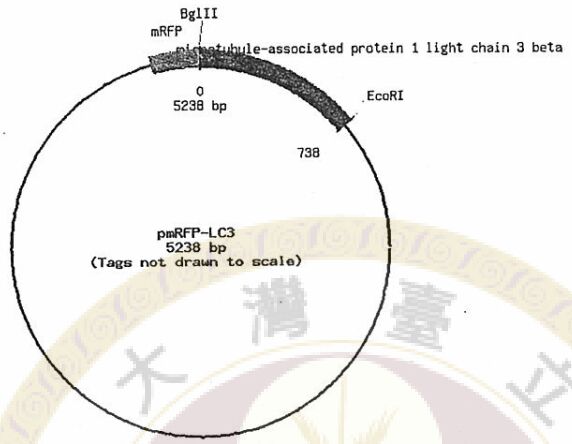
30. If you receive from your collaborator a DNA plasmid with a map shown below.
Which of the following methods could NOT help you to check if you have received a right plasmid? (A) Run the un-cut supercoiled form plasmid DNA in an agarose gel with DNA size marker. You find that the supercoiled plasmid migrates to the position between 5kb and 6 kb bands. (B) You digest the plasmid DNA with BgIII and run the cut plasmid DNA in an agarose gel with DNA size marker. You find that the cut plasmid migrates to the position between 5kb and 6 kb bands. (C) You digest the plasmid DNA with EcoRI and run the cut plasmid DNA in an agarose gel with DNA size marker. You find that the cut plasmid migrates to the position between 5kb and 6 kb bands. (D) You digest the plasmid DNA with BgIII and EcoRI. Then you run the cut plasmid DNA in an agarose gel with DNA size marker. You find 4.5kb and 700bp bands after double digestion. (E) Sequence the plasmid using a primer specific to mRFP.
31. Which of the following descriptions about intracellular protein trafficking are correct? (A) trans-Golgi network is where vesicles bud off and leave Golgi, and cis-Golgi network is where ER-derived vesicles fuse with Golgi (B) COPII vesicles mediate antegrade transport from ER to Golgi, whereas COPI vesicles mediate retrograde transport from Golgi to ER (C) Receptor-mediate endocytosis requires adaptor protein complex 1 (AP-1), which then recruits clathrin to form invaginated coated pits at the plasma membrane (D) Receptor-mediated endocytosis could be blocked by inhibiting the GTPase dynamin or lowering temperature down to 4°C (E) The SNARE complex controls vesicle docking at the target membrane, whereas Rab small GTPases control vesicle fusion with the target membrane
32. Which of the following descriptions regarding G protein signaling are correct? (A) G protein complex is composed of the variable Ga and the invariable Gẞy subunits. (B) Ga could lead to the activation of adenylate cyclase, which hydrolyzes phospholipids to produce two important second messengers, diacyl glycerol (DG) and inositol 1,4,5-triphosphate (IP3) (C) Protein kinase A (PKA) is composed of two catalytic subunits and two regulatory subunits, and cyclic AMP binds the latter to release and activate the catalytic subunits (D) G protein-coupled receptors (GPCR) signaling can be terminated by endocytosis-mediated removal of GPCR or clearance of second messengers by phosphodiesterases or intracellular calcium buffer system (E) DG exerts its effects by triggering increase of intracellular calcium level, whereas IP3 directly activates protein kinase C
33. Gene activities in the nucleus could be regulated by signaling that is initiated at the plasma membrane. Which of the following descriptions are correct? (A) The general principle of such signaling involves nuclear translocation of a transcriptional regulator protein upon activation of the signaling event (B) Wnt-Frizzled signaling activates glycogen synthase kinase 3ẞ (GSK3B), which promotes ẞ-catenin nuclear translocation by phosphorylation (C) Mitogen-activated protein kinase (MAPK) signaling in yeast often requires scaffold proteins to facilitate serial activation of MAPKKK, ΜΑPKK and MAPK (D) Nuclear Factor кВ (NF-kB) is a common mediator of G protein-coupled receptor signaling (E) Nuclear translocation of Smad proteins mediate the effects of transforming growth factor ẞ (TGF-β) signaling
34. Which of the following molecules are required for the vesicular movements that Ted had observed in the axons? (A) Actin (B) Dynein (C) Kinesin (D) ATP (E) cyclic AMP
35. Ted further studied axon transport by knocking down various genes using small hairpin RNA (shRNA). He found that when he knocked down protein X, synaptic vesicles accumulated at the axon terminal. This phenotype could be abolished by further knocking down another protein, Y. When Ted knocked down both X and Y, all the synaptic vesicles accumulated in the cell body. Assume that X and Y are both proteins involved in motor activity. Which of the following are correct? (A) Protein X could be one of the components in a high molecular weight complex that mediates antegrade axon transport (B) Y may have a microtubule-binding domain (C) Treating the cells with cytochalasin, an actin-depolymerizing drug, should produce phenotypes similar to those of Y knockdown (D) X moves in the same direction as the underlying cytoskeleton growth, whereas Y moves in the opposite direction (E) Normal function of Y requires ATP hydrolysis
36. Which of the following descriptions about mitosis and meiosis are correct? (A) Meiosis has two phases of cell divisions and therefore has two S phases (B) Homologous chromosome pairing occurs in the prophase of both meiosis and mitosis (C) In meiosis, there is at least one recombination event between non-sister chromatids (D) The chance of chromosomal recombination is evenly distributed along the entire length of the chromosome (E) Both haploid and diploid cells undergo mitosis, but only diploid cells undergo meiosis
37. About cell cycle and cell division, which of the following descriptions are correct? (A) Proliferating cells often undergo asymmetric division by asymmetric mitotic spindle positioning (B) In asymmetric cell divisions that generate apoptotic cells, such as those in C. elegans, the apoptotic event randomly occurs in either of the daughter cells (C) In mammalian cells, cyclin B mainly functions in G2 and M phases through anaphase, whereas cyclin D functions in S phase (D) Ubiquitin/SCF-dependent degradation of S-phase cyclin-CDK inhibitors is required for the cell cycle to proceed through S phase (E) DNA-damage checkpoint proteins detect DNA damage and block progression through the cell cycle
38. About Lisa's analysis of the fly mutant, which of the following are correct? (A) The axon defects that Lisa identified represent loss-of-function phenotypes of the small GTPase (B) The mutation that Lisa identified could be a gain-of-function mutation of the small GTPase (C) The small GTPase normally is not required for axon projection of the eye (D) There is possibility that an unrelated background mutation, which is somehow linked to the small GTPase mutation, actually causes the axon defects (E) The gene is essential for embryonic development
39. Which of the following experiments may help Lisa gain insights into her project? (A) Compare the fly mutation to existing vertebrate mutations in the homologous genes and see whether the mutation affects conserved residues of the protein (B) Sequence the entire genome of the mutant fly to find any mutations that may co-exist with the small GTPase mutation (C) The initial mapping is wrong and she should re-map the mutation all over again (D) Perform RNAi against this small GTPase in the mutant flies, rather than in wild type flies, to exclude the possibility that it is a neomorphic mutation (E) Purify the mutant protein by expressing it in the bacterial system, and perform in vitro GTPase assay to understand how the protein activity is affected
40. Which of the following descriptions about animal development are correct? (A) Muscles and liver are both derivatives of the mesoderm (B) The initial polarity of the frog and C. elegans embryo is in part determined by the site of sperm entry (C) The order of Hox genes in a certain chromosome cluster has no correlation with the order of the body parts that they control during development (D) Morphogens are membrane-bound molecules that form concentration gradient and specify cell fates at discrete concentrations (E) Germ cells are separated from other somatic tissues early in lineage during animal development
 阿摩線上測驗
登入

 (A)
 (B)
 (C)
 (D)
 (E)