所屬科目:研究所、轉學考(插大)◆分子生物學
1. Which of the following statements is not true about the rho-dependent termination? (A) Rho-dependent terminators consist of an inverted repeat followed immediately by a T-rich region in the non-template strand of the gene. (B) Rho is a hexamer of identical subunits, each of which has ATPase activity. (C) Rho has RNA-DNA helicase activity. (D) Rho is able to bind to RNA at a rho loading site. (E) Rho causes production of shorter transcripts.
2. Which of the following descriptions about infection of E. coli by phage λ is not correct ? (A) The cro gene is stimulated during the lytic cycle of λ infection. (B) CII protects CIII against cellular proteases and thus is important for lytic cycle induction during λ infection. (C) N is an antiterminator that permits RNA polymerase to ignore the terminators at the ends of the immediate early genes and continue transcribing into the delayed early genes. (D) Q is an anti-terminator which permits transcription of the late genes during the lytic cycle of infection. (E) λ repressor can stimulate its own synthesis by activating (a promoter for repressor maintenance).
3. A DNA sequence to which RNA polymerase binds prior to initiation of transcription is called ______. (A) Enhancer (B) Riboswitch (C) Promoter (D) Operator (E) Suppressor
4. Which of the following techniques is most useful in measuring the dissociation rate of the RNA polymerase-DNA complex? (A) DNase footprinting experiment. (B) Density gradient centrifugation. (C) Run-off transcription assay. (D) DMS footprinting experiment. (E) Filter binding assay.
5. Which of the following statements is true about a lac operon with this genotype? (: a mutant repressor gene whose product cannot bind inducer) (A) The mutation is recessive. (B) The operon is uninducible. (C) The mutation is trans-dominant. (D) The operon is nonrepressible. (E) None of the choices is correct.
6. Select the correct statement about Up elements? (A) They are proteins that promote transcription of RNA. (B) They stimulate the binding of repressor to DNA. (C) They are nonpromoter DNA elements. (D) They are recognized by the α-subunit C-terminal domain and allow extra strong interaction between polymerase and promoter. (E) They are usually found downstream of the genes they influence.
7. From the study of a crystal structure, a trigger loop is revealed in eukaryotic RNA polymerase II. What is the possible function of the trigger loop? (A) The trigger loop may initiate the dissociation of the RNA-DNA hybrid during transcription. (B) The trigger loop presumably stabilizes the substrate association with the active site of RNA polymerase II, and is involved in nucleotide selection against improper nucleotides. (C) The trigger loop is involved in maintaining dissociation of the RNA-DNA hybrid during transcription. (D) The trigger loop is used to maintain dissociation of template DNA (i.e. transcription bubble) during transcription. (E) The trigger loop is important for removing the misincorporated nucleotide during transcription.
8. Which statement is true for eukaryotic RNA polymerases? (A) RNA polymerase III is found in nucleolus to make precursor to tRNAs. (B) RNA polymerase II is insensitive to the toxin alpha-amanitin. (C) Yeast Rpb1, Rpb2 and Rpb7 are core subunits of RNA polymerase II, and are absolutely required for the enzyme activity. (D) In yeast, Rpb5 and Rpb6 are two of the common subunits that are found in all three RNA polymerases. (E) RNA polymerase I is responsible for making heterogeneous nuclear RNA (hnRNA).
9. Please choose one correct answer from the following statements related to general transcription factors in eukaryotes. (A) In eukaryotic transcription, TATA-box-binding protein (TBP) binds to the major groove of the TATA box and forces DNA to bend. (B) From structural studies on a TFIIB-RNA polymerase II complex, TFIIB binds to TBP at the TATA box via its C-terminal domain and to RNA polymerase II via its N-terminal domain. (C) Both TFIIE and TFIIH are required for transcription initiation and elongation, but not for promoter clearance. (D) TFIIS has a DNA helicase activity that is important for eukaryotic transcription initiation. (E) TBP is only required for transcription of genes regulated by RNA polymerase II.
10. Bacterial restriction and modification (RM) systems are important for performing DNA cloning. Please choose one correct answer for 4 different types of RM systems. (A) In the type II system, restriction and modification are mediated by the same enzyme with two different subunits, one for recognition and modification, and another one for DNA cleavage. (B) The type III system contains the methyltransferase and endonuclease that are encoded as two separate proteins and act independently. (C) The type I system contains two different enzymes; both of them recognize the same target DNA sequence and either cleave or modify the recognition sequence. (D) In the type II system, one enzyme contains several different subunits that are independently responsible for DNA recognition, cleavage or methylation. (E) The restriction enzymes in the Type II system do not need cofactors such as ATP; therefore, they are commonly used for DNA digestion in DNA cloning experiments.
11. Which is true for transcription in eukaryotes? (A) TFIIIA is a general transcription factor for RNA polymerase III, and contains a homeodomain DNA-binding motif. (B) In the absence of the hormone ligands, type II nuclear receptors (e.g. glucocorticoid receptor) reside in the cytoplasm, bound to another protein. (C) Insulators are DNA elements that can shield gene activation by enhancers or repression by silencers. (D) Enhancers are position- and orientation-dependent DNA elements that stimulate transcription. (E) Class II promoters for highly expressed genes tend to lack TATA box, whereas promoters for housekeeping tend to have TATA boxes.
12. Which of the following methods can be used to quantify the level of gene expression? (A) S1 mapping (B) Yeast one-hybrid analysis (C) Southern blot (D) Far western (E) Phage display
13. Eukaryotic DNA combines with basic protein molecules called histones to form structures known as nucleosomes. Which of the following histones is placed between two nucleosomes and serves as a linker histone? (A) H1 (B) H2A (C) H2B (D) H4 (E) H3
14. Which of the following is associated with silent genes in eukaryotic cells? (A) Euchromatin (B) Heterochromatin (C) DNA hypersensitivity sites (D) Histone tail acetylation (E) Nucleosome-free zones
15. Eukaryotic mRNA splicing requires the presence of splicing signals in the intron. Which of the following is not true about the splicing signals? (A) The first two are GU (at the 5'-splice site) (B) The last two are AG (at the 3'-splice site) (C) A branch-point sequence is near the 3'end of an intron (D) A lariat branched intermediate forms by connecting GU and AG (E) A lariat branched intermediate forms by connecting G at 5'-splice site and A in the branch-point sequence
16. Which of the following snRNPs requires ATP for binding to its pre-mRNA substrate? (A) U1 (B) U2 (C) U4 (D) U5 (E) U11
17. Alternative splicing is a very common phenomenon in higher eukaryotes. Which of the following is not essential for the control of alternative splicing? (A) Exonic splicing enhancers (ESEs) (B) Exonic splicing silencers (ESSs) (C) Hu proteins (D) hnRNP AI (E) SR proteins
18. Which of the following is true for adding a tail in eukaryotic mRNA? (A) Increase half-life of mRNA (B) Increase turn-over rate of mRNA (C) Enhance transcription rate of mRNA (D) Inhibit mRNA splicing (E) Decrease half-life of mRNA
19. Which of the following is not a function of 5' capping of eukaryotic mRNA? (A) Protect mRNA from degradation (B) Enhance translatability of mRNA (C) Prevent transport of mRNA out of nucleus (D) Increase mRNA splicing (E) Decrease turn-over rate of mRNA
20. Which of the following is not involved in the generation of small interference (si) RNA? (A) Trigger ssRNA (B) Dicer (C) Ago2 (D) Release of guide strand (E) dsRNA
21. Which of the following is not involved in the generation of microRNA? (A) Stem-loop dsRNA precursor (B) RNA polymerase I (C) Drosha (D) Dicer (E) Ago2
22. Which of the following is not a part of post-transcriptional events in eukaryotes? (A) Histone methylation (B) RNA editing (C) Trans-splicing (D) 3' untranslated region (UTR)-dependent mRNA stability (E) 5' UTR-dependent mRNA stability
23. Which of the following is not a technique that can be used to study protein-protein interactions? (A) Protein microarrays (B) 2-D gel electrophoresis (C) Immunoaffinity chromatography (D) Phage display (E) Yeast two-hybrid analysis
24. DNA microarrays can be used to study (A) The DNA sequence of multiple chromosomes (B) The DNA sequence of multiple genomes (C) The clustering of expression of genes in time and space (D) Chromosomal rearrangements (E) Chromosomal abnormalities
25. Which of the following enzymes is used to search for CpG islands? (A) HpaII (B) EcoRI (C) HindIII (D) PvuI (E) BamHI
26. A disadvantage of using a prokaryotic expression system for eukaryotic proteins is that the proteins are (A) Highly phosphorylated after translation (B) Highly soluble (C) Heavily glycosylated (D) Improperly folded (E) Over-expressed
27. The Shine-Dalgarno sequence can be found in (A) tRNA (B) 5S rRNA (C) 16S rRNA (D) 30S ribosome (E) mRNA
28. Which of the following is ideal for screening a protein expression library? (A) 3' RACE (B) 5' RACE (C) Labeled antibodies (D) RT-PCR (E) Real-Time PCR
29. In the construction of an expression vector, which of the following would you include in order to stimulate a high level of RNA synthesis? (A) P3 (B) T7 phage promoter (C) (D) His region (E) GFP
30. Which of the following cloning vectors would you use to clone an insert of size 500 kb? (A) Plasmid vector (B) Shuttle vector (C) Cosmid vector (D) Phage λ vector (E) Yeast artificial chromosome
31. Which of the following statements concerning the constitutive heterochromatin is true ? (A) Gene dense region (B) Centromeric location (C) High Cot value (D) Early replicating (E) None of above
32. Meiotic recombination is initiated at (A) Late interphase (B) Early to mid prophase (C) Mid to late prophase (D) The appearance of chiasmata (E)
33. A temperature sensitive mutant refers to (A) A mutation of one of anti-freeze genes (B) A mutation of one of the heat-shock genes (C) A specific type of gene mutation resulting in instability of gene product on non-permissive temperature (D) A mutation of gene resulting in unstable genome at non-permissive temperature (E) All of above
34. Walker and colleagues tested three bacteria for their ability to revert (from his to ) after UV irradiation. Results of their experiment are shown below. Which statement is incorrect regarding the function of UmuC?
(A) umuC mutation decreases the reversion rate (B) Overexpression of UmuC increases the reversion rate (C) This result indicates that umuC is essential for faithful repair of UV-induced DNA damage. (D) Bacterium devoid of umuC activity was essentially unmutable. (E) None of above
35. Regarding DNA repair, which of the following statements is incorrect ? (A) DNA photolyase in E. coli is involved in breaking pyrimidine dimers formed by UV radiation. (B) Patients with Xenoderma pigmentosum are extremely sensitive to ultra violet irradiation due to defects in base excision repair. (C) Microsatellite instability is frequently found in patients with a defective mismatch repair. (D) Double-strand breaks in eukaryotes are repaired by homologous recombination and non-homologous end joining. (E) mismatch repair system of E. coli utilizes the DNA methylation to differentiate template and newly synthesized DNA strand.
36. Which of the following statement concerning the Ac-Ds of maize is incorrect ? (A) Ds element cannot transpose by itself. (B) Ac element cannot transpose by itself. (C) These DNA elements can induce chromosome breakage. (D) These DNA elements can induce the formation of dicentric chromosome. (E) None of above
37. Which of the following subunits of DNA polymerase III holoenzyme is referred to as the "sliding clamp"? (A) α (B) β (C) γ (D) θ (E) τ
38. Given the following cell types, which do you propose would have the highest levels of telomerase activity? (A) Monkey liver cell (B) Macrophage (C) Colon cancer cell (D) Schwann cell (E) Osteoclast
39. Which of the following is incorrect concerning immunoglobulin gene recombination signal sequences? (A) There is a conserved heptamer. (B) There is a conserved nonamer. (C) The conserved sequences are separated by a nonconserved sequence of either a 12 bp or a 23 bp sequence. (D) Recombination occurs between a 12 bp signal and a 23 bp signal. (E) None of above
(a) Show the location of AraC in the absence of arabinose.
(b) Show the location of AraC in the presence of arabinose.
(c) Use a diagram to illustrate the autoregulation of araC.
(a) What does this result indicate?
(b) Please draw a diagram and briefly describe the experimental procedures for this method.
3. Draw rough sketches of the ribosome 30S and 50S subunits with an mRNA and all three tRNAs bound. Point out the relative positions of the A, P, and E sites, the decoding site, the peptidyl transferase site, and the elongation factor binding site.
 阿摩線上測驗
登入
 (a promoter for repressor maintenance).
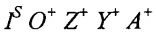 (
 : a mutant repressor gene whose product cannot bind inducer) (A) The mutation is recessive. (B) The operon is uninducible. (C) The mutation is trans-dominant. (D) The operon is nonrepressible. (E) None of the choices is correct.
 tail in eukaryotic mRNA? (A) Increase half-life of mRNA (B) Increase turn-over rate of mRNA (C) Enhance transcription rate of mRNA (D) Inhibit mRNA splicing (E) Decrease half-life of mRNA
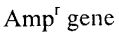 (D) His region (E) GFP
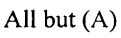
 ) after UV irradiation. Results of their experiment are shown below. Which statement is
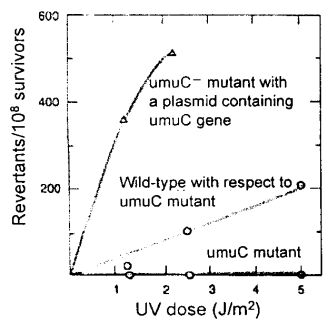 (A) umuC mutation decreases the reversion rate (B) Overexpression of UmuC increases the reversion rate (C) This result indicates that umuC is essential for faithful repair of UV-induced DNA damage. (D) Bacterium devoid of umuC activity was essentially unmutable. (E) None of above