所屬科目:研究所、轉學考(插大)◆基礎分子生物學
1. Which of the followings is NOT a component of DNA? (A) Ribose (B) Base A, T, C, or G (C) 5'-phosphate group (D) 3' hydroxyl group (E) Deoxyribose
2. Which of the following enzymes are required in DNA replication of prokaryotes? (A) DNA gyrase (B) Helicase (C) Methyltransferase (D) Primase (E)DNA ligase
3. Which of the following protein(s) or organelle(s) is NOT involved in proteolysis pathway? (A) Peroxisome (B) Lysosome (C) Proteasome (D) Ubiquitin (E)Mitochondria
4. What is the final 3-carbon product of the glycolytic pathway in cytoplasm? (A)Oxaloacetate (B)Pyruvate (C)a-ketoglutarate (D)Succinate (E) Malate
5. Which of the followings are NOT included in eukaryotic mRNA processing? (A) 5'-capping (B) RNA editing (C) 3' polyadenylation (D) Splicing (E) 5'-triphosphate
6. Which of the following statements regarding "Protein Synthesis" are CORRECT? (A)Ribosomes use the information carried by mRNA to make proteins. (B) Proteins are linear polymers made from amino acids. Most proteins fold into complex 3D structures. (C) Each amino acid in a protein is encoded by three bases in the DNA or RNA sequence. (D) In protein synthesis, the anticodon of rRNA recognizes the codon on mRNA by base pairing. (E) Since the genetic code is read in groups of three bases, any nucleic acid sequence contains three possible reading frames.
7. Which of the following statements regarding "Mitochondria and ATP" are CORRECT? (A) Mitochondria use energy extracted from the chemical bonds of nutrients to generate a proton gradient across the inner membrane. (B) Energetic electrons donated by NADH and FADH2 drive an electron transport pathway in the inner mitochondrial membrane. (C) Mitochondria synthesizes of ATP through oxidative phosphorylation. (D) Glycolysis also produces ATP through oxidative phosphorylation. (E)Citric acid cycle of energy-yielding reactions occurs in the mitochondrial matrix.
8. Some small molecules that carry signals inside living cells are called second messengers. Which of the followings are second messenger(s)? (A) Calcium (Ca2+) (B) Cyclic GMP (cGMP) (C) Nitric oxide (D) Potassium (K+) (E) Cyclic AMP (CAMP)
9. Which of the following statements regarding "Glycosylation" is CORRECT? (A) The sugar-modified molecules, called glycoproteins and glycolipids, constitute the majority of cell surface and extracellular proteins and lipids. (B) Golgi apparatus plays an important role in the glycosylation of proteins and lipids. (C) The N-linked sugar chains are added to asparagine residues of the protein in the ER. (D) The O-linked sugar chains are added to the hydroxyl group of tyrosine residues of a proteoglycan core protein. (E) Glycosyltransferases add specific sugar residues to glycans, while glycosidases remove specific sugar residues.
10. Which of the following statements regarding "Transcription of RNA" are CORRECT? (A) RNA polymerase II synthesizes mRNA and several snRNAs involved in RNA splicing in the nucleoplasm. (B) Initiation of transcription requires RNA polymerase loading onto the chromosome at the promoter of a gene or operon. (C) Eukaryotic RNA polymerase I, II and III promoter sequences are all situated upstream of the transcription start site. (D) In addition to RNA polymerases, RNA transcription in eukaryotes also requires multiple initiation factors termed general transcription factors (GTFs). (E)The end of a gene is marked by a terminator sequence that forms a hairpin structure in the RNA.
11. The 5' End is potentially lost in replication of linear eukaryotic chromosomal DNA. Which molecules or structures are required to prevent the shortening of the 5'end of DNA? (A) DNA gyrase (B) Telomere (C) Telomerase (D) DNA polymerase (E)Helicase
12. Which of the following statements regarding the "Eukaryotic Genome Organization" are CORRECT? (A) In humans, around 30% of the entire genome actually encodes proteins. (B) Non-coding DNA accounts for the majority of the DNA in higher animals and plants. (C) About 50% of the human genome is repeated sequences (or repetitive sequences). (D) Expressed genes are generally found within euchromatin. (E)Genes for ribosomal RNA are usually found in multiple copies.
13. Chromatin states created by histone modifications can be stably inherited through many rounds of cell division. The posttranslational modifications of histones include the following reactions EXCEPT FOR (A) Acetylation (B) Phosphorylation (C) Methylation (D) Ubiquitination (E) Glycosylation
14. When a change in the DNA base sequence that alters a codon so that one amino acid in a protein is replaced with a different amino acid. We call this mutation as (A) Nonsense mutation (B) Missense mutation (C) Synonymous mutation (D) Silent mutation. (E) Insertional mutation
15. Supercoiling is necessary for packaging of bacterial DNA. The enzymes that insert or remove supercoils are named: (A) Topoisomerases (B) Polymerases (C) Ligases (D) Helicases (E) Endonuclease
16. RNA polymerases synthesize a new strand of nucleic acid that is complementary to one of the chromosomal DNA strands. Which of the following statements regarding RNA POLYMERASE is CORRECT? (A) RNA polymerases synthesize a strand of ribonucleotides. (B) Like DNA polymerase, RNA polymerases initiates transcription with a primer. (C) Unlike replication, the newly transcribed sequences do not remain base-paired with the template but are displaced after reaching a length of about 10 nucleotides. (D) Most eukaryotes have three different RNA polymerases, including RNA polymerase I, II, and III. (E) RNA Polymerase II is responsible for transcription of mRNA.
17. Which cytoskeleton filament supports slender protrusions of plasma membrane called microvilli or filopodia? (A) Myosin (B) Intermediate filament (C) Actin (D) Microtubule (E) Dynamin
18. Which of the following statements regarding molecular biology techniques are CORRECT? (A) Southern blotting for detection of specific RNA sequences (B) Northern blotting for detection of specific DNA sequences (C) Western blotting for detection of protein expression levels (D) PCR for amplification of specific DNA sequences (E) Chromatin immunoprecipitation for detection of specific proteins that are associated with specific genomic regions
19. Which of the following statement regarding the "Cell Cycle" is CORRECT? (A) DNA is replicated in S phase. (B) The G₁ phase is the interval between mitosis and the onset of DNA replication. (C) These nondividing cells (which may physiologically be extremely active) are in the G2 phase. (D) The G0 phase is the interval between the termination of DNA replication and the onset of mitosis. (E) During M phase, chromosomes and cytoplasm are partitioned into two daughter cells.
20. Which of the following mobile DNAs moves by using an intermediate RNA form? (A) LINES (Long Interspersed Nuclear Elements) (B) Endogenous retrovirus (C) Transposon (D) Retrotransposon (E) LTR retroelements
21. Which of the following is/are a component of a ribonucleotide? (A) Deoxyribose (B) Phosphate group (C) Uracil (D) Adenine (E) Thymine
22. Which of the following modifications found on amino acids is/are also used to modify nucleic acids? (A) Phosphorylation (B) Glycosylation (C) Methylation (D) Fatty acid modification (E)Hydroxylation
23. Which of the following statements is/are known to be part of signal transduction cascade? (A) phosphorylation of fibronectin (B) dissociation of the components of a heterotrimeric G-protein (C) enzymatic breakdown of phosphatidyl inositol bisphosphate (PIP2) (D) elevation of intracellular [Ca2+] (E)activation of cGMP phosphodiesterase
24. Which of the following is/are characteristic of a eukaryotic enhancer element? (A) It may be found as far as 1 to 2 kilobase from the promoter. (B) Its activity is dependent on its distance from the start site of transcription. (C) It may be positioned at the 5' end or the 3' end of the gene. (D) Its activity is dependent of its orientation. (E)It increases the level of transcription of genes under its control.
25. Which of the following is/are NOT a feature of miRNAs? (A) The enzyme that catalyzes the initial processing of miRNAs in the nucleus is Dicer. (B) Primary miRNA transcripts have internal complementary sequences capable of forming hairpin structures. (C) Precursor miRNAs have internal complementary sequences capable of forming hairpin structures. (D) miRNAs are exported to nuclease in their single-stranded form. (E)Precursor miRNAs are approximately 60-70 nucleotides long.
26. Which of the following amino acids is/are a target for phosphorylation by a protein kinase? (A) Ala (B) Tyr (C) Arg (D) Thr (E)Asp
27. Which of the following statements about eukaryotic translation is/are FALSE? (A) All polypeptides synthesized by cytosolic ribosomes begin with a Met residue, not an fMet. (B) A special initiator tRNA is utilized for initiation by cytosolic ribomes. (C) Polypeptides synthesized by mitochondrial ribosomes begin with fMet. (D) The 40S ribosomal subunit binds the mRNA before any initiation factors. (E)The eIF2a factor binds to the eukaryotic internal ribosome entry site (IRES).
28. Which of the following is/are NOT an example of a regulatory DNA site? (A) Enhancer (B) Insulator (C) Repressor (D) Operator (E)Activator
29. Below is a map of the pBR322 plasmid, numbers on the map refer to the base where the site is located. Which of the following statements is/are FALSE?(A) If a recombinant plasmid were obtained inserting DNA into the BamHI site, the recombinant plasmid would be resistant to the antibiotic tetracycline. (B) If a recombinant plasmid were obtained by inserting DNA into the EcoRV site, the plasmid will be resistant to ampicillin. (C) If the region between Ndel and PstI were deleted, the resulting plasmid would work well for cloning. (D) If a recombinant plasmid was obtained inserting DNA into the BamHI site, screening for the recombinant plasmid can be plate on nutrient agar plates that contain ampicillin, followed by replica plating on tetracycline. (E) If the plasmid were completely digested with the three restriction enzymes BamHI, Ndel and PstI, the resulting fragments would be 1920, 1312, 754, and 375 base pairs long.
30. Which of the following statements is/are TRUE? (A) Restriction endonucleases can cut DNA and RNA. (B) It is common to use ddNTPs (dideoxyribonucleoside triphosphates) in DNA sequencing. (C) Enzymes that seal nicks in DNA are called ligases. (D) In recombinant DNA technology, a YAC is an enzyme isolated from a large South American four-legged mammal. (E)The "c" in cDNA stands for Circular.
31. Which of the following is/are FALSE about the E. coli Lac operon? (A) It is polycistronic. (B) It is an example of negative control. (C) The presence of lactose acts as an inducer. (D) The repressor binds to the operator. (E)The mRNA for the repressor binds to the operator.
32. Which of the following is/are required for transcription in E. coli? (A) Sigma factor (B) RNA polymerase (C) TFIID (D) DNA template (E)ATP
33. Which of the following statements about the genetic code is/are CORRECT? (A) Bacterial mRNA of 800 nucleotides could code for a 300 amino acid protein. (B) There are at least three codons for each amino acid. (C) A new codon begins every three nucleotides. (D) The fourth codon establishes the reading frame. (E)The genetic code is degenerate because one particular amino acid can be encoded by more than one codon.
34. The site-specific recombinases are similar to topoisomerases in what way? (A) They introduce supercoils. (B) They require ATP hydrolysis for their activity. (C) They promote phosphoryl group transfers in which the net change in free energy is close to zero. (D) They also assist in compaction of the DNA. (E)They mediate strand invasion reactions.
35. DNA sequence rearrangements are involved in the following processes? (A) immunoglobulin gene expression in mammals. (B) transposition of bacteriophage Mu. (C) mating-type switching in yeast. (D) antigen switching in trypanosomes. (E)intron splicing in ciliates.
36. Which of the following base pairs is/are a Wobble base pair? (A) G-U (B) I-C (C) I-A (D) G-C (E)A-U
37. A BLAST search is/are done to? (A) find similar gene sequences. (B) find similar protein sequences. (C) find the chromosomal location of a sequence. (D) find restriction sites and SNPs in a sequence. (E)predict the three-dimensional structure of a protein from its amino acid sequence.
38. Which of the following techniques is/are used to test for genetic diseases such as fragile X syndrome? (A) RNA-Seq (B) ChIP-Seq (C) Western blotting (D) FISH (Fluorescent in situ hybridization) (E)PCR
39. Polymerases also have nuclease activities. Which of the following is/are a use for the nuclease activities of DNA polymerase I? (A) Proofreading during synthesis (B) Trimming single-stranded ends (C) Removal of RNA primers (D) Degradation of viral DNAs (E)Removal of DNA lesions during repair
40. Which of the following process about the eukaryotic mRNA degradation is/are TRUE? (A) The poly( A ) tail is lengthened. (B) The 5' cap is removed. (C) Degradation is at least partially carried out in processing bodies. (D) The exosome degrades the molecule to component nucleotides. (E)An mRNA molecule containing a hairpin structure in the 3'-UTR that recruits a ribonuclease.
 阿摩線上測驗
登入
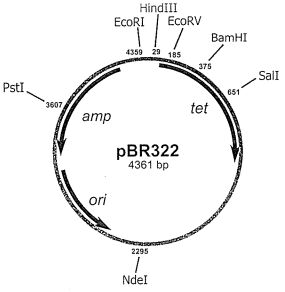 (A) If a recombinant plasmid were obtained inserting DNA into the BamHI site, the recombinant plasmid would be resistant to the antibiotic tetracycline. (B) If a recombinant plasmid were obtained by inserting DNA into the EcoRV site, the plasmid will be resistant to ampicillin. (C) If the region between Ndel and PstI were deleted, the resulting plasmid would work well for cloning. (D) If a recombinant plasmid was obtained inserting DNA into the BamHI site, screening for the recombinant plasmid can be plate on nutrient agar plates that contain ampicillin, followed by replica plating on tetracycline. (E) If the plasmid were completely digested with the three restriction enzymes BamHI, Ndel and PstI, the resulting fragments would be 1920, 1312, 754, and 375 base pairs long.