所屬科目:轉學考-普通化學
1. The average mass of a boron atom is 10.81. If you were able to isolate a single boron atom, what is the chance that you would randomly get an atom with mass 10.81? (A) 0% (B) 0.81% (C) about 11% (D) 10.81% (E) greater than 50%
2. A balloon contains 10.0 g of neon gas. With the temperature kept constant, 10.0 g of argon gas is added. What happens? (A) the balloon doubles in volume (B) the volume of the balloon expands by more than 2 times (C) the volume of the balloon expands by less than 2 times (D) the balloon stays the same size, but the pressure increases (E) none of these
3. The reaction below occurs in basic solution. In the balanced equation, what is the sum of the coefficients?
(A) 12 (B) 15 (C) 19 (D) 23 (E) 27
4. When NH3(aq) is added to , a precipitate initially forms. What is its formula? (A) Cu(NH3) (B) Cu(NO3)2 (C) Cu(OH)2 (D) (E) CuO
5. Which gas has the highest density? (A) He (B) Cl2 (C) CH4 (D) NH3 (E) all the gases have the same density
6. Which of the following statements (I-IV) about "oxidation and reduction" is (are) true? I: cannot occur independently of each other; II: accompany all chemical changes; III: describe the loss and gain of electron(s), respectively; IV: result in a change in the oxidation states of the species involved (A) I only (B) II only (C) III only (D) IV only (E) I, III, and IV
7. The value of the equilibrium constant K is dependent on: I: the temperature of the system; II: the nature of the reactants and products; III: the concentration of the reactants; IV: the concentration of the products. (A) I and II only (B) II and III only (C) III and IV only (D) three of these (E) none of these
8. For which gas do the molecules have the highest average velocity? (A) He (B) Cl2 (C) CH4 (D) NH3 (E) the molecules of all the gases have the same average velocity
9. Consider the following equilibrium: H2(g) + I2(s)⥨ 2HI(g) ΔΗ = +68.0 kJ/mol
Which of the following statements about the equilibrium is false? (A) if the system is heated, the right side is favored (B) this is a heterogeneous equilibrium (C) if the pressure on the system is increased by changing the volume, the left side is favored (D) adding more H2(g) increases the equilibrium constant (E) removing HI as it forms forces the equilibrium to the right
10. According to the Brønsted-Lowry definition, an acid is (A) a substance that increases the hydroxide ion concentration in a solution (B) a substance that increases the hydrogen ion concentration in a solution (C) a substance that can accept a proton from another species in solution (D) a substance that can donate a proton to another species (E) an electron pair acceptor.
11. Which of the following species is not amphoteric? (A) (B) (C) (D) H2O (E) all of these
12. The salt BX, when dissolved in water, produces an acidic solution. Which of the following could be true? (A) HX is a weak acid (B) HX is a strong acid (C) the cation B+ is a weak acid (D) all of these could be true (E) Both HX and the cation B+ are weak acids
13. Which of the following compounds has the lowest solubility, in moles per liter, in water at 25°C? (A) (B) (C) (D) (E)
14. You have two salts, AgX and AgY, with very similar values. You know that Ka for HX is much greater than Ka for HY. Which salt is more soluble in acidic solution? (A) AgX (B) AgY (C) They are equally soluble in acidic solution (D) This cannot be determined from the information given (E) none of these
15. Given the equation S(s) + O2(g) → SO2(g), ∆H = −296 kJ, which of the following statements is(are) true? I: The reaction is exothermic; II: When 0.500 mol of sulfur is reacted, 148 kJ of energy is released; III: When 32.0 g of sulfur is burned, 2.96 x 10⁵ J of energy is released. (A) all are true (B) none is true (C) I and II are true (D) I and III are true (E) only II is true
16. Which of the following are state functions? (A) work, heat (B) work, heat, enthalpy, energy (C) enthalpy, energy (D) work, heat, enthalpy (E) heat, enthalpy, energy
17. Consider the dissociation reaction of the acid HF. Why is AS negative?
(A) each HF molecule produces two ions when it dissociates (B) the ions are hydrated (C) the reaction is expected to be exothermic, and AS thus should be negative (D) the reaction is expected to be endothermic, and thus AS should be negative (E) none of these
18. △S is _ for exothermic reactions and _ for endothermic reactions. (A) favorable, unfavorable (B) unfavorable, favorable (C) favorable, favorable (D) unfavorable, unfavorable (E) cannot tell
19. The experimental rate law for the decomposition of nitrous oxide (N2O) to N2 and O2 is Rate = k[N2O]2. Two mechanisms are proposed:
I: N2O → N2 + O
N2O + O → N2 + O2
II: 2N2O → N4O2
N4O2→ 2N2 + O2
Which of the following could be a correct mechanism? (A) mechanism I with the first step as the rate-determining step (B) mechanism I with the second step as the rate-determining step (C) mechanism II with the second step as the rate-determining step (D) two of these could be correct (E) none of these could be correct.
20. From the following list of observations, choose the one that most clearly supports the conclusion that electrons in atoms have quantized energies. (A) the emission spectrum of hydrogen (B) the photoelectric effect (C) the scattering of alpha particles by metal foil (D) diffraction (E) cathode "rays"
21. How many electrons can be described by the quantum numbers n = 4, l = 3, ml = 0? (A) 0 (B) 2 (C) 6 (D) 10 (E) 14
22. An element has the electron configuration [Kr] . The element is a(n) (A) nonmetal (B) transition element (C) metal (D) lanthanide (E) actinide
23. Which statements about hydrogen are true? I: H has a lower ionization energy than He; II: H- is smaller than H; III: H has a higher effective nuclear charge than He; IV: H is always a metal; V: H does not have a second ionization energy. (A) I, V (B) II, IV (C) I, III, V (D) II, IV, V (E) I, III, IV, V
24. Which of the following statements is incorrect? (A) ionic bonding results from the transfer of electrons from one atom to another (B) dipole moments result from the unequal distribution of electrons in a molecule (C) the electrons in a polar bond are found nearer to the more electronegative element (D) a molecule with very polar bonds can be nonpolar (E) linear molecules cannot have a net dipole moment
25. Consider the following molecules. I: BF3; II: CHBr3 (C is the central atom.); III: Br2; IV: XeCl2; V: CO; VI: SF4. Select the molecule(s) that have a zero net dipole moment. (A) III, V (B) I, III, IV (C) III, IV, V (D) I, III, IV, VI (E) none of these
26. Which of the following ionic compounds has the largest lattice energy; that is, which has the lattice energy most favorable to a stable lattice? (A) Csl (B) Lil (C) LiF (D) CsF (E) MgO
27. As a general pattern, electronegativity is inversely related to (A) ionization energy (B) atomic size (C) polarity of the atom (D) the number of neutrons in the nucleus (E) two of these
28. Which of the following has the shortest N-O bond? (A) (B) NO+ (C) N2 (D) (E) none of these
29. Choose the element that is the strongest reducing agent in the gas phase. (A) Li (B) Na (C) K (D) Rb (E) Cs
30. Which of the following species has the largest dissociation energy? (A) O2 (B) (C) (D) (E)
31. Consider the molecular-orbital energy-level diagrams for O2 and NO. Which of the following is true? I: Both molecules are paramagnetic; II: The bond strength of O2 is greater than the bond strength of NO; III: NO is an example of a homonuclear diatomic molecule; IV: The ionization energy of NO is smaller than the ionization energy of NO+. (A) I only (B) I and II only (C) I and IV only (D) II and III only (E) I, II and IV
32. Which of the following should have the highest boiling point? (A) K2S (B) HF (C) NH3 (D) O2 (E) C2H5OH
33. Which of the following is the smallest hole in a closest-packed lattice of spheres? (A) trigonal (B) tetrahedral (C) cubic (D) octahedral (E) none of these
34. Brass is an example of (A) a superconductor (B) a substitutional alloy (C) an interstitial alloy (D) a network solid (E) none of these
35. Doping Se with As would produce a(n) _ semiconductor with _ conductivity compared to pure Se. (A) n-type, increased (B) n-type, decreased (C) p-type, increased (D) p-type, decreased (E) intrinsic, identical
36. A liquid-liquid solution is called an ideal solution if I: it obeys PV = nRT; II: it obeys Raoult's law; III: solute-solute, solvent-solvent, and solute-solvent interactions are very similar; IV: solute-solute, solvent-solvent, and solute-solvent interactions are quite different. (A) I, II, III (B) I, II, IV (C) II, III (D) II, IV (E) I, II
37. Which of the following oxides is amphoteric? (A) BeO (B) MgO (C) CaO (D) SrO (E) BaO
38. Choose the correct molecular structure for SF4. (A) trigonal bipyramidal (B) trigonal planar (C) tetrahedral (D) octahedral (E) none of these
39. Ionic hydrides are formed when hydrogen combines with elements from
I: Group 1A; II: Group 2A; III: Group 3A (A) I, II and III (B) I and II only (C) I and III only (D) II and III only (E) none of these
40. A compound of which transition metal is responsible for the white color of most paper? (A) titanium (B) copper (C) chromium (D) nickel (E) zinc
41. Which of the following are structural isomers? I: coordination isomers; II: linkage; III: geometric isomers; IV: optical isomers (A) I, III (B) II, IV (C) I, III, IV (D) II, III (E) I, II
42. How many unpaired electrons are found in Mn(CN)63-?(A) 0 (B) 1 (C) 2 (D) 4 (E) 5
43. The complex ions of are all colorless. The most likely explanation for this is that(A) is paramagnetic (B) exhibits "d orbital" splittings in its complexes such that they absorb allwavelengths in the visible region (C) because is a d10 ion, it does not absorb visible light even though the "dorbital" splittings are correct for absorbing visible wavelengths (D) is not a transition metal ion (E) none ofthese explanations could be correct.
44. A student gave a molecule the following name: 3-methyl-4-isopropylpentaneHowever, the teacher pointed out that although the molecule could be correctly drawn from this name, the nameviolates the IUPAC rules. What is the correct (IUPAC) name for the molecule?(A) 4-isopropyl-3-methylpentane (B) 2-isopropyl-3-methylpentane (C) 1,1,2,3-tetramethylpentane (D)2,3,4-trimethylhexane (E) 3,4-dimethylheptane
45. H2CCHCH2N(CH3)2 is(A) an alkyne and a secondary amine (B) an alkene and a primary amine (C) an alkene and a tertiary amine (D)an alkyne and a tertiary amine (E) none of these
46. Which of the following often have useful solvent properties?(A) esters only (B) alcohols only (C) amines only (D) ketones only (E) all of these have useful solvent properties
47. Oxidation of 2-methyl-1-butanol could yieldI: 2-methyl-1-butanone; II: 2-methylbutanal; III: 2-methylbutanoic acid(A) I only (B) II only (C) III only (D) II and III (E) I and III
48. Which statement is true?.(A) protein synthesis takes place in the cytoplasm of the cell (B) each gene in the DNA molecule codes for aspecific protein (C) messenger RNA can be found in both the nucleus and the cytoplasm of each cell (D) when apeptide bond is formed, H2O is produced. (E) all of these statements are true.
49. Teflon is an example of a(A) copolymer (B) homopolymer (C) dimer (D) two of these (E) none of these
50. A protein is(A) polysaccharide (B) a saturated ester of glycerol (C) one of the units composing a nucleic acid (D) a polymerof amino acid units (E) an aromatic hydrocarbon with a fused ring structure
 阿摩線上測驗
登入
 (A) 12 (B) 15 (C) 19 (D) 23 (E) 27
 , a precipitate initially forms. What is its formula? (A) Cu(NH3) (B) Cu(NO3)2 (C) Cu(OH)2 (D)
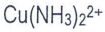 (E) CuO
 (B)
 (C)
 (D) H2O (E) all of these
 (B)
 (C)
 (D)
 (E)

 values. You know that Ka for HX is much greater than Ka for HY. Which salt is more soluble in acidic solution? (A) AgX (B) AgY (C) They are equally soluble in acidic solution (D) This cannot be determined from the information given (E) none of these
 (A) each HF molecule produces two ions when it dissociates (B) the ions are hydrated (C) the reaction is expected to be exothermic, and AS thus should be negative (D) the reaction is expected to be endothermic, and thus AS should be negative (E) none of these
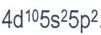 . The element is a(n) (A) nonmetal (B) transition element (C) metal (D) lanthanide (E) actinide
 (B) NO+ (C) N2 (D)
 (E) none of these
 (C)
 (D)
 (E)

 are all colorless. The most likely explanation for this is that
 is paramagnetic (B)
 exhibits "d orbital" splittings in its complexes such that they absorb all
 is a d10 ion, it does not absorb visible light even though the "d
 is not a transition metal ion (E) none of