所屬科目:轉學考-普通化學
1. Vitamin C contains the elements C, H, and O. It is known to contain 40.9% C and 4.58% H by mass. The molar mass of vitamin C has been found to be about 180. The molecular formula for vitamin C is (A) C2H3O2 (B) C3H4O3 (C) C4H6O4 (D) C6H8O6 (E) none of these
2. When the equation FeCr2O4 + K2CO3 + O2 → K2CrO4 + Fe2O3 + CO2 is balanced with the smallest set of integers, the sum of the coefficients is (A) 6 (B) 9 (C) 15 (D) 24 (E) 37
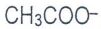
3. The following acids are listed in order of decreasing acid strength in water.
HI > HNO2 > CH3COOH > HCIO > HCN According to Brønsted-Lowry theory, which of the following ions is the weakest base? (A) (B) (C) (D) (E)
4. The strong acid HA is added to water. Which of the following is the strongest base in the system? (A) HA (B) H2O (C) (D) (E)
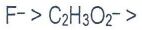
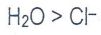
5. The acids HC2H3O2 and HF are both weak, but HF is a stronger acid than HC2H3O2. HCI is a strong acid. Order the following according to base strength. (A) (B) (C) (D) (E) none of these
6. The two salts AgX and AgY have very similar solubilities in water. The salt AgX is much more soluble in acid than is AgY. What can be said about the relative strengths of the acids HX and HY? (A) nothing can be said about their relative strengths (B) HY is stronger than HX (C) HX is stronger than HY (D) the acids have equal strengths (E) none of these
7. For the combustion of ethyl alcohol as described in the above equation, which of the following statements is(are) true?
C2H5OH(l) + 3O2(g) → 2CO2(g) + 3H2O(Λ), ΔΗ = −1.37 x 10³ kJ
I: The reaction is exothermic; II: The enthalpy change would be different if gaseous water were produced; III: The reaction is not an oxidation-reduction one; IV: The products of the reaction occupy a larger volume than the reactants. (A) I, II (B) I, II, III (C) I, III, IV (D) III, IV (E) I only
8. Compounds containing bismuth in the +5 oxidation state tend to be _ and compounds containing bismuth in the +3 oxidation state tend to be _ (A) ionic, ionic (B) ionic, molecular (C) molecular, molecular (D) molecular, ionic (E) none of these
9. One mole of an ideal gas at 25 ℃ is expanded isothermally from 5.0 L to 10.0 L under such conditions that no work is produced in the surroundings. Which statement is correct? (A) = 0 (B) = RIn2/298 (C) = 0 (D) = 0 (E) =
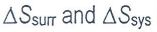
10. Which of the following is true? (A) as long as the disorder of the surroundings is increasing, a process will be spontaneous (B) for any process, have opposite signs (C) , the process is at equilibrium (D) ΔΗ° is zero for a chemical reaction at constant temperature (E) none of these
11. At constant pressure, the reaction, 2NO2(g) → N2O4(g) is exothermic. The reaction is (A) always spontaneous (B) spontaneous at low temperatures but not at high temperatures (C) spontaneous at high temperatures but not at low temperatures (D) never spontaneous (E) none of these
12. For a reaction in a voltaic cell, both ∆H° and ∆S° are positive. Which of the following statements is true? (A) E°cell will increase with an increase in temperature (B) E°cell will decrease with an increase in temperature (C) E° cell will not change when the temperature increases (D) ∆G° > 0 for all temperatures (E) none of the above statements is true.
13. Which of the following statements is(are) true?
I: An excited atom can return to its ground state by absorbing electromagnetic radiation; II: The energy of an atom is increased when electromagnetic radiation is emitted from it; III: The energy of electromagnetic radiation increases as its frequency increases; IV: An electron in the n = 4 state in the hydrogen atom can go to the n = 2 state by emitting electromagnetic radiation at the appropriate frequency; V: The frequency and wavelength of electromagnetic radiation are inversely proportional to each other. (A) II, III, IV (B) III, V (C) I, II, III (D) III, IV, V (E) I, II, IV
14. What is the electron configuration for the chromium atom? (A) [Ar] 4s23d4 (B) [Ar] 4s13d5 (C) [Kr] 4s13d5 (D) [Kr] 4s²3d4 (E) none of these
15. Which of the following bonds would be the most polar without being considered ionic? (A) Mg-O (B) C-O (C) O–O (D) Si−O (E) N-O
16. Which of the following is polar? (A) XeF4 (B) KrF2 (C) BBr3 (D) NBr3 (E) SBr6
17. The first electron affinity value for oxygen is _ and the second electron affinity value is _. (A) unfavorable (endothermic), favorable (exothermic) (B) unfavorable (endothermic), unfavorable (endothermic) (C) favorable (exothermic), favorable (exothermic) (D) favorable (exothermic), unfavorable (endothermic) (E) More information is needed
18. In which of the following compounds does the bond between the central atom and fluorine have the greatest ionic character? (A) OF₂ (B) SF₂ (C) SeF₂ (D) AsF₃ (E) SbF₃
19. Choose the molecule with the strongest bond. (A) F₂ (B) Cl₂ (C) Br₂ (D) I₂ (E) all the same
20. The bond order in the NO⁻ ion is (A) 1.0 (B) 1.5 (C) 3.0 (D) 2.0 (E) 2.5
21. Consider the molecular-orbital energy-level diagrams for O2 and NO. Which of the following is true? I: both molecules are paramagnetic; II: the bond strength of O2 is greater than the bond strength of NO; III: NO is an example of a homonuclear diatomic molecule; IV: the ionization energy of NO is smaller than the ionization energy of . (A) I only (B) I and II only (C) I and IV only (D) II and III only (E) I, II and IV
22. The fact that O2 is paramagnetic can be explained by (A) the Lewis structure of O2 (B) resonance (C) a violation of the octet rule (D) the molecular-orbital diagram for O2 (E) hybridization of atomic orbitals in O2
23. Which of the following statements is false? (A) C₂ is paramagnetic (B) C₂ is diamagnetic (C) the carbon-carbon bond in C₂²⁻ is stronger than the one in CH₃CH₃ (D) the carbon-carbon bond in C₂²⁻ is shorter than the one in CH₃CH₃ (E) two of these statements are false
24. Which of the following is the correct order of boiling points for NaNO₃, C₂H₅OH, C₂H₆, and Ne? (A) Ne < C₂H₅OH < C₂H₆ < NaNO₃ (B) NaNO₃ < C₂H₅OH < C₂H₆ < Ne (C) Ne < C₂H₆ < NaNO₃ < C₂H₅OH (D) Ne < C₂H₆ < C₂H₅OH < NaNO₃ (E) C₂H₆ < Ne < C₂H₅OH < NaNO₃
25. The number of Pb atoms per unit cell is (A) 3 (B) 4 (C) 10 (D) 12 (E) 14
26. A certain metal fluoride crystallizes in such a way that the fluoride ions occupy simple cubic lattice sites, while the metal atoms occupy the body centers of half the cubes. What is the formula for the metal fluoride? (A) MF₂ (B) M₂F (C) MF (D) MF₈ (E) none of these
27. Which of the following statements is true about p-type silicon? (A) it is produced by doping Si with P or As (B) electrons are the mobile charge carriers (C) it does not conduct electricity as well as pure Si (D) all are true (E) none of these
28. Liquid A has vapor pressure x. Liquid B has vapor pressure y, and x > y. What is the mole fraction of A in the liquid mixture if the vapor above the solution is 50% A? (A) y/(2x + 2y) (B) x/(2x + 2y) (C) x/(x + y) (D) y/(x + y) (E) none of these
29. An aqueous solution of barium nitrate reacts with an aqueous solution of sodium sulfate. Identify the solid and indicate its coefficient in the balanced equation. (A) NaNO3, 1 (B) BaSO4, 1 (C) NaNO3, 2 (D) BaSO2, 2 (E) none of these
30. Which of the following is the most polarizable? (A) He (B) Xe (C) Ar (D) Kr (E) Ne
31. A material is made from Al, Ga, and As. The mole fractions of these elements are 0.25, 0.26, and 0.49, respectively. This material would be (A) a metallic conductor because Al is present (B) an insulator (C) a p-type semiconductor (D) an n-type semiconductor (E) none of these
32. For the process X-(g) → X-(aq), select the ion with the most negative value of ΔH. (A) F-(B) Cl- (C) Br- (D) I- (E) all positive values
33. Which of the following noble gases has(have) been observed to form compounds? (A) He and Ar (B) Kr and Xe (C) Xe (D) Ar, Kr and Xe (E) The noble gases never form compounds because they have filled outer shells.
34. Which of the following statements is(are) true? (A) the rate of dissolution of a solid in a liquid always increases with increasing temperature (B) the solubility of a solid in a liquid always increases with increasing temperature (C) according to Henry's law, the amount of gas dissolved in a solution is directly proportional to the pressure of the gas above the liquid (D) two of these statements are true (E) all of these statements are true
35. How many different possible tetramethylbenzenes exist? (A) 2 (B) 3 (C) 4 (D) 5 (E) 6
36. Which of the following is optically active (that is, chiral)? (A) dimethylamine (B) difluoromethane (C) 2-chloropropane (D) 2-chlorobutane (E) 1-bromohexane
37. Oxidation of a primary alcohol results in a(n)__ and oxidation of a secondary alcohol results in a(n)__ (A) carboxylic acid, amine (B) aldehyde, ketone (C) ester, ether (D) ketone, aldehyde (E) amine, carboxylic acid
38. What is the complementary nucleic acid sequence for the DNA sequence GAC TAC GTT GGC? (A) GAC TAC GTT GGC (B) TCA GCA TGG CTA (C) CGA GTG CAT CAG (D) CTG ATG CAA CCG (E) GCG AAG GGG TTG
39. When heat is added to proteins, the hydrogen bonding in the secondary structure breaks apart. What are the algebraic signs of ΔH and ΔS for the denaturation process? (A) both ΔH and ΔS are positive (B) both ΔH and ΔS are negative (C) ΔH is positive and ΔS is negative (D) ΔH is negative and ΔS is positive (E) ΔH is positive and ΔS is 0.
40. Which of the following polymers is not based on a substituted ethylene monomer? (A) nylon (B) polyvinylchloride (C) Teflon (D) polystyrene (E) polypropylene
41. In the DNA molecule, thymine is always bonded to (A) adenine (B) cytosine (C) guanine (D) A or B (E) B or C
42. What reason is given for the stability of C-C, N-N, and O-O bonds, compared to the instability of Si-Si, P-P, and S-S bonds? (A) their metallic character varies greatly (B) there are large differences in their ionization energies (C) there are large differences in their electronegativities (D) there are large differences in their abilities to form strong pi bonds (E) none of these
43. Which of the following elements react(s) with N2 to form a compound of the general formula MN? (A) B (B) Al (C) Ga (D) Ti (E) all of these
44. What Group 6A elements are semiconductors? (A) selenium and polonium (B) tellurium and polonium (C) sulfur and selenium (D) selenium and tellurium (E) sulfur and tellurium
45. What is the molecular shape of XeF4? (A) tetrahedral (B) see-saw (C) T-shaped (D) square planar (E) none of these
46. How many of the following compounds exhibit geometric isomers?
I: Pd(NH3)2Br2 (square planar) II: [Co(NH3)2]Cl3 III: [Ni(NH3)4(NO2)2] IV: K2[CoBr4] (A) 0 (B) 1 (C) 2 (D) 3 (E) 4
47. Give the number of geometric isomers for the octahedral compound [MA2B2C2], where A, B, and C represent ligands. (A) 1 (B) 2 (C) 3 (D) 5 (E) none of these
48. Which of the following statements is true about the octahedral complexes of ? (A) both strong- and weak-field complexes are diamagnetic (B) the strong-field complex is diamagnetic and the weak-field complex is paramagnetic (C) the strong-field complex is paramagnetic and the weak-field complex is diamagnetic (D) both strong- and weak-field complexes are paramagnetic (E) none of these
49. Calculate the total number of unpaired electrons in the following complex ions: , (square planar) and (strong field). (A) 0 (B) 1 (C) 2 (D) 3 (E) 4
50. Oxygen is stored in mammalian tissue in which type of molecule? (A) hemoglobin (B) myoglobin (C) chlorophyll (D) cytochrome (E) porphyrin
 阿摩線上測驗
登入
 (B)
 (C)
 (D)
 (E)

 (D)
 (E)

 (B)
 (C)
 (D)
 (E) none of these
 = 0 (B)
 = RIn2/298 (C)
 = 0 (D)
 = 0 (E)
 =

 have opposite signs (C)
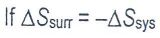 , the process is at equilibrium (D) ΔΗ° is zero for a chemical reaction at constant temperature (E) none of these
 . (A) I only (B) I and II only (C) I and IV only (D) II and III only (E) I, II and IV
 ? (A) both strong- and weak-field complexes are diamagnetic (B) the strong-field complex is diamagnetic and the weak-field complex is paramagnetic (C) the strong-field complex is paramagnetic and the weak-field complex is diamagnetic (D) both strong- and weak-field complexes are paramagnetic (E) none of these
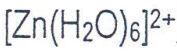 ,
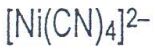 (square planar) and
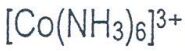 (strong field). (A) 0 (B) 1 (C) 2 (D) 3 (E) 4