所屬科目:研究所、轉學考(插大)◆工程數學
一、 Which of the following sets is basis (are bases) for ? (A) .(B) (C) (D) (E)None of the above are true.
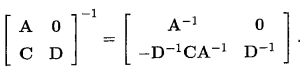
二、 Which of the following statements about the multiplicative inverse of a matrix is/are true?(A) A matrix A is called invertible if there exists a matrix B such that AB is an identitymatrix.(B) If a matrix is both diagonalizable and invertible, then so is its multiplicative inverse.(C) Suppose that matrices A of size n x n and D of size m x m are invertible and thatmatrix C is of size m X fi; then the following identity is true(D) Methods for finding the multiplicative inverse of a matrix include LU factorization,Gaussian elimination, eigen-decomposition, and Gram-Schmidt process.(E) None of the above are true.
三、Which of the following properties of eigenvalue is/are true? (A) A scalar λ is an eigenvalue of matrix A if and only if λ is an eigenvalue of .(B) A matrix is positive semi-definite if and only if all of its eigenvalues are non-negative.(C) Every eigenvalue of a matrix A is also an eigenvalue of A2.(D) If matrices A and B are similar, then they have the same eigenvalues.(E) None of the above are true.
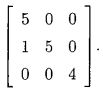
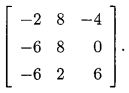
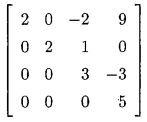
四 、 Which of the following matrices is/are diagonalizable? (A) (B) (C) (D) (E) None of the above are true.
五、Which of the following statements about matrix factorization is/are true? (A) If a matrix A is positive definite, then A has "an" LU factorization, A = LU, where the diagonal entries of U are positive.(B) Suppose that a matrix A = QR, where Q is an m x n matrix and R is an n X n matrix. If the columns of A are linearly independent, then R must be invertible.(C) Any factorization of a matrix A = , with matrices U, V square and positive diagonal entries in the matrix D, is called a singular value decomposition of A.(D) An n x n matrix A is positive definite if and only if A has "a" Cholesky factorization A = for some invertible upper triangular matrix R whose diagonal entries are all positive.(E) None of the above are true.
六、 The Householder matrix H = is the orthogonalprojection matrix onto some nonzero vector , is a reflection matrix. Which of thefollowing statements is/are true?(A) Consider the 2-dimensional space, ie. n = 2. For vectors u, d, p,q shown in thefigure below, we have H d = p.(B) H is a symmetric and orthogonal matrix.(C) Both linear systems A z = o and HAz = Ho are equivalent.(D) Let a = ≠0. Then llull2 = -2 llαll u1
and Hα = (E) None of the above are true.
七、 Given029which of the following statements is/are true?
(A)
(B)
(C)
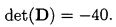
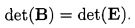
(D) det(F) = 20.(E) None of the above are true.
八、 Consider a 3 x 3 nonzero matrix A, and let W = . The leastsquares solutions xLs to Ax = b are illustrated in the following figure,where projwe b is theorthogonal projection of vector b onto vector space W. A minimun length least squares, solution EMurs is the one among the least squares solutions that has a minimum norm.Which of the following stateme ents is/are true?(A)(B) (C) (D) The minimum length least squares solution EMLLS to Ax = b is unique, and =projvxLs, where V = .(E) None of the above are true.
九 、 Let v1 and v2 be the eigenvectors of matrix A corresponding respectively to eigenvalues λ1 and λ2, where It is found that λ1 > 1 > |λ2l. With matrix A, ,
be a series of vectors related by . Given the initial condition x0 = =
, which of the following statements is/are true? (A)(B)(C) (D) (E) None of the above are true.
十、Let , be a linear transformation on for a rotation by an angle θ about a unit vectoru. Specifically, we let the matrix for with respect to the standard basis S for bewhere is the coordinate vector of u with respect to S, c = cos(θ)and s = sin(θ). Furthermore, let A be the rotation matrix about the z-axis of Cartesiancoordinate system by an angle θ, i.e.,where be an ordered orthonormal basis for with and let be the changeof-basis matrix for changing basis from B to S. Which of the following statements is/aretrue?(A), n1n2 +b1b2 + u1u2 = 0 and n1n3 + b1b3 +u1u3 =0.(B) The coordinate vector of u with respect to basis B is .(C) (D) (E) The matrix for with respect to basis B is A.
十三、Continued from Problem 十二 . Solve the non-homogeneous second order differential equa-tionx2y"(x)-4xy'(x)+6y(x)=x3by variation of parameters, i.e, set the particular solution as +u2(x)y2(x), where y1(x) and y2(x) are homogeneous solutions. With initial conditionsy(1) = 0 and y'(1) = 1 for the complete solution y(x), which of the following statementsis/are true?(A) The real valued solution y(x) exists only for t > 0.(B) y(2) = 2.(C) 2y'(2) -3y(2) = 8.(D) y'(3) -y(3) = 4.(E) None of the above are true.
十四、 The first order systemcan be reduced into an equivalent second order system y"(t) = By(t) with y(t) =. Which of the following statements is/are true?(A) (B) (C) The eigenvalues of B are 9 and 25.(D) is an eigenvector for B.(E) None of the above are true.
十五、Continued from Problem +u. Find the partieular solution for the second order system y"(t) = By(t) with initial conditions . Which of the following statements is/are true? (A) (B) (C) (x1(t) +x3(t)) is an odd function in t.(D) (x1(t) -x3(t)) is an odd function in t.(E) None of the above are true .
十六 、For s > 0, let F(s) be the unilateral Laplace transform of function f(t) given byWhich of the following statements regarding the values of f(t) is/are true?(A) (B) f(2) = 1.(C) f(4)=2.(D) f(8) = 3.(E) None of the above are true.
十七 、 Consider the following periodic functionwhich has a Fourier series representationfor some . Which of the following statements is/are true?(A) (B) (C) (D) (E) None of the above are true.m>o
十八、 For the following second order differential equationtx"(t)+(4t-2)x'(t)+(2t-4)x(t)=0Let x1(t)= be the two linearly independentFrobenius series solutions for x(t) when x > 0, where ri and r2 are the zeros of thecorresponding indicial equation. Assume r1 ≥ r2 and ao = b0 = 1. Which of the followingstatements is/are true?(A) r1 - r2 is not an integer.(B) .(C) (D) .(E) None of the above are true.
十九、Continued from Problem 十i. The second order differential equation can be alternativelysolved by using Laplace transform. Assuming x(0) = 0 and fo = 1, which ofthe following staterents is/are true about the values of x(t) and its unilateral Laplacetransform X(s) = ?(A) x'(0) = 1.
(B)x(1)=1.
(C) X(1) <1.
(D) Values of X(s) exists for all s > -1.
(E) None of the above are true.
二十、Consider the following boundary value problem for the bivariate function u(x,t) definedfor 0 ≤x≤π and t≥0Given the end-point and initial conditions=0 and u(x,0)=x(π-x)which of the following statements is/are true for the solution u(x,t) when it is expressed as for some constants (A) (B) a1=-1.(C) p2 =-31.(D) b1 =-1(E) None of the above are true.
 阿摩線上測驗
登入
 ? (A)
 .(B)
 (C)
 (D)
 (E)None of the above are true.
 .(B) A matrix is positive semi-definite if and only if all of its eigenvalues are non-negative.(C) Every eigenvalue of a matrix A is also an eigenvalue of A2.(D) If matrices A and B are similar, then they have the same eigenvalues.(E) None of the above are true.
 (B)
 (C)
 (D)
 (E) None of the above are true.
 , with matrices U, V square and positive diagonal entries in the matrix D, is called a singular value decomposition of A.(D) An n x n matrix A is positive definite if and only if A has "a" Cholesky factorization A =
 for some invertible upper triangular matrix R whose diagonal entries are all positive.(E) None of the above are true.
 is the orthogonal
 , is a reflection matrix. Which of the
 shown in the
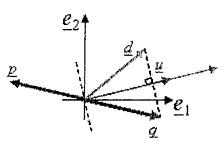 (B) H is a symmetric and orthogonal matrix.(C) Both linear systems A z = o and HAz = Ho are equivalent.(D) Let a =
 ≠0. Then llull2 = -2 llαll u1
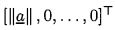 (E) None of the above are true.
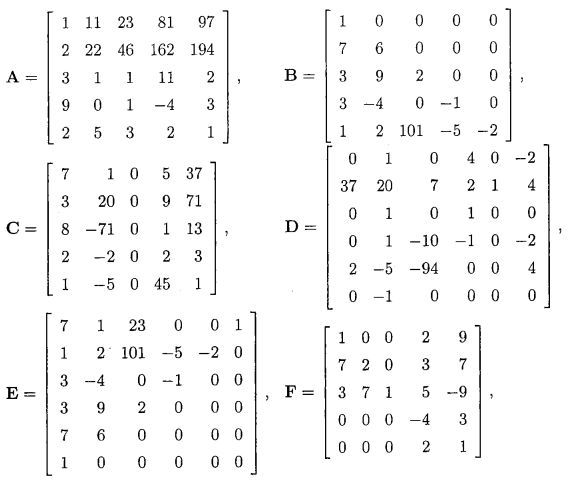 029

 . The least
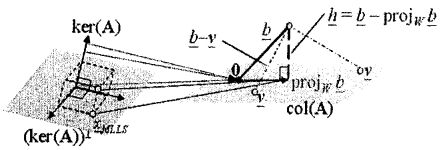
 (B)
 (C)
 (D) The minimum length least squares solution EMLLS to Ax = b is unique, and
 =
 .
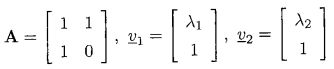 It is found that λ1 > 1 > |λ2l. With matrix A,
 ,
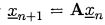 . Given the initial condition x0 =
 =
 , which of the following statements is/are true? (A)
 (B)
 (C)
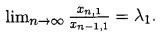 (D)
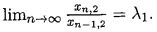 (E) None of the above are true.
 , be a linear transformation on
 for a rotation by an angle θ about a unit vector
 with respect to the standard basis S for
 be

 is the coordinate vector of u with respect to S, c = cos(θ)
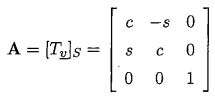
 be an ordered orthonormal basis for
 with
 and let
 be the change
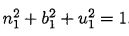 , n1n2 +b1b2 + u1u2 = 0 and n1n3 + b1b3 +u1u3 =0.(B) The coordinate vector of u with respect to basis B is
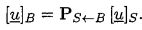 .(C)
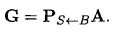 (D)
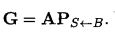 (E) The matrix for
 with respect to basis B is A.
 +
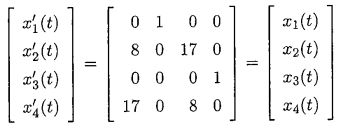
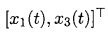 . Which of the following statements is/are true?
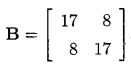 (B)
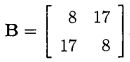 (C) The eigenvalues of B are 9 and 25.(D)
 is an eigenvector for B.(E) None of the above are true.
 . Which of the following statements is/are true? (A)
 (B)
 (C) (x1(t) +x3(t)) is an odd function in t.(D) (x1(t) -x3(t)) is an odd function in t.(E) None of the above are true .
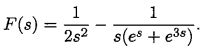
 (B) f(2) = 1.(C) f(4)=2.(D) f(8) = 3.
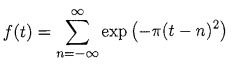

 . Which of the following statements is/are true?
 (B)
 (C)
 (D)
 (E) None of the above are true.
 be the two linearly independent
 .(C)
 (D)
 .(E) None of the above are true.
 = 1, which of
 ?
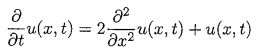
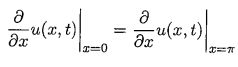 =0 and u(x,0)=x(π-x)


 (B) a1=-1.(C) p2 =-31.(D) b1 =-1(E) None of the above are true.