所屬科目:研究所、轉學考(插大)◆無機化學
2.Which element is in liquid form at T = 50℃ (A) Antinomy (B) Gallium (C) Sulfur (D) Carbon (E) Sodium
5.Identify the point group of(A) Td (B) (C)(D)(E)
6.Identify the point point group of (A) (B)(C)(D)
10. Identify the crystal system with a ≠ b≠c, a = y =90°, B >90°. (A) Cubic (B) Monoclinic (C) Orthorhombic (D) Hexagonal (E) Triclinic
11. Identify the point group of Buckminsterfullerene. (A) (B) Td (C) I h(D) Oh (E)
12. How many symmetrically independent carbon atom(s) for a molecule? (A) 1 (B) 2 (C) 4 (D) 5 (E) 10
13. Identify the point group of bicyclo[2.2.2Joctane (A)C3 (B) (C) (D) (E)
15. Identify the point group of XeF4 (A) C4 (B) (C) (D)(E)
16. Identify the irreducible representation of orbital. (A) (B)(C) (D)(E)
19. Which of the following species is paramagnetic in its ground state? (A) (B) CO (C) F2 (D) CN-(E) NO
22. How many unpaired electrons are there in a ion? (A) 2 (B) 3 (C) 4 (D) 5 (E) 6
23. Which of the following compounds is the strongest base in water? (A)B2O3(B) CO2(C)CI2O(D) K2O(E)
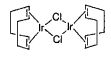
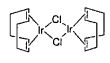
30. Which of the following ions or molecules do you expect to be paramagnetic? (A) [Fe(CO)5] (B) (C) [Cu(CH3CN)4)+ (D)(E)
31. Which of the following ions or molecules do you expect to be colorless? (A) [Fe(CO)5] (B) (C) [Cu(CH3CN)4]+ (D)(E)
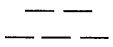
32. What d orbital splitting diagram would you expect for Fe(CO)5 molecule? (A)(B)(C)(D)(E)
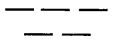
34. Which of the following ions or molecules do you expect to have the shortest S-N bond? (A) PhSO2(NH2) (B) (where N is the central atom) (C) S2N2 (with a square planar structure having only one type of S-N bond) (D) N2S (where N is the central atom) (E) NSF3 (where S is the central atom)
35. Both are very colorful. What type of electronic transitions is responsible for the colors of the complexes? (A) d-d transitions (B) Interligand electron transfer (C) Metal-metal-to-ligand charge transfer (D) Metal-to-ligand charge transfer (E) Ligand-to-metal charge transfer
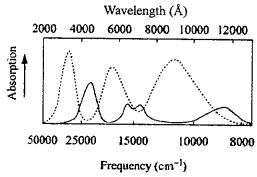
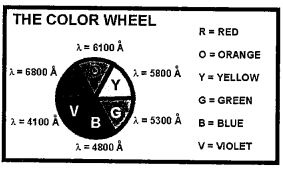
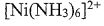
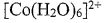
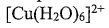
36. The absorption spectra of (en = ethylenediamine) are shown in the figure below, along with a color wheel. How many of the following statement(s) is/are correct? (i) The dotted-curve belongs to (ii) The color of is orange(iii) The color ofis purple (iv) Only exhibits absorption in near-infrared region (v) Bothhave an inversion center and their absorption bands should be intense.
(A) 1(B) 2 (C) 3 (D) 4 (E) 5
38. Which of the following ions do you expect to exhibit the greatest observed magnetic moment? (A) (B)(C)(D)(E)
39. Which ion is mostly kinetically labile? (A) (B)(C) (D)(E)
40. The reactions of (aq) ion with en (en = ethylenediamine) feature the equilibrium constants K shown below:
Why is the K3 significantly smaller than K1 and K2? (A) Jahn-Teller effect (B) Trans effect (C) Cotton effect (D) Hard-Soft Acid-Base Principle (E) 18-electron rule
41. For anion, which of the following statements is correct? (A) This species should be paramagnetic. (B) There is a metal-metal quintuple bond present in this species. (C) This ion adopts a staggered conformation. (D) The electron count for each Os is 18. (E) The oxidation state for Os is +4.
43. The reactions of with NHs (reaction I) and of with [NO2]- (reaction II) followed by NH3 are ways of preparing: (A) I: trans-[PtCl2(NH3)2]; II: trans-(PtCl2(NH3)(NO2)]- (B)I: cis-[PtCl2(NH3)2];II: trans-(PtCl2(NH3)(NO2)]- (C) I: cis-[PtCl2(NH3)2]; II: cis-[PtCl2(NH3)(NO2)]- (D) I: trans-[PtCl2(NH3)2]; II: cis-PtCl2(NH3)(NO2)] -
44. The kinetics of the isomerization of cis to trans-[Mo(CO)4(PEt3)2] can be followed by IR spectroscopy. Which of the following regions of the IR spectrum would you focus on to monitor the reaction? (A)800-1000 (B) 1400-1600 (C) 1800-2000 (D) 2400-2600 (E) 3000-3500
46. Which of the following complex has a highest oxidation state of metal? (A)(η6-C6H6)2Cr (B) Na2(Fe(CO)4] (C) Mn(CO)5Cl (D) Na[(η5-C5H5)Fe(CO)2] (E) Ni(CO)4
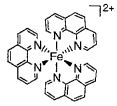
49. The intense red of an (shown below) solution is replaced by pale blue when cerium(IV) sulfate is added to it. Which of the following statements about this observation is correct? (A) The intense coloration o is due to inter-ligand charge transfer. (B) The electron count of is 20. (C) Addition of cerium(IV) sulfate causes the reduction of (D) The change of coloration upon the addition of cerium(IV) sulfate is due to lack of ligand to metal charge transfer transtions. (E) None of statements are correct.
50. Which of the following is closo? (A) C2B3H5(CoCp)2 (B) (C) (D) (E) P4
 阿摩線上測驗
登入
 (A) Td (B)
 (C)
 (D)
 (E)

 (A)
 (B)
 (C)
 (D)

 (B) Td (C) I h(D) Oh (E)

 molecule?
(A) 1 (B) 2 (C) 4 (D) 5 (E) 10
 (C)
 (D)
 (E)

 (C)
 (D)
 (E)

 orbital.
(A)
 (B)
 (C)
 (D)
 (E)

 (B) CO (C) F2 (D) CN-(E) NO
 ion? (A) 2 (B) 3 (C) 4 (D) 5 (E) 6

 (A) 1 (B) 2 (C) 3(D) 4(E) 5
 (C) [Cu(CH3CN)4)+ (D)
 (E)
 (C) [Cu(CH3CN)4]+ (D)
 (E)
 (B)
 (C)
 (D)
 (E)
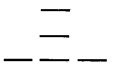
 (where N is the central atom) (C) S2N2 (with a square planar structure having only one type of S-N bond) (D) N2S (where N is the central atom) (E) NSF3 (where S is the central atom)
 are very colorful. What type of electronic transitions is responsible for the colors of the complexes? (A) d-d transitions (B) Interligand electron transfer (C) Metal-metal-to-ligand charge transfer (D) Metal-to-ligand charge transfer (E) Ligand-to-metal charge transfer
 (en = ethylenediamine) are shown in the figure below, along with a color wheel. How many of the following statement(s) is/are correct?
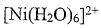
 is orange
 is purple
 exhibits absorption in near-infrared region
 have an inversion center and their absorption bands should be intense.
 (A) 1(B) 2 (C) 3 (D) 4 (E) 5
 (B)
 (C)
 (D)
 (E)

 (B)
 (C)
 (D)
 (E)

 (aq) ion with en (en = ethylenediamine) feature the equilibrium constants K shown below:
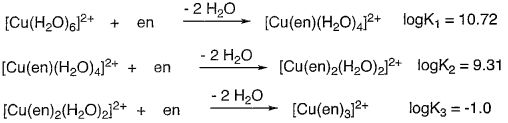 Why is the K3 significantly smaller than K1 and K2? (A) Jahn-Teller effect (B) Trans effect (C) Cotton effect (D) Hard-Soft Acid-Base Principle (E) 18-electron rule
 anion, which of the following statements is correct? (A) This species should be paramagnetic. (B) There is a metal-metal quintuple bond present in this species. (C) This ion adopts a staggered conformation. (D) The electron count for each Os is 18. (E) The oxidation state for Os is +4.
 with NHs (reaction I) and of
 with [NO2]- (reaction II) followed by NH3 are ways of preparing: (A) I: trans-[PtCl2(NH3)2]; II: trans-(PtCl2(NH3)(NO2)]- (B)I: cis-[PtCl2(NH3)2];II: trans-(PtCl2(NH3)(NO2)]- (C) I: cis-[PtCl2(NH3)2]; II: cis-[PtCl2(NH3)(NO2)]- (D) I: trans-[PtCl2(NH3)2]; II: cis-PtCl2(NH3)(NO2)] -
 (B) 1400-1600
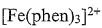 (shown below) solution is replaced by pale blue when cerium(IV) sulfate is added to it. Which of the following statements about this observation is correct?
 (A) The intense coloration o
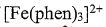 is due to inter-ligand charge transfer. (B) The electron count of
 is 20. (C) Addition of cerium(IV) sulfate causes the reduction of
 (D) The change of coloration upon the addition of cerium(IV) sulfate is due to lack of ligand to metal charge transfer transtions. (E) None of statements are correct.
 (C)
 (D)
 (E) P4