所屬科目:研究所、轉學考(插大)◆分子生物學
1. Which of the following amino acids is hydrophobic? (A) Serine (B) Lysine (C) Glutamate (D) Valine
2. The strand on which DNA replication is discontinuous is called the: (A) Leading strand (B) Lagging strand (C) Template strand (D) Major strand
3. Which of the following is not a stop codon? (A) UGG (B) UGA (C) UAG (D) UAA
4. Which of the following statements is true? (A) RNA lacks the base thymine (which is found in DNA) and has uracil instead. (B) RNA is usually double-stranded, but DNA is usually single-stranded. (C) RNA has the sugar deoxyribose, but DNA has the sugar ribose. (D) RNA contains three different nucleotides, but DNA contains four different nucleotides.
5. Which of the following protein is not required for DNA replication in E. coli? (A) DNA helicase (B) Primase (C) DNA ligase (D) DNA glycosylase.
6. Which activity of DNA polymerase I is also called "proofreading" activity? (A) 5' to 3' polymerase activity (B) 3' to 5' polymerase activity (C) 5' to 3' exonuclease activity (D) 3' to 5' exonuclease activity
7. Which subunit of DNA polymerase III increases its processivity? (A) α subunit (B) γ complex (C) ɛ subunit (D) β subunit
8. Which transposable element does not use an RNA intermediate to insert into new sites in the genome of the host cell? (A) DNA transposons (B) Viral-like retrotransposons (C) Retroviruses (D) Poly-A retrotransposons
9. Which of the following histone proteins is not in the core nucleosome particle? (A) H1 (B) H2A (C) H3 (D) H4
10. Molecular biologists use the retroviral reverse transcriptases for the: (A) synthesis of RNAs with DNAs as the templates. (B) synthesis of proteins with RNAs as the messenger. (C) synthesis of proteins from DNAs. (D) synthesis of DNAs with RNAs as the templates.
11. In E. coli, which of the following protein is responsible for detecting mismatched DNA? (A) MutL (B) MutH (C) MutS (D) RecJ
12. How many hydrogen bonds are formed between one A:T base pair? (A) 1 (B) 2 (C) 3 (D) 4
13. Which of the following techniques is used for amplifying DNA? (A) PCR (B) Western blotting (C) Southern blotting (D) Microarray
14. If a species contains 28% adenine ( A ) in its DNA, what percentage of guanine (G) would it also contain? (A) 28% (B) 56% (C) 44% (D) 22%
15. Which of the following molecules is not involved in the homologous recombination? (A) RecBCD (B) Ku70 (C) RuvA (D) RecA
16. In prokaryote, the σ factor binds to the TATA box which is located as ? site if the transcriptional start site is assigned as +1. (A) -25 (B) -15 (C) -10 (D) +4
17. Following the previous question, which region does TBP (TATA box binding protein) bind to? (A) Major groove (B) Minor groove (C) Backbone (D) Any region except AT rich
18. For Kozak sequence, which positions and the corresponding bases are important for the translational efficiency if the underline A of AUG as the +1? (A) -4 and +3 (B) -3 and +4 (C) -25 and -10 (D) -35 and -10
19. tRNA is transcribed by: (A) RNA polymerase I (B) RNA polymerase II (C) RNA polymerase III (D) RNA-dependent RNA polymerase (RdRp)
20. Which rRNA can pair with the Shine-Dalgarno sequence (ribosome-binding site) of the mRNA during translation? (A) 23S rRNA (B) 5.8S rRNA (C) 5S rRNA (D) 16S rRNA
21. Which structure is NOT classified as the DNA binding motifs? (A) Zinc finger (B) bZIP/bHLH (C) Proline-rich (D) Homeodomains
22. Proteins that phosphorylate the CTD (C-Terminal Domain) of RNA polymerase largest subunit in transcriptional initiation and elongation steps, respectively: (A) both by TAF1 (B) both by TFIIH (C) by TFIIH and pTEFb (D) by TFIIH and TFIIS
23. The shape of intron released by trans-splicing is? (A) lariat (B) circular (C) linear (D) Y-shape
24. In the structure of mature tRNA, the three bases in the most 3' end are: (A) 5'-AAC-3' (B) 5'-CCA-3' (C) 5'-ACC-3' (D) 5'-CAA-3'
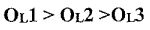
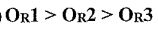
25. In the life cycle of λ phage, which description for the binding ability of cro is correct? (A) (B) (C) (D)
26. Pre-miRNA can be digested into mature miRNA by? (A) Dicer (B) Argonaute (C) DGCR8/ Pasha (D) Slicer
27. In the processing of precursor rRNA, which small RNA is necessary: (A) snRNA (B) snoRNA (C) IncRNA (D) miRNA
28. Which enzyme does NOT involved in RNA editing? (A) endo-nuclease (B) exo-nuclease (C) Terminal Uuridylyl Transferase (TUTase) (D) RNA triphosphatase
29. The protein-protein interaction can be detected by: (A) Far-western blot (B) Western blot (C) Northern blot (D) Southern blot
30. The topic for 2020 Nobel Prize in Physiology or Medicine is about: (A) HCV (B) CRISPR (C) oxygen availability (D) cancer immunotherapy
二、簡答題31. Name the two most common secondary structures of proteins.
32. What enzyme removes excessive supercoiling ahead of the replication fork?
33. Name two types of histone modification.
34. Name two molecules that are involved in mismatch repair.
35. Name two types of DNA damages.
36. Please explain the Wobble concept.
37. The small RNA that is required for mRNA splicing.
38. The two types for transcriptional termination in prokaryote.
39. What are the three components of translational complex eIF4F?
40. Please explain the function(s) of piwiRNA.
三.問答題:41. Please describe the molecular mechanism of the initiation process during E. coli DNA replication.
42. Please describe the molecular process (including all the molecules involved) of homologous recombination in E. coli.
43. Please describe the model , RNA sequence , and protein(s) that are required for transcriptional termination in eukaryote, respectively.
44. Please describe the protocol and application of CHIP (chromatin immunoprecipitation).
 阿摩線上測驗
登入
 (B)
 (C)
 (D)