所屬科目:清大◆化工◆輸送現象及單元操作
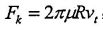
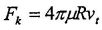
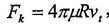
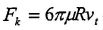
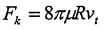
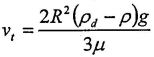
1. The outbreak of coronavirus disease 2019 (COVID-19) has caused a global pandemic and significant impact on society, economy, and human life. To combat the virus, wearing the mask and keep a safe social distance can help prevent the spread of COVID-19. However, it was still broadly debated regarding "what is the safe social distance". Some studies recommended that at least 2 m of physical distance should be kept from others, while others suggested that 2 m may not be adequate. To answer this question, it is vital to fully understand the mechanism of virus spreading. The respiratory infections occur usually through the transmission of virus-containing droplets and aerosols exhaled from infected individuals during breathing, speaking, coughing, and sneezing. Therefore, we can assume the spreading of the droplet is similar to a falling particle in the air. Please identify the kinetic force (F.) acting on the droplet. Assume u is the dynamic viscosity of airflow, R is the radius of the droplet, n is the falling (terminal) velocity. (A) (B)(C)(D) (E)
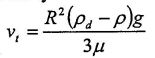
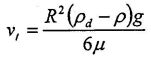
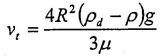
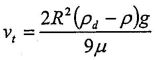
2. Please obtain the falling velocity of the droplet. [Hint] Use the force balance of gravity force, buoyance force, and kinetic force. pu is the density of the droplet and p is the density of the air. (A) (B) (C) (D) (E)
3. Assume the diameter, density, viscosity of the droplet is 5 um, 0.997 g/cm3, and kg/m s, respectively. The density of the air is 1.184 kg/m3 and gravity is 9.8 m/s2. If the initial height of the droplet is set as 1.5 m, please calculate the falling time of the droplet. Choose the closest answer. (A) l min, (B) 2 min, (C) 10 min, (D) 30 min, (E) 60 min
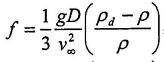
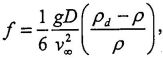
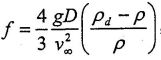
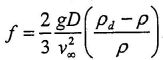
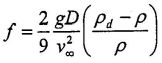
5. As we know, the falling velocity of the particle can also be determined by introducing the friction factor fconcept when we assume kinetic force F& = AKf. A is a characteristic area and K is a characteristic kinetic energy. D is the diameter of the particle. Please identify the correct answer. (A) (B) (C) (D)(E)
6. If we try to introduce the kinetic force Ft from question I, the correlation between fand Re can be: 24 32 (A)(B) (C) (D) (E)
14. For flow of a binary gas mixture over a flat plate, boundary layers of velocity and concentration develop. Which of the following statements concerning the thicknesses of the velocity (δ) and concentration boundary layers is true? (A) (B) (C) (D) none of the above
15. Consider a spherical particle A of radius R dissolving in a stagnant liquid B. Once dissolved, A and B react to form C with an irreversible first-order reaction reaction rate constant k). The solubility of A in B, CAo, is small and the system can be approximated as a dilute binary system. The diffusivity of A in B is DAB. The system can be treated as in a pseudo-steady state. Let b2 denote (k,R/DAB). What is the molar flux of A at the particle surface? (A) (B) (C) (D)
16. Continued from the above problem, what is dmaldr? (-molecular weight of A, ma-mass of particle (A) (B) (C) (D)
17. Consider the absorption of gas A by a laminar falling film of liquid B. Gas A is onlyslightly soluble in B, and the diffusion takes place so slowly in the liquid film that Awill not penetrate very far into B. The concentration of A at the interface is maintainedat CAo and the maximum velocity of the fluid is Vmar. Let x be the coordinate into theliquid film, z the coordinate down the liquid film, and DAB the mass diffusivity of A inB. The molar concentration of A, CA, is a function of x and z. Which of the followingstatements is true?(A) CA increases with increasing x.(B) CA decreases with increasing z.(C) CA increases with decreasing at fixed x and z.(D) CA decreases with increasing at fixed x and z.
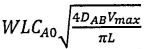
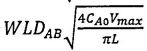
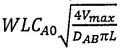
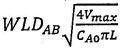
18. Continued from the above problem, what is the molar absorption rate of A at the gas/iquid interface? Here, W and L are the width and length of the liquid film exposed to gas A. (A) (B) (C) (D)
19. The equation of continuity of A in a dilute binary solution can be written asHere, is the mass average velocity and is the molar reaction rate of A. For thesituation of pure diffusion in solids, what will the above equation be reduced to?(A) (B)(C)(D)
(a) Calculate the membrane coefficient,.
(c) Calculate the flux, (kg mol/m2-s). The area required (m2) for'a transfer rate of 0.001 kg mol of A/s.
(d) By increasing the mixing intensity of both liquid phases, we manage to increase the mass coefficients to double their current values. What will be the percent increase in NA?
 阿摩線上測驗
登入
 (B)
 (C)
 (D)
 (E)
 (B)
 (C)
 (D)
 (E)
 kg/m s, respectively. The density of the air is 1.184 kg/m3 and gravity is 9.8 m/s2. If the initial height of the droplet is set as 1.5 m, please calculate the falling time of the droplet. Choose the closest answer. (A) l min, (B) 2 min, (C) 10 min, (D) 30 min, (E) 60 min
 (B)
 (C)
 (D)
 (E)
 (B)
 (C)
 (D)
 (E)

 boundary layers is true? (A)
 (B)
 (C)
 (D) none of the above
 (B)
 (C)
 (D)

 -molecular weight of A, ma-mass of particle (A)
 (B)
 (C)
 (D)

 at fixed x and z.
 at fixed x and z.
 (B)
 (C)
 (D)
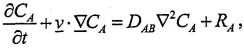
 is the mass average velocity and
 is the molar reaction rate of A. For the

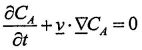
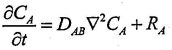
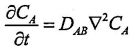
 .
 (kg mol/m2-s). The area required (m2) for'a transfer rate of 0.001 kg mol of A/s.
 to double their current values. What will be the percent increase in NA?
 If the breakthrough concentration is 0.05 mg/ml, what is the fraction capacity used at break point?