所屬科目:研究所、轉學考(插大)◆財務管理與財金數學
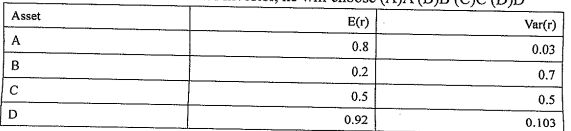
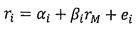
(1) (3 points) Please calculate the mean and variance of the stock index return and mean return for asset B. We run the following regression for each asset.
(2) (2 points) Please find out the estimates of αi and βi for Asset A
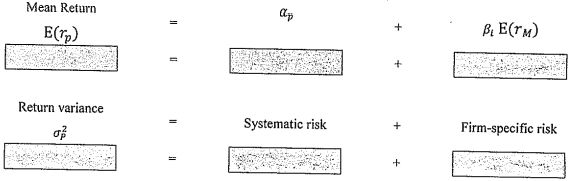
(3) (4 points) A Single Index Model (SIM) specifies two sources of uncertainty for a security's 21.078 return: Systematic risk and firm-specific risk Return variance Systematic risk Firm-specific risk
(4) (6 points) Now assuming a portfolio with weights for asset A and asset B are 0.7 and 0.3. Plcase find out E(rp) and .
(2) (1.5 point) The payoff to equity investors, on liquidation, can therefore be written as: Payofwhere, V = Value of the firm D = Facc Value of the outstanding debt and other external Please draw a figure of the payoff to equity investors (Y-axis) and the firr value (X-axis).
(3) (1.5 point) The payoff to equity investors, on liquidation, can therefore be written as: Payoffwhere, V = Value of the firm D = Face Value of the outstanding debt and other external Piease draw a figure of the payoff to debt investors (Y-axis) and the firm value (X-axis)
(4) The relationship between equity/debt and firm value can be described by the following assets, call option, put option, and pure bond. Please fill in the correct position (long, short, or NO) for an investor to take to desctribe the relation between equity/debt and firm value. (3 points) Please explain tour reasons. (2 points) Put option
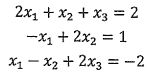
第二部分:財金數學 1. (5 points) Consider the system of following questions
where x1, x2, x3 are unknown. Please use the matrix-vector product to express the 3 x 3 linear system
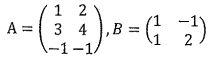
3. (5 points) Please find a matrix C solution so that (BC)T - A = 0, where
(2) (10 points) Note that the investment return, defined as the ratio of marginal benefit to marginal cost of investment, is equal to the firm's stock return (rl) under equilibrium. Please show that
(3) (10 points) Please derive expected excess return:, which is a function of the covariance between the operating profit at t = 1 of firm y and the aggregate productivity shock.
 阿摩線上測驗
登入
阿摩線上測驗
登入
 Based on NPV, which project would you choose if the opportunity cost of capital is 12%? (A) A,
(B) B, (C)the same, (D)cannot be decided.
 We run the following regression for each asset.


 .



 where x1, x2, x3 are unknown. Please use the matrix-vector product to express the 3 x 3 linear system
 , defined as the ratio of marginal benefit to marginal cost of investment, is equal to the firm's stock return (rl) under equilibrium. Please show that

 , which is a function of the covariance between the operating profit at t = 1 of firm y and the aggregate productivity shock.