所屬科目:駕照◆機車法規(英文)
1. The height of items carried on a motorcycle must not exceed the driver's (A)head (B) shoulder (C) waist.
2. The width of items carried on a motorcycle must not exceed ________ beyond the outer edge of the handlebars. (A) 10 cm (B) 2meters (C) 1.5 meters
3. For heavy motorcycles, the weight of items carried must not exceed (A) 50 kg(B) 80 kg (C) 90 kg.
4.The length of items carried on a motorcycle, extending beyond the rear of thevehicle measured from the rear axle, must not exceed (A) 0.5 meters (B) 1meter (C) 3 meters.
5. For standard light motorcycles, the weight limit for carried items is (A) 40 kg(B) 50 kg (C) 20 kg.
6.Regarding regulations for carrying items on a motorcycle, which of thefollowing is incorrect? (A) It is allowed to carry items higher than the rider'sshoulder. (B) The width shall not exceed 10 cm beyond the outer edge of thehandlebars. (C) The portion extending beyond the rear of the vehicle shall notexceed 50 cm from the rear wheel axle.
7.Regarding carrying passengers or items on a motorcycle, which of thefollowing is incorrect? (A) Small and light motorcycles are not allowed to carrypassengers; heavy and ordinary light motorcycles may carry one passenger ifthere is a fixed seat behind the driver. (B) When carrying a passenger, noadditional items may be carried. (C) Passengers may sit sideways.
8.Regarding the principles of carrying passengers on a motorcycle, which of the following is incorrect? (A) Passengers are not allowed to sit sideways. (B)Ordinary light motorcycles are not allowed to carry passengers. (C) Heavymotorcycles are limited to carrying one passenger.
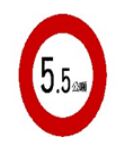
9.
(A) Vehicle gross weight limit (B) Vehicle load capacity limit (C) Vehicle curbweight
10.Regarding cargo carried on a motorcycle, which of the following lengthregulations is correct? (A) Cargo must not extend forward beyond the rear ofthe seat. (B) Cargo must not extend forward more than 1 meter from the rearof the seat. (C) Cargo must not extend forward more than 20 centimeters fromthe rear of the seat.
11.When cargo carried on a motorcycle extends beyond the rear of the vehicle,what is the maximum allowable length? (A) Measured from the rear wheelaxle, it must not exceed 0.5 meter. (B) Measured from the rear wheel axle, itmust not exceed 1 meter. (C) Measured from the rear of the vehicle (vehiclebody), it must not extend more than 0.5 meter.
12.What are the regulations regarding the length of cargo carried on amotorcycle, measured from the rear of the seat? (A) It must not extendforward. (B) It may extend forward, but must not go beyond the handlebars.(C) There are no relevant restrictions.
13.When carrying cargo on a motorcycle, what is the maximum width allowed forthe load? (A) It must not exceed 10 centimeters beyond the outer edge of thehandlebars. (B) It must not exceed 15 centimeters beyond the outer edge ofthe handlebars. (C) It must not exceed the width of the motorcycle handlebars.
14. When transporting cargo on a motorcycle, which of the following statementsregarding loading regulations is correct? (A) If the cargo is securely fastenedwith ropes and does not block the rear lights, it is not subject to sizerestrictions. (B) If the cargo width does not exceed the handlebars and theweight is within the rider's controllable range, it complies with regulations. (C)Cargo must comply with the legally prescribed limits for width, length, height,and weight, and overloading is prohibited.
15.When carrying passengers or cargo on a motorcycle, which of the followingregulations is correct? (A) Small light motorcycles, heavy motorcycles, andregular light motorcycles may carry one passenger if there is a fixed seatbehind the rider. (B) For cargo loading: small light motorcycles must notexceed 30 kg; regular light motorcycles must not exceed 60 kg; heavymotorcycles must not exceed 90 kg. (C) After carrying a passenger, noadditional cargo may be carried. However, small items that do not affect thesafety of the rider or passenger are exempt.
16.If a motorcycle violates the regulations when carrying passengers or cargo,who will be penalized? (A) The passenger. (B) The motorcycle rider. (C) Boththe motorcycle rider and the passenger.
17.If a motorcycle carries passengers or cargo in violation of regulations, what amount of fine will be imposed on the rider? (A) A fine of NT$300 to NT$600(B) A fine of NT$600 to NT$1,200 (C) A fine of NT$1,200 to NT$2,400
18.For an unconscious fracture victim in a traffic accident, (A) unless in anemergency, do not move them arbitrarily (B) before moving the victim, firstaddress breathing difficulties, bleeding, fractures, etc. (C) both of the above
19. When a victim is in shock during a traffic accident, their facial color appears(A) pale (B) lead-gray (C) flushed
20.When an accident occurs ahead and the police are already on the scene,what is the best course of action? (A) Stop by the roadside to watch (B) Detourand leave; do not stay out of curiosity (C) Stay to help and check in on socialmedia
21. The higher the speed, the parking distance is: (A) unchanged (B) shorter (C)longer.
22.If fuel catches fire, you should immediately: (A) extinguish it with water (B) usea fire extinguisher and mud or cover it with a wet blanket or clothing to put outthe fire (C) use nearby tree branches to extinguish it.
23.When a traffic accident occurs, the parties involved should try to find at the scene: (A) relatives or friends (B) eyewitnesses (C) legal professionals toassist in clarifying the case.
24. When driving down hill: (A) you may turn off the ignition and coast in neutral (B)you must not turn off the engine and coast in neutral (C) there is no regulation.
25. Which of the following places are high-risk areas where parking should be avoided? (A) road surfaces with falling small stones (B) areas with rockfallprotection fences or roadside guardrails that are damaged or deformed fromimpact (C) all of the above.
26.When a driver causes injury or death to others in a car accident, they mustimmediately take rescue measures and handle the situation according toregulations, and notify the police to handle it. They must not arbitrarily movethe accident vehicle or any evidence at the scene. Violators (A) shall be fined(B) vehicle confiscation (C) recorded with one violation.
27.Which of the following refers to a road traffic accident causing injury or death while operating on the road? (A) Vehicles (B) Powered machinery (C) Both ofthe above.
28.Which of the following is NOT considered a major road traffic accident? (A)Number of deaths is 3 or more (B) Number of deaths and injuries is 10 ormore (C) Number of injuries is less than 14.
29.Which of the following is considered a major traffic accident? (A) Number ofdeaths is 3 or more, or number of deaths and injuries is 10 or more, ornumber of injuries is 15 or more (B) Accidents involving transportation ofhazardous materials resulting in explosion, fire, or leakage of toxic liquid, gas,or radioactive substances (C) Both of the above.
30.When a driver causes an accident with no injuries or deaths and the motorcycle is still operable, they should first (A) wait for the police to arriveand handle the situation (B) mark the vehicle's position and quickly move it tothe roadside (C) notify the insurance company.
31.After marking the positions of relevant evidence on the ground following an accident, under which of the following circumstances should the vehicle beimmediately moved to the roadside to avoid obstructing traffic? (A) Minoraccident with no injuries or fatalities (B) Someone seriously injured (C)Someone deceased.
32.If a motorcyclist causes an accident with no injuries or fatalities and themotorcycle is still operable but fails to promptly mark and move the vehicle tothe roadside, thereby obstructing traffic, the penalty is (A) impoundment of themotorcycle (B) fine (C) license plate suspension.
33.Regarding right-of-way responsibility during an accident, which of the following is correct? (A) The vehicle going straight must yield to the turningvehicle (B) The vehicle arriving at the intersection first has the right of way (C)The turning vehicle must yield to the vehicle going straight.
34.Basic first aid knowledge for stopped breathing and heartbeat: When ensuringan open airway, the check for breathing should not exceed (A) 5 seconds (B)10 seconds (C) 30 seconds.
35. During CPR (cardiopulmonary resuscitation), the ratio of chest compressionsto rescue breaths for adults is (A) 30:2 (B) 15:2 (C) 5:1.
36.When it is confirmed that the casualty is unconscious, cardiopulmonaryresuscitation (CPR) should be performed. The approximate frequency ofchest compressions is (A) 18 times per minute (B) 72 times per minute (C) 100times per minute.
37.When an injured person is found to have an injury in which area, should you in form them and keep them from moving? (A) Neck (B) Spine (C) Both of theabove.
38.Maintaining an open airway is the primary task in first aid. However, if thecasualty has a cervical spine injury, which method is appropriate to maintainthe airway? (A) Jaw thrust maneuver (B) Head tilt-chin lift maneuver (C) Chinpress-forehead lift maneuver.
39.Which of the following is the correct position for external chest compressions?(A) Lateral edge of the sternum (B) Upper edge of the sternum (C) Center ofthe sternum along the line connecting both nipples.
40.Which of the following signs indicates that the individual has an airwayobstruction? (A) Holding the abdomen, bending over and continuously cryingout in pain (B) Grasping the neck and unable to speak (C) Pressing the chestand unable to speak.
41.In which of the following situations should the Heimlich maneuver beperformed? (A) When the patient is unconscious (B) When airway obstructionis suspected (C) When myocardial infarction is suspected.
42.When an injured person sustains heavy bleeding during an accident, which ofthe following first aid method is incorrect? (A)Determine the location of thebleeding, cut the clothes open, and then apply pressure to stop the bleeding(B)Use a tourniquet to stop bleeding and untie it every 15 to 20 minutes(C)Place the wounded area below the heart to reduce bleeding.
43.After how long of cardiac arrest must CPR (cardiopulmonary resuscitation) beperformed immediately to prevent irreversible brain damage? (A) Within 10 to15 minutes (B) Within 8 to 10 minutes (C) Within 4 to 6 minutes.
44.When performing the Heimlich maneuver, where should the hands beclenched into a fist and applied on the patient? (A) To the left of the navel (B)Below the navel (C) Midway between the navel and the sternum.
45. What is the priority action in first aid? (A) Position the head properly (B) Lightlytap the patient and assess consciousness (C) Listen for breath sounds.
46. What are the emergency treatment measures for chemical injuries? (A) Rinsethe affected area (B) Find a neutralizing agent (C) Remove clothing.
47.For bleeding in the leg caused by external trauma, which of the following measures is appropriate? (A) Do not use a tourniquet to prevent limb necrosis(B) Apply pressure on the wound to stop bleeding (C) Avoid elevating theinjured limb.
48.According to first aid principles, determine the correct order of emergency treatment: A. Stop bleeding B. Maintain airway patency C. Immobilizefracture. (A) A → B → C (B) B → C → A (C) B → A → C
49.Regarding carbon monoxide poisoning, which of the following statements is incorrect? (A) Gas leaks and exhaust fumes from car engines are causes ofcarbon monoxide poisoning (B) The patient's skin turns black (C) In case ofcarbon monoxide poisoning, the patient must be immediately moved out ofthe dangerous environment and given 100% oxygen inhalation.
50.Which of the following methods is NOT used to observe whether a patient isbreathing during CPR (cardiopulmonary resuscitation)? (A) Observe chestmovement (B) Feel for exhaled air (C) Check for carotid artery pulse.
 阿摩線上測驗
登入
 (A) Vehicle gross weight limit (B) Vehicle load capacity limit (C) Vehicle curbweight