所屬科目:研究所、轉學考(插大)◆生物化學
1. Phosphorylation is an important covalent modification of cellular proteins, which can regulate the activity of many proteins. Protein phosphorylation is mediated by protein kinases in the present of ATP/. If you want to -label a substrate protein by its upstream kinase, what kind of ATP should be used in the reaction? (A) (B) (C) (D)
2. Dialysis bag is usually used for concentrating proteins from diluted biological samples. The dialysis bag has different pore sizes, and choice of pore size of dialysis bag is dependent on the molecular weight of the protein to be concentrated. If you want to concentrate a protein having 50 amino acid residues, what pore size of dialysis bag can not be used? (A) 1000 (B) 2000 (C) 4000 (D) 8000
3. A synthetic peptide has the following amino acid sequence:
GYTVLKEEDFLSWRIMCQQNIGAR. If this peptide is digested completely by trypsin, how many fragments can be generated? (A) 1 (B) 2 (C) 3 (D) 4
4. What kind of solution is usually used to disrupt the cell membrane of mammalian cells? (A) Phosphate buffer saline (B) 0.1% EtBr (C) 0.1% Triton X-100 (D) 1% HCl
5. What kind of reagent is the most sensitive one to detect proteins resolved in SDS-gel? (A) Silver Nitrate (B) EtBr (C) Coomassie blue (D) Amido Black
6. "Catalytic antibody" is a kind of antibody with enzyme activity that can trigger the following reaction: A→B→C, where A, B and C represent reactant, intermediate and product, respectively. What is the antigen that is used to generate this "catalytic antibody"? (A) A (B) B (C) C (D) A+B+C
7. The structure of myoglobulin contains a protoporphyrin group, which is used to bind oxygen. Several important amino acid side chains are required to hold the protoporphyrin group and oxygen inside the myoglobulin. Please point out what is the amino acid side chain indicated by an arrow (see below) in this core structure?
(A) Tyr (B) Phe (C) His (D) Thr
8. Antibodies are important research tools in biomedical research. If you want to determine the molecular weight of a specific antigen, what kind of experiment is the most suitable one to get this information? (A) Northern Blot (B) Immunofluorescence (C) EMSA (D) Western Blot
9. Shown here is a sigmoid (cooperative) binding curve when hemoglobin binds oxygen in the presence of different pO2. Please calculate how may percentage of oxygen can be released from hemoglobin when the pO2 is reduced from 8 kPa to 2 kPa.
(A) 40% (B) 50% (C) 60% (D) 70%
10. In β-oxidation, long-chain fatty acids are activated to acyl-CoAs and the acyl group is further transferred to carnitine because: (A) Fatty acids can not be oxidized by acyl-CoA dehydrogenase unless they are in the acyl-carnitine form. (B) Acyl-CoAs easily cross the mitochondrial membrane, but the fatty acids themselves will not. (C) Carnitine is required to oxidize to NADH. (D) Acyl-carnitines readily cross the mitochondrial inner membrane, but acyl-CoAs do not.
11. Which of the following reactions of glycolysis is irreversible? (A) fructose 1,6-bisphosphate → dihydroxyacetone phosphate + glyceraldehyde 3-phosphate. (B) glucose 6-phosphate → fructose 6-phosphate. (C) fructose 6-phosphate → fructose 1,6-bisphosphate. (D) dihydroxyacetone phosphate → glyceraldehyde 3-phosphate.
12. Which of the following hormones initiates biological actions by crossing the plasma membrane and then binding to a receptor? (A) Insulin (B) Adrenocorticotropic hormone (C) Estradiol (D) Glucagon
13. Diacylglycerol activates which of the following enzymes? (A) Protein kinase A (B) Protein kinase C (C) Phosphorylase b kinase (D) Tyrosine kinase
14. Which of the following types of bonds or interactions are LEAST likely to be involved in stabilizing the three-dimensional folding of most proteins? (A) Disulfide bonds (B) Phosphodiester bonds (C) Hydrogen bonds (D) Hydrophobic interactions
15. Proteins are effective buffers over a wide range of pHs because they usually contain: (A) a large number of amino acids. (B) amino acid residues with different pKa values. (C) amino-terminal and carboxyl-terminal residues that can donate or accept protons. (D) a large number of hydrogen bonds in a-helices.
16. All of the following are true about heterotrimeric G proteins except: (A) They bind either GDT or GTP. (B) They phosphorylate proteins. (C) They have GTPase activity. (D) They help amplify a hormone's signal.
17. As you want to discover the biological importance and regulations of H2A, one of human histone protein, you might study the post-translational modification (PTM) of this protein. What techniques can be used for detection and identification of the PTM in H2A protein? (A) mass spectrometry-proteomics (B) western blot (C) radioactive isotope labeling (D) all of these techniques can be used for PTM analysis
18. Fluorescence resonance energy transfer (FRET) analysis can provide information on: (A) gene transcription (B) enzyme cascades (C) protein-protein interaction (D) gated ion channels
19. Which of the following statements about allosteric effectors is correct? (A) typically bind to the enzyme's active site (B) typically bind at a site unique from the active site (C) bind to the substrate rather than the enzyme (D) only bind to the enzyme-substrate complex
20. What happens when a protein is denatured? (A) its primary structure is disrupted but its tertiary structure remains intact (B) its secondary structure is disrupted but its primary structure remains intact (C) it becomes a-helix and β-sheet (D) it becomes all a-helix
21. The biological function of adhesion receptor is major in: (A) cell cycle regulation (B) protein translation (C) cellular mobility (D) open the ion channel
22. A student prepared two trypsin solutions in plastic micro-centrifuge tubes (0.6 mL Eppendorf tube): 1 µg/µL and 1 ng/µL, respectively. He kept the solutions on ice and took small aliquots for activity assay at various time points. He found that the activities of both solutions dropped significantly over time. What reasons may cause the decay of enzyme activity? (A) 1 µg/µL: autolysis, 1 ng/µL: adsorption (B) 1 µg/µL: adsorption, 1 ng/µL: autolysis (C) 1 µg/µL: cleaved by other contaminated proteases, 1 ng/µL: autolysis (D) 1 µg/µL: autolysis, 1 ng/µL: cleaved by other contaminated proteases
23. One-carbon transfer reactions usually involve in the biosynthesis of nitrogen containing biomolecules. Which of the following biosynthesis reactions does not involve one-carbon transfer? (A) serine → glycine (B) methionine → homocysteine (C) dUMP → dTMP (D) UTP → CTP
24. Which of the following ingredients in the beverages may encourage a greater thirst and need for water when running the marathon? (A) carbohydrates (B) amino acids (C) vitamins (D) pure water
25. Which two amino acids participate in the urea cycle directly? (A) arginine and aspartate (B) aspartate and alanine (C) alanine and glutmate (D) asparagine and arginine
26. D-amino acids exist in various kinds of foods and cannot be used for protein synthesis in humans. What enzyme is responsible for catabolizing these D-amino acids in humans? What L-amino acid may also be a substrate for this enzyme? (A) D-amino acid dehydrogenase, glutamate (B) D-amino acid transaminase, glycine (C) D-amino acid reductase, glutamate (D) D-amino acid oxidase, glycine
27. Which of the following is true of glycogen synthesis and breakdown? (A) Phosphorylation activates the enzyme responsible for breakdown, and inactivates the synthetic enzyme. (B) Synthesis is catalyzed by the same enzyme that catalyzes breakdown. (C) The glycogen molecule "grows" at its reducing end. (D) The immediate product of glycogen breakdown is free glucose.
28. Which of the following is not true for the pentose phosphate pathway? (A) It provides NADH for biosynthesis and detoxication. (B) It produces ribose-5-phosphate. (C) It operates mostly in the liver and adipose cells. (D) Deficiency in glucose-6-phosphate dehydrogenase can cause 蠶豆症.
29. In the pathway for the conversion of propionyl CoA to a TCA cycle intermediate, all of the following are true except? (A) Acetyl CoA is the product (B) Methylmalonyl CoA is an intermediate (C) CO2 is added to propionyl CoA in a reaction that requires biotin (D) Coenzyme is used
30. The role of hormone-sensitive triacylglycerol lipase is to (A) Hydrolyze lipids stored in the liver (B) Hydrolyze membrane phospholipids in hormone-producing cells (C) Hydrolyze triacylglycerols stored in adipose tissue (D) Synthesize triacylglycerols in adipose tissue
31. Which of these is able to cross the inner mitochondrial membrane? (A) Acetyl CoA (B) Fatty acyl-carnitine (C) Fatty acyl-CoA (D) Malonyl CoA
32. The rate-limiting step in fatty acids synthesis is? (A) condensation of acetyl-CoA and malonyl-coA (B) formation of acetyl-CoA from acetate (C) formation of malonyl-CoA from malonate and coenzyme A (D) the reaction catalyzed by acetyl-CoA carboxylase
33. Which of these statements about cholesterol synthesis is true? (A) Cholesterol is the only known natural product whose biosynthesis involves isoprene units (B) Only half of the carbon atoms of cholesterol are derived from acetate (C) High insulin stimulates HMG-CoA reductase (D) The activated intermediates in the pathway are CDP-derivates
34. All glycerol-containing phospholipids are synthesized from? (A) cardiolipin (B) ceramide (C) mevalonate (D) phosphatidic acid
35. Fatty liver means (which) is accumulated in the liver? (A) Cholesterol (B) Phospholipids (C) Triacylglycerols (D) Sphingolipids
36. What is the advantage of adding SDS to gel electrophoresis? (A) SDS colors the proteins for visualization. (B) SDS reduces disulfide bonds. (C) SDS allows proteins to be separated on the basis of approximate mass. (D) None of the above.
37. What two properties of water are important for biological interactions: (A) the polarity of water (B) the density of water (C) the cohesive properties of water (D) A and C
38. "Footprinting" or DNase protection is a technique used to identify: (A) a region of DNA that has been damaged by mutation. (B) the position of a particular gene of a chromosome. (C) the position of internally double-stranded regions in a single-stranded DNA molecule. (D) the specific binding site of a repressor, polymerase, or other protein on the DNA.
39. Which of the following amino acid sequences could not be phosphorylated by a protein kinase? (A) Thr - Arg - Phe - Met (B) Gly - Thr - Leu - Ser (C) Asp - Pro - Cys - Tyr (D) Lys - Glu - Ala - Phe
40. Why is p53 considered a tumor suppressor? (A) Because it reduces the mutation rate of DNA polymerase (B) Because it causes progression from G1 to S phase to halt until damaged DNA is fully repaired (C) Because it stimulates transcription of Repair Polymerase (D) Because it repairs breaks in DNA
41. Which of the following statements about eukaryotic DNA is not correct? (A) The methylation of CpG islands can alter pattern of gene expression. (B) Eukaryotic DNA is wrapped around histones to form peroxisomes. (C) The eight histones in the core are arranged into a (H3)2(H4)2 tetramer and a pair of H2A-H2B dimers. (D) Regions adjacent to genes that are being actively transcribed are more sensitive to DNasel cleavage than are other sites in the genome, suggesting that the control of gene expression requires chromatin remodeling.
42. If you want to design an experimental strategy for switching off the expression of a specific mRNA without changing the gene encoding the protein or the gene's control elements, what will you do? (A) Add proteinase K to remove elongation factor Tu (EF-Tu). (B) Design an RT-PCR experiment for mRNAs. (C) Design an antisense RNA molecular with complementary sequence. (D) Use ribonuclease to remove mRNAs.
43. The fluidity of the lipid side chains in the interior of a bilayer is generally increased by: (A) a decrease in temperature. (B) an increase in fatty acyl chain length. (C) an increase in the number of double bonds in fatty acids. (D) the binding of water to the fatty acyl side chains.
44. Isoelectric focusing separates proteins on the basis of (A) charge density. (B) size. (C) SDS binding. (D) isoelectric point.
45. The key property of the stacking gel is (A) low (4%) acrylamide concentration. (B) presence of a zwitterionic buffer. (C) pH several units lower than pKa of glycine (D) all of the above
46. Statistical treatments of plotted data seek to minimize (A) the sum of deviations of actual points from the best line through the points. (B) the sum of squares of deviations of actual points from the best line through them. (C) the intercept of the best line through the points. (D) the variation of slope of lines from the origin through the points.
47. The pK1 of H2CO3 is 6.1, the pK2 is 10.6, and the pKa of is 9.3. The pH of 1 M NH4HCO3 is approximately (A) 10 (B) 9.3 (C) 7.7 (D) 6.1
48. Which of the following is not an advantage of the Coomassie Blue method? (A) speed (B) sensitivity (C) lack of interference (D) low background
49. In Sanger (enzymatic extension) sequencing, what causes DNA synthesis to terminate at a specific base? (A) Chemicals that cleave DNA after particular bases. (B) Fluorescent chemicals. (C) Nucleotide triphosphates that lack a base. (D) Nucleotide triphosphates that lack a hydroxyl.
50. Which one of the following statements is wrong about the ubquitin-proteasome system? (A) Ubiquitin is conjugated to the polypeptide by covalent bonds. (B) Proteasomes are only located in the cytoplasm. (C) Ubiquitination is an ATP-dependent process. (D) Proteasome can only degrade the proteins that are poly-ubiquitinated.
 阿摩線上測驗
登入
 . If you want to
 -label a substrate protein by its upstream kinase, what kind of ATP should be used in the reaction? (A)
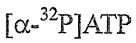 (B)
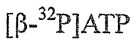 (C)
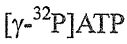 (D)
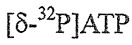
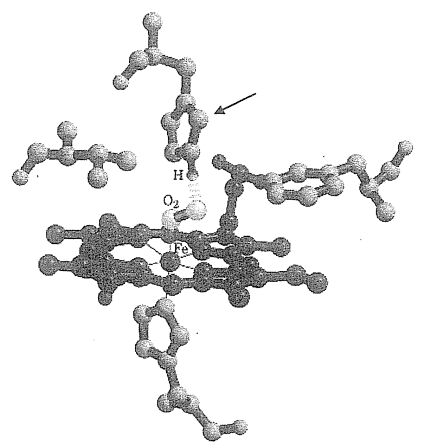 (A) Tyr (B) Phe (C) His (D) Thr
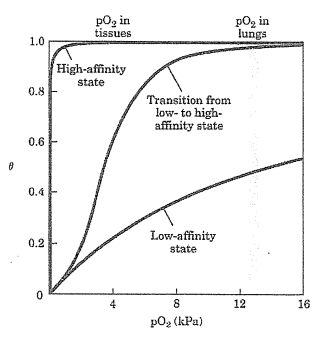 (A) 40% (B) 50% (C) 60% (D) 70%
 to NADH. (D) Acyl-carnitines readily cross the mitochondrial inner membrane, but acyl-CoAs do not.
 is used
 is 9.3. The pH of 1 M NH4HCO3 is approximately (A) 10 (B) 9.3 (C) 7.7 (D) 6.1