所屬科目:研究所、轉學考(插大)◆生物化學
1. Except for ________________, all other amino acids commonly are found in proteins possess tetrahedral structure: (A) Methionine (B) Cysteine (C) Histidine (D) Serine (E) Proline.
2. What is the pH of glutamic acid residue in which the alpha carboxyl (pKa 2.0) is one-fourth dissociated? (log2=0.3, log 3=0.48) (A) 1.6 (B) 1.4 (C) 1.52 (D) 2.48 (Ε) 2.0.
3. What is the post-translational modification of "acetylation" (A)-NH2 (B)-CH3 (C)-CH2COO- (D)-COOH (E)-PO3.
4. Alpha helix and beta sheet are: (A) Primary structure (B) Secondary structure (C) Tertiary structure (D) Quaternary structure (E) Regular structure.
5. Which of the following residue is the amphipathic residue: (A) Tyr (B) Arg (C) Glu (D) Cys (E) Leu.
6. What is nonprotein part of glycoprotein (A) Metal (B) DNA (C) Carbohydrate group (D) Heme (E) Lipids.
7. Which of the following statements about ATP is NOT TRUE? (A) It is used for short-term energy in the cell. (B) It has two phosphoanhydride bonds. (C) The reason for the large -AG° values of hydrolysis reactions is due to destabilization of products. (D) ATP is usually complexed with Mg2+. (E) ATP is a kinetically stable molecule.
8. The plasma membrane is responsible for all EXCEPT: (A) energy transduction (B) exclusion of certain toxic ions and molecules (C) signal transduction (D) accumulation of cell nutrients (E) all are true.
9. Lipid bilayers differ from micelles in that micelles are: (A) self limiting structures (B) formed spontaneously (C) stable in aqueous solution (D) often transformed into vesicles (E) all are true.
10. Which of the following would be the most likely interaction between a peripheral membrane protein that contained a high lysine content and a membrane? (A) ionic interaction (B) hydrophobic interaction (C) hydrogen bonding (D) covalent bonding (E) both a and c.
11. The structure is that of? (A) sphingomyelin (B) platelet activating factor (PAF) (C) phosphatidylcholine (D) a cerebroside (E) phosphatidylethanolamine.
12. Urea contains one carbon, two nitrogens, one oxygen and 4 hydrogens. Where are the sources of the carbone and nitrogens? (A) carbamoyl phosphate and ornithine (B) bicarbonate and aspartate (C) carbamoyl phosphate and bicarbonate and ornithine (D) aspartate (E) None of the above.
13. Which of the following enzymes is responsible for the release of arachidonic acid from membrane phospholipids? (A) phospholipase A1 (B) phospholipase A2 (C) phospholipase B (D) phospholipase C (E) phospholipase D.
14. Which of the following sugars is an aldopentose? (A) galactose (B) ribulose (C) ribose (D) xylulose (E) mannose.
15. Which one is of thermodynamics property and which one is kinetics relevant? (A) I is thermodynamics property and II is kinetics relevant, (B) II is thermodynamics property and I is kinetics relevant, (C) Both are kinetics relevant, (D) The answer will depend on the temperature.
16. Which of the following is true regarding the Briggs and Haldane steady state assumption? (A) It is defined by the equation E + S = ES = E + P, (B) It states the rate of enzyme-substrate complex formation differs from the rate of enzyme-substrate disappearance, (C) The concentration of the enzyme-substrate complex reaches a constant value even in a dynamic system, (D) The enzyme-substrate complex will always dissociate to form E + P, (E) The total amount of enzyme is variable, depending on the amount of substrate available.
17. Because the enzymatic reaction rate is determined by the difference in energy between ES and , the tighter binding of the substrate, the the rate of reaction: (A) ; lower, (B) P; lower, (C) S; higher, (D); higher, (E) S; lower.
18. cAMP and cGMP are ____________________ with phosphate esterified as a cyclic ____________________ and are important as ____________________ of cellular metabolism. (A) nucleotides; phosphodiester; inhibitors, (B) nucleotides; phosphomonoesters, regulators, (C) nucleotides; phosphodiesters, regulators, (D) nucleosides; phosphomonoesters, stimulators, (E) all of the above.
19. All are catalytic mechanisms or factors that contribute to the performance of enzymes EXCEPT: (A) entropy gain in ES formation, (B) covalent catalysis, (C) general acid or base catalysis, (D) proximity and orientation, (E) all are true.
20. Because the is near 7, ____________________ side-chains are often involved in general acid-base catalysis: (A) cysteine, (B) aspartate, (C) glutamate, (D) lysine, (E) histidine.
21. Which statement below about contrasting Hb and Mb is FALSE? (A) Hb shows sigmoidal, whereas Mb shows hyperbolic oxygen saturation curves, (B) Hb shows cooperativity, whereas Mb does not, (C) Hb binds O2 more tightly than Mb, (D) Oxygen binds to a ferrous ion in both proteins, (E) Hb-oxygen binding is dependent on physiological changes in pH, whereas Mb-oxygen binding is not.
22. The major tissues carrying out gluconeogenesis are the ____ and ____. (A) brain; muscles, (B) muscles; kidneys, (C) liver; kidneys, (D) liver; red blood cells, (E) red blood cells; brain.
23. Insulin in the bloodstream is a response to increased blood glucose, and: (A) stimulates gluconeogenesis. (B) inhibits glycolysis. (C) stimulates glycogen synthesis in muscle and liver. (D) stimulates glycogen breakdown in liver. (E) inhibits phosphoprotein phosphatase-1.
24. Bile salts are important in the initial digestion of triacylglycerols in the intestine because they: (A) are coenzymes for pancreatic lipase. (B) convert the inactive lipase into the active form. (C) emulsify the triacylglycerol globules to produce greater surface area which will increase the activity of the lipase. (D) activate the cleavage at the C-2 position. (E) permit greater permeability of the triacylglycerols through the intestinal membrane.
25. The primary storage form of lipid is ____ and it is normally stored in the ____. (A) phospholipid; liver, (B) cholesterol; muscles, (C) monoacylglycerol; adipocytes, (D) triacylglycerols; adipocytes, (E) triacylglycerols; liver.
26. The product of β-oxidation, acetyl-CoA, can be used for all EXCEPT: (A) synthesis of ketone bodies, (B) synthesis of amino acids, (C) catabolism in the TCA cycle, (D) synthesis of glucose, (E) none of the above.
27. E. coli does NOT have any ____ fatty acids, plants can introduce double bonds into fatty acids between 9 and the ____ -end of the chain, while mammals can only introduce double bonds between 9 and the ____ -end of the chain. (A) saturated; carboxyl; methyl, (B) mono-unsaturated; carboxyl; methyl, (C) polyunsaturated; carboxyl; methyl, (D) polyunsaturated; methyl; carboxyl, (E) saturated; methyl; carboxyl.
28. An important mechanism of arachidonate release and eicosanoid synthesis involves ____ and ____. (A) insulin release; high blood sugar, (B) glucagon release; low blood sugar, (C) tissue injury; low blood sugar, (D) inflammation; tissue injury, (E) all are true.
29. Which stage of cellular respiration produces the most ATP? (A) Glycolysis, (B) Citric acid cycle, (C) Fermentation, (D) Mitochondrial electron transport, (E) Oxidative phosphorylation.
30. Which of the following enzymes is a multienzyme complex? (A) Hexokinase, (B) Phosphofructokinase, (C) Pyruvate dehydrogenase, (D) Aconitase, (E) Isocitrate dehydrogenase.
31. Which of the following is not a product of fermentation? (A) O2, (B) Ethanol, (C) Lactate, (D) CO2, (E) .
32. Citric acid cycle takes place in (A) cytoplasm, (B) mitochondria, (C) endoplasmic reticulum, (D) golgi body, (E) cell membrane.
33. Before entering citric acid cycle, pyruvate is converted to (A) citric acid, (B) acetate, (C) oxaloacetate, (D) acetyl-CoA, (E) lactate.
34. The pigments responsible for photosynthesis are located in (A) cell membranes, (B) thylakoid membranes, (C) chloroplast inner membranes, (D) cytoplasm, (E) stroma.
35. How many carbon atoms are in a molecule of xylulose? (A) 3, (B) 4, (C) 5, (D) 6, (E) 7.
36. The carbon skeletons of all of the amino acids below converge to pyruvate EXCEPT: (A) alanine, (B) serine, (C) cysteine, (D) glycine, (E) glutamate.
37. Herbicides (e.g., "Roundup") that inhibit biosynthesis of "essential" amino acids should be relatively safe for animal exposure because animals do not have enzymes of: (A) photosynthesis, (B) glyoxylate cycle, (C) glutamine synthesis pathway, (D) Phe, Val, Leu, Ile and His biosynthetic pathways, (E) none of above.
38. Glutamine synthetase (GS) belongs to what class of enzymes? (A) isomerases, (B) oxidoreductase, (C) ligase, (D) lyase, (E) transferase.
39. The coenzyme for two single carbon additions in purine biosynthesis is: (A) THF, (B) biotin, (C) SAM, (D) TPP, (E) none are true.
40. Which of the following is the mechanism of action of 5-fluorouracil? (A) competitive inhibitor of dihydrofolate reductase, (B) suicide substrate for thymidylate synthase, (C) competitive inhibitor of ribonucleotide reductase, (D) non-competitive inhibitor of thioredoxin reductase, (E) none are true.
1. Draw the reaction of peptide formation and list THREE characterizes of peptide bond. (10%)
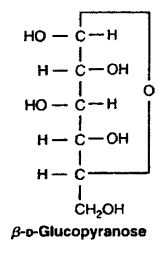
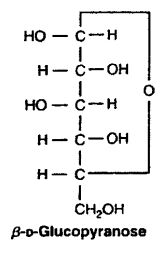
2.(A) Please draw the Haworth projection of this sugar. (5%)
(B) Iodine solution is used to test for starch. What color does iodine turn when it is in the presence of starch? Why? (5%)
(A) What kind of inhibition is this? Competitive, noncompetitive or uncompetitive (3%)
(B) How does the inhibitor interact with the enzyme and/or substrate? (3%)
(C) How do you design an experiment to determine K₁? (Hint: Consider the apparent Vmax, Vmax', is Vmax/(1+[I]/K₁) and then think how [I] is going to change Vmax) (4%).
4. Although epinephrine and glucagon both exert glycogenolytic effects, they do so for quite different reasons in physiology. Please describe the difference between epinephrine and glucagon. In addition, please compare the effect between epinephrine and glucagon in liver and muscle. State your discussion in glycolysis, gluconeogenesis, glycogen break down and glycogen synthesis. (10%)
5. Write down the full name of RUBISCO and the two reactions it catalyzes (10%)
(A) What is the salvage pathway of purine metabolism? (2%)
(B) What reactions (substrates & products) are involved? (2%)
(C)What is the key enzyme in response to this process? (2%)
(D) What disease is caused by the deficient of this key enzyme? (2%)
(E) What is the outcome of the disease? (2%)
 阿摩線上測驗
登入
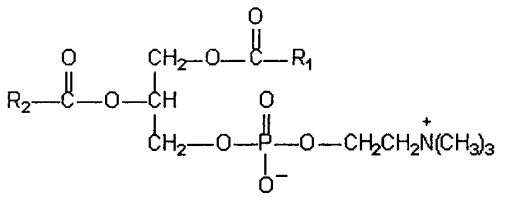 (A) sphingomyelin (B) platelet activating factor (PAF) (C) phosphatidylcholine (D) a cerebroside (E) phosphatidylethanolamine.
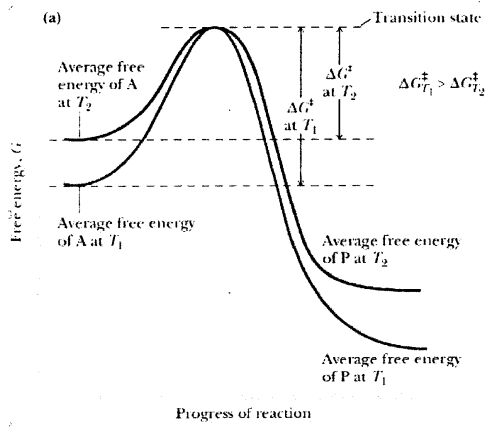 (A) I is thermodynamics property and II is kinetics relevant, (B) II is thermodynamics property and I is kinetics relevant, (C) Both are kinetics relevant, (D) The answer will depend on the temperature.
 ; lower, (B) P; lower, (C) S; higher, (D)
 ; higher, (E) S; lower.
 is near 7, ____________________ side-chains are often involved in general acid-base catalysis: (A) cysteine, (B) aspartate, (C) glutamate, (D) lysine, (E) histidine.
 .