所屬科目:研究所、轉學考(插大)◆生物化學
1. Osmosis is movement of a: (A) charged solute molecule (ion) across a membrane. (B) gas molecule across a membrane. (C) nonpolar solute molecule across a membrane. (D) polar solute molecule across a membrane. (E) water molecule across a membrane.
2. The uncommon amino acid selenocysteine has an R group with the structure -CH2-SeH ( ≈ 5). In an aqueous solution, pH = 7.0, selenocysteine would: (A) be a fully ionized zwitterion with no net charge. (B) be found in proteins as d-selenocysteine. (C) never be found in a protein. (D) be nonionic. (E) not be optically active.
3. In a mixture of the five proteins listed below, which should elute second in size-exclusion (gel- filtration) chromatography? (A) cytochrome c Mr = 13,000 (B) immunoglobulin G Mr = 145,000 (C) ribonuclease A Mr = 13,700 (D) RNA polymerase Mr = 450,000 (E) serum albumin Mr = 68,500
4. The PCR reaction mixture does not include: (A) all four deoxynucleoside triphosphates. (B) DNA containing the sequence to be amplified. (C) DNA ligase. (D) heat-stable DNA polymerase. (E) oligonucleotide primer(s).
5. A husband and wife are in the process of getting a divorce. Daring child-support hearings, the husband states that he should not pay child support as he feels that the child was actually fathered by one of the woman's various lovers. DNA restriction analysis was performed, with the results illustrated in the diagram below. The DNA of the husband in this case can be found in lane 3, whereas that of the suspected father is in lane 4. Based on this information, (A) the husband is definitely the child's father. (B) the husband is definitely not the child's father. (C) either man could be the father, and more tests are needed to discern paternity. (D) neither man in question is the child's biological father. (E) none of the above.
6. The DNA sequence of a coding strand is (5') CGCTATAGCGTTT(3'). Please select the following RNA transcript that corresponds to the above DNA. (A) (5')AAACGCUAUAGCG(3') (B) (5')CGCUAUAGCGUUU(3') (C) (5')UUUGCGAUAUCGC(3') (D) (5')GCGAUAUCGCAAA(3')
7. Please select the following RNA which is synthesized by DNA-dependent RNA polymerase I in eukaryotes. (A) 18S rRNA (B) microRNA (C) mRNA (D) tRNA (E) small nuclear RNA U1
8. Please select the following enzyme that does not possess reverse transcriptase activity. (A) Human immunodeficiency virus (HIV) polymerase (B) Human telomerase (C) Influenza virus polymerase (D) Hepatitis B virus polymerase
9. Please select the following codon for aspartic acid (Asp) that corresponds to the tRNA anticodon (5')GUC(3'). (A) (5')GUC(3') (B) (5')CAG(3') (C) (5')GAU(3') (D) (5')CUG(3')
10. Please select the following statement that is not correct for enhancers in eukaryotic transcription. (A) Work when located long distances from the promoter (B) Work when upstream or downstream (C) Work when orientation in one direction (D) Work through heterologous promoters (E) Work by binding one or more proteins
11. Phosphodiesterase could catalyze which of the following compound? (A) Glycogen (B) Phosphorylase (C) Hyalulonic acid (D) Phosphatidylinositol (E) Deoxyribonucleotide
12. NF-κB is a protein complex that controls DNA transcription. In unstimulated cells, the NF-κB dimers are sequestered in the cytoplasm by I-κBѕ. After TNF-α binding to its receptor, which of the following event after I-κB phosphorylation is important for NF-κB activation? (A) Deacetylation (B) Glycosylation (C) Hydroxylation (D) Ubiquitination (E) ADP-ribosylation
13. Integrin is a (an): (A) enzyme (B) receptor (C) chaperone (D) enzyme inhibitor (E) transcription factor
14. What is the receptor for LPS? (A) Leptin receptor (B) Toll-like receptor (C) Epinephrine receptor (D) Glucocorticoid receptor (E) Epidermal growth factor receptor
15. Which of the following description about LPS is wrong? (A) It contains lipid A moiety. (B) It is a negatively charged compound. (C) It could be dissolved in PBS, as an aqueous suspension. (D) It contains formylated peptides for white blood cell activation. (E) It contains repetitive glycan polymer, referred as the O antigen.
16. Which of the following reactions is catalyzed by a transferase? (A) A → P + Q (B) A + B → P + Q (C) A + ATP → P + ADP (D) A + NAD+ → P + NADH (E) A + H2O → P + Q
17. The reaction rate of an enzymatic reaction A + B → P + Q can be increase by 5-fold in the presence of compound X. X is best referred to as a(an) ____(A) prosthetic group (B) cofactor (C) allosteric effector (D) uncompetitive inhibitor (E) coenzyme
18. When saturated, a solution containing M of enzyme A can catalyze the breakdown of M of substrate per minute. The of enzyme A in is: (A) 0.01 (B) 0.02 (C) 0.05 (D) 0.1 (E) 0.2
19. Which of the following statements regarding competitive inhibitor is wrong? (A) It binds to the active site of the enzyme. (B) Its presence reduces the KM of the enzymatic reaction. (C) The of the enzymatic reaction is not affected. (D) Some drugs are competitive inhibitors of enzymes. (E) The of the enzymatic reaction is not affected.
20. To speed up chemical reaction, an enzyme usually reduces the activation energy by... (A) binding tightly to substrate (B) binding weakly to substrate (C) binding tightly to transition state (D) binding tightly to prosthetic group (E) binding weakly to product
21. Which one of the following enzymes converts adenosine to AMP? (A) aadenosine phosphoribosyl transferase (B) adenosine kinase (C) adenosine deaminase (D) all are wrong.
22. The synthesis of long-chain fatty acids is carried out by (A) acetyl-CoA carboxylase (B) fatty acids synthase (C) both are right (D) both are wrong.
23. Amino acids can be catabolized to intermediates for carbohydrate biosynthesis. Which one of the following reactions is WRONG? (A) Asparagine and aspartate form oxaloacetate (B) Glutamine and glutamate form α-ketoglutarate (C) Tyrosine and phenylalanine form fumarate (D) Proline, arginine and histidine form succinyl-CoA.
24. A defect in glucose-6-phosphatase may cause (A) von Gierke disease (B) Lesch-Nyhan Syndrome (C) Hypouricemia (D) Severe combined immunodeficiency disease.
25. Which one of the following methods can NOT be used to analyze gene expression? (A) Northern blot (B) Southern blot (C) Western blot (D) Quantitative real-time polymerase chain reaction.
26. The following description about selectin is not correct (A) a dependent binding ability for its ligands (B) a sugar binding protein (C) L-selectin is an endothelial cell specific selectin (D) Involved in leukocyte rolling on the endothelial cell layer (E) Ionic interaction is involved in the ligands and receptors recognition
27. Which enzyme is involved in the Trans Golgi oligosaccharides processing (A) Golgi apparatus alpha mannosidase I (B) N-acetyl glucosaminyl transferase (C) galatosyl transferase (D) Fucosyl transferase (E) Mannosyl transferase
28. which proteins is not the component for basal membrane (A) lamin (B) perlecan (C) type IV collagen (D) entactin (E) fibronectin
29. The cytoplasmic tail of which integrin interacts with intermediate filaments (A) α5β1 (B)α6β4 (C) α3β1 (D) α2β1 (Ε) α6β1
30. Which one is correct for the following descriptions about RNA polymerase (Pol). (A) RNA Pol I and III found and function in nucleoplasm (B) rRNA mainly synthesis by RNA Pol I in the nucleoplasm (C) tRNA and 5.8S RNA synthesized by RNA Pol III (D) snRNAs are synthesized by RNA Pol II (E) 5S RNA and U6 snRNA are synthesized by RNA Pol III
31. In human body, docosahexaenoic acid (DHA) can be synthesized from (A) oleic acid (B) linoleic acid (D) a-linolenic acid (E) arachidonic acid (C) y-linolenic acid
32. Which of the following are located on the cell membrane? (A) cholesteryl ester and phospholipid (B) cholesteryl ester and triacylglycerol (C) cholesterol and phospholipid (D) cholesterol and triacylglycerol (E) phospholipid and triacylglycerol
33. Which of the following carry more cholesterol in the blood of human? (A) VLDL (B) IDL (C) LDL (D) HDL (E) chylomicron
34. Which of the following is responsible for the release of free fatty acid from adipocyte? (A) HMG-CoA reductase (B) hormone sensitive lipase (C) lipoprotein lipase (D) pancreatic lipase (E) lysosomal lipase
35. Which following enzyme can be regulated by calcium ion? (A) phosphorylase (B) phosphorylase kinase (C) glycogen synthase (D) phosphofructokinase-1 (E) phosphofructokinase-2
36. Which enzyme can directly release a glucose from glycogen? (A) phosphorylase (B) glucan transferase (C) glycosidase (D) N-glycosyltransferase (E) debranching enzyme.
37. How many following situation can cause hypoglycemia? i. Glucose 6-phosphate dehydrogenase, ii. Damage of beta cells in pancreas, iii Fructose-1, 6-Bisphosphatase deficiency, iv. Impairment of fatty acid oxidation, v. Insulin increases glucose tolerance. (A) 1 (B) 2 (C) 3 (D) 4 (E) 5
38. Which compound is directly produced by fecal flora? (A) uroporphyrin (B) urobilin (C) uroporphyrinogen (D) urobilinogen (E) coproporphyrinogen.
39. Ornithine transcarbamoylase deficiency will cause (A) Hyperammonemia (B) Hypoammonemia (C) Citrullinemia (D) Hypoornithinemia (E) Hyperargininemia
40. Mutation in the ornithine permease that transports ornithine from cytosol to mitochondria for catabolism will cause (A) Hyperammonemia (B) Hyperornithinemia (C) Homocitrullinuria (D) Citrullinemia (E) Argininosuccinicaciduria
41. Which of the following statements are correct? (A) Alanine carries nitrogen wastes in the muscles to the liver for catabolism. (B) Alanine carries nitrogen wastes in the muscles to the intestine for catabolism. (C) Glutamine is the major nitrogen waste carrier of most tissues. (D) Compared to glutamine, glutamate carries one more nitrogen atom for catabolism. (E) It takes energy to produce urea.
42. As indicated in the figure below, the nitrogen atom of the amino acid glutamate was replaced with its isotope . In which of the following molecules can we find ? (A) (B) Carbamoyl phosphate (C) Ornithine (D) Citrulline (E) Aspartate
43. Which of the following enzyme does not take part in the TCA cycle? (A) Citrate synthase (B) Malate dehydrogenase (C) Aldolase (D) Aconitase (E) Fumarase
44. Which of the following substrates is NOT coupled to the production of NADH? (A) Malate (B) Pyruvate (C) alpha-Ketoglutarate (D) Succinate (E) glyceraldehyde 3-phosphate
45. During strenuous exercise, the most important reaction involved in the reoxidation of NADH is: (A) dihydroxyacetone phosphate ---> glycerol 3-phosphate (B) glucose 6-phosphate ---> fructose 6-phosphate (C) isocitrate ---> a-ketoglutarate (D) pyruvate ---> lactate (E) 2-phosphoglycerate ---> phosphoenolpyruvate
46. The conversion of 1 mol of fructose 1,6-biphosphate to 2 mol of pyruvate by the glycolytic pathway results in a net formation of: (A) 2 mol of NAD and 2 mol of ATP (B) 2 mol of NADH and 2 mol of ATP (C) 1 mol of NAD and 2 mol of ATP (D) 1 mol of NADH and 2 mol of ATP (E) 2 mol of NADH and 4 mol of ATP
47. α-Helix and β-strand are components of __ structure (A) primary (B) secondary (C) tertiary (D) quaternary (E) all are true
48. Which of the following levels of protein structure is correctly defined? (A) primary: interaction between subunits of a protein (B) secondary: hydrogen bond arrangement of polar R-groups (C) tertiary: three dimensional arrangement of all atoms in a single peptide (D) quaternary: order of amino acid residues in the peptide chain (E) none of the above are correct
49. Collagen is an example of a(n): (A) enzyme. (B) regulatory protein. (C) transport protein. (D) storage protein. (E) structural protein.
50. _____are proteins that help other proteins to fold. (A) Immunoglobulins (B) Phospholipases (C) Synthetases (D) Molecular chaperones (E) Proteases
 阿摩線上測驗
登入
 ≈ 5). In an aqueous solution, pH = 7.0, selenocysteine would: (A) be a fully ionized zwitterion with no net charge. (B) be found in proteins as d-selenocysteine. (C) never be found in a protein. (D) be nonionic. (E) not be optically active.
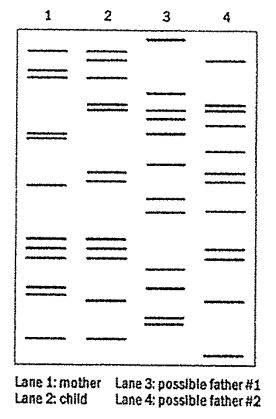 (A) the husband is definitely the child's father. (B) the husband is definitely not the child's father. (C) either man could be the father, and more tests are needed to discern paternity. (D) neither man in question is the child's biological father. (E) none of the above.
 M of enzyme A can catalyze the breakdown of
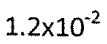 M of substrate per minute. The
 of enzyme A in
 is: (A) 0.01 (B) 0.02 (C) 0.05 (D) 0.1 (E) 0.2
 of the enzymatic reaction is not affected. (D) Some drugs are competitive inhibitors of enzymes. (E) The
 of the enzymatic reaction is not affected.
 dependent binding ability for its ligands (B) a sugar binding protein (C) L-selectin is an endothelial cell specific selectin (D) Involved in leukocyte rolling on the endothelial cell layer (E) Ionic interaction is involved in the ligands and receptors recognition
 of the amino acid glutamate was replaced with its isotope
 . In which of the following molecules can we find
 ?
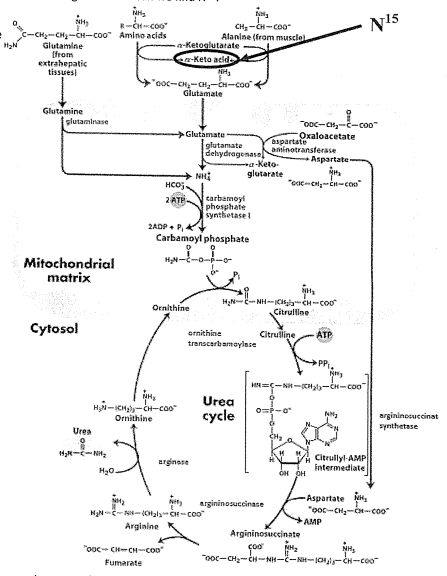 (A)
 (B) Carbamoyl phosphate (C) Ornithine (D) Citrulline (E) Aspartate