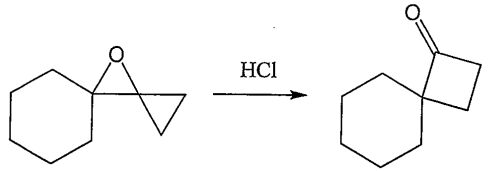
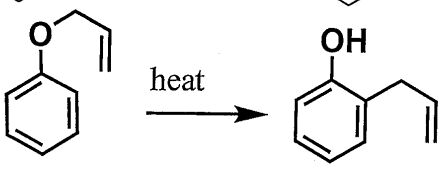
所屬科目:研究所、轉學考(插大)◆有機化學及無機化學
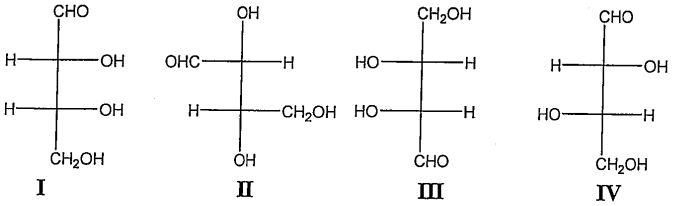
1. Which of the following sugars structure below give meso-product when treated with excess sodium borohydride (NaBH4)(A) I, II(B) I(C) I, III(D) II, IV(E) IV
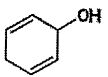
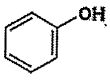
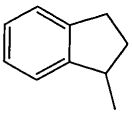
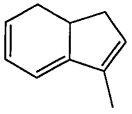
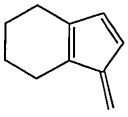
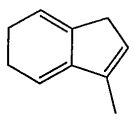
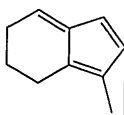
2. Which of the following structure is NOT a structural isomer of cyclohexanol(A) I, II(B) II, III(C) III, V(D) I, IV(E) None of the above
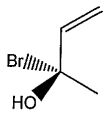
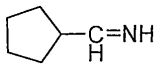
3. What is the name of the following compound?
(A) (S)-1-bromo-1-methyl-2-butenol(B) (S)-2-bromo-3-butene-2-ol(C) (S)-3-bromo-1-butene-3-ol(D) (R)-2-bromo-3-butene-2-ol(E) (R)-3-bromo-1-butene-3-ol
4. Which carbon of ( E ) hex-3-en-2-one has most downfield chemical shift in the 1H NMR spectrum?(A) C-1(B) C-2(C) C-3(D) C-4(E) C-5 and C-6
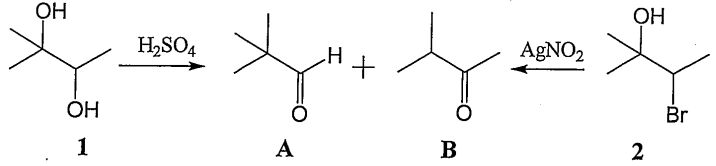
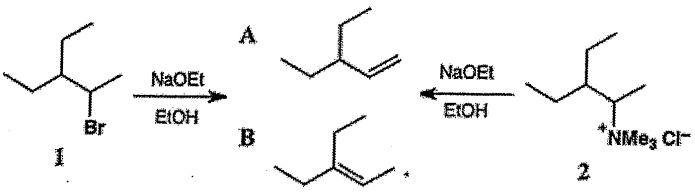
5. Which statement below is correct for the reaction compound 1and 2 below
(A) Both 1 and 2 give A(B) Both 1 and 2 give B(C) 1 gives A and 2 gives B(D) 1 gives B and 2 gives A(E) None of the product shown
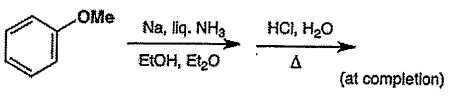
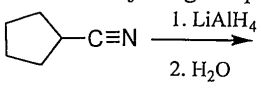
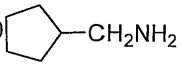
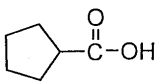
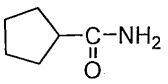
6. Which is the most likely product for this reaction sequence below:
(A)(B)(C)(D)(E)
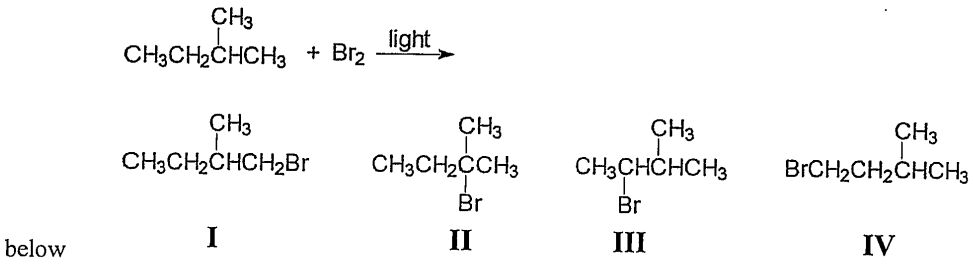
7. Which is the major product for the reaction:
(A) CH3CH2CHCH2Br with CH3 branch(B) CH3CH2CCH3 with CH3 branch and Br(C) CH3CHCHCH3 with CH3 branch and Br(D) BrCH2CH2CHCH3 with CH3 branch(E) I and IV
8. Device a series of reaction to convert benzene into 3-chlorobromobenzene by selective the regents given in an appropriate order
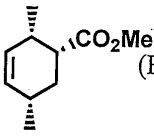
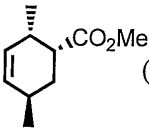
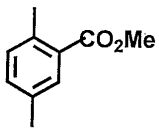
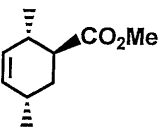
(A) 1 then 2 then 6(B) 2 then 8 then 4 then 3 then 9(C) 8 then 2 then 4 then 3 then 9(D) 8 then 4 then 10 then 2 then 3 then 9(E) 3 then 9 then 8 then 5 then 6
9. Which of the following isomeric hydrocarbons is most acidic?(A)(B)(C)(D)(E)
10. Which / What is the major organic product obtained from the following reaction?
11. Choose the best conditions to achieve the following stereospecific transformation:
(A) 1. Mg 2. CO2 3. H+(B) 1. KOtBu 2. HBR3 3. H2O2, NaOH(C) 1. NaOAc 2. H2O, H+(D) 1. KOH 2. PCC, H2O(E) 1. NaCN 2. KOH, H2O 3. H+, H2O
12. Which of the following statement is CORRECT for the reaction of compound 1 and 2 shown below:
(A) Compound 1 and 2 can both give A(B) Compound 1 and 2 can both give B(C) Compound 1 give A and 2 give B(D) Compound 1 give B and 2 give A(E) Compound 1 give B and 2 do not react
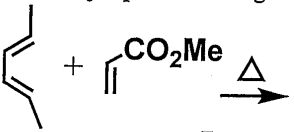
13. Give the major product during the 4+2 reaction below?
(A)(B) (C) (D)(E)
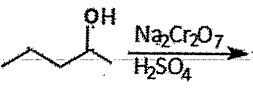
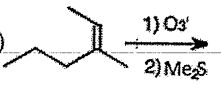
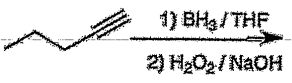
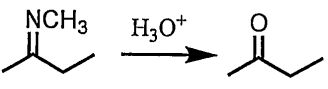
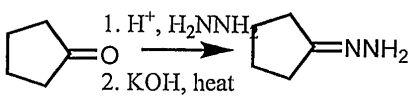
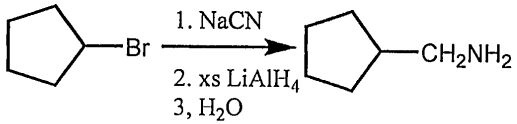
14. Which of the following reaction shown below give the WRONG product(A) (B) (C)(D)(E)
15. Which reaction CANNOT be used for the synthesis of pentan-2-one?(A) (B) (C)(D)(E)
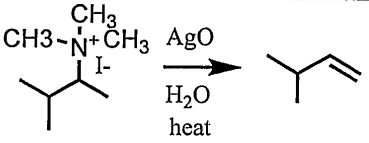
16. Which reaction below give the INCORRECT product for the reaction: Compound with NMe3 I- and AgO in H2O with heat gives alkene product(A) (B) (C) (D)(E)
17. Sodium chloride is a typical example of X structure. It has Y occupying octahedral holes and Z occupying tetrahedral holes.(A) X=face-centered cubic, Y=Na+ and Cl-, Z=none(B) X=body-centered cubic, Y=Na+, Z=Cl-(C) X=face-centered cubic, Y=Na+, Z=Cl-(D) X=body-centered cubic, Y=Cl-, Z=Na+(E) None of the above
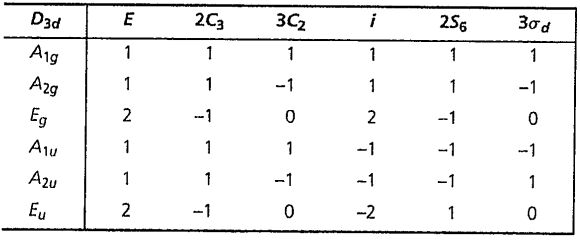
18. What is the symmetry of P2 orbital in D3d?
(A) Eu(B) A1g(C) A1u(D) A2u(E) A2g
19. The intense purple colors of KMnO4 is due to:(A) Ligand to metal charge transfer(B) Metal to ligand charge transfer(C) d-d transition(D) dipole-dipole interaction(E) None of the above
20. What is the most likely transition metal M in K3[M(CN)6] having LFSE=-1.2 Δ0?(A) Ni(B) Fe(C) V(D) Cr(E) Co
21. What is the predicted magnetic moment for [FeCl4]-?(A) 4.9 μB(B) 1.7 μB(C) 2.8 μB(D) 5.9 μB(E) 0 μB
22. Which complex below is expected to show Jahn-Teller distortion?(A) [Co(CO)6]3+(B) [Cr(CN)6]3-(C) [Mn(H2O)6]2+(D) [Fe(CO)6]2+(E) None of the above
23. In a cubic unit cell, what is the intersect angle between (100) and (110)?(A) 180°(B) 45°(C) 60°(D) 30°(E) 90°
24. In CaF2 crystal, Ca2+ ions have coordination number of X while F- ions have coordination number of Y.(A) X=6 and Y=4(B) X=8 and Y=4(C) X=4 and Y=4(D) X=8 and Y=8(E) X=6 and Y=6
25. Among the listed characteristics below, which one does not belong to ionic bonding?(A) Columbic forces(B) Brittle(C) Small difference in electronegativity between bonding pairs(D) Low conductivity in solid state(E) Large bond energy
26. Which of the following statement is correct?(A) Back bonding concerns the electron donation coming from ligands to metal and yielding sigma bond(B) HOMO has higher energy levels than LUMO in molecular orbital theory(C) Compared to Lewis structure, molecular orbital theory describes bonding electrons to be more delocalized(D) The larger radius ratios of cation to anion (Rcation/Ranion), the smaller coordination numbers observed in the crystal packing(E) None of the above
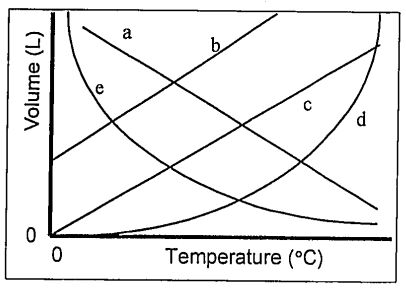
27. Which of the lines on the figure below is the best representation of the relationship between the volume of a gas and its Celsius temperature, other factors remaining constant?(A) Line a(B) Line b(C) Line c(D) Line d(E) None of the above
28. What is the point group of PCl5?(A) C4v(B) D5h(C) C5v(D) D3h(E) C3v
29. Which of the following ligand decreases Δo with octahedral coordination?(A) F-(B) CO(C) PR3(D) CN-(E) None of the above
30. On the basis of 18-electron rule, please identify the first -row transition metal of compound (η3-C5H5)(η5-C5H5)M(CO)(A) M=Ni(B) M=Co(C) M=Fe(D) M=Mn monodentate(E) M=Cr
31. What is the correct wavenumber order of ν(CO) in the compounds listed below?(A) [Fe(CO)6]2+ > [Ti(CO)6]2-> Cr(CO)6(B) Cr(CO)6 > [Fe(CO)6]2+ > [Ti(CO)6]2-(C) [Fe(CO)6]2+ > Cr(CO)6 > [Ti(CO)6]2-(D) [Ti(CO)6]2- > Cr(CO)6 > [Fe(CO)6]2+(E) None of the above
32. How many isomers of octahedral compound of MA2B2C2 can be found (M is the central metal; A, B, and C are the three different monodentate ligands)?(A) 6(B) 7(C) 8(D) 9(E) 10
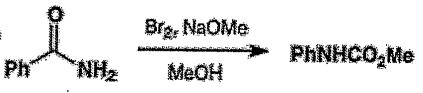
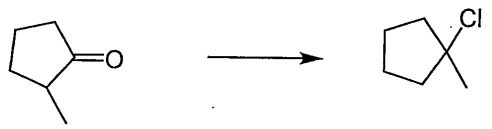
(a)
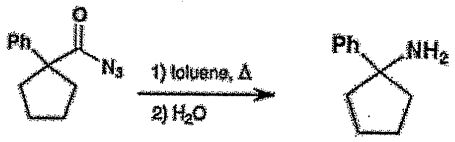
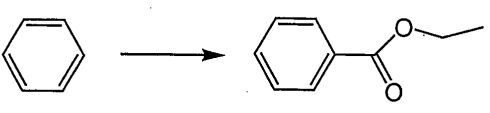
(b)
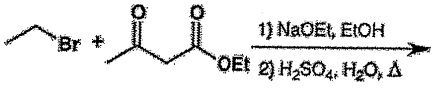
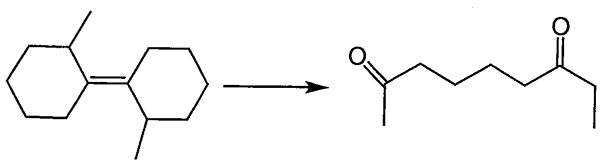
(c)
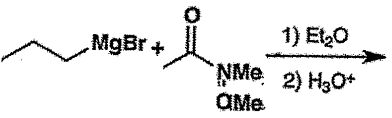
3. Explain the major difference between hexagonal closest packing (hcp) and cubic closest packing (ccp).
4. Explain why there is no base-centered tetragonal lattice in all 14 Bravais lattices?
5. Using molecular orbital to explain how pi-acceptor ligands increase Δo when they conduct octahedral coordination to transition metals.
 阿摩線上測驗
登入
阿摩線上測驗
登入