所屬科目:研究所、轉學考(插大)◆生物化學
1. In biochemical metabolism, decarboxylation and carboxylation requires __________ and __________, respectively. (A) biotin, cobalamin. (B) pyridoxine, thiamine. (C) thiamine, cobalamin. (D) thiamine, biotin. (E) cobalamin, pyridoxine.
2. (A) Transaldolase, (B) Transketolase, (C) Glucose 6-phosphate dehydrogenase, (D) Phosphopentose isomerase, (E) Phosphopentose epimerase deficient will cause pamaquine -induced hemolytic anemia.
3. Which of the following statements about fatty acid metabolism is true? (A) Carnitine serves as a carrier to transport acetyl units from the mitochondrion to the cytosol for fatty acid synthesis. (B) Malonyl CoA is the two-carbon unit for fatty acid synthesis. (C) Decarboxylation initiates fatty acid degradation. (D) α - oxidation occurs in the endoplasmic reticulum of the liver and kidney and preferred 10 or 12 carbon fatty acids when oxidation is defective. (E) ω - oxidation occurs in the peroxisomes and preferred a branched-fatty acid.
4. Among major human plasma lipoprotein classes, ____________ is the highest triacylglycerol content basis on dry weight, and ___________ is the principal form in which cholesterol is transported to tissues. (A) high density lipoprotein (HDL) chylomicron, (B) low density lipoprotein (LDL) intermediate density lipoprotein (IDL), (C) very low density lipoprotein (VLDL) chylomicron (D) chylomicron LDL, (E) IDL HDL.
5. In addition to pentose phosphate pathway, the source of NADPH for fatty acid biosynthesis is(A) Pyruvate dehydrogenase complex, (B) malate dehydrogenase, (C) citrate lyase,(D) malic enzyme, (E) 3-hydroxy-3-methyl-glutaryl-CoA (HMG-CoA) lyase.
6. Experiments that investigated the Pasteur effect showed that when oxygen is introduced to anaerobic yeast, where glycolysis is occurring, all intermediates beginning with ________ become depleted due to inhibition of the enzyme _________. (A) glucose-6-phosphate, hexokinase. (B) fructose-6-phosphate, phosphofructokinase. (C) fructose-1,6-bisphosphate, phosphofructokinase. (D) phosphoenolpyruvate, pyruvate kinase. (E) fructose-1,6-bisphosphate, fructose-1,6-bisphosphate aldolase.
7. Insulin can __________ phosphofructokinase 2, __________ pyruvate dehydrogenase complex, ______________ acetyl CoA carboxylase, and _____________ lipase to regulate glucose and lipid metabolism in animal cells. (A) active, active, active, active. (B) inactive, inactive, inactive, inactive. (C) active, active, active, inactive. (D) inactive, active, inactive, active. (E) active, inactive, active, inactive.
8. Which of the following compounds are the inhibitors of gluconeogenesis?1. ATP, 2. AMP, 3. acetyl CoA, 4. citrate, 5. glucose 6-phosphate, 6. fructose 2,6-bisphosphate.(A) 1 and 5. (B) 2 and 6. (C) 1 and 4. (D) 3 and 5. (E) 3 and 6.
9. Which of the following statements is not true? (1) In muscle, the activity of phosphofructokinase is regulated by pH value. (2) Lactase deficiency cause many adults are intolerant of milk. (3) In vertebrate liver, fructokinase is bypassed during fructose metabolism, often leading to conversion of excess fructose into fat. (4) Ethanol is metabolized in the cytosol of liver that will elevate the [NADH]/[NAD+ ] ratio, and inhibit glycolysis and gluconeogenesis. (5) Compared to hexokinase, glucokinase displays sigmoidal kinetics for glucose uptake and higher glucose affinity. (A) 1 and 3, (B) 2 and 4, (C) 3 and 5, (D) only 3, (E) only 5.
10. Which of following statements is false? (A) Ionophores can destroy the electrochemical gradients in the living cells. (B) The Na+ -K + pump acts in all cells to maintain lower concentrations of K+ inside and Na+ outside. (C) Tetrodotoxin is found in some organs of the puffer fish and has a good affinity and inhibitor for sodium channel. (D) Cobratoxin and -bungarotoxin have high affinity with acetylcholine receptor. (E) Acetylcholine binds to its receptor in the postsynaptic membrane opens Na+ channel and depolarization the postsynaptic membrane, generating a new action potential.
11. Which of following statements is false? (A) Compartmentation and allosteric control of anabolic and catabolic processes prevent futile cycles. (B) The biological significances of futile cycle are to amplify metabolic signals and generate heat. (C) ADP is the common motif of ATP, FAD, NADH, and coenzyme A. (D) Dehydrogenase can catalyze the reaction that involve a pair of electrons and two hydrogen atoms. (E) Vitamin E deficiency leads to rickets and skeletal deformities.
12. Which of the following enzymes involve substrate-level phosphorylation in glycolysis and citricacid cycle?(1) glyceraldehyde-3-phosphate dehydrogenase, (2) enolase, (3) phosphoglycerate kinase,(4) pyruvate kinase, (5) succinyl-CoA synthetase (6) -ketoglutarate dehydrogenase.(A) 1, 2 and 3. (B) 2, 3 and 4. (C) 3, 4 and 5. (D) 3 and 6. (E) 4 and 6.
13. (A) Coenzyme Q, (B) Cytochrome P450, (C) Cytochrome a, (D) Cytochrome b,(E) Cytochrome c is a central signaling component in the intrinsic of apoptosis.
14. Which of the following statements is not true? (A) Formation of the glycosidic bond between two sugar monomers in an oligosaccharide is a condensation reaction, involving the elimination of a molecule of water. (B) The most common linkages between sugar residues have 1→1, 1→ 2,1→ 3, 1→ 4, and 1→ 6, but is absent 1→ 5. (C) Glycosaminoglycans are acidic (anionic), through the presence of either sulfate or carboxylate groups. (D) Fucose presents on cell surface is recognized by the influenza virus. (E) Dolichol phosphate is the mediator of N-linked glycoproteins acquired the initial sugars in the endoplasmic reticulum.
15. Which of the following statements is not true? (A) CO blocks the flow of electrons from coenzyme Q to cytochrome c oxidoreductase. (B) 2,4-Dinitrophenol increases oxygen consumption while decreasing ATP synthesis. (C) Cytochrome P450 involves in hydroxylating a large variety of compounds. (D) Glycerol 3-phosphate shuttle is the electrons of cytosolic NADH from glycolysis enter mitochondrial electron transport chain to yield 1.5 ATP/NADH. (E) Oligomycin decreases both oxygen consumption and ATP synthesis.
16. When you run the mixture protein sample using SDS-PAGE, which of following protein could be moved fast toward the bottom of the gel? (A) cytochrome c, Mr = 13,000 (B) immunoglobulin G, Mr = 145,000 (C) ribonuclease A, Mr = 13,700 (D) RNA polymerase, Mr = 450,000 (E) serum albumin, Mr = 68,500
17. For amino acids with neutral R groups, at any pH below the pI of the amino acid, the population of amino acids in solution will have: (A) a net positive charge. (B) a net negative charge. (C) no net charge. (D) no charged groups. (E) positive and negative charges in equal concentration.
18. A compound has a pKa of 7.4. To 100 mL of a 1.0 M solution of this compound at pH 8.0 is added 30 mL of 1.0 M hydrochloric acid. The pH value of resulting solution is: (A) 7.5 (B) 7.4 (C) 7.2 (D) 6.8 (E) 6.5
19. One method used to prevent disulfide bond interference with protein sequencing procedures is: (A) cleaving proteins with proteases that specifically recognize disulfide bonds. (B) reducing disulfide bridges and preventing their re-formation by further modifying the-SH groups. (C) removing cysteines from protein sequences by proteolytic cleavage. (D) protecting the disulfide bridge against spontaneous reduction to cysteinyl sulfhydryl groups. (E) sequencing proteins that do not contain cysteinyl residues.
20. A sequence of amino acids in a certain protein is found to be –Ser-Gly-Pro-Gly-. The sequence is most probably part of a(n): (A) α helix (B) α sheet (C) β turn (D) parallel β sheet (E) antiparallel β sheet
21. An average protein will not be denatured by: (A) urea (B) pH10 (C) iodoacetic acid (D) heating to 90℃ (E) a detergent such as sodium dodecyl sulfate.
22. Myoglobin and the subunits of hemoglobin have: (A) no obvious structural relationship. (B) very similar primary and tertiary structures. (C) very different primary and tertiary structures. (D) very similar tertiary structures, but different primary structures. (E) very similar primary structures, but different tertiary structures.
23. The proteins of the Major Histocompatibility Complex (MHC) bind and display: (A) macrophage fragments. (B) T cell fragments. (C) B cell fragments. (D) antigen fragments. (E) immunoglobin fragments.
24. An enzyme-catalyzed reaction was carried out with the substrate concentration initially a thousand times greater than the Km for that substrate. After 9 minutes, 1% of the substrate had been converted to product, and the amount of product formed in the reaction mixture was 12 mol. If, in a separate experiment, one-third as much enzyme and twice as much substrate had been combined, how long would it take for the same amount (12 mol) of product to be formed? (A) 1.5 min (B) 3 min (C) 6 min (D) 13.5 min (E) 27 min
25. The average molecular weight of the 20 standard amino acids is 138, but biochemists use 110 when estimating the number of amino acids in a protein of known molecular weight. Why? (A) The number 138 represents the molecular weight of conjugated amino acids. (B) The number 110 takes into account the relatively small size of nonstandard amino acids. (C) The number 110 is based on the fact that the average molecular weight of a protein is 110,000 with an average of1,000 amino acids. (D) The number 110 reflects the number of amino acids found in the typical small protein, and only small proteins have their molecular weight estimated this way. (E) The number 110 reflects the higher proportion of small amino acids in proteins, as well as the loss of water when the peptide bond forms.
26. The DNA oligonucleotide abbreviated pATTCGAC: (A) has a hydroxyl at its 3’ end. (B) has 7 phosphate groups. (C) has an A at its 3’ end. (D) has a phosphate on its 3’end. (E) violates Chargaff’s rules.
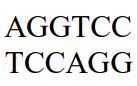
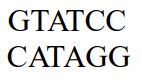
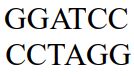
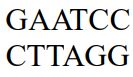
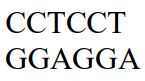
27. Which of the following is a palindromic sequence? (A) (B) (C)(D) (E)
28. In the laboratory experiment, recombinant plasmids are commonly introduced into bacterial cells by: (A) microinjection. (B) electrophoresis-a gentle low-voltage gradient draws the DNA into the cell. (C) transformation-heat shock of the cells incubated with plasmid DNA in the presence of CaCl2. (D) infection with a bacteriophage that carries the plasmid. (E) mixing plasmids with an extract of broken cells.
29. Functional DNA is not found in: (A) nuclei. (B) mitochondria. (C) chloroplasts. (D) lysosomes.(E) bacterial nucleoids.
30. The synthesis of purine and pyrimidine nucleotides differ in that: (A) pyrimidine biosynthesis istightly regulated in the cell, whereas purine biosynthesis is not. (B) ATP is required in thesynthesis of purines but not in the synthesis of pyrimidines. (C) pyrimidines go through manysteps, adding a single carbon or nitrogen each time, whereas the basic skeleton for purines isformed by two main precursors. (D) purine formation requires a THF derivative, whereaspyrimidine formation does not. (E) purine biosynthesis starts with the formation of PRPP,whereas pyrimidines incorporate the PRPP near the end of the pathway.
B: Simply explain the following terms (20 points)1. Advanced glycosylation end products (AGEs)
2. Fenton reaction
3. Respiratory quotient
4. Adenylate energy charge
C: Please write the term that the following sentences represent (20 points) 1. A DNA hybridization procedure in which one or more specific DNA fragments are detected in a larger population by means of hybridization to a complementary, labeled nucleic acid probe.
2. A specific sequence of three nucleotides in a tRNA, complementary to a codon for an amino acid in an mRNA.
3. A process in which complex mixtures of molecules are separated by many repeated partitionings between a flowing (mobile) phase and a stationary phase.
4. Movement of charged solutes in response to an electrical field; often used to separate mixtures of ions, proteins, or nucleic acids.
5. The full complement of proteins expressed in a given cell, or the complete complement of proteins that can be expressed by a given genome
 阿摩線上測驗
登入
 (B)
 (C)
 (D)
 (E)