所屬科目:研究所、轉學考(插大)◆物理化學及分析化學
2. In an adiabatic free expansion process for an ideal gas, which term is NOT zero? (A)△U (internal energy change) (B)W (Work) (C) △T (temperature change) (D)
3.In Joule-Thomson experiment, which thermodynamic term is zero? (A) △H (Enthalpy change) (B)△U (internal energy change) (C) △V (Volume change) (D) △P (Pressure change)
4.What is the correct relationship between Cv and S?(A) (B) as dv=o, ds =dT(C) as dp-=o, ds =dT (D)as dv=0, ds =dP
5.If we mix 0.4 mole of pure benzene with 0.6 mole of pure toluene at temperature T. Assume this mixture is an ideal solution. What is△S? (A)0.4RIn0.4 +0.6Rn0.6 (B) 0.4RTIn0.4 + 0.6RTIn0.6 (C) 0.4RIn0.6+0.6RIn0.4 (D) 0.4RTIn0.6+ 0.6RT1n0.4
7.How many wavenumbers () are equivalent to the energy at 300 Kelvin? (A) 100 (B) 53 (C) 0.371 (D) 208
8.What is the boundary conditions for a "'particle in a box" model? (A)(0)=(L)=0(B)(0)=(L)=∞(C)(0)=(L)=1(D)(0)=0,(L)=∞
9. If a potential function of a diatomic molecule can be described by a Morse potential, V(x) =, what is the force constant k? (A)βDe(B) 1/2βDe (C) 1/2 β2De2 (D) 2 β2De2
10. The is an eigenfunction of, so what is the eigenvalue? (A) (B) (C) (D)1
11. What is the ground state term of molecular oxygen? (A)3P (B)(C)(D)
12. To measure a correct rate coefficient, which order reaction does not require to know the absolute concentrations of reactants? (A) order (B) order (C) order (D) order
13. If the population decay channels of the excited state decay include three channels, such as fluorescence channel (kF), internal conversion channel (), and intersystem crossing channel (), what is the observed fluorescence lifetime Tr? (A)1/ kF (B) 1/ (kF+ ) (C) 1/ (kF+ + ) (D) 1/ (kF+ )
14. The rate constant for the reaction of at 575 K and 716 K. Estimate the value of Ea from these data. (Assuming the Ea and pre- exponential factor are temperature independent) (A)185 (B) 158 (C) 116 (D) 161
17. Which of the following statements are INCORRECT? (A) 100 ppb (B) The number 1.2500 x 10⁴has five significant figures. (C)0.02(±0.02)+0.01(±0.02)-0.02(±0.03)=0.01(±0.04) (D) Molality is the number of moles of a substance per liter of solution.
19. The calibration curve equation for quantifying standard was I = 51.00 x [ ] + 1.00, where I is the intensity and the concentration is in micromole/L. The reagent blank, measured by three repeated experiments, gave a value of 0.30± 0.04. What is the detection limit for Cu2t based on a signal-to-noise ratio of 2? (A) 1.56 nM. (B) 1.35 nM. (C) 2.56 nM. (D) 2.35 nM.
20. Which of the following statements concerning titration are INCORRECT? (A) The pH at the midpoint, the point halfway on the titration curve to the equivalence point, is equal to the pKa of the weak acid. (B) The pKa values of a diprotic acid H2A are= 8.00. At pH 9.00, the major species are(C) The equivalent volume for titrating 50.00 mL of a solution (0.05 M in iodide ions and 0.08 M in chloride ions) with 0.1 M silver nitrate is 60 mL. (D) In EDTA titration, ammonia often is required to prevent the precipitation of metal ions.
25. The activity coefficients of H+ and OH- are 0.83 and 0.76 when the ionic strength is 0.1. The pH of water containing 0.10 M LiNO3 at 25℃ are (A) 6.98 (B) 7.00. (C) 7.02 (D) 7.04
28. Which of the following methods concerning absorption are INCORRECT? (A) UV-Visible spectroscopy of organic compounds is usually associated with n → π*and π → π*(B) The intensity of absorbance is proportional to the log of the absorbing species concentration (C) An atomic absorption spectrum consists of a series of line peaks (D) X-ray absorption spectroscopy (XAS) can probe the chemical surroundings around an atom of interest.
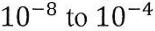
29. Which of the following statements concerning fluorescence are INCORRECT? (A) The lifetime of fluorescence is s. (B) The difference between the excitation and emission wavelengths is called the Stokes Shift. (C) Fluorescence intensity is sensitive to environmental factors, such as pH and solvent polarity. (D) The fluorescent quantum yield is dependent of excitation intensity.
(a)
(b)
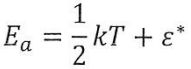
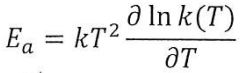
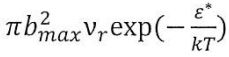
32. (10%) The activation energy Eacan be defined from the Arrhenius expression asUse the equation k(T) = to show that
 阿摩線上測驗
登入
阿摩線上測驗
登入

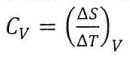 (B) as dv=o, ds =
 dT(C) as dp-=o, ds =
 ) are equivalent to the energy at 300 Kelvin?
(A) 100
 (0)=
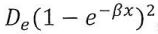 , what is the force constant k?
(A)βDe(B) 1/2βDe (C) 1/2 β2De2 (D) 2 β2De2
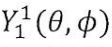 is an eigenfunction of
 , so what is the eigenvalue?
(A)
 (B)
 (C)
 (D)1
 (C)
 (D)

 order (B)
 order (C)
 order (D)
 order
 ), and intersystem crossing channel (
 ), what is the
observed fluorescence lifetime Tr?
(A)1/ kF (B) 1/ (kF+
 at 575 K and
 716 K. Estimate the value of Ea from these data. (Assuming the Ea and pre-
exponential factor are temperature independent)
(A)185
 (B) 158
 (B) The number 1.2500 x 10⁴has five significant figures.
(C)0.02(±0.02)+0.01(±0.02)-0.02(±0.03)=0.01(±0.04)
(D) Molality is the number of moles of a substance per liter of solution.
 standard was I = 51.00 x [
 = 8.00. At pH 9.00, the major
species are
 (C) The equivalent volume for titrating 50.00 mL of a solution (0.05 M in iodide ions and 0.08 M in
chloride ions) with 0.1 M silver nitrate is 60 mL.
(D) In EDTA titration, ammonia often is required to prevent the precipitation of metal ions.
 s.
(B) The difference between the excitation and emission wavelengths is called the Stokes Shift.
(C) Fluorescence intensity is sensitive to environmental factors, such as pH and solvent polarity.
(D) The fluorescent quantum yield is dependent of excitation intensity.


 to show that