所屬科目:研究所、轉學考(插大)◆生物化學
1. Which of the following statements regarding the general concepts of metabolism is true? (A) once glucose is converted to pyruvate, there is no way to convert pyruvate back to glucose (B) when triacylglycerols are used as fuel, only the fatty acids can be metabolized, the glycerol is a waste product (C) all 20 common amino acids can be made from metabolites derived from the citric acid (or TCA) cycle (D) the citric acid (or TCA) cycle is generally considered an anabolic pathway while gluconeogenesis is generally considered a catabolic pathway (E) none of the above
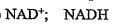
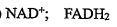
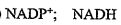
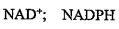
2. _________ is commonly used as an oxidizing agent in catabolic pathways while _________ is commonly used as a reducing NADH agent in anabolic pathways. (A) (B) (C) (D) FAD; FADH2 (E)
3. The transient association of lipid rafts is thought to play a significant role in which of the following? (A) cell signaling (B) bacterial entry into host cells (C) protein trafficking (D) membrane receptor dimerization (E) all of the above
4. When comparing the sequences of a peripheral membrane protein with an integral membrane protein, which of the following amino acids would most likely be present in a higher percentage in the integral membrane protein? (A) Asp (B) Leu (C) His (D) Ser (E) none of the above
5. Oseltamivir, also known as Tamiflu, is effective as an antiviral against the influenza virus due to its ability to block the action of which protein associated with the surface of the viral particle? (A) neuraminidase (B) hemagglutinin (C) M1 (D) M2 (E) none ofthe above
6. What range type(s) of electromagnetic radiation are absorbed by photosynthetic pigments to allow the reactions of photosynthesis to occur? (A) UV only (B) visible only (C) infrared only (D) UV and visible (E) visible and infrared
7. Humans maintain a nearly constant level of hemoglobin by continually synthesizing and degrading it. This is an example of a(n): (A) exergonic change. (B) equilibrium state. (C) dynamic steady state. (D) free-energy change. (E) waste of energy.
8. Enzymes are biological catalysts that enhance the rate of a reaction by: (A) decreasing the activation energy. (B) decreasing the amount of free energy released. (C) increasing the activation energy. (D) increasing the amount of free energy released. (E) increasing the energy of the transition state.
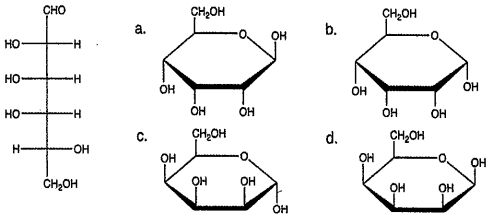
9. Which of the following would be the correct Haworth projection for B-D-talose (linear form is shown on the left)?
(A) a (B) b (C) c (D) d (E) none of the above
10. Cholesterol is synthesized from: (A) acetyl-CoA. (B) choline. (C) lipoic acid. (D) malate. (E) oxalate.
11. An intermediate of purine degradation in humans is: (A) glutamate. (B) (C) succinate. (D) urea. (E) uric acid.
12. Transport of fatty acids from the cytoplasm to the mitochondrial matrix requires: (A) ATP, carnitine, and coenzyme A. (B) ATP, carnitine, and pyruvate dehydrogenase. (C) ATP, coenzyme A, and hexokinase (D) ATP, coenzyme A, and pyruvate dehydrogenase. (E) carnitine, coenzyme A, and hexokinase.
13. Which compound is an intermediate of the B-oxidation of fatty acids? (A) (B) (C) CH3CH2-CO-CH2-OH (D) CH3-CH2-CO-CO-S-CoA (E) CH3- CO- CH2- CO-S-CoA
14. The major carrier(s) of dietary fat from the intestine is (are): (A) VLDL. (B) chylomicrons. (C) HDL. (D) LDL. (E) IDL.
15. What molecule contributes at least two nitrogen atoms to each purine? (A) asparagine (B) 10-formyltetrahydrofolate (C) glycine (D) glutamine (E) carbamoyl phosphate
16. Which of the following best explains the enzyme(s) involved in ribonucleotide reduction? (A) there is 1 enzyme for each of the 4 different nucleotides (B) 1 enzyme for pyrimidine nucleotides and 1 for purine nucleotides (C) 1 enzyme for pyrimidine nucleotides, 1 for ADP and I for GDP (D) 1 enzyme for purine nucleotides, 1 for CDP and 1 for UDР (E) 1 enzyme for all 4 nucleotides
17. Which of the following molecules uses chorismate as a precursor? (A) p-aminobenzoic acid (B) coenzyme Q (C) phenylalanine (D) tryptophan (E) all of the above
18. What are the products of the following transamination?
(A) glutamine and pyruvate (B) a-ketoglutarate and alanine (C) glutamate and alanine (D) oxaloacetate and alanine (E) aspartate and pyruvate
(1) CAMP
(2) electrophoresis
(3) gluconeogenesis
2.(1) List the types of noncovalent interactions that are important in providing stability to the three-dimensional structures of macromolecules.
(2) Why is it important that these interactions be noncovalent, rather than covalent, bonds?
3. Lipid nanoparticles (LNPs) have emerged as promising vehicles for drug delivery. The latest successful use of LNPs is the recently approved COVID-19 vaccines by Pfizer/BioNTech and Moderna. One ofthe main components in the LNPs of these two vaccines is a synthetic ionizable cationic lipid. What is the central role of the ionizable cationic lipid in these two COVID-19 vaccines?
4. Please briefly describe the similarities and differences between oxidative phosphorylation and photophosphorylation.
5. Please briefly describe the metabolic fates of glucose in mammalian cells.
6. Please describe "specific activity".
7. What is the coenzyme of the transamination reaction?
8. Please list all biological functions of nucleotides and their derivatives in living cells.
9. (1) Please write the complementary sequence of the following DNA sequence (5')-AGGATCCGGTCGGC-(3').
(2) Is there any palindromic sequence in the above DNA sequence?
(3) If there is a palindromic sequence in the DNA molecule, what's the possible application for that?
10. How do cells prevent the futile cycle of fatty acid metabolism (Biosynthesis and oxidation of fatty acid do not occur at the same time)?
(1) What type of protein separation techniques might the graduate student use to separate protein X from protein 1?
(2) What type of protein separation techniques might the graduate student use to separate protein X from protein 2?
(3) What type of protein separation techniques might the graduate student use to separate protein X from protein 3?
(4) After these above purification strategies, the graduate student successfully separates Protein X from Protein 1 and 2. However, Protein X can't be separated from Protein 3. The graduate student suspects that the reason might be related to protein structure of Protein X. What's the possible reason for that?
(5) What other technique could the graduate student use to verify the reason in (4)?
(6) What technique could the graduate student use to verify the identity of Protein Х?
 阿摩線上測驗
登入
 (B)
 (C)
 (D) FAD; FADH2 (E)
 (A) a (B) b (C) c (D) d (E) none of the above
 (C) succinate. (D) urea. (E) uric acid.
 (B)
 (C) CH3CH2-CO-CH2-OH (D) CH3-CH2-CO-CO-S-CoA (E) CH3- CO- CH2- CO-S-CoA
 (A) glutamine and pyruvate (B) a-ketoglutarate and alanine (C) glutamate and alanine (D) oxaloacetate and alanine (E) aspartate and pyruvate