所屬科目:研究所、轉學考(插大)◆生物化學
2. FLAG-tag is often introduced to a protein for Western blotting, immunoprecipitation, or recombinant protein purification. It consists of an amino acid sequence DYKDDDDK. When a FLAG-tag is introduced a recombinant protein, how would it affect the net charge of the recombinant protein when buffered at neutral pH?(A) +4 (B)+1 (C)-2 (E) -5 (D)-3
3. Which of the following amino acids contains a β-branched side chain?(A) Alanine (B) Glutamate (C) Isoleucine (D) Proline (E) Tryptophan
4. Which statement is true regarding solutes that are soluble in water?(A) The solute must be ionic.
(B) The water-solute interactions must be more energetically favorable than water-water interactions.
(C) The solute must be nonpolar.(D) The undissolved solute particles must only be attracted to each other by van der Waals interactions.(E) The solute must be hydrophilic.
5. The ion channel that opens in response to acetylcholine is an example of a_____signal transduction system.(A)G protein (B) ligand-gated (C) receptor-enzyme(D) serpentine receptor (E) voltage-gated
6. All of the following statements are true about free fatty acids released from adipose tissue except(A) Fatty acids are hydrophobic.(B) Fatty acids are not soluble in blood, the cytosol, or any other water solution.(C) Fatty acids are transported in the blood by albumin.(D) Fatty acids bind to a hydrophilic binding pocket of albumin.(E) The released fatty acid is taken up by muscle and liver.
7. The synthesis of both glycerophospholipids and triacylglycerols involves(A) serine.(B)phosphatidylethanolamine. (C) phosphatidic acid.(D) phosphocholine. (E) phosphatidic acid phosphatase.
8. In the normal oxidation of an odd chain fatty acid, all of the following would be part of the process except(A) Each odd chain fatty acyl CoA will produce one propionyl-CoA.(B) Propionyl-CoA enters the mitochondria using the carnitine-palmitoyltransferase I system.(C) Propiony1-CoA is converted to methylmalonyi-CoA.(D) Methylmalonyl-CoA is converted to succiny1-CoA.(E) The oxidation of an odd chain fatty acid requires biotin to produce propionyl-CoA.
9. Which of the following is not true regarding ketone bodies?(A) Ketone bodies form during the catabolism of fats.(B) Ketone bodies are an cffective means for weight loss, since the body will excrete them in the urine.(C) The first enzyme used in the production of ketone bodies is thiolase.(D) Ketone bodies are usually an alternative fuel in all tissues.(E) None of the above
10. Regarding the mechanism for the control of the adenylate cyclase, which statement is incorrect?(A) It is a membrane protein.(B) It catalyzes the formation of cAMP using UTP.(C) It is often activated or inhibited by G proteins.(D) Its catalytic product is a second messenger in eukaryotic signal transduction.(E) Adrenaline activates the adenylate cyclase indirectly.
11. Which statement is correct?(A) The biosynthesis of dNTPs uses NTPs as the source.(B) The overall scheme of pyrimidine biosynthesis is the same as purine.(C) The pyrimidine catabolism is first degraded to the nucleobase.(D) The pyrimidine ring is assembled before it is attached to ribose-5-phosphate.(E) Ribonucleotide reductase catalyzes deoxyribose to ribose in all biology.
12. Glutamate is metabolically converted to a-ketoglutarate and NH4+ by a process described as:(A) reductive deamination. (B) hydrolysis. (C) transamination.(D) deamination. (E) oxidative deamination.
13. In phosphory1 group transfer reactions, the____of the nucleotide serves as an information symbol, channeling the nucleotide to appropriate metabolic activities.(A) sugar (B) diphosphate anhydride
(C) sugar-phosphate ester(D) base (E) None are true.
14. Which of the following statements about mitochondrial transport systems is correct?(A) Malate-aspartate shuttle: converts cytosolic NADH to mitochondrial FADH2(B) ATP-ADP translocase: transfers ATP and a proton from matrix to cytosol while transferring ADP from cytosol to matrix(C) Glycerophosphate shuttle: converts cytosolic FADH2 to mitochondrial NADH(D) The malate-aspartate shuttle is irreversible while the glycerophosphate shuttle is reversible.(E) None of the above are correct.
15. The enzyme glycogen phosphorylase:(A) catalyzes a cleavage of β(1→4) bonds.(B) catalyzes a hydrolytic cleavage of α(1→4) bonds.(C) is a substrate for a kinase.(D) uses glucose 6-phosphate as a substrate.(E) uses glucose as a substrate.
16. All are characteristics associated with "brown fat" except:(A) high levels of mitochondria rich in cytochromes.(B) presence of uncoupler protein-1, thermogenin, in the mitochondrial inner membrane.(C) energy from oxidation is converted to heat.(D) found in newborns and hibernating animals.(E) All are characteristics.
17. From the abbreviated name of the compound Gal(β1→4)Glc, we know that:(A) C-4 of glucose is joined to C-1 of galactose by a glycosidic bond.(B) the compound is a D-enantiomer.(C) the galactose residue is at the reducing end.(D) the glucose is in its pyranose form.(E) the glucose residue is the β anomer.
18. When a mixture of glucose 6-phosphate and fructose 6-phosphate is incubated with the enzyme phosphohexose isomerase, the final mixture contains twice as much giucose 6-phosphate as fructose 6-phosphate. Which one of the following statements is most nearly correct, when applied to the reaction below? (R = 8.315 J/mol·K 且 T = 298 K)
Glucose 6-phosphatefructose 6-phosphate(A) ΔG'° is +1.7 kJ/mol. (B) ΔG'° is -1.7 kJ/mol.(C) ΔG'° is incalculably large and negative.(D) ΔG'°is incalculably large and positive. (E) ΔG'° is zero.
19.If carbon I is the carbony1 group of an aldopentose, which carbon determines if the sugar is a p- or L- stereoisomer?(A) 1 (B)2 (C) 3 (D) 4 (E) 5
20. In glycoproteins, the carbohydrate moiety is always attached through the amino acid residues:(A)asparagine, serine, or threonine. (B) aspartate or glutamate. (C) glutamine or arginine.(D) glycine, alanine, or aspartate. (E) tryptophan, aspartate, or cysteine.
21. Bacteria and other prokaryotic cells have the capacity to get more ATP/glucose oxidized than eukaryotic cells because__________,so they are more efficient.(A) they are simpler and have less going on(B) they don't have to use shuttles to reoxidize reduced nucleotides(C) they do not have to translocate ATP-ADP across the mitochondrial membranes(D) they use an electron transport chain that translocates more protons(E) None of the above.
22 The standard reduction potentials (E'°) for the following half reactions are given.
If you mixed succinate, fumarate, FAD, and FADH2 together, all at I M concentrations and in the presence of succinate dehydrogenase, which of the following would happen initially?(A) Fumarate and succinate would become oxidized; FAD and FADH2 would become reduced.(B) Fumarate would become reduced; FADH2 would become oxidized.(C) No reaction would occur because all reactants and products are already at their standard concentrations.(D) Succinate would become oxidized; FAD would become reduced.(E) Succinate would become oxidized; FADH2 would be unchanged because it is a cofactor.
23. Which of the following pairs is interconverted in the process of mutarotation?(A) D-glucose and D -fructose (B) D-glucose and D-galactose(C) D-glucose and D-glucosamine(D) D-glucose and L-glucose (E) a-D-glucose and β-D-glucose
24. The biochemical property of lectins that is the basis for most of their biological effects is their ability to bind to:(A) amphipathic molecules. (B) hydrophobic molecules. (C) specific lipids.(D) specific oligosaccharides. (E) specific peptides.
25. The citric acid cycle is considered part of acrobic metabolism even though oxygen does not appear explicitly in any reaction because:(A) it contains oxidative decarboxylation of isocitrate to succinyl-CoA.(B) it takes place in the mitochondrion.(C) the reoxidation of NADH and FADH2 leads to the production of considerable quantities of ATP.(D) it consumes H2O molecule.(E) the NADH and FADH2 produced are reoxidized in the electron transport chain linked to oxygen.
26. Immobilized metal affinity chromatography (IMAC) is an important tool for recombinant protein purifications.Nickel (Ni2+) nitriloacetic acid (Ni-NTA) agarose is a commonly used affinity resin for IMAC. Which of the following peptide motif is often engineered to the target protein for IMAC-based purifications?(A) Polyalanine (B) Polyhistidine (C) Polylysine (D) Polyproline (E) Polyglycine
27. N-linked glycosylation is a common form of post-translational modification. Which of the following peptides is likely to be N-glycosylated?(A) ATQPCSN (B) SMNASTK (C) PLIVSQN (D) NPTGGS (E) WANLIYT
28. PNGase F is the most effective enzyme for removing N-linked oligosaccharides from glycoproteins/glycopeptides. The glycan removal is accompanied by deamidation of the asparagine side-chain to which the N-linked oligosaccharides are attached. Which of the following statements is false about the target protein after PNGase F treatment?(A) The molecular weight of the target protein will be reduced.(B) The extinction coefficient at 280 nm of the target protein will be unchanged.(C) The primary structure of the target protein will be the same.(D) The target protein will gain additional aspartic acid residues.(E) The isoelectric point of the target protein will be reduced.
29. Which of the following statements about the Bohr effect regarding hemoglobin's oxygen binding capacity is false?(A) Hemoglobin's oxygen binding affinity is inversely proportional to the acidity of the blood(B) Hemoglobin's oxygen binding affinity is inversely proportional to the concentration of carbon dioxide in the blood(C) Carbonic anhydrase helps increase the concentration of carbonate in the blood.(D) Modification of the amino-terminus of hemoglobin by carbon dioxide into a carbamino-terminus will increase oxygen binding affinity of hemoglobin.(E) When oxygen concentration is low, hemoglobin releases oxygen and binds H+.
30.Most covalent catalysis is carried out by enzymes using a:(A) ping-pong kinetic mechanism. (B) sequential bisubstrate kinetic mechanism.(C) random bisubstrate kinetic mechanism. (D) simple unimolecular kinetic mechanism.(E) competition mechanism.
31. Steroid hormone response elements (HREs) are______which, when bound to______, alter gene expression at the level of_______(A) intron sequences; activated hormone receptor; translation(B) nuclear proteins; hormone; transcription(C) plasma membrane proteins; hormone; transcription(D) sequences in DNA; receptor-hormone complex; replication(E) sequences in DNA; receptor-hormone complex; transcription
32. For enzymes in which the slowest (rate-limiting) step is the reaction
Km becomes equivalent to:(A) kcat. (B) the [S] where Vo = Vmax (C) the dissociation constant, Kd, for the ES complex.(D) the maximal velocity. (E) the turnover number.
33. Which of the following statements about glycolysis is correct?(1) Conversion of glucose to glyceraldehyde-3-phosphate is an endergonic reaction.(2) In the conversion of glucose-6-phosphate to fructose-6-phosphate, the C-1 aldehyde of glucose-6 phosphate is reduced to a hydroxyl group.(3) Conversion of dihyroxyacetone phosphate glyceraldehyde-3-phosphate is an isomerization reaction.(A) 1 and 2 (B) 1 and 3 (C) 2 and 3(D) None of above is correct. (E) All of above are correct.
34.Which of the following statements about the following reaction is correct?Citrate + CoA-SH + ATP→ Acetyl-CoA + Oxaloacetate + ADP+ Pi(1) The reaction is catalyzed by ATP citrate lyase.(2) Formation of acetyl-CoA in this reaction provides the starting materials for lipid metabolism.(3) Formation of oxaloacetate in this reaction provides an indirect means for the production of the NADPH for lipid metabolism.(A) 1 and 2 are correct. (B) 1 and 3 are correct. (C) 2 and 3 are correct.(D) All of above are correct. (E) None of above is correct.
35. Concerning the pathway for ketone body synthesis, all of the following make sense except(A) Three acetyl-CoA molecules can become HMG-CoA.(B) HMG-CoA is used for cholesterol and ketone body synthesis.(C) HMG-CoA Iyase produces acetoacetate and acetyl-CoA.(D) Acetoacetate is oxidized to beta-bydroxybutyrate and acetone.(E) The rate of ketone body production is proportional to the excess acety1 CoA in the mitochondria.
36. Which of the following statement(s) is correct regarding the regulation of fatty acid synthesis and breakdown?(1) Malonyl-CoA is the key repressor for fatty acid degradation due to the inhibition of fatty acid entry into mitochondria.(2) Insulin signaling triggers the dephosphorylation of acetyl-CoA carboxylase to synthesize malony1-CoA.
(3) The reaction catalyzed by fatty acid synthase is the rate-limiting step in the biosynthesis
of fatty acids.(A) 1 and 2(B) 2 and 3 (C) 1 and 3(D) 2 only(E) All of above are correct.
37. The synthesis of 1 molecule of cholesterol requires_____molecules of isopentenyl pyrophosphate, with each molecule of isopentenyl pyrophosphate requiring_____molecules of acetyl-CoA.(A) 4;3 (B) 5;2 (D) 6;2 (C) 6;3:(E) 7;3
38. The urea cycle and citric acid cycle are linked by(A) arginine and fumarate. (B) citrulline and ornithine.(C) fumarate and aspartate.(D) omnithine and arginine. (E) citrulline and argininosuccinate.
39. Approximately how many ATP molecules are netted from the complete oxidation of stearic acid (C-18)?(A) 2 (B) 4 (C) 32 (D) 88 (E) 120
40. Gout is caused by high levels of uric acid. What are the possible causes?(A) Glucose-6-phosphatase deficiency(B) Phosphoribosylpyrophosphate (PRPP) synthetase mutation(C) Hypoxanthine-guanine phosophoribosyItransferase (HGPRT) deficiency(D) All of these are possible causes.(E) None of the above.
41. What situation is most likely to cause the formation of ketone bodies?(1) Starvation (2) Gout (3) High in lipid diet (4) Regular meal(5) High in carbohydrate diets (6) Diabetes(7) Exercising (8) Intake of short-chain fatty acids (A) 1,2, and 3 (B) 3, 4, and 7 (C) 5,6, and 7 (D) 2, 4, and 8(E) 1, 6, and 8
42. Glucose breakdown in certain mammalian and bacterial cells can occur by mechanisms other than classic glycolysis. In most of these, glucose 6-phosphate is oxidized to 6-phosphogluconate, which is then further metabolized by:(A) an aldolase-type split to form glyceric acid and glyceraldehyde 3-phosphate.(B) an aldolase-type split to form glycolic acid and erythrose 4-phosphate.(C) conversion to 1,6-bisphosphogluconate.(D) decarboxylation to produce keto- and aldopentoses.(E) oxidation to a six-carbon dicarboxylic acid.
44. In the citric acid cycle, citrate is isomerized to isocitrate by aconitase. H2O was first abstracted from citrate, and then rehydrated with H- and HO–adding back in opposite positions to produce isocitrate. This reaction catalyzed by aconitase is quite stereospecific. As citrate has a total of four chemically equivalent hydrogens (labeled as H1~H4 in the figure), only one of the four hydrogens, the pro-R H atom of the pro-R arm of citrate, is abstracted during the reaction of theH2O abstraction by aconitase.Which one of the hydrogens in the citrate molecule shown in the figure is the pro-R H atom of the pro-R arm?(A) H1 (B) H2 (C) H3 (D)H4 (E) None of them.
45. Which of the following monosaccharides is an aldose?(A)a(B) b (C)c (D)d (E) None of the above.
46. The ratio of NADP+/NADPH in liver runs about 1/67 which means that:(A) it is similar to the ratio of NAD+/NADH.(B) glucose-6-phosphate dehydrogenase will be turned on most of the time.(C) glucose-6-phosphate is rate limiting for pentose phosphate pathway.(D) glucose-6-phosphate preferentially goes to the pentose phosphate pathway.(E) glucose-6-phosphate dehydrogenase activity is dependent upon use of some of the NADPH before activity increases.
47. In an anaerobic muscle preparation, lactate formed from glucose labeled in C-2 would be labeled in:(A) all three carbon atoms.(B) only the carbon atom carrying the OH.(C) only the carboxyl carbon atom.(D)only the methyl carbon atom.(E) the methyl and carboxyI carbon atoms.
48. In the glycolytic pathway, there is an isomerization of glucose 6-phosphate to fructose 6-phosphate occurs two steps before the C-C bond cleavage reaction between C3 and C4 to produce two three-carbon sugars. Where would the bond cleavage occur if there is no preceding isomerization?(A) Without isomerization, bond cleavage would occur between C2 and C3.(B) Without isomerization, bond cleavage would occur between C3 and C4.(C) Without isomerization, bond cleavage would occur between C4 and C5.(D) Without isomerization, bond cleavage would occur between C5 and C6.(E) Without isomerization, bond cleavage would occur between C1 and C2.
49. Nucleic acid hybridization is a commonly employed procedure in molecular biology to investigate all except:(A) evolutionary relationships. (B) specific genes against a vast background.(C) specific probe based isolation of genes. (D) quantify gene expression. (E) All are true.
50. What coenzyme would be required in the following reaction?(A) ADP(B) thiamine pyrophosphate (C) biotin (D) lipoic acid (E) coenzyme A
 阿摩線上測驗
登入
 fructose 6-phosphate(A) ΔG'° is +1.7 kJ/mol. (B) ΔG'° is -1.7 kJ/mol.(C) ΔG'° is incalculably large and negative.(D) ΔG'°is incalculably large and positive. (E) ΔG'° is zero.


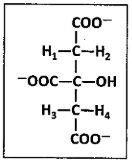 (A) H1 (B) H2 (C) H3 (D)H4 (E) None of them.
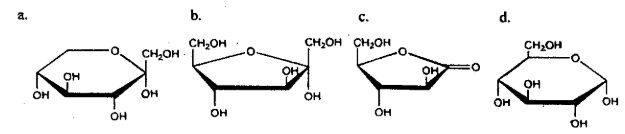 (A)a(B) b (C)c (D)d (E) None of the above.
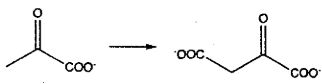 (A) ADP(B) thiamine pyrophosphate (C) biotin (D) lipoic acid (E) coenzyme A