阿摩線上測驗
登入
首頁
>
研究所、轉學考(插大)◆生物化學
> 113年 - [非官方正解]113 亞洲大學_學士後獸醫學系招生考試試題_學士後獸醫學系:生物化學#123308
113年 - [非官方正解]113 亞洲大學_學士後獸醫學系招生考試試題_學士後獸醫學系:生物化學#123308
科目:
研究所、轉學考(插大)◆生物化學 |
年份:
113年 |
選擇題數:
80 |
申論題數:
0
試卷資訊
所屬科目:
研究所、轉學考(插大)◆生物化學
選擇題 (80)
1. Which cellular structure generates adenosine triphosphate in prokaryotic? (A) Ribosomes (B) Mitochondria (C) Golgi apparatus (D) Plasma membrane
2. Which of the following is a ketone body? (A) Oxaloacetate (B) Acetone (C) α–hydroxybutyrate (D) All of the above
3. Which organelle is critical in initiating programmed cell death when triggered by ER stress? (A) Golgi apparatus (B) Mitochondria (C) Nucleus (D) Vacuole
4. How many cycles of β-oxidation are required to completely process a saturated arachidic acid (C20)? (A) 7 (B) 8 (C) 9 (D) 18
5. The phosphate buffer system is maximally effective at a pH close to its pKa of 6.86. What is the pH of a mixture of 0.5 M NaH
2
PO
4
and 0.05 M Na
2
HPO
4
?(A) 5.86 (B) 6.86 (C) 7.19 (D) 7.86
6. Which form of DNA is left-handed? (A) A form (B) B form (C) Z form (D) All of the above
7. Which enzyme in red blood cells is responsible for converting relatively insoluble CO
2
into the highly soluble anionic form bicarbonate ion
? (A) Carbon monoxide dehydrogenases (B) Hemoglobinase (C) Carbonic anhydrase (D) Bicarbonate dehydrogenase
8. Which ion is one of the most widespread second messengers in signal transduction? (A)
(B)
(C)
(D)
9. Which amino acid is NOT optically active? (A) Alanine (B) Glycine (C) Lysine (D) Phenylalanine
10. Which enzyme is central to the Calvin cycle? (A) ATP synthase (B) Ribulose-1,5-bisphosphate carboxylase/oxygenase (C) Malate dehydrogenase (D) NADPH reductase
11. Which of the following amino acids contain aromatic groups and can absorb ultraviolet (UV) light? (A) Aspartate, Glutamate and Histidine (B) Glycine, Serine and Threonine (C) Methionine, Lysine and Cysteine (D) Phenylalanine, Tyrosine, and Tryptophan
12. Which of the following principal ways can control the production of β-galactosidase in E. coli through transcriptional regulation? (A) Alternative σ factors (B) Operons (C) Enhancers (D) Transcription attenuation
13. Which of the following amino acids serves as the donor of a methyl group in many transmethylation reactions? (A) Aspartate (B) Cysteine (C) Methionine (D) Lysine
14. What is the standard start codon for protein synthesis in eukaryotes? (A) UAA (B) UAG (C) UGA (D) AUG
15. Which of the following amino acids is NOT required for the de novo synthesis of purine and pyrimidine nucleotides? (A) Aspartate (B) Glutamine (C) Glycine (D) Tyrosine
16. Which complex in the respiratory chain is the largest and most complicated? (A) Complex I (B) Complex II (C) Complex III (D) Complex VI
17. Which of the following amino acids the most abundant in the body? (A) Aspartate (B) Glutamine (C) Glycine (D) Tyrosine
18. Histidine has the following pKa values: pK
1
= 1.82, pK
2
= 9.17,
= 6.0 Which is the isoelectric point of aspartic acid? (A) 3.91 (B) 5.50 (C) 7.59 (D) 8.50
19. Which of the following proteins is absent α-helices in its secondary structure? (A) Hemoglobin (B) Insulin (C) Chymotrypsin (D) Collagen
20. In persons with amyloidosis, what is the principal secondary structure of amyloid? (A) α-Helix (B) β-Sheet (C) β-Turns (D) Random Coil
21. Which of the following enzymes can introduce negative supercoils in DNA replication? (A) DNA ligase (B) DNA primase (C) DNA helicase (D) DNA gyrase
22. Which of the following forces is a major determinant in the maintenance of protein conformation? (A) van der Waals forces (B) Disulfide bond (C) Hydrogen bonds (D) Hydrophobic interactions
23. What is the main function of salvage pathways in nucleotide synthesis? (A) Utilize preformed purines and pyrimidines for nucleotide synthesis (B) Synthesize nucleotides from precursor molecules (C) Convert ribose-5-phosphate into nucleotide bases (D) Break down preformed nucleotides
24. Which proteins aid in directing and targeting the folding of intermediate polypeptides to fully folded structures? (A) Kinases (B) Ligases (C) Proteases (D) Chaperonins
25. What is the end product of purine catabolism? (A) Adenosine (B) Guanosine (C) Uric acid (D) Xanthine
26. Which enzymes hydrolyze particular peptide bonds of the protein? (A) Hexokinase (B) Phosphatases (C) Proteases (D) Esterases
27. What type of inhibitor X is this Lineweaver–Burk plot shown?
(A) Competitive inhibition (B) Uncompetitive inhibition (C) Noncompetitive inhibition (D) Irreversible inhibitors
28. Which type of DNA damage is caused by UV radiation from sunlight? (A) Cytosine deamination (B) Depyrimidinations (C) Pyrimidine dimerization (D) O
6
-methylguanines
29. Methotrexate (MTX) is structurally similar to the coenzyme, folate, which binds to the dihydrofolate reductase, thereby inhibiting synthesis of DNA and RNA. What type of inhibitors does Methotrexate belong to? (A) Competitive inhibition (B) Uncompetitive inhibition (C) Noncompetitive inhibition (D) Irreversible inhibitors
30. Which type of mutation involves the interchange of large segments of chromosomal DNA? (A) Translocation (B) Base substitution (C) Frameshift mutation (D) Nonsense mutation
31. Which membrane type does NOT contain cholesterol in animals? (A) Inner mitochondrial membrane (B) Plasma membrane (C) Endoplasmic reticulum membrane (D) Golgi apparatus membrane
32. Which description about enzymes is NOT correct? (A) Cofactors commonly are metal ions or organic compounds. (B) Cofactors participate in a reaction but are not consumed. (C) Every enzyme requires cofactors to catalyze their particular chemical reactions. (D) Coenzymes function as substrates in two-substrate reactions, being bound only momentarily to the enzyme during catalysis.
33. In aerobic cells, what is the end product of glycolysis? (A) Lactate (B) Acetyl-CoA (C) Ethanol (D) Pyruvate
34. Which description of allosteric enzymes is NOT correct? (A) Allosteric enzyme activities can be regulated by noncovalent interactions with certain compounds at sites other than the catalytic site. (B) Most allosteric enzymes are single protomers. (C) Allosteric enzymes are usually rate-determining enzymes. (D) The allosteric kinetics do not follow the hyperbolic Michaelis-Menten relationship.
35. What structure of hemoglobin allows it to exhibit cooperativity in oxygen binding? (A) Heme groups (B) Quaternary structure (C) Tertiary structure (D) Iron ions
36. What is the function of single-stranded DNA-binding proteins (SSB proteins) during DNA replication? (A) Unwinding the parental double helix (B) Synthesizing small RNA primers for DNA polymerases (C) Preventing single-stranded regions from reannealing (D) Adding nucleotides to the growing DNA chains
37. When a vertebrate dies, the muscles stiffen is called rigor mortis. What is the primary cause of rigor mortis? (A) Depletion of ATP (B) Denaturation of actin (C) Hydrolysis of myosin (D) Conformational changes of troponin
38. Fresh corn can be immersed in boiling water for a few minutes to preserve its sweetness. What is the primary biochemical mechanism? (A) Activation of enzymes converting starch to sugar (B) Inactivation of enzymes converting starch to sugar (C) Activation of enzymes converting sugar to starch (D) Inactivation of enzymes converting sugar to starch
39. Which of the following is NOT a property of lectins? (A) High affinity for specific sugar residues (B) Involvement in carbohydrate transport (C) Used in blood group typing (D) Enhancing DNA replication
40. Which description is correct? (A) Cellulose is composed of fructose units. (B) Glycogen is highly branched. (C) Cellulose is found in animal tissues. (D) Glycogen contains beta-glycosidic linkages.
41. Among the essential amino acids, which one is a precursor for the neurotransmitter serotonin? (A) Tryptophan (B) Threonine (C) Valine (D) Isoleucine
42. What determines the fluidity of the membrane structure in animals? (A) Length of hydrocarbon chains (B) Concentration of glycolipids (C) Degree of unsaturation of hydrocarbon chains and amount of cholesterol (D) Presence of cholesterol only
43. Which vitamin is required for the hydroxylation process during collagen synthesis? (A) Vitamin A (B) Vitamin B12 (C) Vitamin C (D) Vitamin D
44. Which of the following forces primarily stabilizes the structure of fibrillin? (A) van der Waals forces (B) Disulfide bond (C) Hydrogen bonds (D) Hydrophobic interactions
45. Which process in photosynthesis involves the synthesis of both ATP and NADPH? (A) Calvin cycle (B) Cyclic photophosphorylation (C) Non-cyclic photophosphorylation (D) Photorespiration
46. Which description about heteropolysaccharides is correct? (A) They contain only one type of monomeric residue. (B) They are used for energy storage in cells. (C) They consist of multiple types of monosaccharide units. (D) They are covalently linked with proteins and lipids.
47. Which polymerase is analogous in function to E. coli pol I and is involved in base excision and repair in mammalian cells? (A) DNA polymerase α (B) DNA polymerase β (C) DNA polymerase γ (D) DNA polymerase δ
48. Which type of glycosidic linkage is predominant in amylose, the unbranched polymer of glucose in starch? (A) α(1→2) (B) β(1→4) (C) α(1→4) (D) β(1→6)
49. Which one of the following vitamin B is most required for glycolysis? (A) Riboflavin (B2) (B) Niacin (B3) (C) Pantothenic acid (B5) (D) Pyridoxine (B6)
50. Transport of acyl-CoA to the mitochondrial matrix is accomplished by carnitine. What essential amino acids is carnitine synthesized from? (A) Isoleucine and Leucine (B) Valine and Histidine (C) Lysine and Methionine (D) Phenylalanine and Threonine
51. Which amino acid residue participates in N-glycosidic linkage in glycoproteins? (A) Glutamine (B) Tyrosine (C) Asparagine (D) Methionine
52. Where does the majority of the TCA cycle occur within the cell? (A) Cytoplasm (B) Mitochondrial matrix (C) Rough endoplasmic reticulum (D) Smooth endoplasmic reticulum
53. Excess lactate production causes metabolic acidosis. Which process is primarily responsible for disposing of excess lactate to maintain acid-base balance in the body? (A) Krebs cycle (B) Oxidative phosphorylation (C) Glycolysis (D) Gluconeogenesis
54. Which organelle is responsible for protein biosynthesis? (A) Smooth endoplasmic reticulum (B) Rough endoplasmic reticulum membrane (C) Mitochondrial (D) Golgi apparatus
55. Which description about glycoproteins is NOT correct? (A) The hydrophobic domain of glycoproteins interacts with the lipid bilayer. (B) The carbohydrate moieties of glycoproteins are distributed symmetrically in cell membranes. (C) Membrane glycoproteins have domains of hydrophilic and hydrophobic sequences, making them amphipathic molecules. (D) Glycoproteins play major roles in antigen-antibody reactions, hormone function, enzyme catalysis, and cell-cell interactions.
56. What is the basic structure of collagens? (A) Single polypeptide chain (B) Double helix (C) Triple helix (D) Quadruple helix
57. Which factor does NOT affect the melting temperature (Tm) of a DNA molecule? (A) Ionic strength of the solution (B) Concentration of DNA in the solution (C) GC content of the DNA molecule (D) Length of the DNA molecule
58. Which of the following is NOT a major component of connective tissue? (A) Myoglobin (B) Collagen (C) Elastin (D) Proteoglycans
59. Which of the following immunoglobulin with monomeric or dimeric form plays an important role in the mucous membranes? (A) IgG (B) IgA (C) IgM (D) IgD
60. Which of the following enzymes regulates the entry of glucose into glycolysis and is inhibited by its product, glucose-6-phosphate? (A) Hexokinase (B) Phosphofructokinase (C) Glucose-6-phosphatase (D) Pyruvate kinase
61. Which of the following metabolic pathways does pyruvate NOT directly participate in? (A) Electron transport chain (B) Glycolysis (C) Gluconeogenesis (D) Fatty acid synthesis
62. Which technique utilizes DNA probes to detect specific DNA sequences in large DNA molecules? (A) Western blotting (B) Northern blotting (C) Southern blotting (D) Eastern blotting
63. What is the source of NADH used to reduce acetaldehyde to ethanol during yeast fermentation? (A) Electron transport chain (B) Glycolysis (C) Citric acid cycle (D) Pentose phosphate pathway
64. What is the primary function of telomerase in animal cells? (A) Initiating DNA replication (B) Adding species-dependent repeat sequences at terminal chromosomal sites (C) Repairing DNA damage (D) Catalyzing DNA supercoiling
65. Where is the respiratory electron transport chain located in the cells? (A) Inner mitochondrial membrane (B) Outer mitochondrial membrane (C) Mitochondrial matrix (D) Mitochondrial intermembrane space
66. What is the primary site of synthesis for very-low-density lipoprotein (VLDL)? (A) Intestinal epithelial cells (B) Muscle cells (C) Adipocytes (D) Liver
67. Which lipid serves as the primary form of energy storage in the body? (A) Phospholipids (B) Cholesterol (C) Triacylglycerol (D) Steroids
68. Which technique is NOT used in recombinant DNA technology directly? (A) Nucleic acid extraction (B) Western blotting (C) Cleaves fragments by restriction enzyme (D) Amplification by polymerase chain reaction
69. The irreversible reactions of glycolysis are bypassed by four alternate reactions of gluconeogenesis. Where is glucose-6-phosphatase that catalyzes one of these reactions primarily located in the cell? (A) Mitochondrial matrix (B) Cytosol (C) Endoplasmic reticulum (D) Golgi apparatus
70. Which enzyme is primarily responsible for catalyzing the overall DNA polymerization of the replicating strands in E.coli? (A) DNA polymerase I (B) DNA polymerase II (C) DNA polymerase III (D) DNA polymerase IV
71. DNA replication is semi-discontinuous. What direction are Okazaki fragments synthesized in? (A) Random (B) 3’ to 5’ (C) 5’ to 3’ (D) Both directions simultaneously
72. Apart from urea production, which of the following metabolic processes utilizes enzymes from the urea cycle? (A) Gluconeogenesis (B) Lipogenesis (C) De novo synthesis of arginine (D) Ketogenesis
73. Which of the following is the protective mechanism employed by C4 plants to reduce the rate of photorespiration? (A) Increasing the concentration of CO
2
around RuBisCO (B) Two partially isolated compartments differentiate within leaves (C) CO
2
is incorporated into a four-carbon organic acid (D) All of the above
74. Which enzymes do NOT catalyze an irreversible reaction in glycolysis? (A) Hexokinase (B) Pyruvate kinase (C) Phosphofructokinase-1 (D) Glucose-6-phosphatase
75. Which fatty acids are animals' most abundant saturated fatty acids? (A) Palmitic and stearic acids (B) Palmitic and oleic acids (C) Stearic and linoleic acids (D) Linoleic and linolenic acids
76. What is the main function of topoisomerases in DNA replication? (A) Modifying the degree of DNA supercoiling (B) Packaging DNA into chromosomes (C) Initiating DNA replication (D) Repairing damaged DNA
77. What type of probe is commonly used in Western blotting? (A) Protein probe (B) DNA probe (C) RNA probe (D) Antibody probe
78. Where are gangliosides primarily broken down in a cell? (A) Peroxisome (B) Endoplasmic reticulum (C) Lysosome (D) Vacuole
79. Many cyanides are highly toxic. What site of the respiratory electron transport chain is inhibited by cyanides? (A) Complex I (B) Complex II (C) Complex III (D) Complex VI
80. Bongkrekic acid recently caused a food safety crisis in Taiwan. What is this respiratory toxin's primary impact on energy metabolism? (A) Activation of glycolysis (B) Inhibition of respiratory electron transport chain (C) Inhibition of adenine nucleotide translocase (D) Inhibition of ATPase
申論題 (0)
相關試卷
115年 - [無官方正解]115 亞洲大學_學士後獸醫學系招生試題:生物化學#145002
115年 · #145002
115年 - [無官方正解]115 國立清華大學_碩士班考試入學試題_生命科學暨醫學院甲組(生物與醫學科學組)﹕生物化學#142711
115年 · #142711
115年 - [無官方正解]115 國立臺灣大學_轉學生招生考試試題:生物化學概論#142642
115年 · #142642
115年 - 115 台灣聯合大學系統_碩士班招生考試_化學類:生物化學#139667
115年 · #139667
115年 - [無官方正解]115 國立臺灣大學_ 碩士班招生考試試題:生物化學(C)#137643
115年 · #137643
115年 - [無官方正解]115 國立臺灣大學_ 碩士班招生考試試題:生物化學(A)#137641
115年 · #137641
115年 - [無官方正解]115 國立臺灣大學_ 碩士班招生考試試題:生物化學(一般生物化學)#137622
115年 · #137622
115年 - 115 國立臺灣大學_ 碩士班招生考試試題:生物化學(B)#137619
115年 · #137619
114年 - [無官方正解]114 國立中興大學_碩士班招生考試試題_生物醫學研究所:生物化學#139094
114年 · #139094
114年 - [無官方正解]114 國立中正大學_碩士班招生考試試題_生物醫學科學系:生物化學#138415
114年 · #138415
 阿摩線上測驗
登入
 ? (A) Carbon monoxide dehydrogenases (B) Hemoglobinase (C) Carbonic anhydrase (D) Bicarbonate dehydrogenase
 (B)
 (C)
 (D)

 = 6.0 Which is the isoelectric point of aspartic acid? (A) 3.91 (B) 5.50 (C) 7.59 (D) 8.50
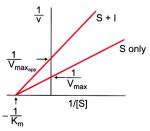 (A) Competitive inhibition (B) Uncompetitive inhibition (C) Noncompetitive inhibition (D) Irreversible inhibitors