所屬科目:研究所、轉學考(插大)◆生物化學
1.Which of the following description about catabolism is correct? (A) synthetic (B) endergonic (C) ATP consuming (D) NADH generating (E) FAD generating
2. Given an amino acid in Fisher's projection presentation shown below, which statement is correct? (A) It is a D-amino acid. (B) It is an R-amino acid. (D) D, L system is equivalent to the R, S system. (E) Nearly all amino acid residues in proteins are L-amino acids. (C) It is not an amino acid.
3. What is a polypeptide chain's approximate molar mass (in kDa) with 200 amino acid residues? (A) 11 (B) 18 (C) 22 (D) 28 (E) 32
4.Which amino acid exhibits a specific UV absorption at 280 nm? (A) Lys (B) Tyr (C) His (D) Gln (E) Cys
5. Given an amino acid titration curve shown in the figure. What is its isoelectric point (pI)?(A) 2.0 (B) 4.0 (C)7.0 (D)10.0 (E) 12.0
6. Both water and glucose possess an-OH group that can react with the terminal phosphate of ATP in a reaction facilitated by hexokinase. Despite this similarity, glucose is approximately a million times more reactive as a substrate compared to water. The most plausible explanation for this difference is:(A)Glucose has more -OH groups per molecule than does water. (B) The-OH group of water is attached to an inhibitory H atom, while the glucose-OH group is attached to C. (C) The larger glucose binds better to the enzyme; it induces a conformational change in hexokinase that brings active-site amino acids into position for catalysis. (D) Water and the second substrate, ATP, compete for the active site resulting in a competitive inhibition of the enzyme. (E)Water normally will not reach the active site because it is hydrophobic.
7. In living cells, nucleotides and their derivatives can serve as: (A) carriers of metabolic energy. (B) enzyme cofactors. (D) precursors for nucleic acid synthesis. (E) All of the above. (C) intracellular signals.
8. What is the purpose of using reverse transcriptase in DNA-based technologies? (A) To transcribe RNA into DNA. (B) To replicate DNA. (C) To cut DNA at specific sites. (D) To ligate DNA fragments. (E) To amplify proteins.
9. CRISPR-Cas9 technology is used for: (A) DNA amplification. (B) gene silencing. (D) protein synthesis. (E) DNA repair.(C) gene editing.
10. Which of the following statements concerning receptor enzymes is correct? (A) They are not usually membrane-associated proteins. (B) They contain an enzyme activity that acts upon a cytosolic substrate. (C) They contain an enzyme activity that acts upon the extracellular ligand. (D) They have a ligand-binding site on the cytosolic side of the membrane. (E) They have an active site on the extracellular side of the membrane.
11. The E. coli recombinant plasmid pBR322 has been widely utilized in genetic engineering experiments. pBR322 has all of the following features except: (A) A number of conveniently located recognition sites for restriction enzymes. (B) A replication origin, which permits it to replicate autonomously. (C) Resistance to antibiotics, which permits rapid screening for recombinant plasmids containing foreign DNA. (D) Small overall size, which facilitates entry of the plasmid into host cells. (E) A number of palindromic sequences near the EcoRI site, which permit the plasmid to assume a conformation that protects newly inserted DNA from nuclease degradation.
12. Which is a characteristic of sphingolipids? (A) They all contain a fatty acid joined to glycerol. (B) They all contain a long-chain alcohol joined to isoprene. (C) They all contain ceramide joined to a polar group. (D) They all contain a carbohydrate joined to a phosphate group. (E) They all contain a polar head group and two non-polar fatty acids.
13. Which of these statements about triacylglycerol synthesis is correct? (A) Humans can store more energy in glycogen than in triacylglycerols. (B) Insulin stimulates conversion of dietary carbobydrate into triacylglycerols. (C) Triacylglycerols are the building blocks for cell membrane architecture. (D) Mammals are unable to convert carbohydrates into triacylglycerols. (E) Phosphatidic acid is not on the pathway of triacylglycerol synthesis.
14.What are the products of β oxidation of a saturated 20-carbon fatty acid? (A) 1 propionyl-CoA, 9 acetyl-CoA, 9 FADH2, and 9 NADH (B) 9 acetyl-CoA, 8 FADH2,8 NADH (C) 9 acetyl-CoA, 9 FADH2,9 NADH (D) 10 acetyl-CoA, 9 FADH2, 9 NADH (E) 10 acetyl-CoA, 10 FADH2, 10 NADH
15. For skeletal muscle, which of the following correctly pairs the activity state with the source of energy? (A) resting: glucose (B) resting: amino acids (C) exertion: glucose (D) exertion: fatty acids (E) None of the above.
16. Which of the following is true of glucagon? (A) It is released from the pancreatic β-cells when glucose levels are low. (B) Its synthesis and release are exclusively under the control of epinephrine. (C) The primary targets of glucagon are liver, adipose and muscle tissues. (D) Major pathways promoted by glucagon include glycogenolysis and glycolysis. (E) None of the above.
17. Oxidation-reduction reactions in biological system always involve; (A) direct participation of oxygen. (B) transfer of electron(s). (C) mitochondria. (D) formation of water. (E) transfer of hydrogens.
18. Carotenoids have primary roles in photosynthesis as: (A) accessory light-harvesting and photooxidation. (B) accessory light-harvesting and photoprotection from reactive oxygen species. (C) resonance transfer pigments and photooxidation. (D) resonance transfer and photodiffusion protection. (E) None are true.
19. Epinephrine triggers an increased rate of glycolysis in muscle by: (A) activation of hexokinase. (B) activation of phosphofructokinase-1. (C) conversion of glycogen phosphorylase a to glycogen phosphorylase b. (D) inhibition of the Cori Cycle. (E) the Pasteur effect.
20. Which of the following reactions in glycolysis is a ketose to aldose isomerization? (A) Hexokinase (B) Phosphoglycerate mutase (C) Enolase (D) Aldolase (E) Triose phosphate isomerase
21. When carbohydrate intake is low,______ are formed from acetate units to provide metabolic fuel for the ______and other tissue. (A) fatty acids; liver (B) ketone bodies; brain (C) ketone bodies; liver (D) amino acids; brain (E) sterols; heart
22. The_______ of pyruvate to acetyl-CoA is catalyzed by_______. (A) dehydration; pyruvate dehydration complex (B) decarboxylation; pyruvate dehydrogenase complex (C) decarboxylation; pyruvate decarboxylase (D) transacylation; pyruvate transacylase (E) None of the above.
23.The rate of oxidative phosphorylation in mitochondria is controlled prin (A) feedback inhibition by C02. (B) the availability of NADH from the TCA cycle. (C) the concentration of citrate. (D) the mass-action ratio of the ATD-ADP system. (E) the presence of thermogenin.
24._______and_______ are produced in the light reactions of photosynthesis which are used to convert _______to_______. (A) ATP; NADPH; carbon dioxide; sugar. (B) oxygen; ATP; NADPH; carbon dioxide (C) ATP; NADPt; carbon dioxide; sugar (D) oxygen; NADPH; ATP; sugar (E) NADPH; ATP; sugar; carbon dioxide
25. It is crucial that regulation occur at pyruvate dehydrogenase because: (A) pyruvate kinase is reversible. (B) lactate dehydrogenase is the only other enzyme to use pyruvate. (C) the product acetyl-CoA is committed to oxidation in the citric acid cycle or fatty acid biosynthesis. (D) alanine aminotransferase would use the pyruvate. (E) All of the above.
26. Given a Hill plot for protein X (shown in the figure). What is protein X's Hill coefficient?
(A)0.5 (B)1 (C)2 (D) 3 (E) 4
27. What amino acids utilize chorismate for their biosynthetic ingredient? (A) Trp, Asp, Phe (B) Thr, Asn, Lys (C) Asp, Thr, Gln (D) Trp, Tyr, Phe (E) Met, Ile, Leu, Lys
28. Regarding the binding energy generated from enzyme-substrate interactions, which statement is accurate? (A) It is insufficient to account for the substantial rate increases caused by enzymes. (B) It may be utilized to maintain two substrates in the ideal orientation for a reaction. (C) It originates from the formation of covalent bonds between the enzyme and substrate. (D) A large portion of it comes from covalent bonds between the enzyme and substrate. (E) The majority of it is expended in just attaching the substrate to the enzyme.
29.Which of the following is not involved in signal transduction by the B-adrenergic rece (A) Cyclic AMP synthesis (B) GTP hydrolysis (C) GTP-binding protein (D) Protein kinase (E) All of the above are involved.
30. Regulation of cholesterol biosynthesis:(A) involves transcriptional regulation but not covalent regulation. (B) is sensitive to insulin but not glucagon. (C) occurs in the short term primarily by regulating HMG-CoA reductase. (D) involves changes in the rate of biosynthesis of critical enzymes, but not changes in the rate of proteolysis of those enzymes. (E) All above are correct.
31. A marathon runner is engaged in a 20-mile run. During a 20-mile run, there is an increase in the rate at which acyl-CoA is taken up by the mitochondria and used by β-oxidation. Part of the increase can be explained by the increase fatty acid entering the cell and part is explained by all of the following except (A) Glucagon triggers the release of free fatty acids from adipose tissue to meet energy needs. (B) AMP-dependent protein kinase (AMPK) causes the phosphorylation of acetyl-CoA carboxylase. (C) Phosphorylation of acetyl-CoA carboxylase inhibits the production of malonyl-CoA. (D) The malonyl-CoA concentration drops and inhibition of carnitine-acyltransferase II is removed. (E) Much more acyl-carnitine is available to use the carnitine/acyl-carnitine transporter
32.Which of the following statement(s) is incorrect regarding the formation of ketone body? (A) Acetoacetate and D-β-hydroxybutyrate are transported by the blood to tissues such as brain and muscle other than the liver. (B) Ketone bodies are formed in the liver through the condensation of acety1-CoA, which is an unfavorable reaction that needs excess of substrates. (C) Starvation and untreated diabetes mellitus lead to overproduction of ketone bodies in the liver, with several adverse effects on health. (D) Ketone bodies are used as fuels in all tissues except liver, which lacks-ketoacyl-CoA transferase for the reaction to activate acetoacetate. (E) )All above are correct.
33. Which is a difference between integral membrane proteins and peripheral membrane proteins? (A) Integral membrane proteins contain mainly a-helices while peripheral membrane proteins contain mainly B-sheets. (B) Integral membrane proteins often contain carbohydrates on the inner surface while peripheral membrane proteins often contain carbohydrates on the outer surface. (C) Integral membrane proteins bind to the membrane using hydrophobic forces while peripheral membrane proteins bind to the membrane using hydrophilic forces. (D) Integral membrane proteins always span the entire membrane one time while peripheral membrane proteins are always located on one side of the membrane. (E) Integral and peripheral membrane proteins both contain transmembrane domain so they could associate with membranes.
34. Which of the following represents the correct sequence of events in a cycle of β-oxidation beginning with a saturated fatty acyl-CoA? (A) hydration, FAD-coupled oxidation, NAD+-coupled oxidation, thiolytic cleavage (B) FAD-coupled oxidation, hydration, NAD+-coupled oxidation, thiolytic cleavage (C) FAD-coupled oxidation, NAD+-coupled oxidation, hydration, thiolytic cleavage (D) NAD+-coupled oxidation, FAD-coupled oxidation, hydration, thiolytic cleavage (E) NAD+-coupled oxidation, hydration, FAD-coupled oxidation, thiolytic cleavage
35. The C4 pathway for carbon dioxide fixation has what requirement compared to the C3 pathway? (A) require less CO2 (B) require more CO2 (C) require less NADPH (D) require less ATP (E) require more ATP
36. Which of the following statements about the oxidative decarboxylation of pyruvate in aerobic conditions in animal cells is false? (A) The process occurs in mitochondria. (B) The carboxyl group is eliminated as CO2. (C) One of the products of the reactions of the pyruvate dehydrogenase complex is a thioester of acetate. (D) The pyruvate dehydrogenase complex uses all of the following as cofactors: NAD+, lipoic acid, pyridoxal phosphate (PLP), and FAD. (E) The reaction is so important to energy production that pyruvate dehydrogenase is tightly regulated.
37. Which of the following statements about the citric acid (CA) cycle is correct? 1. The citric acid cycle is considered part of aerobic metabolism because the NADH and FADH2 produced are reoxidized in the electron transport chain linked to oxygen.
38. A poison that prevents the transfer of electrons from the last iron-sulfur cluster of Complex I to coenzyme Q is added to a suspension of actively respiring mitochondria. Which statement best describes the cffect seen? (A) ATP production would be reduced as fewer protons would be pumped out of the mitochondrial matrix. (B) ATP production would be severely impaired as this would completely block electron transport through the electron transport chain. (C) ATP production would be impaired as this would uncouple oxidative phosphorylation from electron transport. (D) This compound would have little to no effect on ATP production. (E) None of above is correct.
39. Which of the following is an advantage of using multiple steps in electron transport? (A) By using several steps, the net △G is higher (more energy is released). (B) More heat can be generated by using small steps. (C) More energy can be captured to synthesize ATP by using small steps. (D) Small steps allow for both more heat generation and more ATP synthesis. (E) All of these statements are advantages of using multiple steps.
40. The reactions during the light phase of photosynthesis include the following:
41. Glucose most commonly forms which of the following structures? (A) a pyranose using the hydroxyl group on carbon 4 (B) a pyranose using the hydroxyl group on carbon 5 (C) a pyranose using the hydroxyl group on carbon 6 (D) a furanose using the hydroxyl group on carbon 3 (E) a furanose using the hydroxyl group on carbon 4
42. Shuttle vectors have the property that they: (A) contain promoters for the expression of the gene. (B) have origins of replication for two different cell types, usually bacteria and yeast. (C) are capable of incorporating very large DNA fragments. (D) contain more than one antibiotic resistant gene. (E) None of the above.
44. Fructose in the diet or fructose from sucrose in the diet can be a source of calories for fat synthesis in the liver because: (A) ketoses are fattening. (B) fructose enters glycolysis after the primary regulation point, PFK-1. (C) fructose provides a net of four ATP from glycolysis. (D) fructose enters the branch of glycolysis that forms fat. (E) glycerol (the "backbone" of triacylglycerols) comes specifically from fructose.
47. Which of the following statements about the reactions involved in the synthesis of deoxyribonucleotides is false? (A) Deoxyribonucleotides are derived from the corresponding ribonucleotides by direct reduction at the 2'-carbon atom of the D-ribose to form the 2'-deoxy derivative. (B) Formation of deoxyribonucleotides is catalyzed by ribonucleotide reductase, in which its substrates are ribonucleoside diphosphates. (C) Ribonucleotide reductase is notable in that its reaction involves free radicals in biochemical transformations. (D) Nucleoside diphosphate kinase catalyzes the reaction: dTDP + ATP → dTTP + ADP. (E) The immediate precursor of thymidylate (dTMP) is dUMP. The conversion of dUMP to dTMP is a reaction of deamination.
49. All of the following are a coenzyme or a precursor of a coenzyme except: (A) thiamin. (B) riboflavin. (C) retinol. (D) niacin. (E) biotin.
 阿摩線上測驗
登入
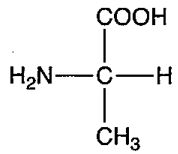 (A) It is a D-amino acid. (B) It is an R-amino acid. (D) D, L system is equivalent to the R, S system. (E) Nearly all amino acid residues in proteins are L-amino acids. (C) It is not an amino acid.
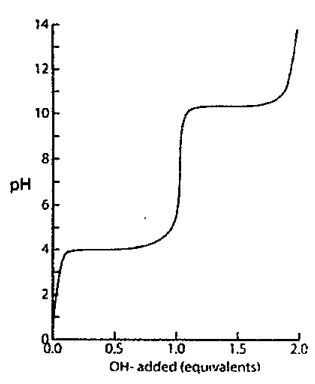 (A) 2.0 (B) 4.0 (C)7.0 (D)10.0 (E) 12.0
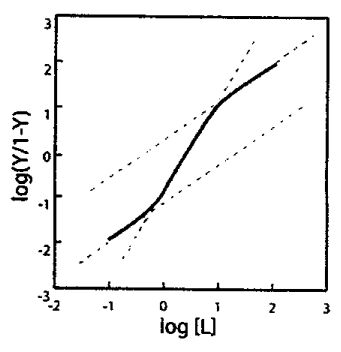 (A)0.5 (B)1 (C)2 (D) 3 (E) 4
 phosphoenolpyruvate + H₂O; lyase (B) pyruvate + NADH + H⁺
 lactate + NAD⁺; oxidoreductase (C) 3-phosphoglycerate