所屬科目:學士後西醫-物理
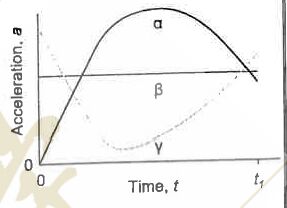
1.The graph shows acceleration versus time for three different objects, α, β, and γ, all of which start at rest from the same position. Which object is going fastest at the time t1? (A) object α (B) object β (C) object γ (D) objects α and γ (E) objects α, β, and γ
2.Consider a projectile launched upward near the surface of Earth from the origin at some angle θ0 to the horizontal, with initial speed v0. The horizontal position x can be calculated as x = v0cosθ0t. On the other hand, under the influence of gravity with gravitational acceleration g, the height y can be expressed by a function of x as (A)(B) (C)(D)(E)
3.A 740-kg elevator accelerates upward at 0.2 m/s2, pulled by a cable of negligible mass. Note that the acceleration due to gravity g = 9.8 m/s2. What is the tension force in the cable? (A) 74 N (B) 740 N (C) 7400 N (D) 74000 N (E) None of the above
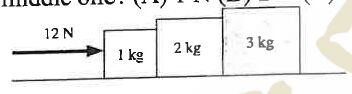
4.Blocks of 1, 2, and 3 kg are lined up on a frictionless table, as shown in the figure, with a 12-N force applied to the leftmost block. What's the magnitude of the force that the rightmost block exerts on the middle one? (A) 1 N (B) 2 N (C) 3 N (D) 6 N (E) 12 N
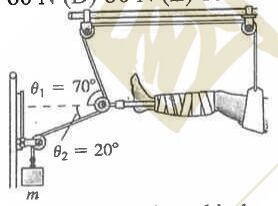
5.Patients with severe leg breaks are often placed in traction, with an external force countering muscles that would pull too hard on the broken bones. In the arrangement shown in the figure, the mass m is 5 kg, and the pulleys can be considered massless and frictionless. Note that sin20° ≈ 0.34 and sin70° ≈ 0.94. What is the horizontal traction force applied to the leg? About (A) 20 N (B) 40 N (C) 60 N (D) 80 N (E) 100 N
6.An elastic cord used in bungee jumping is normally 10 m long and has spring constant k = 250 N/m. At the lowest point in a jump, the cord length has doubled. How much work has been done on the cord? (A) 2.5 kJ (B) 12.5 kJ (C) 25 kJ (D) 125 kJ (E) 250 kJ
7.A 1.5-tonne car accelerates from 10 to 20 m/s in 10 s on a flat road. How much work is done on the car? (A) 225 J (B) 2.25 kJ (C) 22.5 kJ (D) 225 kJ (E) 2.25 MJ
8.Based on Newton's law of universal gravitation and Newton's second law of motion, Kepler’s third law = constant, where r is the radius of the circular path and T is the orbital period, can be derived. The constant, , should be (A)(B)(C)(D)(E)
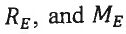
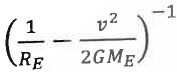
9.A rocket is launched vertically upward at velocity v around the surface of Earth. The constant of universal gravitation, the radius of Earth, and the mass of Earth are G, , respectively. Neglect the air resistance and friction. What is the maximum height it can reach? (A)(B)(C)(D)(E)
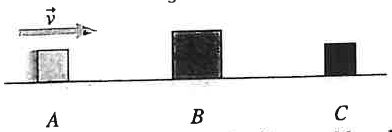
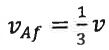
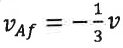
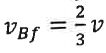
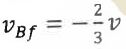
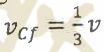
10.In the figure, blocks B and C have masses 2m and m, respectively, and are at rest on a frictionless surface. Block A, also of mass m, is heading at speed v toward block B. Assume all collisions are elastic. After all subsequent collisions are over, which of the following final velocity is necessarily true? (A)(B) (C) (D)(E)
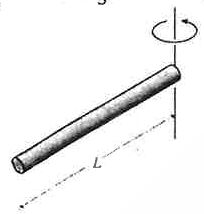
11.A uniform, narrow rod of mass M and length L rotates freely about an axis through one of its ends and perpendicular to the rod, as shown below. The rotational inertia of the rod about this axis is (A) 1/2ML2(B) 1/3ML2(C) 1/4ML2(D) 1/5ML2(E) 1/12ML2
12.A solid ball of mass M and radius R starts from rest and rolls down a hill. Its center of mass drops a total distance h. What is the ball’s speed at the bottom of the hill under the influence of gravity with gravitational acceleration g? (A) (B) (C)(D) (E)
13.For a simple pendulum with length L swinging back and forth through a small angle, under the influence of gravity with gravitational acceleration g, the angular frequency ω is approximately equal to (A)(B)(C)(D)(E)
14.The figure shows three pairs of forces acting on an object. Which pair, acting as the only forces on the object, results in static equilibrium? (A) Pair A, forces (B) Pair B, forces and (C) Pair C, forces (D) Pairs A and B (E) All of the above
15.The density of a rubber ball is three-fifths that of water. When placed in water, the ball will (A) float with less than one-third of it out of the water (B) float with less than one-fifth of it out of the water (C) float with less than half of it out of the water (D) float with more than half of it out of the water (E) sink.
16.Two identical stars are different distances from Earth, and the intensity of the light from the more distant star as received at Earth is only 1% that of the closer star. The more distant star should be (A) twice (B) √10 times (C) 10 times as far away (D) 100 times (E) 1000 times as far away.
17.A string 1 m long is clamped tightly at one end and is free to slide up and down at the other. Which of the following is a possible wavelength for standing waves on this string? (A) 1 m (B)m(C) (D) 2 m (E) 3 m
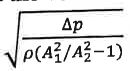
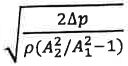
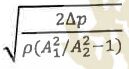
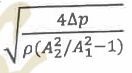
18.An incompressible fluid of density ρ flows through a horizontal pipe of cross-sectional area A1. The pipe has a venturi constriction of area A2, and a gauge measures the pressure difference Δp between the unconstructed pipe and the venturi. What is the expression for the flow speed in the unconstructed pipe? (A) (B)(C) (D)(E)
19.A U-shaped tube open at both ends contains water and a quantity of oil occupying a 2.0-cm length of the tube as shown in the figure. If the oil's density is 80% of water’s, what's the height difference h? (A) 0.2 cm (B) 0.4 cm (C) 0.6 cm (D) 0.8 cm (E) 1.6 cm
20.You draw 200 g of 10 °C water from the tap and pop it into an 800-W microwave oven to heat. The specific heat capacity of water is 1 cal · or 4.184 J · . How long should you microwave the water so it just reaches the boiling point of water, 100 °C at 1 atm? Approximately (A) 30 s (B) 60 s (C) 90 s (D) 120 s (E) 150 s
21. are defined as the molar specific heat at constant volume and the molar specific heat at constant pressure, respectively. For an ideal gas, which one is larger, ? What is the difference between Cv and Cp? Note that R is the universal gas constant. (A)(B) (C)(D)(E)
22.Based on the first law of thermodynamics, in isothermal ideal-gas processes, which one should be zero? Note that, Q, W, V, and p are the change in the system's internal energy, the heat supplied to the system, the work done on the system, the gas volume, and the gas pressure, respectively. (A) (B) Q (C) W (D) V (E) p
23.Based on the first law of thermodynamics, in adiabatic ideal-gas processes, which one should be a nonzero constant? Note that ΔEint, Q, W, p, V, γ, and T are the change in the system's internal energy, the heat supplied to the system, the work done on the system, the gas pressure, the gas volume, the ratio of the specific heats at constant pressure and at constant volume (= ), and the gas temperature, respectively. (A)(B) Q (C) W (D) (E)
24.Which of the following atom or molecule has three rotational degrees of freedom? (A) Ar (B) H2 (C) O2 (D) CO2 (E) NO2
25."The entropy of the universe can never decrease." is a statement related to (A) the zeroth law (B) the first law (C) the second law (D) the third law (E) the fourth law of thermodynamics.
26.A 16-nC charge is distributed uniformly along the x axis from x = 0 to x = 4 m. Which of the following integrals is correct for the magnitude (in N/C) of the electric field at x = +10 m on the x axis? The Coulomb constant is 9.0 × 10⁹ N · m2 / C2. (A) (B)(C) (D)(E) none of these.
27.Charges q and Q are placed on the x axis at x = 0 and x = 2.0 m, respectively. If q = -40 pC and Q = +30 pC, determine the net flux through a spherical surface (radius = 1.0 m) centered on the origin. The permittivity of free space is 8.85 × C2 / N · m2. (A) -9.8 N · m2 / C (B) -7.8 N · m2 / C (C) -4.5 N · m2 / C (D) -1.3 N · m2 / C (E) +2.0 N · m2 / C.
28.For the potential V = 3x2z - 2yz3, what is the corresponding electric field at the point (2, 2, 2)? Note that , and are unit vectors along x, y, and z directions, respectively. (A)(B)(C)(D) (E) none of these.
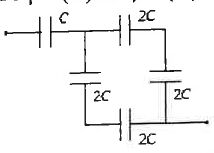
29.Determine the equivalent capacitance of the combination shown when C = 24 µF. (A) 24 µF (B) 16 µF (C) 36 µF (D) 27 µF (E) 12 µF.
30.Light bulb A is rated at 60 W and light bulb B is rated at 100 W. Both are designed to operate at 110 V. Which statement is correct? (A) The 60 W bulb has a greater resistance and greater current than the 100 W bulb. (B) The 60 W bulb has a greater resistance and smaller current than the 100 W bulb. (C) The 60 W bulb has a smaller resistance and smaller current than the 100 W bulb (D) The 60 W bulb has a smaller resistance and greater current than the 100 W bulb. (E) We need to know the resistivities of the filaments to answer this question.
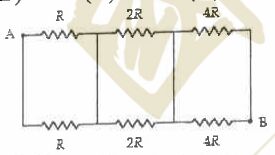
31.What is the equivalent resistance between points A and B in the figure when R = 20 Ω? (A) 20 Ω (B) 40 Ω (C) 70 Ω (D) 90 Ω (E) 84 Ω
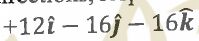
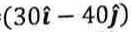
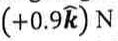
32.A 2.0-m wire carries a current of 15 A directed along the positive x axis in a region where the magnetic field is uniform and given by B = mT. What is the resulting magnetic force on the wire? (A)(B) (C)(D) (E)
33.At t = 0 the switch S is closed with the capacitor uncharged. If C = 30 µF, ε = 30 V, and R = 5.0 kΩ, at what rate is energy being stored in the capacitor when I = 2.0 mA? (A) 15 mW (B) 40 mW (C) 45 mW (D) 70 mW (E) 90 mW
34.We find that N current loops are coplanar and coaxial. The first has radius a and current I. The second has radius 2a and current 2I, and the pattern is repeated up to the Nth, which has radius Na and current NI. The current in each loop is counterclockwise as seen from above. The magnitude of the magnetic field at the center of the loops is (A) µ0I / 2Na (B) µ0I / Na (C) µ0I /2a (D) µ0NI / 2a (E) µ0NI / a
35.A wire with current I is bent into the shape in a uniform magnetic field B as shown in the figure. Determine the net magnetic force on the wire. (A) IBL in the +z direction (B) IBL in the -z direction (C) √3IBL in the +z direction (D) √2IBL in the -z direction (E) Zero
36.A square loop (L = 0.20 m) consists of 50 closely wrapped turns, each carrying a current of 0.50 A. The loop is oriented as shown in a uniform magnetic field of 0.40 T directed in the positive y direction. What is the magnitude of the torque on the loop? (A) 0.15 N · m (B) 0.35 N · m (C) 0.55 N · m (D) 0.75 N · m (E) 1.73 N · m
37.Coaxial Cable A has twice the length, twice the radius of the inner solid conductor, and twice the radius of the outer cylindrical conducting shell of coaxial Cable B. What is the ratio of the inductance of Cable A to that of Cable B? (A) 4 ln 2 (B) 2 ln 2 (C) ln 2 (D) 4 ln 4 (E) 2
38.For the circuit shown, what is the rate of change of the current in the inductor when the current in the battery is 0.50 A? (A) 200 A/s (B) 300 A/s (C) 400 A/s (D) 500 A/s (E) 600 A/s
39.A flat coil of wire consisting of 20 turns, each with an area of 50 cm2, is positioned perpendicularly to a uniform magnetic field that increases its magnitude at a constant rate from 2.0 T to 6.0 T in 2.0 s. If the coil has a total resistance of 0.40 Ω, what is the magnitude of the induced current? (A) 0.2 A (B) 0.5 A (C) 0.7 A (D) 0.9 A (E) 1.0 A
40.An open circuit consists of a 12 µF parallel plate capacitor charged to 200 V and a 10 Ω resistor. At the instant when a switch closes the circuit (with no battery in it) the displacement current between the plates of the capacitor is (A) 1.2 µA (B) (C) 2.4 mA (D) 10 A (E) 20 A
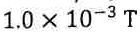
41.If the maximum E-component of an electromagnetic wave in free space is 600 V/m, what is the maximum B-component? (A) 1.4 T (B) (C)(D)(E) 1.8 × T
42.What is the average value of the magnitude of the Poynting vector at 1 meter from a 100-watt lightbulb radiating uniformly in all directions? (A) 1 W/m2 (B) 2 W/m2 (C) 4 W/m2 (D) 8 W/m2 (E) 16 W/m2
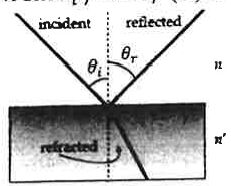
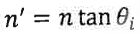
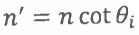
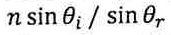
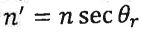
43.A light ray is partially reflected and partially refracted at a boundary between two media. The upper (lower) medium has index of refraction n (n'). The angle of incidence (reflection) is . The reflected ray is perpendicular to the refracted ray when (A) (B)(C)(D)(E)
44.When light is refracted, the quantity that does not change in either process is its (A) direction of travel (B) dispersion (C) frequency (D) speed (E) wavelength
45.An optical fiber has a refractive index of n = 2.0, while the surrounding air has a refractive index of 1.00. If light propagates inside the fiber and is incident on the interface between the fiber and air, at what minimum angle (the critical angle) will total internal reflection occur? (A) 15° (B) 30° (C) 45° (D) 60° (E) 89°
46.To create a nonreflective coating for a camera lens, a film of index of refraction n1 = 2.0 coats the surface of the lens, which has an index of refraction n2 = 1.5. This coating leads to destructive interference for reflected monochromatic light of wavelength 600 nm in air. Assuming the light ray is incident on the film at nearly normal incidence, what could be the possible thickness of the coating film? (A) 200 nm (B) 300 nm (C) 400 nm (D) 500 nm (E) 800 nm
47.White light is spread out into spectral hues by a diffraction grating. If the grating has 1000 lines per cm, at what angle will red light (λ = 640 nm) appear in first order? (A) 14.7° (B) 7.35° (C)17.7° (D) 3.67° (E) 0.80°
48.The light intensity incident on a metallic surface produces photoelectrons with a maximum kinetic energy of 2 eV. The light intensity is doubled. Determine the maximum kinetic energy of the photoelectrons. (A) 4 eV (B) 2 eV (C) √2 eV (D) 3 eV (E) 16 eV
49.When a photon collides with a free electron at rest and the direction of motion of the photon changes, (A) the magnitude of the momentum of the photon does not change. (B) the momentum of the electron does not change. (C) the kinetic energy of the electron does not change. (D) the total energy of the photon does not change. (E) both the magnitude of the momentum and the total energy of the photon decrease.
50.A baseball (1 kg) has an energy of 100 joules. If its uncertainty in position is 1.0 m, what is the minimum percentage uncertainty in the momentum ( × 100%) of the baseball? Here, p (Δp) is the momentum (momentum uncertainty) of the baseball. (A) << 1% (B) 1% (C) 2% (D) 5% (E) 10%
 阿摩線上測驗
登入
 (A) object α (B) object β (C) object γ (D) objects α and γ (E) objects α, β, and γ
 (B)
 (C)
 (D)
 (E)

 (A) 1 N (B) 2 N (C) 3 N (D) 6 N (E) 12 N
 = constant, where r is the radius of the circular path and T is the orbital period, can be derived. The constant,
 , should be (A)
 (B)
 (C)
 (D)
 (E)

 , respectively. Neglect the air resistance and friction. What is the maximum height it can reach? (A)
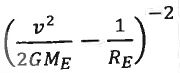 (B)
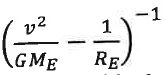 (C)
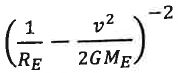 (D)
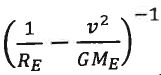 (E)
 (A)
 (B)
 (C)
 (D)
 (E)
 (A) 1/2ML2(B) 1/3ML2(C) 1/4ML2(D) 1/5ML2
 (B)
 (C)
 (D)
 (E)

 (B)
 (C)
 (D)
 (E)

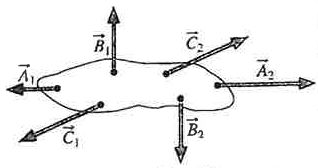 (A) Pair A, forces
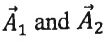 (B) Pair B, forces
 and
 (C) Pair C, forces
 (D) Pairs A and B (E) All of the above
 m(C)
 (D) 2 m (E) 3 m
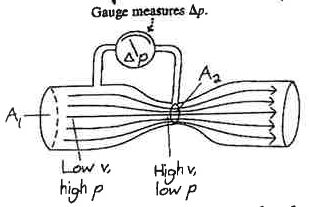 (A)
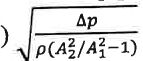 (B)
 (C)
 (D)
 (E)
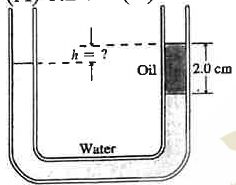 (A) 0.2 cm (B) 0.4 cm (C) 0.6 cm (D) 0.8 cm (E) 1.6 cm
 or 4.184 J ·
 . How long should you microwave the water so it just reaches the boiling point of water, 100 °C at 1 atm? Approximately (A) 30 s (B) 60 s (C) 90 s (D) 120 s (E) 150 s
 are defined as the molar specific heat at constant volume and the molar specific heat at constant pressure, respectively. For an ideal gas, which one is larger,
 ? What is the difference between Cv and Cp? Note that R is the universal gas constant. (A)
 (B)
 (C)
 (D)
 (E)

 , Q, W, V, and p are the change in the system's internal energy, the heat supplied to the system, the work done on the system, the gas volume, and the gas pressure, respectively. (A)
 (B) Q (C) W (D) V (E) p
 ), and the gas temperature, respectively. (A)
 (B) Q (C) W (D)
 (E)

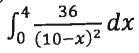 (B)
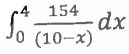 (C)
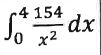 (D)
 (E) none of these.
 C2 / N · m2. (A) -9.8 N · m2 / C (B) -7.8 N · m2 / C (C) -4.5 N · m2 / C (D) -1.3 N · m2 / C (E) +2.0 N · m2 / C.
 , and
 are unit vectors along x, y, and z directions, respectively. (A)
 (B)
 (C)
 (D)
 (E) none of these.
 (A) 24 µF (B) 16 µF (C) 36 µF (D) 27 µF (E) 12 µF.
 (A) 20 Ω (B) 40 Ω (C) 70 Ω (D) 90 Ω (E) 84 Ω
 mT. What is the resulting magnetic force on the wire? (A)
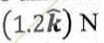 (B)
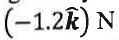 (C)
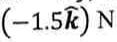 (D)
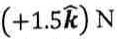 (E)
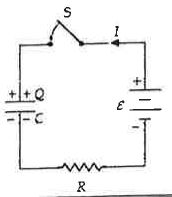 (A) 15 mW (B) 40 mW (C) 45 mW (D) 70 mW (E) 90 mW
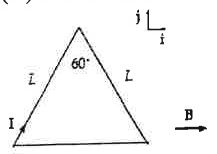 (A) IBL in the +z direction (B) IBL in the -z direction (C) √3IBL in the +z direction (D) √2IBL in the -z direction (E) Zero
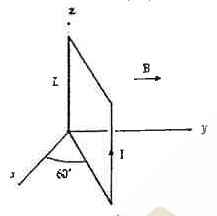 (A) 0.15 N · m (B) 0.35 N · m (C) 0.55 N · m (D) 0.75 N · m (E) 1.73 N · m
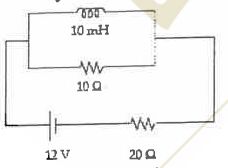 (A) 200 A/s (B) 300 A/s (C) 400 A/s (D) 500 A/s (E) 600 A/s
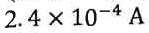 (C) 2.4 mA (D) 10 A (E) 20 A
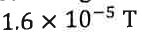 (C)
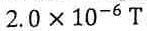 (D)
 (E) 1.8 ×
 T
 . The reflected ray is perpendicular to the refracted ray when
 (A)
 (B)
 (C)

 (D)
 (E)
 × 100%) of the baseball? Here, p (Δp) is the momentum (momentum uncertainty) of the baseball. (A) << 1% (B) 1% (C) 2% (D) 5% (E) 10%