所屬科目:研究所、轉學考(插大)◆普通化學
1. What is the de Broglie wavelength of a proton accelerated through a potential of $2.0 \times 10^4 V$? (A) 0.20 pm (B) 0.64 pm (C) 0.91 pm (D) 2.74 pm (E) 8.67 pm
2. A contour plot of an atomic orbital is shown to the right. What is the name of this orbital? (A) $2p_x$ (B) $2p_y$ (C) $3p_x$ (D) $3p_y$ (E) $3d_{xy}$
3. If $\lambda_1$ is the wavelength required to excite an electron in H from 2s to 4p level, what is the wavelength emitted by the same electron when relaxing from 4p back to 1s level? (A) $5\lambda_1$ (B) $2\lambda_1$ (C) $\lambda_1/2$ (D) $\lambda_1/4$ (E) $\lambda_1/5$
4. How many constitutional (structural) isomers exist for $C5H{10}$? (A) 6 (B) 7 (C) 8 (D) 9 (E) 10
5. How many of the following compounds have optical isomers?(A) 0 (B) 1 (C) 2 (D) 3 (E) 4
6. Which compound has the strongest dispersion force among them? (A) CO2 (B) H2S (C) C6H6 (D) CH4 (E) PH3
7. In an electrolysis cell, a constant current of 1.90 A is passed through an aqueous $CuCl_2$ solution for 15.0 min. At the end of the experiment, 0.468 g of Cu(s) is obtained as the target reduction product. What fraction of the electrons passed through the circuit was successfully used to produce Cu(s)? (A) 20.8% (B) 41.6% (C) 62.4% (D) 83.1% (E) 100%
8. What says the third law of thermodynamics? (A) The entropy of the universe never decreases. (B) The entropy of a perfect crystal at 0 K is zero. (C) Energy is distributed evenly between different degrees of freedom. (D) The total energy of the universe is conserved. (E) Both internal energy U and enthalpy H are state functions.
9. The following data were collected for the reaction between $H_2$ and NO at $700^{\circ}C$: The rate law of this reaction can be written as: $rate = (P{H2})^x(P{NO})^y$. Determine the coefficients x and y. (A) x=1, y=0 (B) x=1, y=1 (C) x=1, y=2 (D) x=2, y=0 (E) x=2, y=1
10. Which compound is expected to have the highest melting point? (A) BaCl2 (B) HClO3 (C) C2H5OH (D) C6H12O6
11. Which of the following polymers is NOT synthesized by addition polymerization? (A) PP (B) PVC (C) PS (D) Teflon (E) PET
12. A gas has a mass of 30.8 grams and occupies \(9.24 \times 10^6\) mm3 at 0.873 atm and 21 °C. Assuming ideal gas behavior, determine the molar mass of this gas. (A) 16.0 g mol-1 (B) 44.1 g mol-1 (C) 70.9 g mol-1 (D) 92.1 g mol-1 (E) 106.2 g mol-1
13. Which graph below describes the vapor pressures (total and individual) of an ethanol (C2H5OH) and hexane (C6H14) mixture? Mixing ethanol and hexane is (A) I; endothermic (B) I; exothermic (C) II; endothermic (D) II; exothermic (E) III; endothermic
14. In the development of the hydrogen economy, one of the most crucial challenges is safely storing hydrogen gas. For example, magnesium metal has the hcp (hexagonal close-packed) lattice structure and can use the empty space between Mg atoms (interstitial sites) to store smaller hydrogen molecules. The overall reaction can be represented as:
Mg(s) + H2(g) ⇌ MgH2(s)
The equilibrium pressures of hydrogen gas at different temperatures are plotted in the figure to the right. Based on these data, what are the signs of ΔH and ΔS for this reaction? (A) ΔH > 0, ΔS > 0 (B) ΔH < 0, ΔS < 0 (C) ΔH < 0, ΔS > 0 (D) ΔH > 0, ΔS < 0 (E) There is no sufficient information to determine the signs of ΔH and ΔS
15. After adding 10 mL of 0.15 M KOH into 30 mL of 0.08 M HNO2 (Ka = 4.5 x 10⁻⁴), which of the following statements is NOT correct? (A) The neutralization reaction between KOH and HNO2 almost reaches completion. (B) The solution has a higher buffer capacity against strong bases than against strong acids. (C) The solution pH is still within the most effective buffer range. (D) The solution pH is approximately 3.57. (E) Compared to the original solution, the percent ionization of HNO2 is decreased.
16. Which of the following compounds will be more soluble in an acidic solution than in pure water? (A) Ca3(PO4)2 (B) NH4Cl (C) FeBr3 (D) CuS (E) Sr(OH)2
17. Choose all correct descriptions of orbital hybridization. (A) A hybrid orbital is a special type of molecular orbital. (B) For the same atom, the energy of a sp hybrid orbital is lower than that of a sp2 hybrid orbital. (C) The sulfur atom in SF4 is sp3d-hybridized. (D) The central atoms of ClF4+ and PF5 have the same hybridization type. (E) The central atoms of CO2 and SO2 have the same hybridization type.
18. For a chemical reaction that has reached equilibrium, which statements are correct? (A) The concentrations of reactants and products do not change with time. (B) More products can be formed by increasing the temperature. (C) The reaction quotient equals the equilibrium constant K. (D) The Gibbs free energy change ΔG = 0. (E) The forward reaction rate and the reverse reaction rate are the same.
19. Using valence bond theory, which following statements correctly describe bonding in the nitrate ion (NO₃⁻)? (A) There exist multiple resonance structures. (B) Resonance structures transform rapidly between each other. (C) The nitrogen atom is sp² hybridized. (D) Among all three N-O bonds, one is shorter than the other two. (E) NO₃⁻ has no net dipole moment because the N-O bonds are non-polar.
20. Choose all correct statements about O₂ and O₂⁻ based on molecular orbital theory. (A) Both molecules have a higher ionization energy than a gaseous oxygen atom. (B) Both molecules are paramagnetic. (C) O₂ has a shorter bond length than O₂⁻. (D) O₂⁻ has more electrons and a higher bond order than O₂. (E) O₂⁻ has a smaller bond dissociation energy.
21. Shown to the right is the reaction coordinate diagram for the reaction: A + 2B → 2C. Which of the following statements are correct? (A) Based on the reaction coordinate diagram, the rate law can be determined to be: rate = kA². (B) The reaction mechanism consists of only one elementary step. (C) Compound C is generated twice as fast as compound A is consumed. (D) The overall reaction is endothermic. (E) Increasing the temperature would result in the formation of fewer compound C.
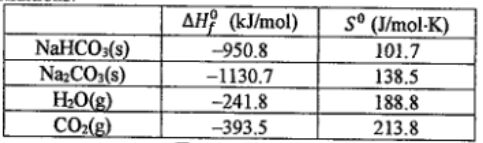
(a) (3%) Predict whether the sign of \(\Delta S^0_{rxn}\) for reaction (1) is positive or negative. Explain your answer.(c) (2%) Calculate the temperature range (T > ____ K or T < ____ K) in which reaction (1) is spontaneous.
(b) (6%) The standard formation enthalpies \(\Delta H^0_f\) and standard entropy \(S^0\) for each species involved in reaction (1) are listed in the following table. Calculate the enthalpy of reaction \(\Delta H^0_{rxn}\) and the entropy of reaction \(\Delta S^0_{rxn}\) under standard conditions.
(c) (2%) Calculate the temperature range (T > _ K or T < _ K) in which reaction (1) is spontaneous.
 阿摩線上測驗
登入
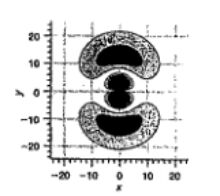 (A) $2p_x$ (B) $2p_y$ (C) $3p_x$ (D) $3p_y$ (E) $3d_{xy}$
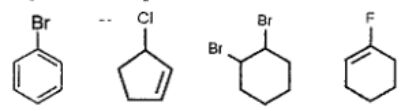 (A) 0 (B) 1 (C) 2 (D) 3 (E) 4
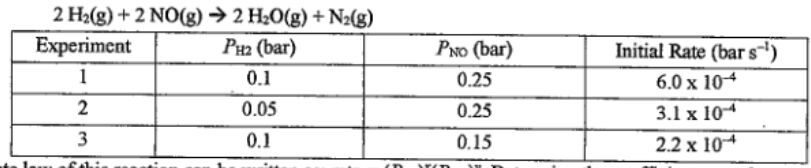 The rate law of this reaction can be written as: $rate = (P{H2})^x(P{NO})^y$. Determine the coefficients x and y. (A) x=1, y=0 (B) x=1, y=1 (C) x=1, y=2 (D) x=2, y=0 (E) x=2, y=1
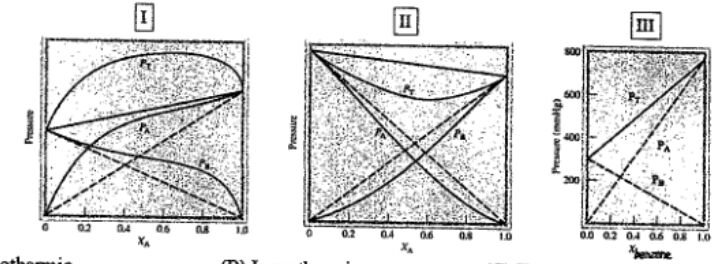 (A) I; endothermic (B) I; exothermic (C) II; endothermic (D) II; exothermic (E) III; endothermic
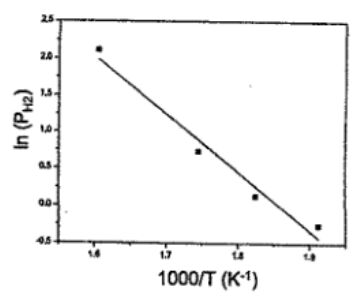 (A) ΔH > 0, ΔS > 0 (B) ΔH < 0, ΔS < 0 (C) ΔH < 0, ΔS > 0 (D) ΔH > 0, ΔS < 0 (E) There is no sufficient information to determine the signs of ΔH and ΔS
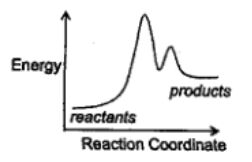 (A) Based on the reaction coordinate diagram, the rate law can be determined to be: rate = kA². (B) The reaction mechanism consists of only one elementary step. (C) Compound C is generated twice as fast as compound A is consumed. (D) The overall reaction is endothermic. (E) Increasing the temperature would result in the formation of fewer compound C.