所屬科目:研究所、轉學考(插大)◆普通化學
1. What is the purpose of a salt bridge in an electrochemical cell? (A)The salt bridge allows ions to move in order to replenish the reactants and remove products. (B) The salt bridge completes the circuit by allowing electrons to flow back to where they started. (C)The salt bridge allows solvent to flow between the compartments replenishing the solution. (D) The salt bridge allows ions to move from one cell to the other to keep them electrically neutral.
2.Based on the following cell diagram \( Pt|Fe^{2+},Fe^{3+}||Cu^{2+}|Cu \), what reaction occurs at the anode?
(A) \( Fe^{2+} \rightarrow Fe^{3+} \)(B) \( Fe^{3+} \rightarrow Fe^{2+} \)(C) \( Cu \rightarrow Cu^{2+} \)(D) \( Cu^{2+} \rightarrow Cu \)
3. When a sparingly soluble salt such as \( \text{CaCO}_3 \) dissolves in water, what chemical equilibrium occurs? (A) The compound in aqueous solution is in equilibrium with the dissociated atoms. (B) The solid compound is in equilibrium with the dissociated atoms in solution. (C) The solid compound is in equilibrium with its conjugate acid and conjugate base. (D) The solid compound is in equilibrium with the dissociated anion and cation.
4. \( \text{Cu(CrO}_4\text{)} \) has a \( \text{K}_{\text{sp}} = 3.6 \times 10^{-6} \). How many grams of \( \text{Cu(CrO}_4\text{)} \) will dissolve in 100 ml of water? (A) \( 6.5 \times 10^{-4} \) (B) 0.034 (C) 0.68 (D) 14. (Cr: 52, Cu: 63.5)
5. If the half-life of a first-order reaction is 4 hours, how long will it take for the reactant to decrease to 1/8 of its initial value? (A)8 hours (B) 12 hours (C)16 hours (D) 32 hours
6. What is the cathode half-reaction in the equation \[ 2\text{Mn}^{2+}(aq) + 5\text{Sn}^{4+}(aq) + 8\text{H}_2\text{O} \rightarrow 2\text{MnO}_4^-(aq) + 5\text{Sn}^{2+}(aq) + 16\text{H}^+(aq) \] (A) \( \text{Mn}^{2+}(aq) + 4\text{H}_2\text{O} + 5\text{e}^- \rightarrow \text{MnO}_4^-(aq) + 8\text{H}^+(aq) \) (B) \( \text{Sn}^{4+}(aq) + 2\text{e}^- \rightarrow \text{Sn}^{2+}(aq) \) (C) \( \text{Sn}^{4+}(aq) \rightarrow \text{Sn}^{2+}(aq) + 2\text{e}^-(aq) \) (D) \( \text{Mn}^{2+}(aq) + 4\text{H}_2\text{O} \rightarrow \text{MnO}_4^-(aq) + 8\text{H}^+(aq) + 5\text{e}^- \)
7. What is the ground state electron configuration for the element vanadium? (A) \( 1s^2 2s^2 2p^6 3s^2 3p^4 4s^2 3d^5 \) (B) \( 1s^2 2s^2 2p^6 3s^2 3p^6 4s^1 3d^4 \) (C) \( 1s^2 2s^2 2p^6 3s^2 3p^6 3d^5 \) (D) \( 1s^2 2s^2 2p^6 3s^2 3p^6 4s^2 3d^3 \)
8. The different types of electromagnetic radiation vary in their (A)speed and frequency. (B) speed and amplitude. (C)speed and wavelength. (D) frequency and wavelength.
9. What is the frequency of the 528 nm green light emitted from an argon ion laser? (A) \( 1.58 \times 10^{11} \) (B) \( 1.58 \times 10^{2} \) (C) \( 5.68 \times 10^{14} \) (D) \( 5.68 \times 10^{5} \)
10. Which of the following sets of quantum numbers is NOT allowed? (A)n = 3; l = 2, ml = +2 (B) n = 5; l = 2, ml = +1 (C)n = 2; l = 2, ml = 0 (D) n = 4; l = 2, ml = -1
11. When a metal complex ion forms in solution, what are the metal ion and ligands acting as? (A)The metal ion acts as a Lewis base, and the ligand acts as a Lewis acid. (B) The metal ion is a Lewis acid, and the ligand is its conjugate base. (C)The ligand is a Lewis base, and the metal ion is its conjugate acid. (D) The metal ion acts as a Lewis acid, and the ligand acts as a Lewis base.
12. Most metal oxides and hydroxides are classified as (A)acidic oxides. (B) amphoteric oxides. (C)basic oxides. (D) highly insoluble.
13. How does a closed system differ from an open system? (A)Energy is conserved in a closed system. (B) A closed system cannot exchange matter with the surroundings. (C)A closed system cannot exchange heat with the surroundings. (D) A closed system does not do any work on the surroundings.
14. Which of the following is NOT true about a state function? (A)The change in a state function depends on the initial and final states. (B) A state function does not depend on the history of the system. (C)The change in a state function depends on the pathway used. (D) The state function only depends on the present state.
15. What types of forces are responsible for the phenomenon of incomplete dissociation? (A)Hydrogen bonding (B) Dipole-dipole attractions (C)Electrostatic attractions (D) Polar covalent bonds
16. What kinds of compounds have increased solubility because of incomplete dissociation? (A)Ionic compounds (B) Molecular compounds (C)Highly charged ionic compounds (D) Covalent network solids
17. How does the formation of ion pairs affect the solubility of an ionic compound? (A)Ion pairing decreases the solubility of a compound. (B) Ion pairing does not change the solubility of a compound. (C)Ion pairing increases the solubility of a compound. (D) Ion pairing can increase or decrease the solubility.
18. What will occur if 10 ml of 0.500 M sodium acetate solution is added to 90 ml of 0.100 M silver nitrate solution (\( K_{\text{sp}} \) for silver acetate is \( 2.0 \times 10^{-3} \))? (A) The solution will become acidic. (B) The solution will remain clear. (C) A precipitate will form. (D) Two immiscible liquid layers will form.
19. If a saturated solution of the salt AB has a small amount of another soluble salt of B added, what is expected to occur? (A)The soluble salt will also precipitate from solution. (B) The soluble salt will dissolve and nothing will precipitate (C)The soluble salt will dissolve, and some of the AB will precipitate. (D) Both the soluble salt and AB will precipitate from the solution.
20. What is a catalyst? (A)A catalyst is a molecule that decreases the rate of undesired reactions. (B) A catalyst increases the rate of a reaction but is not changed during the reaction. (C)A catalyst increases the rate of a reaction and is consumed during the reaction. (D) A catalyst helps to direct the course of a reaction but does not increase the rate.
21. What is the wavelength of light emitted when an electron in a hydrogen atom changes from the n = 5 state to the n = 2 state? (A)230 nm (B) 304 nm (C)1914 nm (D) 434 nm
22. The Paschen series of lines in the atomic spectrum of hydrogen end in the orbit n = 3. What is the wavelength of the second line in the Paschen series? (A)656 nm (B) 1281 nm (C)1875 nm (D) 103 nm
23. The Lyman series of lines in the atomic spectrum of hydrogen end in the lowest energy orbit. What is the wavelength of the fourth line in the Lyman series? (A)121 nm (B) 114 nm (C)95 nm (D) 364 nm
24. How much work in joules is done on the system when a 1.15 atm external pressure causes a piston to decrease in volume from 6.55 liters to 3.16 liters? (AB)-3.90 J (AC) -394 J (AD)-761 J (AE) -367 J (BC) 3.90 J (BD) 394 J (BE) 761 J (CD) 367 J
25. What is the energy change of the system if a chemical reaction transfers 32,146 J of heat to the surroundings while it causes the expansion of a 1.465 liter vessel to 3.687 liters against a pressure of 3.64 atmospheres? (AB)33.0 kJ (AC) 31.3 kJ (AD)40.2 kJ (AE) 24.1 kJ (BC) -33.0 kJ (BD) -31.3 kJ (BE) -40.2 kJ (CD) -24.1 kJ
26. What is the definition of entropy? (A)A thermodynamic property of all substances proportional to their degree of disorder. (B) A thermodynamic property of substances proportional to the degree of order. (C)A thermodynamic property of a substance proportional to its internal energy. (D) A thermodynamic property of a substance proportional to spontaneity.
27. Which of the following processes results in a decrease in the entropy of the system? (A)Melting of ice (B) Sublimation of CO2 (C)Condensation of steam (D) Dissolving of NaCl in water
28. What is the Gibbs free energy equation? (A)ΔG = ΔH + TΔS (B) ΔG = ΔH - TΔS (C)ΔG = ΔH - PΔV (D) ΔG = ΔS + TΔH
29. When a system is at equilibrium, which of the following is NOT true? (A)The composition of the system is not changing. (B) The forward reaction is occurring at a faster rate than the reverse. (C)Reactants are being converted to products and product converted back to reactants. (D) The forward and reverse chemical reactions are in balance.
Consider the reaction \( \text{CO(g)} + \text{H}_2\text{O(g)} \leftrightarrow \text{CO}_2\text{(g)} + \text{H}_2\text{(g)} \).
Which of the following initial compositions will NOT achieve equilibrium?
(A) 1.0 mol of \( \text{CO}_2 \) and 0.50 mol \( \text{H}_2 \)(B) 0.25 mol \( \text{CO} \) and 0.75 mol \( \text{H}_2\text{O} \)(C) 0.85 mol \( \text{CO} \) and 0.25 mol \( \text{H}_2 \)(D) 0.25 mol \( \text{H}_2 \), 0.35 mol \( \text{CO}_2 \), and 0.25 mol \( \text{CO} \)
31. How is it possible to tell if equilibrium has been achieved? (A)The rate of the forward reaction has decreased to zero. (B) All of the reactants are converted to products. (C)The composition of the system does not change. (D) The concentration of one of the reactants becomes zero.
32. What would be the effect of increasing the temperature on the preceding reaction? (A)The reaction would proceed to the product side. (B) The reaction would proceed to the reactant side. (C)The position of the equilibrium would not change. (D) Additional information is needed to answer this question.
33. What would be the effect on the preceding reaction of decreasing the volume to one-half its original value? (A)The reaction would proceed to the product side. (B) The reaction would proceed to the reactant side. (C)The position of the equilibrium would not change. (D) Additional information is needed to answer the question.
34. What would be the effect on the preceding reaction of adding 2.0 mol of CO? (A)The reaction would shift to the product side. (B) The composition of the system at equilibrium will not change. (C)The reaction will shift to the reactant side. (D) Additional information is needed to answer the question.
Acetic acid has a \( K_a \) of \( 1.75 \times 10^{-5} \). What is the value of \( K_b \) for the acetate ion?
(A) \( 1.75 \times 10^{-5} \)(B) \( 2.39 \times 10^{-5} \)(C) \( 5.71 \times 10^{-10} \)(D) \( 1.75 \times 10^{-19} \)
36. Which of the following is the strongest acid? (A)CH3CO2H (B) ClCH2CO2H (C)CCl2HCO2H (D) CCl3CO2H
37. What would be the most important solute-solvent interaction when anthracene is dissolved in benzene? (A)London dispersion forces (B) Dipole-dipole attractions (C)Hydrogen bonding (D) Iondipole attractions
38.Based on the reaction \( \text{NH}_3(\text{aq}) + \text{CH}_3\text{CO}_2\text{H}(\text{aq}) \leftrightarrow \text{NH}_4^+(\text{aq}) + \text{CH}_3\text{CO}_2^-(\text{aq}) \), which of the following is a conjugate acid-base pair?
(A) \( \text{NH}_3/\text{CH}_3\text{CO}_2^- \)(B) \( \text{NH}_3/\text{NH}_4^+ \)(C) \( \text{CH}_3\text{CO}_2\text{H}/\text{NH}_4^+ \)(D) \( \text{NH}_3/\text{CH}_3\text{CO}_2\text{H} \)
39. The water molecule has a bent shape, and the O atom pulls electrons away from the H atoms, which (A)results in the formation of an ionic compound with two hydrogen ions and one oxide ion. (B) makes water a polar molecule with a partial negative charge on the oxygen. (C)results in a nonpolar molecule with no charges on any of the atoms. (D) results in partial negative charges on the hydrogen atoms and a partial positive charge on the oxygen atom.
40. When sodium chloride dissolves in water to form an aqueous solution, which of the following is NOT true? (A)The sodium ions are surrounded by water molecules with the hydrogen atoms directed inward. (B) Each of the cations and anions are surrounded by their own shell of water molecules. (C)The sodium ion and chloride ion are separated from each other by many water molecules. (D) The sodium and chloride ions are each hydrated by water molecules.
41. What is the molar concentration of a solution that is prepared by dissolving 4.79 g of C6H5CO2H in 100 ml of solution? (A)5.84 M (B) 0.392 M (C)0.0479 M (D) 0.514 M
42. The lattice energy of an ionic compound is (A)the energy released when an ionic compound is formed from the elements. (B) equal to the enthalpy of formation of the ionic compounds. (C)the energy released when two gas phase ions combine to give an ion pair. (D) the energy released when gas phase ions combine to form a solid ionic compound.
43. Sodium crystallizes in a body-centered cubic unit cell. How many atoms are contained in the unit cell of Na? (A)1 (B) 2 (C)4 (D) 9
44. What is the molecular geometry of the SeCl4 molecule? (A)Trigonal bipyramidal (B) Tetrahedral (C)Square planar (D) Seesaw shaped
45. The bonding in the O2 molecule is best described as (A)nonpolar covalent. (B) polar covalent. (C)ionic. (D) coordinate covalent.
46. The ideal gas law adequately describes the behavior of real gases when (A)the temperature is low and the pressure is low. (B) the pressure is high and the temperature is low. (C)the pressure is high and the temperature is high. (D) the temperature is high and the pressure is low.
47. A sample of gas occupies a volume of 0.683 liters at 25°C. What volume would the gas occupy at 100°C? (A)2.73 liters (B) 0.546 liters (C)0.854 liters (D) 0.171 liters
48. What is diffusion? (A)The motion of a gas through a barrier with a hole in it (B) The gradual mixing of gases due to the motion of the gas molecules (C)The motion of gas particles from one container to another (D) The tendency of some molecules to want to form clusters
49. What is an adhesive force? (A)The intermolecular interactions between molecules in a liquid (B) The forces that make droplets of water form on a surface (C)The attractive forces between the liquid and a substance (D) The forces that allow insects to walk easily on water
50. What is the definition of the normal boiling point of a liquid? (A)The vapor pressure of the liquid at a temperature of 25°C. (B) The temperature when the vapor pressure of a liquid is equal to the applied pressure. (C)The temperature at which the vapor pressure of the liquid is 1 mmHg. (D) The temperature at which the vapor pressure of the liquid is 1 atmosphere.
 阿摩線上測驗
登入
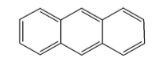 (A)London dispersion forces (B) Dipole-dipole attractions (C)Hydrogen bonding (D) Iondipole attractions