所屬科目:研究所、轉學考(插大)◆生物化學
1. Evidence that a peptide bond displays resonance includes all of these reasons, except:(A) It is planar. (B) It is shorter than a normal N-C single bond. (C) The alpha carbons attached to the peptide bond are always in a cis configuration. (D) It has double bond character. (E) All of these facts are consistent with peptide bonds displaying resonant structures.
2. Assuming the oligopeptide ALPHAHELICKS forms one continuous a-helix, the carbonyl oxygen of the glutamic acid residue is hydrogen bonded to the amide nitrogen of: (A) leucine. (B) isoleucine. (C) serine. (D) lysine. (E) cysteine.
3. Quaternary structure is associated with the relative orientation of one polypeptide to another polypeptide in a multisubunit protein. Which of the following bond forces are important in quarternary structure: (A) Disulfide bonds. (B) Hydrogen bonds. (C) Hydrophobic attraction. (D) Both hydrogen bonds and hydrophobic attraction. (E) All of these are important in quarternary structure.
4. In allosteric interactions: (A) proteins that consist of a single polypeptide chain form aggregates. (B) disulfide bonds are broken. (C) changes that take place in one site of a protein cause drastic changes at a distant site. (D) metal ions always bind to the protein. (E) aid in the correct and timely folding of other proteins.
5.Which type of columns are affected by the ionic charge, shape, substrate-binding strength of a protein, respectively? (A) Gel filtration, affinity chromatography, cation or anion exchange. (B) Cation or anion exchange, gel filtration, affinity chromatography. (C) Affinity chromatography, gel filtration, cation or anion exchange. (D) Gel filtration, cation or anion exchange, affinity chromatography. (E) Cation or anion exchange, affinity chromatography, gel filtration.
6. Which of the following statements about acid and base catalysis is correct? (A) Glu normally acts as a general acid in an enzyme reaction at around neutral pH. (B) General acid can abstract a proton from a substrate. (C) The active-site His in chymotrypsin protease reaction plays both roles of general acid and general base. (D) The value of Cys side chain is around 6. (E) Metal ion such as can accept electrons to act as a Lewis base.
7. In a peptide bond, the angle of rotation around the -N bond is designated: (A) α. (B) B. (C) o. (D) y. (E) Y.
8. Which of the following methods can not be used to determine protein molecular mass under native or denatured state? (A) Mass spectrometer. (D) Size exclusion column. (B) SDS-PAGE. (C) Analytic ultracentrifuge. (E) Isothermal titration microcalorimeter.
9. Which of the following statements about enzyme inhibitors is not correct? (A) A competitive inhibitor binds to the substrate binding site. (B) A competitive inhibitor does not alter the of an enzyme reaction. (C) A competitive inhibitor increases the of an enzyme reaction. (D) A non-competitive inhibitor decreases the of an enzyme reaction. (E) A non-competitive inhibitor increases the of an enzyme reaction.
10. Which of the following strategies is not used by enzymes for effective catalysis? (A) Van der Waals catalysis. (B) Metal ion catalysis. (C) Covalent catalysis. (D) General acid and base catalysis. (E) Electrostatic catalysis.
11. Glucose breakdown in certain mammalian and bacterial cells can occur by mechanisms other than classic glycolysis. In most of these, glucose 6-phosphate is oxidized to 6-phosphogluconate, which is then further metabolized by: (A) an aldolase-type split to form glyceric acid and glyceraldehyde 3-phosphate. (B) an aldolase-type split to form glycolic acid and erythrose 4-phosphate. (C) conversion to 1,6-bisphosphogluconate. (D) decarboxylation to produce keto- and aldopentoses. (E) oxidation to a six-carbon dicarboxylic acid.
12. Which one of the following statements about gluconeogenesis is false? (A) For starting materials, it can use carbon skeletons derived from certain amino acids. (B) It consists entirely of the reactions of glycolysis, operating in the reverse direction. (C) It employs the enzyme glucose 6-phosphatase. (D) It is one of the ways that mammals maintain normal blood glucose levels between meals. (E) It requires metabolic energy (ATP or GTP).
13. The metabolic function of the pentose phosphate pathway is to: (A) act as a source of ADP biosynthesis. (B) generate NADPH and pentoses for the biosynthesis of fatty acids and nucleic acids. (C) participate in oxidation-reduction reactions during the formation of H₂О. (D) provide intermediates for the citric acid cycle. (E) synthesize phosphorus pentoxide.
14. Which of the following is a source of NADPH? (A) The electron transport chain. (B) Dehydrogen of the phosphoenopyruvate to pyruvate. (C) Oxidative decarboxylation of the malate to pyruvate. (D) All of the above. (E) Neither of the above.
15. The enzymes of the citric acid cycle are listed in the following. Would you please use the information to answer the following questions?
(1) Fumarase (2) Succinate dehydrogenase(3) Succinyl-CoA synthase
(4) Aconitatse (5) a-Ketoglutarate dehydrogenase (6) Isocitrate dehydrogenase
(7) Citrate synthase (8) Pyruvate dehydrogenase (9) Malate dehydrogenase (A) Enzymes 5, 6, and 8 catalyze the reactions that release CO₂. (B) Enzyme 4 catalyzes the reaction that produces FADH2. (C) Enzymes 1 and 4 catalyze reactions that transform achiral to chiral molecules. (D) Enzymes 1 and 7 catalyze the reactions that consume double-bond-containing molecules. (E) Enzymes 5 and 6 catalyze the reactions that are bypassed in the glyoxylate cycle.
16. The citric acid cycle is considered part of aerobic metabolism even though oxygen does not appear explicitly in any reaction because: (A) it contains oxidative decarboxylation of isocitrate to succinyl-CoA. (B) it takes place in the mitochondrion. (C) the reoxidation of NADH and FADH2 leads to the production of considerable quantities of ATР. (D) it consumes H₂O molecule. (E) the NADH and FADH2 produced are reoxidized in the electron transport chain linked to oxygen.
17. Which of the following is an advantage of using multiple steps in electron transport? (A) By using several steps, the net AG is higher (more energy is released). (B) More heat can be generated by using small steps. (C) More energy can be captured to synthesize ATP by using small steps. (D) Small steps allow for both more heat generation and more ATP synthesis. (E) All of these statements are advantages of using multiple steps.
18. Evidence for chemiosmotic coupling as the mechanism for oxidative phosphorylation is based on the observation that: (A) mitochondrial membrane fragments without compartmentalization can carry out oxidative phosphorylation. (B) many different kinds of substances can serve as uncouplers. (C) submitochondrial preparations that contain closed vesicles can carry out oxidative phosphorylation. (D) it has proved impossible to duplicate the process by creating pH gradient. (E) None of the above.
19. In the Calvin cycle a reshuffling of intermediates is necessary: (A) to use as little NADPH as possible. (B) to provide the carbon reacts for other reactions linked to Calvin cycle. (C) to use as little ATP as possible. (D) to regenerate the key intermediate with which CO₂ initially reacts. (E) to ensure uniform incorporation of CO₂ into newly synthesized sugars.
20. Which ofthe following is not an intermediate in the C4 pathway? (A) Malate. (B) Pyruvate. (C) Phosphoenolpyruvate. (D) Fumarate. (E) Oxaloacetate.
21. Which one of the following statements is incorrect? (A) Rafts are enriched in sphingolipids and cholesterols. (B) A region with more than 20 residues of high hydropathy index is presumed to be a transmembrane segment. (C) The positively charged Lys, His, and Arg residues of membrane proteins occur more commonly on the cytoplasmic face of membranes. (D) Glycosyl phosphatidylinositol (GPI)-linked proteins are always on the inner face of the plasma membrane. (E) Lamin A uses the farnesyl group to anchor at the nuclear inner membrane. Unable to cleave pre-Lamin A/C from the nuclear inner membrane may cause premature aging.
22. Which one of the following statements is incorrect? (A) A transporter can significantly reduce the for polar compounds and ions across the membrane bilayer. (B) P-type ATPases are sensitive to the phosphate analog vanadate. (C) ATPase, an antiporter for outward 2 Na ions and inward ions, produces the membrane potential of-50 to -70 mV. (D) The multidrug transporter (MDR1), an ABC transporter, is responsible for the drug resistance in certain tumors. (E) Cystic fibrosis is resulted from a defective chloride ion channel.
23. Which one of the following statements is incorrect? (A) Epinephrine and glucagon activate adenylyl cyclase to free fatty acids from adipocytes. (B) Defective perilipin cannot promote hormone-sensitive lipase-mediated adipocyte lipolysis. (C) The fatty acids with acyl chain lengths of 12 or fewer carbons enter mitochondria without the help of membrane transporters. (D) Fatty acids with 14 or more carbons must be through the carnitine shuttle to enter the mitochondrial membranes. (E) Coenzyme A in the mitochondrial matrix is largely used in the biosynthesis of fatty acids; whereas cytosolic coenzyme A is used in oxidative degradation of fatty acids.
24. Which one of the following statements is incorrect? (A) Malonyl-CoA negatively regulates carnitine acyltransferase I. (B) During vigorous exercise, glucagon activates protein kinase A (PKA) to phosphorylate acetyl-CoA carboxylase and reduce malonyl-CoA synthesis. (C) The peroxisomal ẞ oxidation is active on very-long-chain fatty acids. (D) Branched fatty acids with methyl groups, such as phytanic acid (16 C), are catabolized in peroxisomes by a oxidation. (E) In vertebrates, the preferred substrates for oxidation are fatty acids of 20 to 26 carbon atoms.
25. Which one of the following statements is incorrect? (A) All cells can synthesize cholesterol from acetyl-CoA. (B) The B-hydroxy-B-methylglutaryl-CoA (HMG-CoA) synthase for cholesterol synthesis is simultaneously responsible for the ketone body formation in the mitochondria. (C) The reduction of HMG-CoA to mevalonate by HMG-CoA reductase is a rate-limiting step, which can be inhibited by statins. (D) Adrenal gland and gonads use cholesterol as a precursor for steroid hormones. (E) Cholesterol and cholesteryl esters are carried in the blood plasma as lipoproteins.
26. Which one of the following statements is incorrect? (A) Humans have the enzyme to synthesize the o-3 a-linolenic acid (ALA; 18:3. (B) Fish oils are rich in eicosapentaenoic acid (EPA; 20:5 and docosahexaenoic acid (DHA; 22:6. (C) The "Mediterranean diets" contain rich -3 polyunsaturated fatty acids (PUFAs). (D) In all naturally unsaturated fatty acids, the double bonds are in the cis configuration. (E) Intake of more trans fatty acids leads to a higher incidence of cardiovascular disease.
27. Which of the following statements is false in reference to the mammalian synthesis of urea? (A) The carbon atom of urea is derived from mitochondrial . (B) Aspartate directly donates a nitrogen atom for the formation of urea during the urea cycle. (C) The activity of urea cycle is regulated by the rates of synthesis of the four urea cycle enzymes and carbamoyl phosphate synthetase I. (D) Arginine is an inhibitor of the urea cycle. (E) The process of urea production is an energy-consuming series of reactions.
28. Which of the following statements concerning the nitrogen excretion and the urea cycle in mammals is false? (A) The reaction of the combination of ammonia with glutamate to form glutamine requires ATP. y-Glutamyl phosphate is an intermediate in the reaction. (B) Glutamate is metabolically converted to a-ketoglutarate and by a process described as oxidative deamination. (C) generated in liver mitochondria is immediately used, together with CO2 (as ), to form carbamoyl phosphate. This reaction is catalyzed by carbamoyl phosphate synthetase I and requires ATP. (D) The urea cycle causes a net conversion of oxaloacetate to malate. (E) The pathways of the citric acid cycles and the urea cycles are interconnected, and the pathway interconnections decrease the energetic cost of urea synthesis.
29. Which of the following conversions require more than one step?
1. Alanine → pyruvate
2. Phenylalanine → hydroxyphenylpyruvate
3. Aspartate → oxaloacetate
4. Glutamate → ketoglutarate
5. Proline → glutamate (A) 2 and З. (B) 1, 2, and 4. (C) 1, 3, and 5. (D) 2 and 5. (E) 2, 3, and 5.
30. Which of the following descriptions is false? (A) The conversion of glutamate to an a-keto acid and NH4 is accompanied by ATP hydrolysis. (B) Most amino acids are metabolized in the liver; however, the three amino acids with branched side chains (leucine, isoleucine, and valine) are oxidized as fuels primarily in muscle, adipose, kidney, and brain. (C) In liver mitochondria, glutaminase catalyzes the reaction to release the amino group from glutamine; the products are glutamate and ammonia. (D) Genetic defects in the urea cycle can not be treated by a protein-free diet. (E) Alanine can play the role to transport ammonia from skeletal muscles to the liver. In muscles, glutamate can transfer its a-amino group to pyruvate to form alanine by alanine aminotransferase.
31. In the activated-methyl cycle for the synthesis of S-adenosylmethionine (adoMet), S-adenosylmethionine is synthesized from: (A) methionine and N-methyltetrahydrofolate. (B) methionine and AТР. (C) homocysteine and ATP. (D) cysteine and AТР. (E) homocysteine and N-methyltetrahydrofolate.
32.Tetrahydrofolate (THF) and its derivatives shuttle _____ between different substrates. (A) electrons. (B) (C) NH2 groups. (D) one carbon units. (E) acyl groups.
33. The enzyme involved in the synthesis of asparagine from asparte is a(n): (A) asparte aminotransferase. (B) glutamine amidotransferase. (C) glutamate dehydrogenase. (D) decarboxylase. (E) hydroxylase.
34. Which of the following statements is false? (A) The brain prefers glucose as an energy source, but can use ketone bodies. (B) Elevated epinephrine levels stimulate the conversion of liver glycogen to blood glucose and stimulate fatty acid mobilization in adipose tissue. (C) At rest, fatty acids are the preferred fuel in skeletal muscle. (D) In skeletal muscle, fatty acids are the preferred fuel at rest. (E) Epinephrine triggers an increased rate of glycolysis in muscle by lowering the concentration of fructose 2,6-biphosphate.
35. Elevated cellular concentration of fructose 2,6-biphosphate in hepatocytes stimulates: (A) the activity of phosphofructokinase-1. (B) the activity of fructose 1,6-biphosphatase. (C) the activity of phosphoprotein phosphatase. (D) the activity of phosphofructokinase-2. (E) the activity of fructose 2,6-biphosphatase.
36. Orotic aciduria is an inherited metabolic disease in which orotic acid (orotate) accumulates in the tissues, blood, and urine. The metabolic pathway in which the enzyme defect occurs is: (A) epinephrine synthesis. (B) purine synthesis. (C) purine breakdown. (D) pyrimidine synthesis. (E) pyrimidine breakdown.
37. Several nucleotide bases undergo spontaneous loss of their exocyclic amino groups (deamination). Deamination of the nucleotide bases cytosine and 5-methylcytosine yields nucleotide bases: (A) hypoxanthine and xanthine, respectively. (B) uracil and thymine, respectively. (C) uracil only. (D) uracil and hypoxanthine, respectively. (E) thymine and uracil, respectively.
38. In nucleotides and nucleic acids, syn and anti conformations relate to: (A) sugar pucker. (B) rotation around the sugar-base bond. (D) rotation around the phosphodiester bond. (C) sugar stereoisomers. (E) base stereoisomers.
39. A plasmid that encodes resistance to ampicillin and tetracycline is digested with the restriction enzyme Sall, which cuts the plasmid at a single site in the tetracycline-resistance gene. The DNA is then annealed with a Sall digest of human DNA, ligated, and used to transform E. coli cells. What antibiotic would you put in an agar plate to ensure that the cells of a bacterial colony contain the plasmid? (A) Ampicillin. (B) Tetracycline. (C) Ampicillin and tetracycline. (D) Any antibiotic will do. (E) The agar plate should not contain any antibiotic.
40. DNA in a closed-circular, double-stranded molecule with no net bending of the DNA axis on itself is: (A) a left-handed helix. (B) a mixed right- and left-handed helix. (C) relaxed. (D) supercoiled. (E) underwound.
41. The 5'→3' exonuclease activity of E. coli DNA polymerase I is involved in: (A) formation of a nick at the DNA replication origin. (B) formation of Okazaki fragments. (C) proofreading of the replication process. (D) removal of RNA primers by nick translation. (E) sealing of nicks by ligase action.
42. In base-excision repair, the first enzyme to act is: (A) AP endonuclease. (B) Dam methylase. (C) DNA glycosylase. (D) DNA ligase. (E) DNA polymerase.
43. Which one of the following statements about the reverse transcriptases of retroviruses and the RNA replicases of other single-stranded RNA viruses, such as R17 and influenza virus, is correct? (A) Both enzymes can synthesize either RNA or DNA from an RNA template strand. (B) Both enzymes can utilize DNA in addition to RNA as a template strand. (C) Both enzymes carry the specificity for the RNA of their own virus. (D) Both enzymes have error rates similar to those of cellular RNA polymerases. (E) Both enzymes require host-encoded subunits for their replication function.
44. Differential RNA processing may result in: (A) a shift in the ratio of mRNA produced from two adjacent genes. (B) attachment of the tail to the 5' end of an mRNA. (C) inversion of certain exons in the final mRNA. (D) the production of the same protein from two different genes. (E) the production of two distinct proteins from a single gene.
45. Which of the following is not known to be involved in initiation by eukaryotic RNA polymerase II? (A) DNA helicase activity. (B) DNA polymerase activity. (C) Formation of an open complex. (D) Protein binding to specific DNA sequences. (E) Protein phosphorylation.
46. The sigma factor of E. coli RNA polymerase: (A) associates with the promoter before binding core enzyme. (B) combines with the core enzyme to confer specific binding to a promoter. (C) is inseparable from the core enzyme. (D) is required for termination of an RNA chain. (E) will catalyze synthesis of RNA from both DNA template strands in the absence of the core enzyme.
47. Which of the following statements correctly describes promoters in E. coli? (A) A promoter may be present on either side of a gene or in the middle of it. (B) All promoters have the same sequence that is recognized by RNA polymerase holoenzyme. (C) Every promoter has a different sequence, with little or no resemblance to other promoters. (D) Many promoters are similar and resemble a consensus sequence, which has the highest affinity for RNA polymerase holoenzyme. (E) Promoters are not essential for gene transcription, but can increase its rate by two- to three-fold.
48. Transcription of the lactose operon in E. coli is stimulated by: (A) a mutation in the repressor gene that strengthens the affinity of the repressor for the operator. (B) a mutation in the repressor gene that weakens the affinity of the repressor for the operator. (C) a mutation in the repressor gene that weakens the affinity of the repressor for the inducer. (D) binding of the repressor to the operator. (E) the presence of glucose in the growth medium.
49. The function of the eukaryotic DNA replication factor PCNA (proliferating cell nuclear antigen) is similar to that ofthe ẞ-subunit of bacterial (A) DNA polymerase III in that it: facilitates replication of telomeres. (B) forms a circular sliding clamp to increase the processivity of replication. (C) has a 3'→ 5' proofreading activity. (D) increases the speed but not the processivity of the replication complex. (E) participates in DNA repair.
50. Protein structural motifs often have general functions in common. Which one of the following motifs is known to be involved in protein dimer formation, but not in direct protein-DNA interactions? (A) B-barrel. (D) leucine zipper. (B) helix-turn-helix. (E) zinc finger. (C) homeodomain.
 阿摩線上測驗
登入
 value of Cys side chain is around 6. (E) Metal ion such as
 can accept electrons to act as a Lewis base.
 -N bond is designated: (A) α. (B) B. (C) o. (D) y. (E) Y.
 of an enzyme reaction. (C) A competitive inhibitor increases the
 of an enzyme reaction. (D) A non-competitive inhibitor decreases the
 of an enzyme reaction. (E) A non-competitive inhibitor increases the
 of an enzyme reaction.
 for polar compounds and ions across the membrane bilayer. (B) P-type ATPases are sensitive to the phosphate analog vanadate. (C)
 ATPase, an antiporter for outward 2 Na ions and inward
 ions, produces the membrane potential of-50 to -70 mV. (D) The multidrug transporter (MDR1), an ABC transporter, is responsible for the drug resistance in certain tumors. (E) Cystic fibrosis is resulted from a defective chloride ion channel.
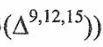 . (B) Fish oils are rich in eicosapentaenoic acid (EPA; 20:5
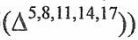 and docosahexaenoic acid (DHA; 22:6
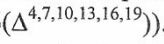 . (C) The "Mediterranean diets" contain rich -3 polyunsaturated fatty acids (PUFAs). (D) In all naturally unsaturated fatty acids, the double bonds are in the cis configuration. (E) Intake of more trans fatty acids leads to a higher incidence of cardiovascular disease.
 . (B) Aspartate directly donates a nitrogen atom for the formation of urea during the urea cycle. (C) The activity of urea cycle is regulated by the rates of synthesis of the four urea cycle enzymes and carbamoyl phosphate synthetase I. (D) Arginine is an inhibitor of the urea cycle. (E) The process of urea production is an energy-consuming series of reactions.
 by a process described as oxidative deamination. (C)
 generated in liver mitochondria is immediately used, together with CO2 (as
 ), to form carbamoyl phosphate. This reaction is catalyzed by carbamoyl phosphate synthetase I and requires ATP. (D) The urea cycle causes a net conversion of oxaloacetate to malate. (E) The pathways of the citric acid cycles and the urea cycles are interconnected, and the pathway interconnections decrease the energetic cost of urea synthesis.
 (C) NH2 groups. (D) one carbon units. (E) acyl groups.
 tail to the 5' end of an mRNA. (C) inversion of certain exons in the final mRNA. (D) the production of the same protein from two different genes. (E) the production of two distinct proteins from a single gene.