所屬科目:研究所、轉學考(插大)◆生物化學
1. Which of the following amino acids has more than one chiral carbon? (A) Cys (B) Thr (C) Tyr (D) Trp (E) Lys
2. Which of the following statements about aromatic amino acids is correct? (A) All are strongly hydrophilic. (B) Histidine is categorized as aromatic. (C) On a molar basis, tryptophan absorbs more ultraviolet light (280 nm) than tyrosine. (D) The major contribution to the characteristic absorption of light at 280 nm by proteins is the phenylalanine R group. (E) The presence of a ring structure in an amino acid determines whether or not it is aromatic.
3. For amino acids with neutral R groups, at any pH below the pI of the amino acid, the population of amino acids in solution will have: (A) a net negative charge. (B) a net positive charge. (C) no charged groups. (D) no net charge. (E) positive and negative charges in equal concentration.
4. The six atoms of the peptide group lie in a single plane as depicted in the picture below. In the picture, "R" represent the side chains, and a few atoms are labeled. Which side is closer to the C-terminus of this short peptide.
(A) Right side (B) Left side (C) Both sides possible (D) Can't tell from limited information (E) Neither side
5. The bond angles φ and ψ of the short peptide in the picture above are most likely located in the area of Ramachandran plot as below
(A) I (B) II (C) III (D) IV (E) I and III
6. Compare the following sequences taken from four different proteins, and select the answer that best characterizes their relationships.
1 PDWLKDNDYLLHGHRPPMPFFRACFKSIFRIHTETGNIWTHLLGFVLFLF
2 PDWLKDNDYLLHGHRPPMPSFRACFKSIFRIHTETGNIWTHLLGFVLFLF
3 PDWLKDNDYLLHGHRPPMPSFRACFKSIFRIHTETGNIWTHLLGFVLFLF
4 PEYMKDNEYILN-YYRADWSIRDAFFSVFSFHNESLNVWTHLIGFIFFVA (A) Protein 3 reveals the greatest evolutionary divergence. (B) Comparing proteins 1 and 2 reveals that these two proteins have diverged the most throughout evolution. (C) Protein 4 is the protein that shows the greatest overall homology to protein 1. (D) Proteins 1 and 4 show a greater evolutionary distance than proteins 1 and 2. (E) The portions of amino acid sequence shown suggest that these proteins are completely unrelated.
7. Which of the following statements about the folding of polypeptides is false? (A) Burial of hydrophobic amino acid R groups to exclude water (B) Alpha helices and beta sheet generally are usually found in different structural layers. (C) Polypeptide segment adjacent to each other in the primary sequence are always far away to each other in the folded structure. (D) Connections between elements of secondary structure do not form knots in most times. (E) Left handed connection between beta strands is very rare.
8. Two heme-binding proteins (myoglobin and hemoglobin), A and B, can bind oxygen. Which of the following statement is correct?. (6, fraction)
(A) The plot below describes the behavior of A when it binds oxygen under different pH (B) The plot below describes the behavior of B when it binds oxygen under different pH (C) The plot below describes the behavior of both A and B when they bind oxygen under different pH (D) The curves can't describes the behavior of A or B (E) Hemoglobin does not bind oxygen at pH 7.4
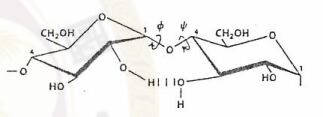
9. The molecule in the right figure is a
(A) two glucose linked by β1-4 linkage, part of cellulose (B) two glucose linked by β1-4 linkage, part of amylose (C) two glucose linked by α1-4 linkage, part of amylose (D) two glucose linked by α1-4 linkage, part of sucrose (E) two glucose linked by β1-4 linkage, part of heparan
10. The reaction A + B→C has a ΔG°of -20 kJ/mol at 25°C. Starting under standard conditions, one can predict that: (A) at equilibrium, the concentration of B will exceed the concentration of A. (B) at equilibrium, the concentration of C will be less than the concentration of A. (C) at equilibrium, the concentration of C will be much greater than the concentration of A or B. (D) C will rapidly break down to A + B. (E) when A and B are mixed, the reaction will proceed rapidly toward formation of C.
11. When a muscle is stimulated to contract aerobically, less lactic acid is formed than when it contracts anaerobically because: (A) glycolysis does not occur to significant extent under aerobic conditions. (B) muscle is metabolically less active under aerobic than anaerobic conditions. (C) the lactic acid generated is rapidly incorporated into lipids under aerobic conditions. (D) under aerobic conditions in muscle, the major energy-yielding pathway is the pentose phosphate pathway, which does not produce lactate. (E) under aerobic conditions, most of the pyruvate generated as a result of glycolysis is oxidized by the citric acid cycle rather than reduced to lactate.
12. Gluconeogenesis must use "bypass reactions" to circumvent three reactions in the glycolytic pathway that are highly exergonic and essentially irreversible. Reactions carried out by which three of the enzymes listed must be bypassed in the gluconeogenic pathway?
1) Hexokinase
2) Phosphoglycerate kinase
3) Phosphofructokinase-1
4) Pyruvate kinase
5) Triosephosphate isomerase (A) 1, 2, 3 (B) 1, 2, 4 (C) 1, 4, 5 (D) 1, 3, 4 (E) 2, 3, 4
13. Malonate is a competitive inhibitor of succinate dehydrogenase. If malonate is added to a mitochondrial preparation that is oxidizing pyruvate as a substrate, which of the following compounds would you expect to decrease in concentration? (A) Citrate (B) Fumarate (C) Isocitrate (D) Pyruvate (E) Succinate
14. The coenzyme required for all transaminations is derived from: (A) niacin. (B) pyridoxine (vitamin B6). (C) riboflavin. (D) thiamine. (E) vitamin .
15. During oxidative phosphorylation, the proton motive force that is generated by electron transport is used to: (A) create a pore in the inner mitochondrial membrane. (B) generate the substrates (ADP and Pi) for the ATP synthase. (C) induce a conformational change in the ATP synthase. (D) oxidize NADH to . (E) reduce O₂ to H₂O.
16. Cholesterol is synthesized from: (A) choline. (B) acetyl-CoA. (C) lipoic acid. (D) oxalate. (E) malate.
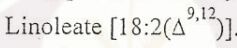
17. Which of these can be synthesized by plants but not by humans? (A) Phosphatidylcholine. (B) (C) Pyruvate. (D) Stearate (18:0). (E) Palmitate (16:0).
18. Transport of fatty acids from the cytoplasm to the mitochondrial matrix requires: (A) ATP, coenzyme A, and hexokinase. (B) ATP, coenzyme A, and pyruvate dehydrogenase. (C) carnitine, coenzyme A, and hexokinase. (D) ATP, carnitine, and coenzyme A. (E) ATP, carnitine, and pyruvate dehydrogenase.
19. What is the correct order of function of the following enzymes for β oxidation?
1. β-Hydroxyacyl-CoA dehydrogenase; 2. Thiolase;
3. Enoyl-CoA hydratase; 4. Acyl-CoA dehydrogenase (A) 1, 2, 3, 4. (B) 4, 2, 3, 1. (C) 4, 1, 3, 2. (D) 4, 3, 1, 2. (E) 1, 4, 3, 2.
20. Which compound is an intermediate of the β oxidation of fatty acids? (A)(B) (C) CH3-CH2-CO-CH2-OH. (D) CH3-CH2-CO-CO-S-CoA. (E) CH3-CO-CH2-CO-S-CoA.
21. Posttranslational glycosylation of proteins is inhibited specifically by: (A) ampicillin. (B) cycloheximide. (C) tunicamycin. (D) puromycin. (E) streptomycin.
22. The PCR reaction mixture does not include: (A) DNA containing the sequence to be amplified. (B) heat-stable DNA polymerase. (C) DNA ligase. (D) oligonucleotide primer(s). (E) all four deoxynucleoside triphosphates.
23. In DNA sequencing by the Sanger (dideoxy) method: (A) the role of the dideoxy CTP is to occasionally terminate enzymatic synthesis of DNA where Gs occur in the template strands. (B) radioactive dideoxy ATP is included in each of four reaction mixtures. (C) radioactive labeling is not required. (D) restriction enzymes are used to cut the newly synthesized DNA into small pieces. (E) the template DNA strand is radioactive.
(二)請回答下列問題1. The tertiary structure of protein may be studied by four techniques, x-ray crystallography, NMR, electron microscopy and mass spectroscopy. Please describe the principles behind these techniques. Please discuss their advantages and drawbacks. Similarities exist between NMR and mass spectroscopy when they are used for structure analysis, please explain why?
2. What are the advantages to the plant cell of having different organelles to carry out different reaction sequences that share intermediates? Please employ the following terms in your discussion, ATP/ADP ratio, NADH/NAD+.
3. Please explain how Scatchard analysis is performed to study receptor-ligand interaction.
4. If cholesterol, phosphatidylglycerol and beeswax were dissolved in chloroform, then subjected to thin-layer chromatography on silica gel using a mixture of chloroform/methanol/water as the developing solvent, which would move slowest? Why?
5. Please describe the reaction catalyzed by acetyl-CoA carboxylase in lipid biosynthesis and explain the biochemical role of its covalently bound prosthetic group.
(a) antibiotic resistance genes;
(b) polylinker region;
(c) origin of replication;
(d) T7 promoter.
7. What is the difference between a genomic library and a cDNA library?
8. Please briefly describe the role of ubiquitin-proteasome system in mediating intracellular protein breakdown.
9. Please briefly describe general types of plasma membrane and nuclear receptors for signal transduction.
10. What are the principal features of the fluid mosaic model of membranes? Draw the structure of a biological membrane as proposed by the fluid mosaic model. Indicate the positions and orientations (outside and inside) of phospholipids, cholesterol, integral and peripheral membrane proteins, and the carbohydrate moieties of glycoproteins and glycolipids.
 阿摩線上測驗
登入
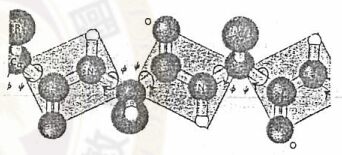 (A) Right side (B) Left side (C) Both sides possible (D) Can't tell from limited information (E) Neither side
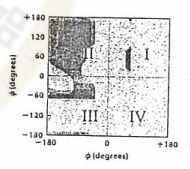 (A) I (B) II (C) III (D) IV (E) I and III
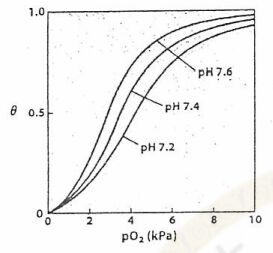
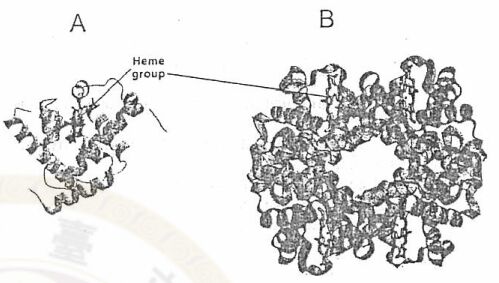 (A) The plot below describes the behavior of A when it binds oxygen under different pH (B) The plot below describes the behavior of B when it binds oxygen under different pH (C) The plot below describes the behavior of both A and B when they bind oxygen under different pH (D) The curves can't describes the behavior of A or B (E) Hemoglobin does not bind oxygen at pH 7.4
 (A) two glucose linked by β1-4 linkage, part of cellulose (B) two glucose linked by β1-4 linkage, part of amylose (C) two glucose linked by α1-4 linkage, part of amylose (D) two glucose linked by α1-4 linkage, part of sucrose (E) two glucose linked by β1-4 linkage, part of heparan
 .
 . (E) reduce O₂ to H₂O.
 (C) Pyruvate. (D) Stearate (18:0). (E) Palmitate (16:0).
 (B)
 (C) CH3-CH2-CO-CH2-OH. (D) CH3-CH2-CO-CO-S-CoA. (E) CH3-CO-CH2-CO-S-CoA.