所屬科目:研究所、轉學考(插大)◆普通化學
1. Penicillin is a group of antibiotics, consisting of all antibiotic agents that contain a β-lactam ring in their molecular structures. Which is the functional group (β-lactam) in penicillin G? (A) I (B) II IV II (C) III H H S N (D) IV O N (E) V O OH I O III V
2. A sample of chemical X is found to contain 5.0 grams of oxygen, 10.0 grams of carbon, and 15.0 grams of nitrogen. The law of definite proportion would predict that a 60 gram sample of chemical X should contain how many grams of carbon? (A) 5.0 grams (B) 10.0 grams (C) 15.0 grams (D) 20.0 grams (E) 25.0 grams
3. Naturally occurring copper exists in two isotopic forms: \( ^{63}\text{Cu} \) and \( ^{65}\text{Cu} \). The atomic mass of copper is 63.55 amu. What is the approximate natural abundance of \( ^{63}\text{Cu} \)? (A) 30% (B) 40% (C) 50% (D) 60% (E) 70%
4. All of the following are weak acids except (A) HF (B) HI (C) HCN (D) HNO2 (E) HCNO
5. Boyle's law states that: (A) The volume of a fixed amount of gas is inversely proportional to its pressure at constant temperature. (B) Equal amounts of gases occupy the same volume at constant temperature and pressure. (C) The volume of a fixed amount of gas is directly proportional to its temperature in Kelvin at constant pressure. (D) The total pressure of a mixture of gases is the simple sum of the partial pressure of all of the gaseous compounds. (E) The rates of effusion of gases are inversely proportional to the square roots of their molar masses.
6. According to the first law of thermodynamics, the energy of the universe is constant. Does this mean that E is always equal to 0? (A) No, E does not always equal 0, but this is only due to factors like friction and heat. (B) No, E does not always equal zero because it refers to the system's internal energy, which is affected by heat and work. (C) No, E never equals 0 because work is always being done on the system or by the system. (D) No, E never equals 0 because energy is always flowing between the system and surroundings. (E) Yes, E = 0 at all times, which is why q = –w.
7. Which form of electromagnetic radiation has the longest wavelengths? (A) gamma rays (B) X-rays (C) infrared radiation (D) microwaves (E) radio waves
8. Consider the following reaction: \( \text{A}_2 + \text{B}_2 \rightarrow 2\text{AB} \quad \Delta\text{H} = -365 \text{ kJ} \). The bond energy for \( \text{A}_2 \) is half the amount of \( \text{AB} \). The bond energy of \( \text{B}_2 = 447 \text{ kJ/mol} \). What is the bond energy of \( \text{A}_2 \)? (A) 271 kJ/mol (B) -183 kJ/mol (C) 183 kJ/mol (D) -630 kJ/mol (E) 630 kJ/mol
9. In the molecule C2H2 the valence orbitals of the carbon atoms are assumed to be (A) dsp hybridized (B) sp hybridized (C) sp2 hybridized (D) sp3 hybridized (E) not hybridized
10. Which of the species below would you expect to show the least hydrogen bonding? (A) HF (B) NH3 (C) CH3OH (D) C2H6 (E) H2O2
11. How many milliliters of 15.7 M H2SeO4 are needed to prepare 600.0 mL of 0.10 M H2SeO4? (A) 0.9 mL (B) 1.9 mL (C) 3.8 mL (D) 7.6 mL (E) 15.2 mL
12. Consider the reaction: 4NH3 + 7O2 → 4NO2 + 6H2O At a certain instant the initial rate of disappearance of the oxygen gas is X. What is the value of the appearance of nitrogen dioxide at the same instant? (A) 1.2 X (B) 1.5 X (C) 0.86 X (D) 0.57 X (E) 0.56 X
13. For the reaction given below, 2.00 moles of A and 3.00 moles of B are placed in a 6.00 L container. A(g) + 2B(g) ↔ C(g) At equilibrium, the concentration of A is 0.246 mol/L. What is the concentration of B at equilibrium? (A) 0.246 mol/L (B) 0.325 mol/L (C) 0.492 mol/L (D) 0.500 mol/L (E) 0.612 mol/L
14. You have 100.0 mL of a solution of HA that has a pH of 2.00. You add 100.0 mL of water to this solution. What is the resulting pH of the solution? (A) The pH = 4.50 (the average of 2.00 and 7.00). (B) The pH = 9.00 (2.00 + 7.00 = 10.00). (C) The pH = 2.00 (water is neutral and does not affect the pH). (D) None of the above is correct, but the pH must be greater than 2.00. (E) None of the above is correct, but the pH must be less than 2.00.
15. Which of the following will not produce a buffered solution? (A) 50 mL of 0.2 \( M \) Na2CO3 and 5 mL of 1.0 \( M \) HCl (B) 100 mL of 0.1 \( M \) Na2CO3 and 50 mL of 0.1 \( M \) HCl (C) 100 mL of 0.1 \( M \) NaHCO3 and 25 mL of 0.2 \( M \) HCl (D) 100 mL of 0.1 \( M \) Na2CO3 and 75 mL of 0.2 \( M \) HCl (E) 100 mL of 0.1 \( M \) Na2CO3 and 50 mL of 0.1 \( M \) NaOH
16. The solubility of an unknown salt, \( \text{MX}_3 \), at \( 25^\circ\text{C} \) is \( 3.1 \times 10^{-5} \, \text{mol/L} \). What is the \( K_{\text{sp}} \) for \( \text{MX}_3 \) at \( 25^\circ\text{C} \)? (A) \( 2.5 \times 10^{-17} \) (B) \( 3.8 \times 10^{-15} \) (C) \( 1.2 \times 10^{-13} \) (D) \( 1.2 \times 10^{-11} \) (E) \( 5.9 \times 10^{-13} \)
17. What would be the effect on the amount of NO present of compressing the equilibrium system to a smaller volume, while keeping the temperature constant? (A) Cannot be determined. (B) The amount of NO will decrease. (C) The amount of NO will increase. (D) The amount of NO will remain the same. (E) Answer depends on the value of K.
18. What is the oxidation state of Cr in \( \text{Cr}_2\text{O}_7^{2-} \)? (A) \( -6 \) (B) \( +2 \) (C) \( +6 \) (D) \( -2 \) (E) \( +8 \)
19. For the cell Cu(s) | Cu2+ || Ag+ | Ag(s), the standard cell potential is 0.46 V. A cell using these reagents was made, and the observed potential was 0.16 V at 25°C. What is a possible explanation for the observed voltage? (A) The Cu2+ concentration was larger than the Ag+ concentration. (B) The Ag+ concentration was larger than the Cu2+ concentration. (C) The Ag electrode was twice as large as the Cu electrode. (D) The volume of the Ag+ solution was larger than the volume of the Cu2+ solution. (E) The volume of the Cu2+ solution was larger than the volume of the Ag+ solution.
20. Consider a certain type of nucleus that has a half-life of 32 min. Calculate the percent of original sample of nuclides remaining after 130 min have passed. (A) 50% (B) 25% (C) 13% (D) 6.3% (E) 3.1%
21. Choose the correct molecular structure for NH4+. (A) octahedral (B) tetrahedral (C) trigonal planar (D) trigonal bipyramidal (E) none of these
22. What is the formula for the hexaaquachromium(II) ion? (A) \( [\text{Cr}(\text{H}_2\text{O})_6]^{4-} \) (B) \( [\text{Cr}_2(\text{H}_2\text{O})_6]^{2+} \) (C) \( [\text{Cr}(\text{H}_2\text{O})_4]^{2+} \) (D) \( [\text{Cr}_2(\text{H}_2\text{O})_6]^{4+} \) (E) \( [\text{Cr}(\text{H}_2\text{O})_6]^{2+} \)
23. How many isomers are there of dichloroethene? (A) 3 (B) 4 (C) 5 (D) 6 (E) 2
24. The complimentary nucleic acid sequence for the following DNA sequence—GAC TAC GTT AGC—is (A) TCA GCA TGG CTA (B) GAC TAC GTT AGC (C) CTG ATG CAA TCG (D) CGA TTG CAT CAG (E) TCA GCA TGG CAT
25. Which of the following is an example of a quantitative observation? (A) The temperature of the liquid A is 35°C. (B) The liquid in beaker A is blue. (C) Solution A is much darker than solution B. (D) The piece of metal is longer than the piece of wood. (E) At least two of the above (A‒D) are quantitative observations.
 阿摩線上測驗
登入
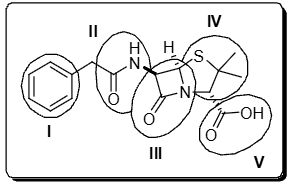 (A) I (B) II IV II (C) III H H S N (D) IV O N (E) V O OH I O III V