所屬科目:研究所、轉學考(插大)-近代物理學
1. An astronaut traveling with a speed v = 0.90c holds a meterstick in his hand. If he measures its length, he will obtain a value of (A) 1.0 m (B) 2.3 m (C) 0.19 m (D) 0.43 m (E) 0.81 m
2. The quantity which does not change in magnitude from that observed in system S when observed in system S' moving away from system S at speed v is (A)(B)(C) (γ-1)mc² (D) E²-p²c² (E) x²+y²+z²
3. An electron (m = 9.1 × 10⁻³¹ kg) has a speed of 0.90c. What is the difference between its relativistic momentum and its non-relativistic momentum (in kg·m/s)? (A) 4.3 × 10⁻²² (B) 3.2 × 10⁻²² (C) 5.4 × 10⁻²² (D) 6.5 × 10⁻²² (E) 2.5 × 10⁻²²
4. How much energy is in a 63-kHz photon of AM radiation (Hint: the Planck constant h = 6.626 × 10⁻³⁴ m²kg/s)? (A) 1.0 × 10⁻³⁸ J (B) 6.6 × 10⁻³⁰ J (C) 4.2 × 10⁻²⁹ J (D) 3.1 × 10⁻³⁰ J (E) 13 × 10⁻²⁹ J
5. What is the maximum velocity (in km/s) of a photoelectron emitted from a surface whose work function is 5.0 eV when illuminated by a light whose wavelength is 200 nm? (A) 460 (B) 650 (C) 420 (D) 550 (E) 1480
6. A neutron has a mass of 1.67 × 10⁻²⁷ kg. The de Broglie wavelength is 1.4 × 10⁻¹⁰ m. How fast is the neutron going (in m/s)? (A) 3.4 × 10³ (B) 2.8 × 10³ (C) 3.9 × 10³ (D) 2.6 × 10³ (E) 1.7 × 10³
7. Assume we can determine the position of a particle within an uncertainty of 0.5 nm. What will be the resulting uncertainty in the particle's momentum (in kg·m/s)? (A) 1.9 × 10⁻²⁵ (B) 4.2 × 10⁻²⁵ (C) 1.1 × 10⁻²⁵ (D) 1.3 × 10⁻²⁴ (E) 6.6 × 10⁻²⁵
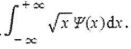
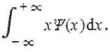
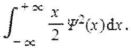
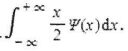
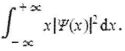
8. The average position, or expectation value, of a particle whose wave function ψ(x) depends only on the value of x, is given by ⟨x⟩ = (A)(B)(C)(D)(E)
9. The wave function ψ(x) of a particle confined to 0 ≤ x ≤ L is given by ψ(x) = Ax. ψ(x) = 0 for x < 0 and x > L. When the wave function is normalized, the probability density at coordinate x has the value (A)(B)(C)(D)(E)
10. Find the kinetic energy (in terms of Planck's constant) of a baseball (m = 1 kg) confined to a one-dimensional box that is 25 cm wide if the baseball can be treated as a wave in the ground state. (A) 3h² (B) 2h² (C) h² (D) 4h² (E) 0.5h²
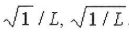
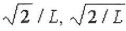
11. The wave function for a particle confined to a one-dimensional box located between x = 0 and x = L is given by Ψ(x) = A sin(nπx/L) + B cos(nπx/L). The constants A and B are determined to be (A)(B)(C)(D)(E) 2/L, 0
12. The wave function for a particle in a one-dimensional box is Ψ = A sin. Which statement is correct? (A) This wavefunction gives the probability of finding the particle at x. (B) |Ψ(x)|² gives the probability of finding the particle at x. (C) |Ψ(x)|² Δx gives the probability of finding the particle between x and x + Δx. (D) gives the probability of finding the particle at a particular value of x. (E) gives the probability of finding the particle between x and x + Δx.
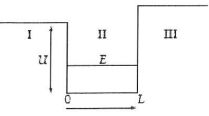
13. A particle in a finite potential well has energy E, as shown below.The wave function in region I where x < 0 has the form ψI = (A) αe⁻ᵏˣ (B) βeᵏˣ (C) A sin(kx) (D) B cos(kx) (E) A sin kx + B cos kx
14. When a particle approaching a potential energy barrier has a total energy that is greater than the potential energy barrier, what is the probability that the particle will be reflected? (A) P < 0 (B) P = 0 (C) P = 1 (D) P > 0 (E) P = ∞
15. The ground state energy of a harmonic oscillator is (A) E = ℏω (B) E = ℏω/2 (C) E = (2/3)ℏω (D) E = 0 (E) E = ℏω/4
16. An electron in a hydrogen atom makes a transition from the n = 3 to the n = 1 energy state. Determine the wavelength of the emitted photon (in nm). (R = 1.097 × 10⁷ m⁻¹) (A) 1006 (B) 209 (C) 306 (D) 103 (E) 821
17. Suppose Bohr had chosen the potential energy of the electron in the hydrogen atom to be V = 0 when the electron is in the orbit with n = 1. He could do this by (A) choosing n = 1 for the orbit where the kinetic energy of the electron is zero. (B) adding a constant 13.6 eV to the potential energy for all values of n. (C) adding a constant 27.2 eV to the potential energy for all values of n. (D) subtracting a constant 13.6 eV from the potential energy for all values of n. (E) subtracting a constant 27.2 eV from the potential energy for all values of n.
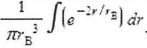
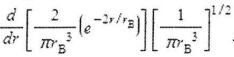
18. The radial portion of the de Broglie wavefunction for an electron in the ground state of the hydrogen atom is , where rB is the Bohr radius. The probability of finding the electron is (A) (B)(C) (D)(E)
19. Forbidden transitions and selection rules suggest that (A) a photon has linear momentum. (B) a photon has energy. (C) a photon has angular momentum. (D) a photon has parity. (E) a photon has mass.
20. Zeke says that the magnitude of the orbital angular momentum in the hydrogen atom has the value L = ℓℏ. Ruth says that the maximum magnitude of the projection of the angular momentum along the direction of a constant magnetic field vector is . Which one, if either, is correct, and why? (A) Ruth, because the maximum value of L is . (B) Ruth, because the orbital angular momentum always lines up with a magnetic field so that has its maximum value along the field. (C) Zeke, because the maximum magnitude of is L = ℓℏ. (D) Zeke, because the orbital angular momentum always lines up with a magnetic field so that has its maximum value along the field. (E) Neither, because they have interchanged the maximum magnitude of , , and ℓℏ, its maximum projection along a magnetic field direction.
 阿摩線上測驗
登入
 (B)
 (C) (γ-1)mc² (D) E²-p²c² (E) x²+y²+z²
 (B)
 (C)
 (D)
 (E)
 (B)
 (C)
 (D)
 (E)

 (B)
 (C)
 (D)
 (E) 2/L, 0
 . Which statement is correct? (A) This wavefunction gives the probability of finding the particle at x. (B) |Ψ(x)|² gives the probability of finding the particle at x. (C) |Ψ(x)|² Δx gives the probability of finding the particle between x and x + Δx. (D)
 gives the probability of finding the particle at a particular value of x. (E)
 gives the probability of finding the particle between x and x + Δx.
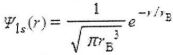 , where rB is the Bohr radius. The probability of finding the electron is (A)
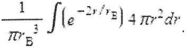 (B)
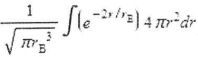 (C)
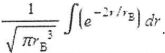 (D)
 (E)
 is
 . Which one, if either, is correct, and why? (A) Ruth, because the maximum value of L is
 . (B) Ruth, because the orbital angular momentum always lines up with a magnetic field so that
 has its maximum value along the field. (C) Zeke, because the maximum magnitude of
 is L = ℓℏ. (D) Zeke, because the orbital angular momentum always lines up with a magnetic field so that
 has its maximum value along the field. (E) Neither, because they have interchanged the maximum magnitude of
 ,
 , and ℓℏ, its maximum projection along a magnetic field direction.