所屬科目:研究所、轉學考(插大)-近代物理學
1. What is the maximum kinetic energy (in eV) of a photoelectron when a surface, whose work function is 5.0 eV, is illuminated by photons whose wavelength is 400 nm? (A) 3.1 (B) -1.9 (C) 1.9 (D) 0 (E) 1.2
2. How much energy is in an 89.7-MHz photon of FM radiation?(Hint: The Planck constant is h = 6.626 × 10⁻³⁴ J·Hz⁻¹ = 4.135 × 10⁻¹⁵ eV·Hz⁻¹) (A) 2.2 × 10⁻³³ J (B) 5.9 × 10⁻²⁷ J (C) 7.4 × 10⁻⁴² J (D) 9.5 × 10⁻²⁶ J (E) 3.7 × 10⁻²⁵ J
3. The experimental observation(s) below that require(s) a quantum explanation for the photoelectric effect (A) is that more photoelectrons are emitted when the light frequency increases. (B) is that the maximum kinetic energy of the photoelectrons is related linearly to the frequency of the light. (C) is that every metal surface has a work function, a minimum amount of energy needed to free electrons. (D) is that the stopping potential measures the kinetic energy of the photoelectrons. (E) are all of the above.
4. An electron is accelerated through a potential difference of 25 000 V. What is the de Broglie wavelength of the electron (in m)?(Hint: the electron mass is me = 9.11 × 10⁻³¹ kg and 1 eV = 1.602 × 10⁻¹⁹ J) (A) 7.8 × 10⁻¹² (B) 6.8 × 10⁻¹² (C) 6.5 × 10⁻¹² (D) 5.9 × 10⁻¹² (E) 5.5 × 10⁻¹²
5. Because the factor ℏ on the right side of Heisenberg's uncertainty principle has units of joule-seconds, it suggests that the energy of a system also has uncertainty. The uncertainty in energy depends on the length of the time interval during which a system exists. ΔEΔt ≥ ℏ/4π. Suppose an unstable mass is produced during a high-energy collision such that the uncertainty in its mass is me/100 (me = 9.11 × 10⁻³¹ kg). How long will this particle exist? (A) 8.1 × 10⁻¹⁹ s (B) 2.3 × 10⁻²³ s (C) 1.0 × 10¹⁵ s (D) 1.2 × 10¹³ s (E) 6.4 × 10⁻²⁰ s
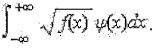
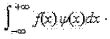
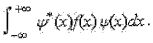
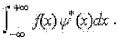
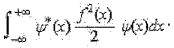
6. The expectation value of a function f(x) of x when the wave function depends only on x is given by ⟨f(x)⟩ = (A)(B)(C)(D)(E)
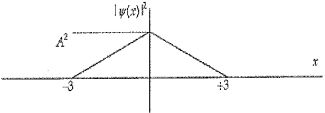
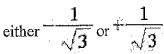
7. The graph below shows the value of the probability density |ψ(x)|² in the region -3.00 m ≤ x ≤ +3.00 m. The value of the normalization constant A is (A)(B)(C)(D)(E)
8. What is the quantum number n of a particle of mass m confined to a one-dimensional box of length L when its energy is 2h²/mL²? (A) 2 (B) 4 (C) 8 (D) 1 (E) 16
9. The wave function for a particle in a box of length L is given by ψ(x) =. If the box extends from x = 0 to x = L, what is the probability of finding the particle between x = 0.60L and x = 0.70L? (A) 0.05 (B) 0.20 (C) 0.25 (D) 0.10 (E) The probability is not given.
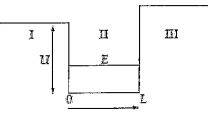
10. A particle in a finite potential well has energy E, as shown below.The wave function in region I where x < 0 has the form ψI = (A)(B)(C) A sin(kx) (D) B cos(kx) (E) A sin(kx) + B cos(kx)
11. Classically, the concept of "tunneling" is impossible. Why? (A) The total energy of a particle is equal to the kinetic and potential energies. (B) The velocity of the particle would be negative. (C) The kinetic energy of the particle would be negative. (D) The kinetic energy must be equal to the potential energy. (E) The total energy for the particle would be negative.
12. The ground state energy of a harmonic oscillator is (A) E = ℏω (B) E = ℏω/4 (C) E = (2/3)ℏω (D) E = 0 (E) E = ℏω/2
13. Rutherford's experiment, in which he fired alpha particles of 7.7-MeV kinetic energy at a thin gold foil, showed that nuclei were very much smaller than the size of an atom because (A) some alpha particles passed through the foil undeflected. (B) some alpha particles were deflected backwards. (C) some alpha particles were captured by the gold nuclei. (D) the alpha particles could not get closer than 10⁻¹⁰ m to the gold nuclei. (E) the alpha particles split into deuterium nuclei when they encountered the gold nuclei.
14. An electron in a hydrogen atom makes a transition from the n = 4 to the n = 3 energy state. Determine the energy (in eV) of the emitted photon. (A) 0.54 (B) 1.51 (C) 0.85 (D) 0.66 (E) 10.2
15. How fast is the electron moving in the first Bohr orbit? (A) 3.3 × 10⁶ m/s (B) 5.5 × 10¹⁵ m/s (C) 4.4 × 10⁶ m/s (D) 5.5 × 10⁶ m/s (E) 2.2 × 10⁶ m/s
16. Zeke says that the magnitude of the orbital angular momentum in the hydrogen atom has the value L = ℓℏ. Ruth says that the maximum magnitude of the projection of the angular momentum along the direction of a constant magnetic field vector is . Which one, if either, is correct, and why? (A) Ruth, because the maximum value of L is (B) Ruth, because the orbital angular momentum always lines up with a magnetic field so that has its maximum value along the field. (C) Zeke, because the maximum magnitude of L is = ℓℏ. (D) Zeke, because the orbital angular momentum always lines up with a magnetic field so that has its maximum value along the field. (E) Neither, because they have interchanged the maximum magnitude of , and ℓℏ, its maximum projection along a magnetic field direction.
17. The Pauli exclusion principle states (A) when an atom has orbitals of equal energy, the maximum number of electrons will have unpaired spins. (B) there is an inherent uncertainty in the position and momentum of a particle. (C) no two electrons in the same atom can have the same set of quantum numbers. (D) when an atom has orbitals of equal energy, the maximum number of electrons will be paired spins. (E) no two atoms can have the same set of quantum numbers.
18. As a spaceship heads directly to Earth at a velocity of 0.8c, it sends a radio signal to Earth. When those radio waves arrive on Earth, their velocity relative to Earth is (A) c (B) 0.8c (C) 1.8c (D), where vE is the velocity of the Earth (E), where v_E is the velocity of the Earth
19. The speed of FM waves will be observed to be c = 2.9979 × 10⁸ m/s when the antenna emitting the waves is (A) at rest relative to the receiving antenna. (B) moving to the right of the detecting antenna at 0.5c. (C) moving to the left of the detecting antenna at 0.5c. (D) moving at 2.9979 × 10⁸ m/s. (E) moving as described in (a), (b) or (c) above.
20. The half-life of a muon is 2.20 μs as measured in a stationary reference frame. What is the half-life of the muon (in μs) when it is moving with a speed of v = 0.800c? (A) 8.13 (B) 3.67 (C) 2.75 (D) 15.8 (E) 1.32
 阿摩線上測驗
登入
 (B)
 (C)
 (D)
 (E)
 (A)
 (B)
 (C)
 (D)
 (E)
 . If the box extends from x = 0 to x = L, what is the probability of finding the particle between x = 0.60L and x = 0.70L? (A) 0.05 (B) 0.20 (C) 0.25 (D) 0.10 (E) The probability is not given.
 (B)
 (C) A sin(kx) (D) B cos(kx) (E) A sin(kx) + B cos(kx)
 is
 . Which one, if either, is correct, and why? (A) Ruth, because the maximum value of L is
 (B) Ruth, because the orbital angular momentum always lines up with a magnetic field so that
 has its maximum value along the field. (C) Zeke, because the maximum magnitude of L is
 = ℓℏ. (D) Zeke, because the orbital angular momentum always lines up with a magnetic field so that
 has its maximum value along the field. (E) Neither, because they have interchanged the maximum magnitude of
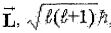 , and ℓℏ, its maximum projection along a magnetic field direction.
 , where vE is the velocity of the Earth (E)
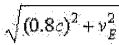 , where v_E is the velocity of the Earth