阿摩線上測驗
登入
首頁
>
學士後 - 普通生物學(生物學)
> 113年 - [非官方正解]113 亞洲大學_學士後獸醫學系招生考試試題_學士後獸醫學系:生物學(含植物學)#123147
113年 - [非官方正解]113 亞洲大學_學士後獸醫學系招生考試試題_學士後獸醫學系:生物學(含植物學)#123147
科目:
學士後 - 普通生物學(生物學) |
年份:
113年 |
選擇題數:
80 |
申論題數:
0
試卷資訊
所屬科目:
學士後 - 普通生物學(生物學)
選擇題 (80)
1. Which molecule is the primary structural composing a cell membrane? (A) cholesterol molecule;(B) enzyme molecule;(C) sugar molecule attached to a protein;(D) phospholipid molecule.
2. Which statement about eukaryotic cell is correct? (A) It does not have membrane-bounded organelles;(B) It has a cell wall with peptidoglycan;(C) It is usually smaller than a prokaryotic cell;(D) It has membrane-bounded organelles.
3. Which statement is not part of the first law of thermodynamics? (A) Any energy transformation loses some energy to its surroundings as heat;(B) The amount of energy in the universe is constant;(C) Energy cannot be created or destroyed;(D) Energy can be converted to other forms of energy.
4. Which reactions belong to the coupled reactions? (A) Exergonic reaction drives an endergonic reaction;(B) Exergonic reaction drives a spontaneous reaction;(C) Endergonic reaction drives an exergonic reaction;(D) Endergonic reaction drives a spontaneous reaction.
5. Which one is the reason of an enzymes speed chemical reactions? (A) Supplying energy to the reaction process;(B) Raising the temperature of the surroundings;(C) Lowering the amount of reactants that are needed;(D) Lowering the energy required to start a chemical reaction.
6. Phagocytosis of an infective bacterium by a white blood cell is a subset type of ? (A) Exocytosis;(B) Endocytosis;(C) Simple diffusion;(D) Facilitated diffusion.
7. Which of these groups represents organisms that are heterotrophs? (A) Microorganisms that harness solar energy, converting it to chemical energy;(B) Non-photosynthesizing bacteria, fungi, earthworms;(C) All organisms that developed after photosynthesis;(D) Photosynthesizing bacteria, algae, ferns, pine trees
8. Which molecule is produced in the photosystem II? (A) Oxygen;(B) High-energy electrons; (C) Both oxygen and high-energy electrons;(D) water.
9. Which plants keep their stomata open only at night? (A) C4 plants;(B) C3 plants;(C) CAM plants;(D) all of answers are correct
10.In a eukaryotic cell, the Krebs cycle occurs in the___? (A) Lysosome;(B) Nucleus;(C) Mitochondria;(D) Cytoplasm.
11.Why would rapid change in climate potentially lead to ecological problems? (A) Evolution is unlikely to occur quickly enough to keep pace with biome changes;(B) Animals don't migrate fast enough;(C) Most biome shifts lead to rainforest formation and shading out of native plants;(D) Water availability will decrease, driving aquatic species extinct.
12.What will you find if you compared the DNA sequence of a gene with the sequence of the mature mRNA that was transcribed from the gene? (A) The mRNA is shorter because each codon of three bases encodes only one amino acid;(B) The mRNA is shorter because it does not contain introns;(C) The mRNA is longer because each codon of one amino acid encodes three bases;(D) Both are the same length.
13.Which statement about the silent mutation is correct? (A) Codon that mutates causes a change in the amino acid specified;(B) Codon that mutates does not cause a change in the amino acid specified;(C) Mutation does not occur in a codon;(D) Codon that mutates causes a stop codon to occur instead of the placement of an amino acid.
14.When is DNA replicated when a cell is divided by meiosis? (A) Between meiosis I and again before meiosis II;(B) During prophase I;(C) Before meiosis I;(D) During prophase II.
15.In meiosis, the separated sister chromatids move to opposite poles of the cell during _______? (A) Metaphase I;(B) Metaphase II;(C) Anaphase I;(D) Anaphase II.
16.What is the major advantage of sexual reproduction over asexual reproduction? (A) Simpler form of reproduction;(B) Genetic variability during an ecological disaster;(C) Faster reproduction;(D) Genetic variability when the environment is stable.
17.If a chromosome in one of your liver cells becomes mutated, you will not pass this mutation onto your children because? (A) Germ cells cannot undergo mitosis;(B) Germ cells cannot undergo meiosis;(C) Somatic cells cannot undergo mitosis;(D) Somatic cells cannot undergo meiosis.
18.In plants, haploid gametophytes produce gametes by? (A) Mitosis;(B) Meiosis;(C) Sporulation;(D) Fertilization.
19.The movement of a section of DNA from a chromosome to a non-homologous chromosome is an example of___? (A) Translocation during meiosis;(B) Nondisjunction during meiosis; (C) Crossing over during meiosis;(D) Random alignment during mitosis.
20.A source for stem cells to be found in humans is in ____? (A) Adults, in several specialized tissues;(B) Skin cells;(C) Embryos, after division of the original zygote;(D) All of the answer are correct.
21.Which method can be used to produce the cloned sheep, Dolly? (A) Embryonic stem cell transplantation;(B) Polymerase chain reaction;(C) Short tandem repeats;(D) Somatic cell nuclear transfer.
22.Which type of cells were used from the donor, to provide genetic material that produced the cloned sheep, Dolly? (A) Embryonic stem cells;(B) A specialized somatic cell, specifically a mammary gland cell;(C) Egg cells;(D) Sperm cells
23.A couple, both carriers of Cystic Fibrosis alleles, can prepare for a child being born with the disease, by testing with___? (A) Preimplantation genetic diagnosis;(B) Cloning and testing the unborn child;(C) Gene therapy;(D) Polymerase chain reaction.
24.Convergent evolution means that? (A) Organisms living in similar habitats may develop similar traits even though they are not closely related;(B) Evolution converges on a desired body form based on an external plan or design;(C) Different organisms will never have similar traits;(D) All species will eventually have the same traits.
25.Which mode of natural selection in which one extreme phenotype is fittest and the environment selects against the others? (A) Directional selection;(B) Disruptive selection; (C) Artificial selection;(D) Convergent selection.
26.Which mode of natural selection in which two or more extreme phenotypes are fitter than the intermediate phenotype? (A) Directional selection;(B) Disruptive selection;(C) Artificial selection;(D) Convergent selection.
27.Islands provide ideal opportunities to study speciation because? (A) Natural selection occurs more rapidly;(B) They are very large with diverse populations;(C) Organisms cannot easily immigrate and emigrate;(D) The organisms have little competition and do not change.
28.The type of reproductive isolation in which two populations are separated due to the sperm cells of one not being able to fertilize the egg cells of the other is__? (A) Gametic isolation; (B) Ecological isolation;(C) Temporal isolation;(D) Hybrid infertility.
29.Which statement about virus is correct? (A) Most viruses infect only a few closely related species;(B) Most viruses only infect plant cells;(C) Most viruses cannot infect living cells; (D) Most viruses infect a wide variety of organisms.
30.The genetic information in viruses is ___? (A) a specialized capsid protein;(B) always DNA;(C) always RNA;(D) DNA or RNA.
31.Which sequence of the stages of viral replication is correct? (A) Penetration, attachment, synthesis, release, and then assembly;(B) Attachment, penetration, synthesis, assembly, and then release;(C) Attachment, synthesis, penetration, assembly, and then release;(D) Attachment, penetration, assembly, synthesis, and then release.
32.Which one is NOT the function of glycocalyx in prokaryotic? (A) Attachment;(B) Protection from immune system cells;(C) Production of biofilms;(D) Protein synthesis.
33.When given a skin biopsy sample from a person native to an area near the equator, you are not surprised to find abundant? (A) Melanin;(B) Chondrocytes;(C) Actin;(D) Hybrid.
34.Clostridium tetani, the bacterium that causes tetanus, can only survive in soil away from oxygen. It is considered which of the following? (A) A facultative anaerobe;(B) An autotroph;(C) An obligate anaerobe;(D) A phototroph.
35.Which gaseous hormone is produced by plants that helps control fruit ripening? (A) Dextrose;(B) Carbon dioxide;(C) Chlorophyll;(D) Ethylene.
36.Which statement about fungi and plants is correct? (A) Fungi are heterotrophs, but plants are essentially autotrophs;(B) Plants and fungi both carry out photosynthesis;(C) Plants and fungi both have cellulose as the main component of their cell walls;(D) Glycogen is the main storage carbohydrate in both fungi and plants.
37.The embryonic germ layer of tissue in animals that develops into the skin and nervous system is? (A) Endoderm;(B) Mesoderm;(C) Protoderm;(D) Ectoderm.
38.Which of the following is not a characteristic of amphibians? (A) They have a three-chambered heart;(B) They are ectothermic;(C) They have a cartilaginous skeleton; (D) They do not have an amnion.
39.The tissue that regrows a leaf from its base is? (A) Intercalary meristem;(B) Apical meristem;(C) Lateral meristem;(D) Tracheid
40.A useful form of nitrogen is made available to plants through their? (A) Roots;(B) Roots and leaves;(C) Leaves;(D) Stomata.
41.What is the function of cartilage? (A) Connect muscle to bone;(B) Flexible support;(C) Transport;(D) Insulation
42.Which organ system is most directly responsible for the signals that lead to lactation? (A) Nervous;(B) Endocrine;(C) Respiratory;(D) Digestive
43.Which pairs of organs interact to regulate body temperature? (A) Lungs and brain;(B) Lungs and skin;(C) Brain and skin;(D) Skin and bones
44.Which statement about collagen and elastin is correct? (A) They are fibrous protein secreted by fibroblasts;(B) They are carbohydrates inside cells;(C) They are enzymes secreted by fibroblasts;(D) They are enzymes attached to chondrocytes.
45.Which muscle tissue is controlled involuntarily and has no striations? (A) Smooth muscles; (B) Cardiac muscles;(C) Skeletal muscles;(D) Either skeletal or cardiac muscles.
46.Which cancer arises in epithelial tissue ? (A) Sarcomas;(B) Carcinomas;(C) Leukemias; (D) Hybridomas.
47.What kind of feedback can be seen exemplified in blood clotting? (A) Negative feedback;(B) Positive feedback;(C) Endocrine feedback;(D) Nervous feedback.
48.The simple squamous cells found in the glomeruli of the kidney have which function? (A) Secrete and propel mucus;(B) Secrete and absorb substances;(C) Secrete hormones;(D) Allow exchange of substances by diffusion and osmosis.
49.The simple cuboidal cells found in kidney tubules have which function? (A) Secrete and propel mucus;(B) Secrete and absorb substances;(C) Secrete hormones;(D) Allow exchange of substances by diffusion and osmosis.
50.What is the primary function of melanin? (A) Increase light absorption;(B) Decrease water loss;(C) Increase muscle strength;(D) Absorb UV light.
51.The part of the neuron that is usually highly branched and receives input from other neurons is the ? (A) Dendrite;(B) Axon;(C) Synapse;(D) Cell body.
52.Which type of neuron brings information toward the central nervous system? (A) Synaptic neuron;(B) Interneuron;(C) Motor neuron;(D) Sensory neuron.
53.Which statement about neuron fires is correct? (A) Na+ ions cross the plasma membrane, initiating a wave that travels down the axon;(B) Vesicles carry neurotransmitters from the nucleus to the other end of the neuron;(C) Na+ ions enter one end of the neuron and diffuse to the other end, down the axon;(D) Neurotransmitters enter one end of the neuron and diffuse to the other end, down the axon.
54.If a person has a genetic mutation which renders them incapable of making chemoreceptors, which sense would be affected? (A) Vision;(B) Taste;(C) Pain;(D) Touch.
55.Which chemical compound is responsible for the light-sensitive pigment in retina? (A) Carotene;(B) Chlorophyll;(C) Glutamate;(D) Rhodopsin.
56.The part of the eye that focuses light onto a sheet of photoreceptors is the? (A) Lens;(B) Cone;(C) Pupil;(D) Retina.
57.Abiotic components of an ecosystem include? (A) Both living and nonliving components;(B) All components except animal life;(C) Only animal life;(D) Nonliving components only.
58.The endocrine gland that controls homeostasis in terms of blood glucose levels is the ? (A) Parathyroid gland;(B) Adrenal gland;(C) Pineal gland;(D) Pancreas.
59.Which statement about the peptide hormones is correct? (A) They bind to a receptor in the cytoplasm of a target cell;(B) They are typically lipid-soluble;(C) They are typically water-soluble and bind to a receptor in the cytoplasm of a target cell;(D) They are typically water-soluble.
60.Which molecule is the precursor of the lipid-soluble steroid hormones? (A) Cholesterol;(B) Amino acids;(C) Nucleotides;(D) Proteins with large amounts of tryptophan.
61.Which of the following has its primary effect on the brain's pain receptors? (A) Adredocorticotropic hormone (ACTH);(B) Follicle-stimulating hormone (FSH) and luteinizing hormone (LH);(C) Endorphins;(D) Oxytocin.
62.Which statement about the motor unit is correct? (A) It’s a motor neuron and all of the muscle fibers to which it connects;(B) It’s a sensory neuron and two muscle fibers;(C) It’s a motor neuron and a whole muscle;(D) It’s a sensory neuron and several sarcomeres.
63.Greater force of contraction comes when? (A) Motor units are stimulated for a longer time; (B) More motor units are stimulated;(C) More ATP is available;(D) Motor units have few muscle fibers per unit.
64.Which hormone helps remove calcium from the blood and stores it in bone? (A) Prolactin; (B) Calcitonin;(C) Parathyroid hormone (PTH);(D) Insulin.
65.Which molecule rapidly replenishes ATP at the beginning of muscle activity? (A) Actin;(B) Creatine phosphate;(C) Acetylcholine;(D) Myosin.
66.After a muscle cell contracts, which of the following must occur for the muscle to stop contracting? (A) Calcium ions must be pumped back into the endoplasmic reticulum;(B) Calcium ions must flow out of the endoplasmic reticulum;(C) Calcium ions must flow into the muscle cell;(D) Calcium ions must be pumped out of the muscle cell.
67.Which statement about the fast-twitch muscle fiber is correct? (A) It uses ATP quickly in short, fast contractions;(B) It has many capillaries;(C) It is rich in myoglobin;(D) It works aerobically.
68.Which vessel might be blocked if the heart itself was not being well oxygenated? (A) Aorta; (B) Coronary artery;(C) Superior vena cava;(D) Inferior vena cava.
69.A heart murmur is caused by? (A) a greater than normal force of contraction of the right atrium;(B) a constriction of the pulmonary artery;(C) blockage of the aorta;(D) the heart valves not functioning properly.
70.Which protein carries oxygen in the red blood cells? (A) Myoglobin;(B) Hemoglobin;(C) Actin;(D) Iron.
71.The concentration of oxygen is decreased at high altitude. Why would this make it harder for a person to get enough oxygen into their blood? (A) Hemoglobin cannot bind oxygen well at low concentrations;(B) The concentration gradient from the alveoli to the blood decreases; (C) People are working harder at high altitude and have higher demands for oxygen;(D) The concentration of oxygen in the blood is too low for diffusion into tissues.
72.Which of the following produces bile? (A) Gall bladder;(B) Liver;(C) Stomach;(D) Pancreas.
73.Which enzyme can break down protein? (A) Lipase;(B) Lactase;(C) Pepsin;(D) Mylase.
74.A cell that does not circulate in blood, but instead settles in tissues near the skin and in the digestive tract, producing and releasing histamine when tissue is damaged is a(n)? (A) Basophil;(B) Mast cell;(C) Osteocyte;(D) Macrophage.
75.Which involves adaptive cell-mediated immunity? (A) A neutrophil killing a bacteria by direct cell-to-cell contact;(B) A cytotoxic T cell destroying a virus-infected cell;(C) Antibodies produced that destroy an invading pathogen;(D) A neutrophil killing a bacteria by direct cell-to-cell contact, and a cytotoxic T cell destroying a virus-infected cell.
76.If you were observing an early stage in human development at which endoderm, mesoderm, and ectoderm had just formed, you would be looking at a? (A) Zygote;(B) Gastrula;(C) Embryonic stage;(D) Morula.
77.In humans, the transparent sac that contains fluid that cushions the embryo and maintains a constant temperature and pressure is the? (A) Amnion;(B) Yolk sac;(C) Embryonic disc; (D) Chorion.
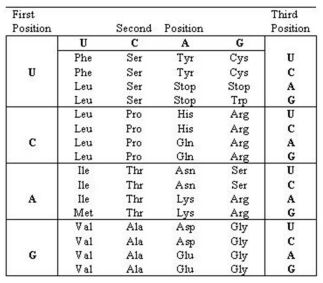
78.Using the genetic code shown below, predict what type of mutation has occurred in Peter’s epithelial cells.
Normal allele 5'–GGAAUGAAACAGGAACCC–3'
Mutant allele 5'–GGAAUGAACCAGGAACCC–3'
(A) a point mutation, Glu to Val;(B) a point mutation, Lys to Asn;(C) a frameshift mutation;(D) addition of a new stop codon.
79.Using the genetic code shown below, predict the RNA sequence from the following DNA sequence
5’-AATGTCATGGGGACTTCATGATTTCCC-3’
3’-TTACAGTACCCCTGAAGTACTAAAGGG-5’(A) 5’-AAUGUCAUGGGGACUUCAUGAUUUCCC-3’;(B) 5’- UUACAGUACCCCUGAAGUACUAAAGGG -3’;(C) 5’-AATGTCATGGGGACTTCATGATTTCCC-3’;(D) 3’-TTACAGTACCCCTGAAGTACTAAAGGG-5’
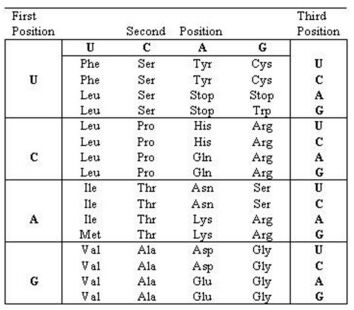
80.Using the genetic code shown below, predict the amino acid sequence from the following DNA sequence
5’-AATGTCATGGGGACTTCATGATTTCCC-3’
3’-TTACAGTACCCCTGAAGTACTAAAGGG-5’
(A) Ile-Val-Met-Gly-Thr-Ser;(B) Leu-Gln-Tyr-Pro;(C) Met-Gly-Thr-Ser;(D)Leu-Gln-Tyr-Pro-Ser-Thr-Lys-Gly
申論題 (0)
相關試卷
115年 - [無官方正解]115 亞洲大學_學士後獸醫學系招生試題:生物學#144968
115年 · #144968
114年 - [非官方正解]114 亞洲大學_招生試題_學士後獸醫學系:生物學(含植物學)#131166
114年 · #131166
113年 - [非官方正解]113 中國醫藥大學_學士班寒假轉學招生考試試題:普通生物學#124975
113年 · #124975
112年 - 112 中國醫藥大學_學士班寒假轉學考試試題:普通生物學#118590
112年 · #118590
111年 - 111 臺北醫學大學寒假轉學入學考試:普通生物學#112980
111年 · #112980
111年 - 111 中國醫藥大學_學士班寒假轉學考試試題:普通生物學#112963
111年 · #112963
110年 - 110 中國醫藥大學_學士班寒假轉學招生考試:普通生物學#105817
110年 · #105817
109年 - [非官方正解]109 亞洲大學_學士後招生_獸醫學系︰生物化學#100897
109年 · #100897
109年 - 109 中國醫藥大學學士班寒假轉學考試:普通生物學#99483
109年 · #99483
108年 - [非官方正解]108 亞洲大學_學士後招生考試_獸醫學系:生物學(含動物學、植物學)#100726
108年 · #100726
 阿摩線上測驗
登入
 (A) a point mutation, Glu to Val;(B) a point mutation, Lys to Asn;(C) a frameshift mutation;(D) addition of a new stop codon.
 (A) Ile-Val-Met-Gly-Thr-Ser;(B) Leu-Gln-Tyr-Pro;(C) Met-Gly-Thr-Ser;(D)Leu-Gln-Tyr-Pro-Ser-Thr-Lys-Gly