所屬科目:研究所、轉學考(插大)◆有機化學
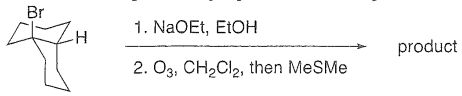
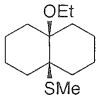
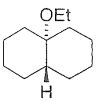
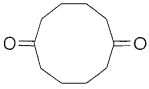
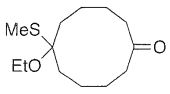
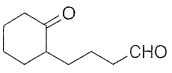
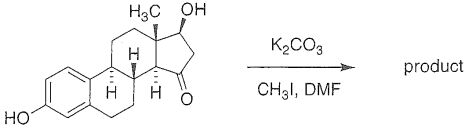
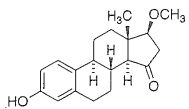
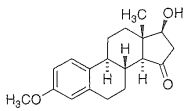
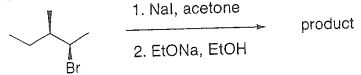
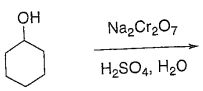
1.What is the expected major product of this sequence of reactions? (A)(B)(C)(D)(E)
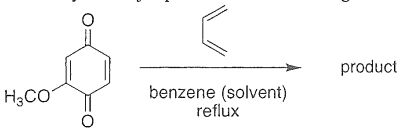
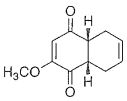
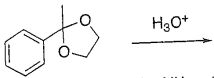
2. Identify the major product of the following reaction.(A)(B)(C)(D)(E)
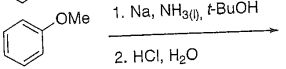
3. Identify the major product of the following reaction. (A)(B)(C)(D)(E)
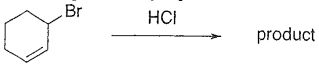
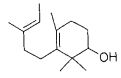
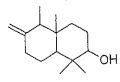
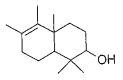
4. The expected major product of HCl addition to the alkene would be: (A)(B)(C)(D)(E)
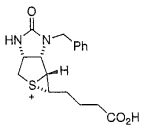
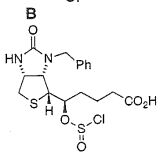
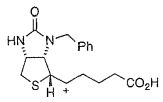
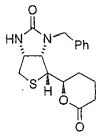
5.In the following substitution reaction, diastereoselectivity. After analyzing the ster compound A was converted to compound B in excellent ereochemcal relationship between A and B, it was proposed that chloride attacked a key intermediate, resulting in the forination of B. The structure of the key intermediate is most likely to be: (A)(B)(C)(D)(E)
6.Rank the following protons (I, II, and IlI) in decreasing order (most to least) of acidity. (A)II>IlI>I(B)I>II>IlI(C) IlI>I>II (D)IlI>II>I (E)I>IlI>II
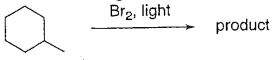
7.The light-induced bromination of the C-H bond of alkanes with molecular bromine could be a regioselective process. The reactions involved the fomnation of radical intermediates. Identify the major product of the following reaction. (A)(B)(C)(D)(E)
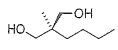
8.Which of the following compounds is chiral? (A)(B)(C)(D)(E)
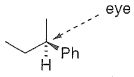
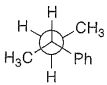
9.As viewed from the angle indicated, draw the Newman projection of the conformer of the following compound where the two methyl groups are gauche. (A)(B)(C)(D)(E)
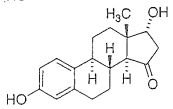
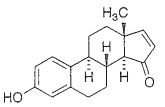
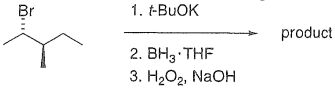
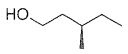
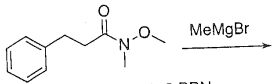
10.For the following reaction sequence, which molecule is expected as the major product? (A)(B)(C)(D)(E)
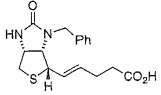
11.Examine the transforration shown below and then indicate which of the following statements is correct. (A)This is a reduction reaction. (B)The product is a protected ester. (C) The product has two resonance structures. (D)The entropy of the reaction decreases. (E) The unsaturation numbers of the starting material and the product are different.
13. A graduate student found four reagent vials (I, II, III, IV) with unclear labels. A lab manager mentioned that one of the reagents could be chlorine-substituted alkane (R-Cl). The graduate student quickly made a judgment after collecting the mass spectra of these four samples. Based on the data, please tell us which vial contains a chloroalkane compound. (A)reagent vial I(B) reagent vial Il (C)reagent vial III (D)reagent vial IV(E)None of them is a chlorine-substituted compound.
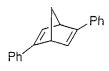
14. One of the following chloronorbornanes undergoes E2 eiimination much faster than others. Considering the E2 mechanism and structural features of the norbornane systemns, determine which one is faster to give the corresponding alkene product. (A)(B)(C)(D)(E)The above compounds react equally fast.
15.A student reported that an acid (H+X- ) promoted a reaction of the epoxide to give a product. By analyzing the1H NMR spectrum of the product, the student saw that the most downfield peak is 3.4 ppm. Considering the reactivity of the epoxide and the spectroscopic data of the product, what is the most reasonable structure of the product?(A)(B)(C)(D)(E)
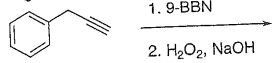
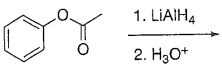
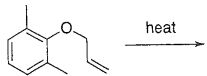
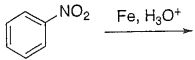
16. Based on your knowledge of current organic chemistry, which of the following reactions leads to a correct major product? Note: Only key reagents are shown, and assuming that appropriate workup procedures are applied. (A)(B)(C)(D)(E)
17. What is the major product for the following reaction? (A)(B)(C)(D)(E)
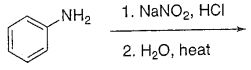
18. Which of the following reactions will NOT give a ketone as a major product? (A)(B)(C)(D)(E)
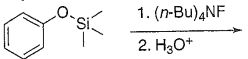
19. Which of these reactions will NOT give a phenol as a major product? (A)(B)(C)(D)(E)
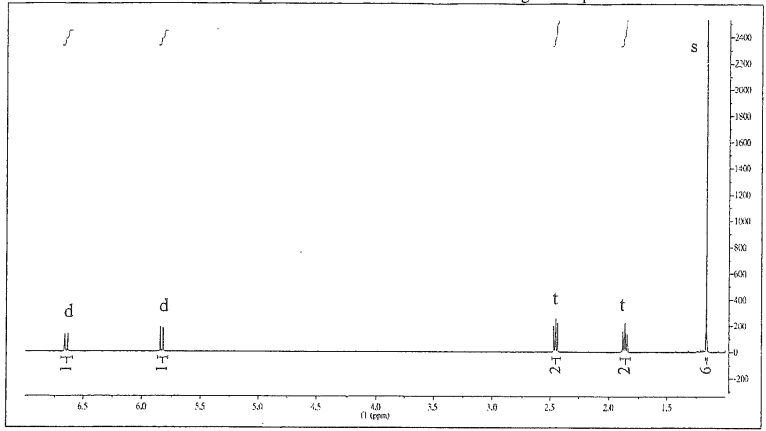
20.Which one of the listed compounds is consistent with the following NMR spectrum?(A)(B)(C)(D)(E)
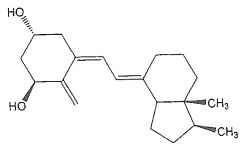
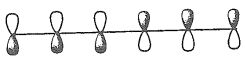
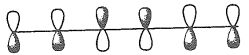
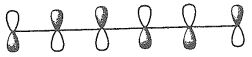
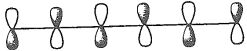
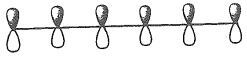
22.Which of the following represents the highest occupied molecular orbital for the conjugated pi system in Vitamin D3? (A)(B)(C)(D)(E)
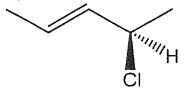
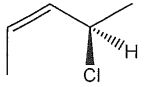
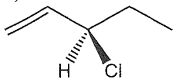
23. When 1 mole of anbydrous HC1 is reacted with excess 1,3-pentadiene, the 1,2 and the 1,4-addition products are formed. Which of the following structures below is the least likely to be one of these products? (Note: When a chiral carbon is formed in this reaction, a racemic mixture results, but only one of the two possible enantiomers is shown.)(A)(B)(C)(D)(E)
27. Choose the BEST reagent for each of the following conversions.
(A)LiAJH4, THF (B)NaBH4, ethanol (C)(D)All of tbe above work well
28. Which labeled peaks would distinguish an aldehyde from a ketone based on this spectrum? (A)1 (B)2 (C) 3(D)4(E)5
29. Which labeled peaks would distinguish an aldehyde from a ketone based on this spectrum? (A)1 (B)2 (D)4 (E)5 (C) 3
30. In the diagram below, fill in the terms in the appropriate places indicated by a letter.(A)A - replication, B - transcription, C - translation (B)A - replication, B - translation, C - transcription (C) A - transcription, B - replication, C -translation (D)A - translation, B - transcription, C - replication (E)A - translation, B - transcription, C -replication
31. Consider the following diagram. Which letter should be filled in on the bottom line? (A)GCU(B)UCG (C)GCT (D)TGC (E)GUC
36. Arrange the carboxylic acid derivatives below to increase reactivity towards nucleophilic acy/ substitution.(A)1<2<3 (B)1<3<2 (C)2<1<3 (D)2<3<1 (E)3<2<1
37. What is the product of the following reaction?(A)(CH3)3CCH2CH2CH2COOH (B)(CH3)3CCH2CH2CH2NH2 (C) (CH3)3CCH2CH2CH2CH2NH2 (D)(CH3)3CCH2CH2CH2CONH2 (E)(CH3)3CCH2CH2CH2CH=NH
40. Which of the following is an incorrect description of benzene? (A)The CCC bond angles are all equal to 120°. (B)The molecule is planar. (C) The molecule is a 6-membered ring that contains alternating single and double carbon-carbon bonds. (D)The molecule is aromatic. (E)The molecule can be drawn as a resonance hybrid of two Kekule structures.
 阿摩線上測驗
登入
 (A)
 (B)
 (C)
 (D)
 (E)
 (A)
 (B)
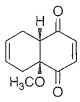 (C)
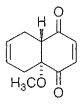 (D)
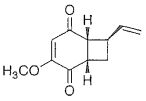 (E)
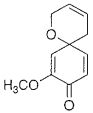
 (A)
 (B)
 (C)
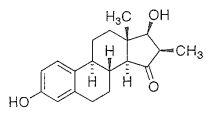 (D)
 (E)
 (A)
 (B)
 (C)
 (D)
 (E)

 (A)
 (B)
 (C)
 (D)
 (E)
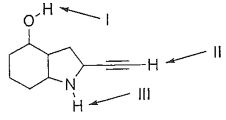 (A)II>IlI>I(B)I>II>IlI(C) IlI>I>II (D)IlI>II>I (E)I>IlI>II
 (A)
 (B)
 (C)
 (D)
 (E)

 (B)
 (C)
 (D)
 (E)
 (A)
 (B)
 (C)
 (D)
 (E)

 (A)
 (B)
 (C)
 (D)
 (E)

 (A)This is a reduction reaction. (B)The product is a protected ester. (C) The product has two resonance structures. (D)The entropy of the reaction decreases. (E) The unsaturation numbers of the starting material and the product are different.
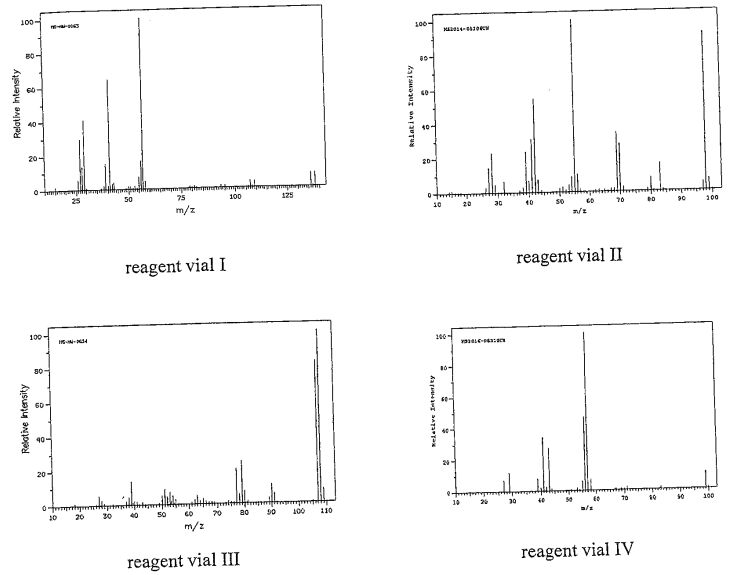 (A)reagent vial I(B) reagent vial Il (C)reagent vial III (D)reagent vial IV(E)None of them is a chlorine-substituted compound.
 (B)
 (C)
 (D)
 (E)The above compounds react equally fast.
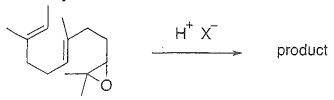 (A)
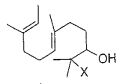 (B)
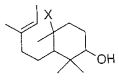 (C)
 (D)
 (E)
 (B)
 (C)
 (D)
 (E)

 (A)
 (B)
 (C)
 (D)
 (E)

 (B)
 (C)
 (D)
 (E)
 (B)
 (C)
 (D)
 (E)
 (A)
 (B)
 (C)
 (D)
 (E)

 (A)
 (B)
 (C)
 (D)
 (E)
 (B)
 (C)
 (D)
 (E)
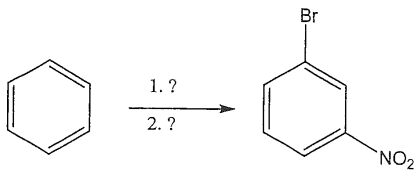 (A)1.e; 2.b (B)1. b;2.e (C) 1. a; 2. b (D)1.d;2.e (E)1. b;2. a
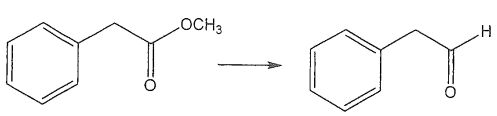 (A)LiAJH4, THF (B)NaBH4, ethanol (C)
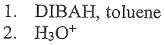 (D)All of tbe above work well
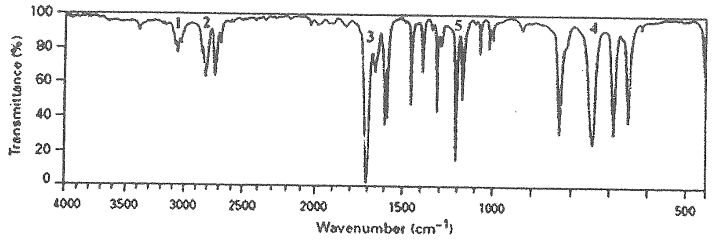 (A)1 (B)2 (C) 3(D)4(E)5
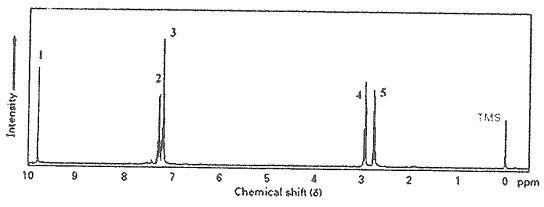 (A)1 (B)2 (D)4 (E)5 (C) 3
 (A)A - replication, B - transcription, C - translation (B)A - replication, B - translation, C - transcription (C) A - transcription, B - replication, C -translation (D)A - translation, B - transcription, C - replication (E)A - translation, B - transcription, C -replication
 Which letter should be filled in on the bottom line? (A)GCU(B)UCG (C)GCT (D)TGC (E)GUC
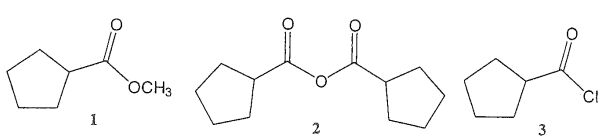 (A)1<2<3 (B)1<3<2 (C)2<1<3 (D)2<3<1 (E)3<2<1
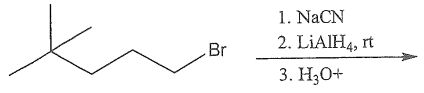 (A)(CH3)3CCH2CH2CH2COOH (B)(CH3)3CCH2CH2CH2NH2 (C) (CH3)3CCH2CH2CH2CH2NH2 (D)(CH3)3CCH2CH2CH2CONH2 (E)(CH3)3CCH2CH2CH2CH=NH