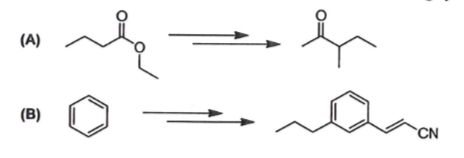
所屬科目:研究所、轉學考(插大)◆有機化學
1. I and II are ______.
(A) constitutional isomers. (B) enantiomers. (C) identical. (D) diastereomers. (E) not isomeric.
2. How many of the following compounds are chiral?
(A) 1 (B) 2 (C) 3 (D) 4 (E) 5
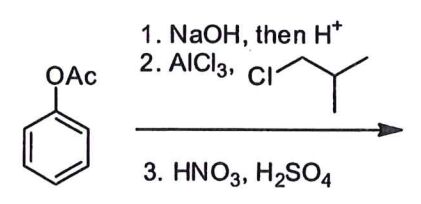
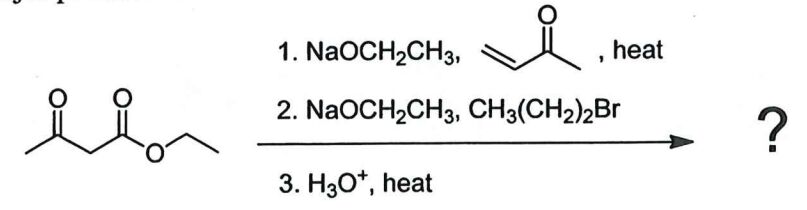
3. What is the major product of the following reaction sequence? (A) I (B) II (C) III (D) IV (E) V
4. An optically active compound, A, with the molecular formula $\mathrm{C_7H_{12}}$ reacts with cold dilute $\mathrm{KMnO_4}$ and gives IR absorption at about $3300~\mathrm{cm^{-1}}$. On catalytic hydrogenation, A is converted to B ($\mathrm{C_7H_{16}}$), and B is also optically active. Which is a possible structure for A?
(A) I (B) II (C) III (D) IV (E) V (F) V
5. What is the major product of the Friedel-Crafts alkylation of benzene with 1-butene and $\mathrm{AlCl}_3$? (A) $n$-butylbenzene (B) 2-phenylbutane (C) 2-methyl-1-phenylpropane (D) $t$-butylbenzene (E) 2,2-diphenylbutane
6. Which of the following factors is favorable for nucleophilicity but not basicity? (A) highly polarizable (B) low electronegativity (C) positively charged (D) sterically hindered (E) negatively charged
7. If a certain hydrocarbon molecule has 10 carbons atoms, one ring and two triple bonds, how many hydrogens does it have? (A) 10 (B) 12 (C) 14 (D) 16 (E) 18
8. How many distinct alkene products are possible, including stereoisomers, when the alkyl bromide below reacts with sodium tert-butoxide?
9. While the carbonyl IR stretching frequency for simple aldehydes, ketones, and carboxylic acids is about $1710~\mathrm{cm}^{-1}$, the carbonyl stretching frequency for amides is about ______. (A) $1700~\mathrm{cm}^{-1}$ (B) $1735~\mathrm{cm}^{-1}$ (C) $1800~\mathrm{cm}^{-1}$ (D) $1660~\mathrm{cm}^{-1}$ (E) $2200~\mathrm{cm}^{-1}$
10. What reagent is used to convert pentanamide to 1-pentanamine? (A) $\mathrm{POCl}_3$ (B) CuCN (C) $\mathrm{CH}_3\mathrm{MgBr}$ (D) $\mathrm{SOCl}_2$ (E) LiAlH₄
11. Predict the order of pKa of the following carboxylic acid.
(A) $\mathrm{I} > \mathrm{II} > \mathrm{III}$ (B) $\mathrm{III} > \mathrm{II} > \mathrm{I}$ (C) $\mathrm{II} > \mathrm{I} > \mathrm{III}$ (D) $\mathrm{III} > \mathrm{I} > \mathrm{II}$ (E) $\mathrm{II} > \mathrm{III} > \mathrm{I}$
12. Which of these could be resolved into separate enantiomers? (A) 4-Methyl-1-pentanamine (B) 4-Methyl-2-pentanamine (C) $N$-Methyl-1-butanamine (D) $N,N$-Dimethyl-1-propanamine (E) $N$-Butyltrimethylammonium bromide
13. When 3-methyl-2-pentene is treated with mercuric acetate, $\mathrm{Hg(O_2CCH_3)_2}$, in a THF-$t$-butyl alcohol mixture and the resulting product is reacted with $\mathrm{NaBH_4}$ in basic solution, the principal product formed is which of these? (A) 3-methyl-3-pentanol (B) 3-$t$-butoxy-3-methylpentane (C) 3-methyl-2-pentanol (D) 2-$t$-butoxy-3-methylpentane (E) 1-$t$-butoxy-3-methylpentane
14. How many of the following compounds are aromatic? (A) 4 (B) 5 (C) 6 (D) 7 (E) 8
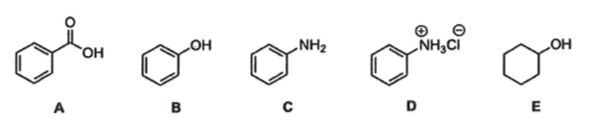
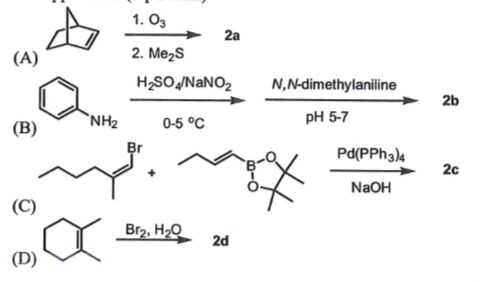
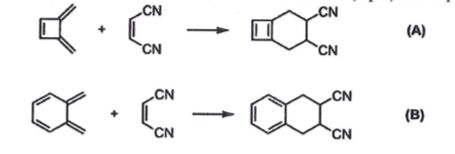
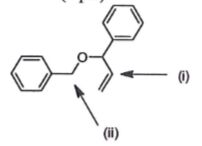
15. How many of the following reactions give the correct major product?
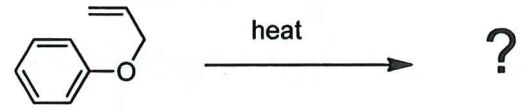
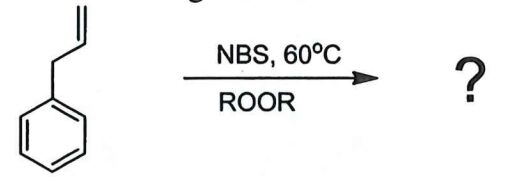
16. What is the major product of the reaction shown below?(A)(B)(C)(D)(E)
17. Predict the major product for the following reaction?(A)(B)(C)(D)(E)
18. Rank of the acidity of the following compounds from high to low? (A) ii > iii > iv > i > v (B) iii > i > iv > v > ii (C) iv > i > iii > v > ii (D) v > iv > i > iii > ii (E) i > iv > v > ii > iii
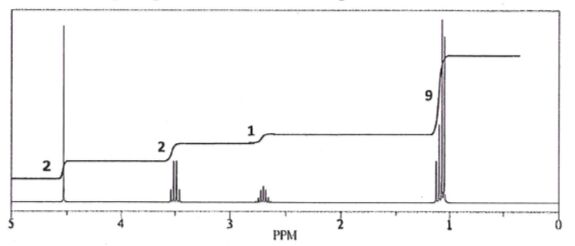
19. Which of the following compounds has the $^{1}\mathrm{H}$-NMR spectrum shown below?
(A)(B)(C)(D)(E)
20. What is the major product for the following reaction?(A)(B)(C)(D)(E)
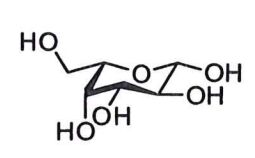
21. Which of the following monosaccharides is a D form sugar?(A)(B)(C)(D)(E)
22. What is the major product for the following reaction?(A)(B)(C)(D)(E)
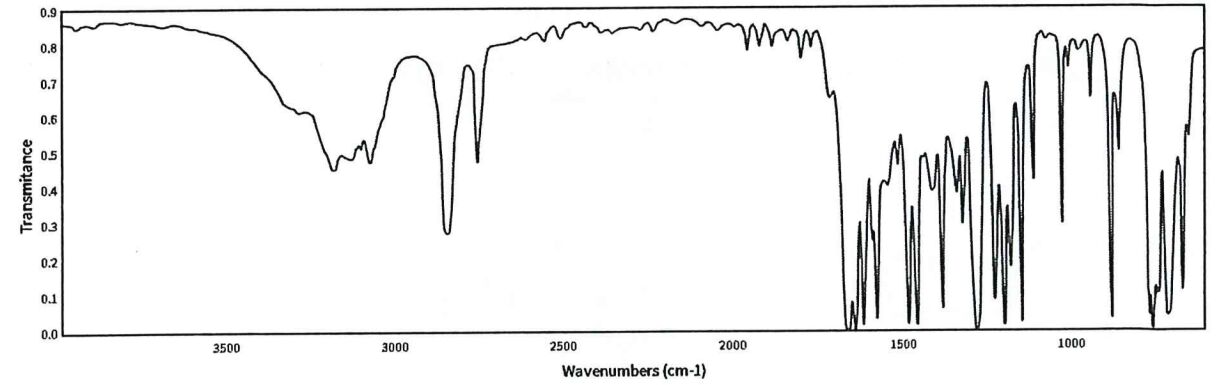
23. Which of the following compounds has the IR spectrum shown below?(A)(B)(C)(D)(E)
24. What is the major product of the reaction shown below?(A)(B)(C)(D)(E)
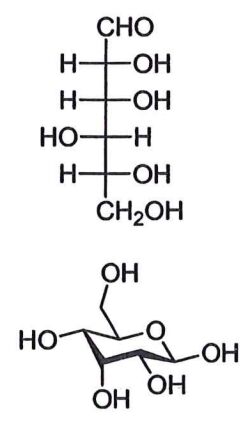
25. Which of the following structures pair represent the same type of hexose?(A)(B)(C)(D)(E)
26. What is the major product of the following reaction?(A)(B)(C)(D)(E)
27. What is the major product of the following reaction?(A)(B)(C)(D)(E)
28. Which following group of m/z signals belongs to the fragments of the shown compound in its mass spectrum?
(A) 29, 71, 76, 104, 107 (D) 29, 71, 73, 87, 101 (B) 45, 74, 76, 90 (E) 45, 74, 93, 104, 107 (C) 29, 74, 76, 101, 104
29. Which of the following reaction conditions can provide the desired major product?(A)(B)(C)(D)(E)
30. Which of the following reaction conditions can provide the desired major product?(A)(B)(C)(D)(E)
 阿摩線上測驗
登入
阿摩線上測驗
登入
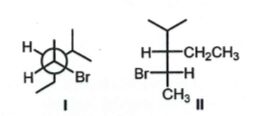 (A) constitutional isomers. (B) enantiomers. (C) identical. (D) diastereomers. (E) not isomeric.
 (A) 1 (B) 2 (C) 3 (D) 4 (E) 5
 (A) I (B) II (C) III (D) IV (E) V
 (A) I (B) II (C) III (D) IV (E) V (F) V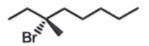
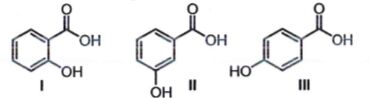 (A) $\mathrm{I} > \mathrm{II} > \mathrm{III}$ (B) $\mathrm{III} > \mathrm{II} > \mathrm{I}$ (C) $\mathrm{II} > \mathrm{I} > \mathrm{III}$ (D) $\mathrm{III} > \mathrm{I} > \mathrm{II}$ (E) $\mathrm{II} > \mathrm{III} > \mathrm{I}$
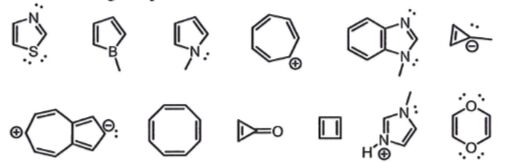 (A) 4 (B) 5 (C) 6 (D) 7 (E) 8
 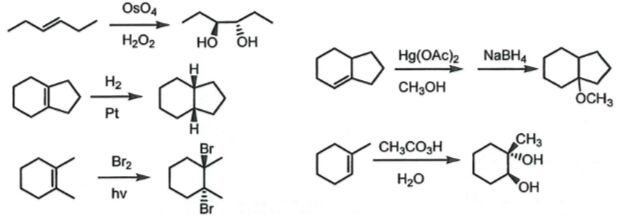 (A) 1 (B) 2 (C) 3 (D) 4 (E) 5
 (A)
(A)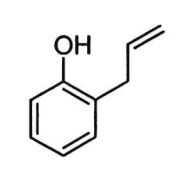 (B)
(B)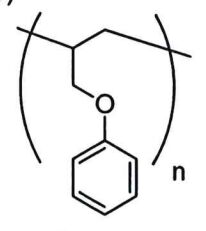 (C)
(C)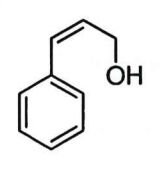 (D)
(D)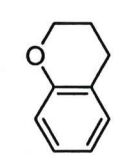 (E)
(E)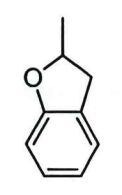
 (A)
(A)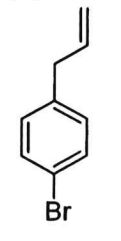 (B)
(B)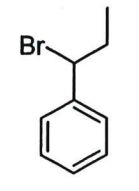 (C)
(C)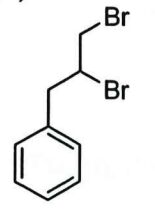 (D)
(D)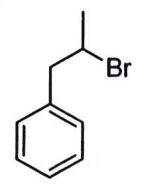 (E)
(E)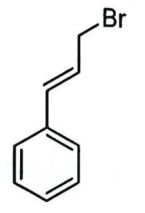
 (A) ii > iii > iv > i > v (B) iii > i > iv > v > ii (C) iv > i > iii > v > ii (D) v > iv > i > iii > ii (E) i > iv > v > ii > iii
  (A)
(A)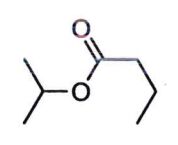 (B)
(B)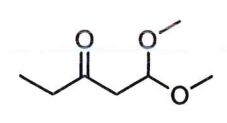 (C)
(C)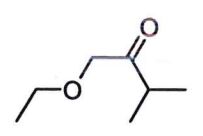 (D)
(D)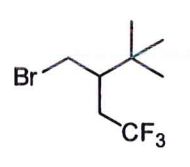 (E)
(E)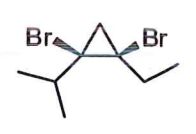
 (A)
(A)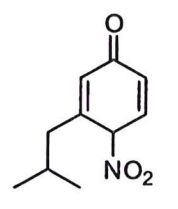 (B)
(B)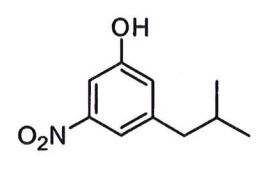 (C)
(C)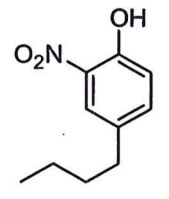 (D)
(D)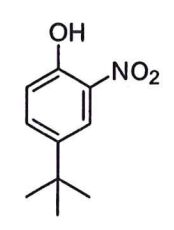 (E)
(E)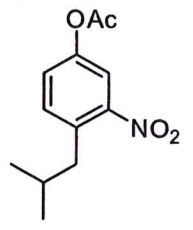
 (B)
(B)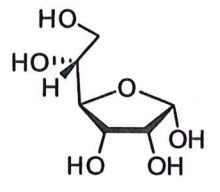 (C)
(C)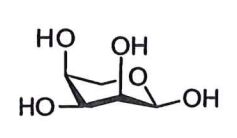 (D)
(D)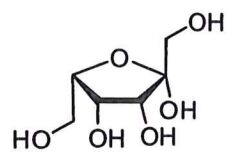 (E)
(E)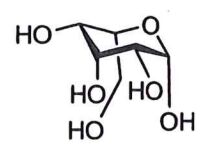
 (A)
(A)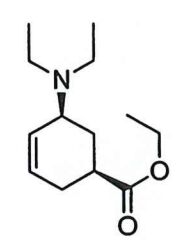 (B)
(B)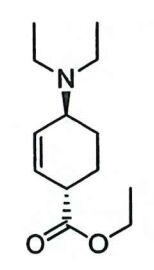 (C)
(C)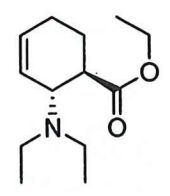 (D)
(D)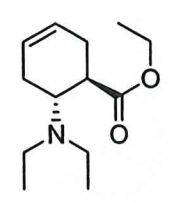 (E)
(E)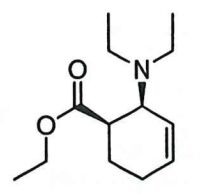
 (A)
(A)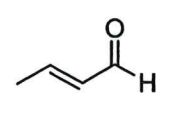 (B)
(B)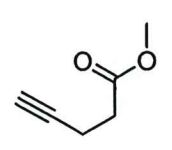 (C)
(C)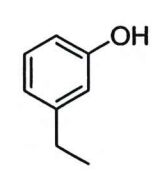 (D)
(D)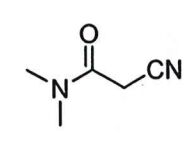 (E)
(E)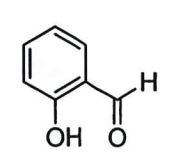
 (A)
(A)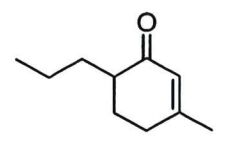 (B)
(B)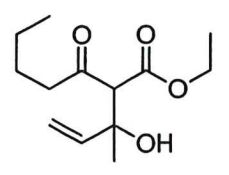 (C)
(C)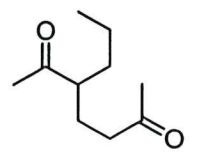 (D)
(D)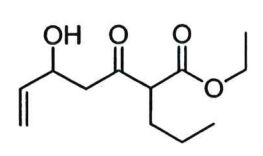 (E)
(E)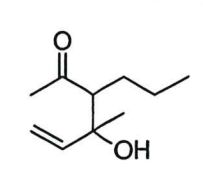
 (B)
(B)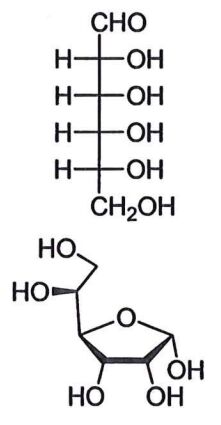 (C)
(C)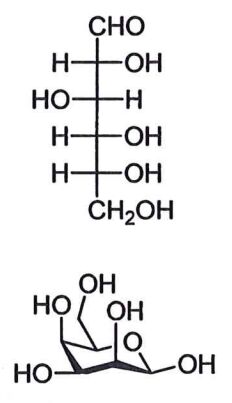 (D)
(D)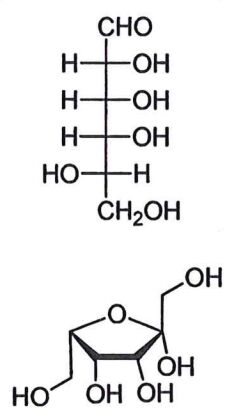 (E)
(E)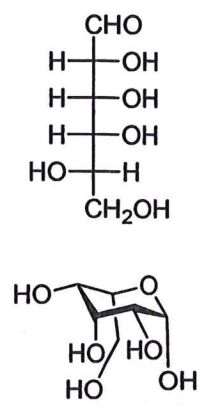
 (A)
(A)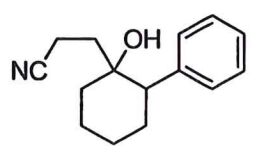 (B)
(B)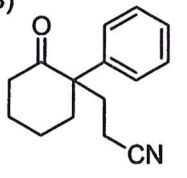 (C)
(C)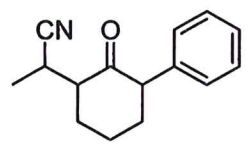 (D)
(D)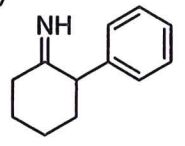 (E)
(E)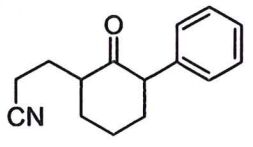
 (A)
(A)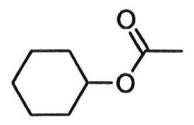 (B)
(B)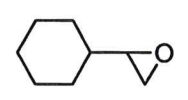 (C)
(C)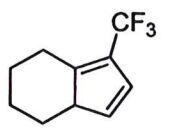 (D)
(D)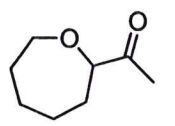 (E)
(E)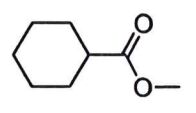
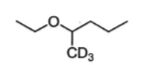 (A) 29, 71, 76, 104, 107 (D) 29, 71, 73, 87, 101 (B) 45, 74, 76, 90 (E) 45, 74, 93, 104, 107 (C) 29, 74, 76, 101, 104
  (B)
(B) (C)
(C) (D)
(D) (E)
(E)
 (B)
(B) (C)
(C) (D)
(D) (E)
(E)