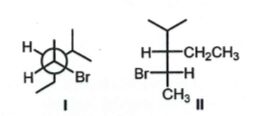
1. I and II are ______.
(A) constitutional isomers.(B) enantiomers.(C) identical.(D) diastereomers.(E) not isomeric.

 阿摩線上測驗
登入
阿摩線上測驗
登入