所屬科目:學士後西醫物理及化學
1. Consider a system consisting of the following apparatus, in which gas is confined in flask A and there is a vacuum in flask B. The flasks are separated by a valve. A B Assuming that the flasks are perfectly insulated and will not allow the flow of heat into or out of the flasks to the surroundings. When the valve is opened, gas flows from flask A to flask B. Which of the following5 atm Evacuated statements regarding this process is correct? (A) No work is performed during the expansion of the gas. (B) The gas expansion is a nonspontaneous process. (C) The driving force for this process is enthalpy change. (D) The internal energy change (ΔΕ) for this expansion process is > 0. (E) The entropy change of the surrounding (ASsurr) for this process is > 0.
2. Given the values for the following compounds:
Which of the following statements about these compounds is incorrect ? (A) The solubility of MnS in water is pH dependent. (B) Zn(OH)2 has the lowest molar solubility in water. (C) Pb(OH)2 has the highest molar solubility in water. (D) Zn(OH)2 is more soluble upon decreasing the pH of solution. (E) A saturated PbCrO4 solution has a lower than a saturated Pb(OH)2 solution.
3. An unknown compound X was found to have molecular peak of m/z = 74 by mass spectrometry and a measured boiling point of 57°C at latm. Which of the following is most likely to be compound X? (A) diethyl ether (D) butanone (B) methyl acetate (E) n-pentane (C) propionic acid
4. Consider the reaction: a X(g) ⇌ b Y(g)
Each entry in the table below represents the equilibrium partial pressures of X and Y under different initial conditions at the same temperature. The coefficients a and b are the simplest integers. When the equilibrium partial pressure of X is 0.20 atm, the equilibrium partial pressure of Y is n atm. Which of the following statements is true?
(A) a = 1 (B) b = 2 (C) n = 0.10 (D) a = 2b (E) a + b = 4
5. Which of the following amino acids has the correct ionized form for the functional groups at physiological pH (7.4)? (A)(B)(C)(D) (E)
6. Which of the following statements about electrochemical cells is incorrect? (A) The standard potential (E°)in a concentration cell is zero. (B) In a concentration cell, the higher ion concentration solution is present at the cathode. (C) At equilibrium, the standard potential (E°) in a cell is zero. (D) The cell potential (E)can determine the spontaneity of a cell. (E) In a concentration cell, decreasing the anode ion concentration will give rise to larger cell potentials.
7. Which of the following names for compounds complies to IUPAC nomenclature? (A) 2,5-pentadiene (B) cis-1-butene (D) trans-1,1-dichlorocyclohexane (C) (R)-bromocyclopentane (E) propanal
8. Which of the following molecules does not belong to 20 common amino acids? (A)(B)(C)(D)(E)
9. In preparation for the combustion demonstration, the assistant instructor injected equal molar amount of H2 and O2 into the balloon, but the demonstration had to be postponed until the next day due to safety setup problems. During the night, both gases leaked through the pores of the balloon. What is the molar ratio of O2 to H2 in the balloon the next day if 30% of the H2 is leaking? (A) 0.76 (B) 0.95 (C) 1.14 (D) 1.32 (E) 1.60
10. The following statements describe the chemical and physical properties of some representative elements and their compounds. Which statement is incorrect ? (A) Diborane (B2H6) has two three-center two-electron B-H-B bonds. (B) Lithium metal is converted to lithium superoxide in the presence of excess molecular oxygen. (C) Al2O3 is amphoteric and can dissolve in both acidic and basic solutions. (D) The hydration of F¯ decreases the entropy when HF dissociates in water, which contributes to make HF a weaker acid than HCl and HBr. (E) SiC is an extremely hard substance because it has a covalent network structure similar to diamond.
11. Which of the available number of stereoisomers for the following open-chain monosaccharide is correct? (A) aldopentose: 8 stereoisomers (B) aldohexose: 32 stereoisomers (C) ketotetrose: 4 stereoisomers (D) aldotriose: 4 stereoisomers (E) ketohexose: 16 stereoisomers
12. Which of the following forms of peptide residues is the most basic? (A)(B)(C)(D)(E)
13. Which of the following statements about nuclear reaction and stability is correct? (Z is the atomic number.) (A) As Z increases, nuclides need a smaller neutron-to-proton ratio for stability. (B) Nuclides with small Z values are often observed to be a-particle producers. (C) A radioactive nuclide that decays from 2.00 × 10¹⁰ atoms to 2.50 × 10º atoms in 30.0 min has a half-life of 15.0 min. (D) Both the radioactive processes of positron production and electron capture increase the neutron-to-proton ratio. (E) If less than one neutron from each fission event causes another fission event, the fission situation is described as supercritical.
14. What is the major product for following reaction? (A)(B)(C)(D)(E)
15. A mineral crystallizes in a cubic closest-packed array of oxygen ions (O²⁻) with aluminum ions (Al³⁺) in some of the octahedral holes and magnesium ions (Mg²⁺) in some of the tetrahedral holes. Which of the following statements about this compound is correct? (A) The empirical formula is Al₂Mg₂O₅. (B) Half of the octahedral holes are filled with aluminum ions. (C) One-fourth of the tetrahedral holes are filled with magnesium ions. (D) There are two oxygen ions in a unit cell. (E) There are four aluminum ions in a unit cell.
16. Two moles of a monatomic ideal gas were heated at a constant pressure of 1 atm from 200 K to 300 K. The entropy (S°) for this gas at 200 K is 6.00 J mol⁻¹ K⁻¹. Regarding the related thermodynamic parameters during the process, which of the following statements is correct? (R = 8.31 J mol⁻¹ K⁻¹; ln2 = 0.69; ln3 = 1.10) (A) internal energy change (ΔE) = 1662 J (B) work (w) = -831 J (C) heat (q) = 2493 J (D) the entropy change (ΔS) = 8.52 J K⁻¹ (E) the entropy (S°) for this gas at 300 K is 14.52 J mol⁻¹ K⁻¹
17. Which of the following compounds (A-E) is not aromatic? (A) A (B) B (C) C (D) D (E) E
18. Titrating 30.00 mL of a saturated calcium iodate solution requires 27.00 mL of a 0.100 M solution of Na₂S₂O₃ according to the equation
IO₃⁻ + S₂O₃²⁻ + H⁺ → I⁻ + S₄O₆²⁻ + H₂O (not balanced)
What is the Ksp for Ca(IO₃)₂? (A) 7.14 × 10⁻⁸ (B) 1.68 × 10⁻⁶ (D) 4.62 × 10⁻⁴ (E) 6.23 × 10⁻² (C) 2.79 × 10⁻⁵
19. In an organic solution, an organometallic compound R3MPH3 (R = alkyl, M = metal) decomposes into a hydrocarbon R-R and a new compound RMPH3. The mechanism for the reaction was proposed as follows. The first and third steps are fast, whereas the second step is slow. What is the rate law based on the mechanism?
(A) Rate =(k1k3/k-1)R3MPH3[PH3] (B) Rate = R-R/[R3M] (C) Rate = (k2k1/k-1)[R3MPH3]/[PH3] (D) Rate = k2[R3M]/[PH3] (E) Rate = k1[R3MPH3]
20. The heat required to raise the temperature from 298 K to 398 K for 2 moles of a gas at constant volume is 4155 J. At constant pressure, the internal energy required to heat the same gas from 450 K to 550 K is 4960 J, and the gas does 857 J of work during this expansion. Which of the following statements is correct? (R = 8.31 J mol⁻¹ K⁻¹) (A) This gas is monatomic. (B) This gas is not an ideal gas. (C) The molar heat capacity at constant volume is 41.55 J mol⁻¹ K⁻1. (D) The molar heat capacity at constant pressure is 49.60 J mol⁻¹ K⁻1. (E) The internal energy change is 2078 J when the gas is heated from 273 K to323 K at constant pressure
21. The molar ratio of Cl⁻, Br⁻, and I in a solution is 2:3:4. Now, if you want to pass Cl2 into the solution so that the molar ratio of Cl⁻, Br⁻, and I in the solution becomes 4:3:2, what is the molar ratio of Cl2 to be added and I in the original solution? (A) 1:2 (B) 1:3 (C) 1:4 (D) 1:5 (E) 1:6
22. Methane monooxygenase (s-MMO) contains a dinuclear iron active center and is a catalyst for the oxidation of CH4 by O2 to form CH3OH; the reaction process is shown below. Which of the following statements is incorrect? (A) Theelectronic configuration of the ground state Fe atom is [Ar]3d64s². involves the breaking of a non-polar bond and the formation of (B) Step polar bonds. (C) Electron transfer occurs between iron and oxygen atoms in each step. (D) Radical species are produced during the reaction. (E) The overall reaction shown is CH4 + O2 + 2H⁺ +2 CH3OH+ H2O
23. Which pair of the following compounds that measured under the same conditions have the same amplitude of specific rotation but with opposite direction? (A) cis-1,2-dichlorocyclopentane and trans-1,2-dichlorocyclopentane (B) (2S, 3R)-butane-2,3-diol and (2R, 3S)-butane-2,3-diol (C) cis-2-butene and trans-2-butene (D) (2S, 3R)-butane-2,3-diol and (2R, 3R)-butane-2,3-diol (E) D-glucose and L-glucose
24. (i) The number of the following species which exhibit resonance is a.
O3, SeO2, NF3, N2O, CCl4, SCN⁻, OF2
(ii) The number of the following diatomic species which are paramagnetic is b.
What is (a + b)? (A) 5 (B) 6 (C) 7 (D) 8 (E) 9
25. 2-Methoxy-2-methylbutane (TAME) is commonly used as a gasoline additive. With the presence of appropriate catalysts, TAME can be produced by the liquid- liquid reaction between methanol and olefins, in which the following reactions occur simultaneously.
The equilibrium constants Kx, expressed in terms of the amount fraction of the substance, for reactions I, II, and III are shown above. What is the range of values of ? (A) <-1 (B)-1~0 (C) 0~1 (D) > 1 (E)
26. Consider the reaction 2 X(g) + Y(g) ⇌2Z(g) in a rigid container at 27 °C. The initial concentrations of X and Y are 2.0 mol/L and 3.0 mol/L, and 1.0 mol/L of Z will be produced at equilibrium. If you want to prepare 0.40 atm of Z from an initial pressure of 1.0 atm of X, what would be the approximate initial pressure of Y? (gas constant R = 0.082 atm·L·K⁻¹·mol⁻¹) (A) 1.3 atm (B) 3.3 atm (C) 10.2 atm (D) 21.3 atm (E) 28.0 atm
27. The formation of stalactite is closely related to the concentration of carbon- containing species formed by the dissolution of CaCO3 in the rocks and CO2 in the air in natural water bodies. Given that (CaCO3) = , pM = -log[M] where M = , the variation of pM with pH in a cave water body at room temperature is shown on the right. Which of the following is incorrect ? (A) represents . (B) (C) m = 2.75 and n = 4.35 (D) When pH is 10.3, (E) When pH is increased from 4 to 8, increases faster than .
28. At a certain temperature, cis-1,2-dimethylcyclopropane (M) and trans-1,2- dimethylcyclopropane (N) undergo the following transformation.
The rate laws for the reactions can be expressed as , with ky and k, being constants at a given temperature, called the forward and reverse rate constants, respectively, and the equilibrium constant of the reaction, K = 3. Which of the following statements is correct? (A) At this temperature, the conversion of M is 66.7%. (B) As the temperature increases, both , increase. (C) At room temperature, N is a gas under 1 atm. (D) M is more stable than N. (E) Heating this reaction increases the equilibrium constant K.
29. When the following monosaccharide form furanose, a new bond is formed between which two atoms (use underlined numbers)? (A) (B)(C)(D)(E)
30. Consider the complex ions . The wavelengths of absorbed electromagnetic radiation for these ions in solution are (in no specific order) 293 nm, 442 nm, and 768 nm. Which of the following statements is correct? (A) absorbs 293-nm electromagnetic radiation. (B) absorbs 442-nm electromagnetic radiation. (C) absorbs 768-nm electromagnetic radiation. (D) The solution of is blue. (E) The solution of is red.
31. The capacitor in the figure (right) is initially uncharged. w The emf of the battery is 8 = 10 volts. The values of the resistors are: R1 = R2 = R3 = 1 Ω. The capacitor C is 10 μF. Τ The switch is initially open and is closed at t = 0. What is R R R switch C the final charge on the capacitor if one waits long enough? (A)10 μC (B) 50 μC (C) 100 μC (D) 200 μC (E) 0
32. A particle collides with an identical particle at rest relative to an inertial frame S. These two (noninteracting) particles has speed 0.6c moving toward each other along the x direction in their center-of-momentum frame (namely, in the inertial frame in which the total momentum of the system vanishes), denoted by S'. What is the speed of frame S'relative to frame S? (A) 1.2c (B)(C) (D) 0.6c (E) (2 - √3)c
33. The wave function of a transverse wave propagating on a rope is y(x, t) = 5sin(πχ 4πt), where x and y are measured in meters and t is in seconds. What is the velocity (m/s) of a particle on the rope at x = 2 m and t = 0.5s? (A) 0 (B) -4 (C) 5π (D) 10π (E) 20π
34. A conductor of radius r, length 1, and resistivity p has resistance R. Assume that the volume of this conductor is conserved. What is the new resistance if it is stretched to double its original length? 1 (A) (B)(C) R (D) 2R (E) 4R
35. The molar specific heat at constant volume is , and the molar specific heat at constant pressure is . For an ideal gas at a fixed temperature, which of the following statements is true? (A) is always greater than , because part of the absorbed heat is used to do work to the environment. (B) is always greater than , because the environment absorbs additional heat. (C) is always less than , because part of the absorbed heat is used to do work to the environment. (D) is always less than , because the environment absorbs additional heat. (E) There is no certain relation between and .
36. Which of the following statements about the specific heat of an ideal gas is correct? (A) The specific heat at constant pressure is greater than the specific heat at constant volume because work is done by the gas at constant volume. (B) The specific heat at constant pressure is greater than the specific heat at constant volume because work must be done by the gas at constant pressure. (C) The specific heat is greater for a more massive gas. (D) The specific heat is greater at lower temperature. (E) The specific heat is proportional to the absolute temperature.
37. A neutron has a mass of 1.67 × kg. The de Broglie wavelength is 1.4 × m. What is the velocity of the neutron? (Plank's constant h = 6.63 × J.s) (A) 1.55 × 10² m/s (B) 7.01 × 10² m/s (C) 2.99 × 10⁶ m/s(D) 2.83 × 10³ m/s(E) 3.53 × 10³ m/s
38. For designing an anti-reflective coating for a glass surface in an optical device at a free-space wavelength of 552 nm. The refractive index of the glass is 1.50. Determine the minimum thickness (nm) of the optical coating with a refractive index of 1.38. (A) 276 (B) 184 (C) 138 (D) 100 (Ε) 92.0
39. A coin of mass m and radius R rolls steadily without slipping on a moving pad. Assume that the coin's face orientation remains fixed and its density is uniform. The coin rolls counter-clockwise and moves in the x-direction as shown in the figure. Suppose the pad is accelerating along the +x-direction with a constant acceleration a0 with respect to the inertial frame. What is the linear acceleration of the coin with respect to the inertial frame? (A)+a0/3(B)-a0/3(C) +a0/2 (D) -a0/2 (E) 0
40. What is the capacitance C of an isolated conductive spherical shell of radius R in free space with total charge Q uniformly distributed over its surface? (You can think of the second conductor as a hollow conducting shell of infinite radius.) (A) 0 (B) 4 πρ² Q (C) 2πε0RQ (D) 2 πε0Ρ (E) 4 πε0Ρ
41. A long, straight conductor carries 1.0 A of current. At what distance from the axis of the conductor is the magnetic field caused by the current equal to the Earth's magnetic field (about 0.5 Gauss)? μ0 = 4π × T·m/A (A) 200 mm (B) 40 mm (C) 20 mm (D) 4 mm (E) 1 mm
42. Which of the following statements is true for one mole of ideal monatomic gases? (A) For the isobaric process, the change in the internal energy is linearly proportional to the change in the temperature. (B) For the gas undergoing the adiabatic process, the temperature of the gas remains constant. (C) For the gas undergoing the isothermal expansion, the internal energy of the gas increases. (D) For the gas undergoing the adiabatic free expansion process, the temperature of the gas drops. (E) For the gas undergoing the adiabatic free expansion process, the internal energy of the gas increases.
43. For a monatomic ideal gas undergoing the following three consecutive thermodynamic processes. First, an isochoric process from (P0, V0) to (2P0, V0). Second, an adiabatic free expansion from (2P0, V0) to (P0, 2V0). Finally, an isobaric process from (P0, 2V0) to (P0, V0). Which of the following statements is true? (A) The entropy of the gas and the entropy of the surroundings increase. (B) The entropy of the gas increases during the isochoric process. (C) The entropy of the gas increases during the isobaric process. (D) The entropy of the gas increases after one cycle is unknown since the gas undergoes the adiabatic free expansion process. (E) None of the above is true.
44. According to the Drude model, the speed of charge carriers driven in conducting media can be described by the concept of drift velocity under a bias voltage. Also, charge carriers (say, electrons) are used to be treated as free particles like ideal gas molecules that are thermally agitated into random motion with an average velocity . In common situations, what the estimated ratio (in the order of magnitude) of would be? (A) or even more (B) around 105(C) about 1(D) around (E) or even less
45. For a sound wave travelling in a cylinder along the x-direction, a snapshot of the displacement field of air molecules is shown in the following figure. At which marked position, the sound wave possesses the largest energy density? The wave equation of sound is (A) The sound wave at A, C, and E all possess the largest energy density. (B) Only at point A since its amplitude is the largest. (C) Only at point C since it has the largest curvature. (D) The sound wave at B and E possess the largest energy density. (E) Only at point D since it has the largest slope.
46. Gold (Au) and tin (Sn) wires are joined together at both ends. The length ratio of the Au and Sn wires is 1:3 and both wires have the same cross-sectional area. A potential difference of Vis applied to the free ends. The ratio of the conductivities of Au and Sn is 5:1 and the ratio of the free electron densities of Au and Sn is 5:2. Which of the following statements is correct? Au Sn (A) The resistance of Au and Sn wires has the relation = 1:6. (B) The voltage across of Au and Sn wires has the relation = 1:15. (C) The electric field in Au and Sn wires has the relation = 1:1. (D) The drift velocity of electrons in Au and Sn wires has the relation =1:5. (E) None of the above is correct.
47. For a classical electromagnetic plane wave travelling in the x direction in a vacuum (with speed c), the electric field has the form = E0 cos(kx - wt) (V/m). Which of the following statements is true? (A) The magnetic field oscillates in the x direction with an amplitude | E0l/c (T). (B) The energy density of the electromagnetic wave is a constant everywhere in space. (C) The radiation pressure due to the electromagnetic wave shinning on a wall does not depend on its frequency. (D) The instantons power per unit area delivered by the electromagnetic wave is a constant. (E) None of the above is correct.
48. A bar magnet approaches a conducting loop from the left with its north pole directed towards the loop. Considering the effect of electromagnetic induction, the induced current in the loop has the greatest magnitude and a clockwise direction ________.(A) as the north pole of the magnet approaches the loop (B) when the north pole has passed through the loop, but the south pole has not yet passed through (C) when the north pole has passed through and the south pole is about to pass through the loop (D) as the south pole of the magnet leaves the loop (E) after the south pole of the magnet is several centimeters to the right of the loop
49. Which of the following values is closest to the wavelength (nm) of a photon with energy 1.0 eV? h = 6.6 × m²kg/s; c = 3.0 × 10⁸ m/s (A) 1 (B) 10 (C) 100 (D) 1000 (E) 10000
50. A parallel-plate capacitor has a capacitance of 100 pF, a plate area of 100 cm², and the space between the plates is completely filled with a mica dielectric (k =5.4). At a potential difference of 50 V, which of the following values is closest to the magnitude of the electric field E in the mica? (A) 1.0 × 10⁴ V/m (B) 1.0 × 10³ V/m (C)1.0 × 10² V/m (D) 1.0 × 10¹ V/m (E) 1.0 V/m
51. As shown in the figure on the right, a particle with charge Q is located at a small distance d above the center of a plane on a hemisphere of radius R. What is the electric flux through the circular face (of area πR²) as δ → 0⁺? (A)-Q/ε0 (B)(C) 0(D)(E) Q/ε₀
52. As shown in the figure below, a uniform thin stick of mass M and length L is held vertically by two strings of negligible mass. What is the linear acceleration in the middle of the stick when one of the strings is cut? (Hint: The moment of inertia of the stick is I = ML²/3 for an axis through one end.) (A) 1.50 g (B) 1.0 g (C) 0.75 g (D) 0.50 g (E) 0.25 g
53. As shown in the figure below, particle 1 of mass m₁ is sliding to the right along the x-axis on a frictionless floor with velocity v₁. When it reaches x = 0, it undergoes a one-dimensional elastic collision with stationary particle 2 of mass m2. When particle 2 reaches the wall at , (>0), it bounces off the wall without losing velocity. What is the condition that (0 Xw particle 2 collides only twice with particle 1? (A) m2 <m1 (B) 1/3 < m1/m2 ≤ 1 (C) 1/3 ≤ m1/m2 ≤1 (D) 1/3 ≤ m1/m2 < 1 (E) None of the above.
54. Two planets of equal mass orbit a star. Planet A has a smaller orbital radius than planet B. Which of the following statements is correct? (A) Planet A and planet B have the same mechanical energy (potential energy plus kinetic energy). (B) Planet A has less kinetic energy, less potential energy, and less mechanical energy (potential energy plus kinetic energy) than planet B. (C) Planet A has more kinetic energy, less potential energy, and less mechanical energy (potential energy plus kinetic energy) than planet B. (D) Planet A has more kinetic energy, less potential energy, and more mechanical energy (potential energy plus kinetic energy) than planet B. (E) Planet A has more kinetic energy, more potential energy, and more mechanical energy (potential energy plus kinetic energy) than planet B.
55. Which of the following statements is false for one mole of monatomic ideal gas? (A) By the Equivalence Theorem, we know that the average energy of each molecule in a monatomic gas is , where the translation, rotational and vibrational motion each contribute equally to the energy . (B) The isobaric process requires absorbing more heat to increase its temperature by one unit than the isochoric process. (C) If the pressure of a gas is doubled and the volume is halved, the internal energy of the gas does not change. (D) During a reversible adiabatic process, the ideal gas law PV = nRT still holds. (E) None of the above is false.
56. Let us consider aspherical capacitor consisting of two concentric metal spherical shells of radii R1 and R2 (R1 < R2), respectively. Which of the following statements is true? (A) The capacitance is increased as R₁ reduces. (B) The capacitance is increased as R2 increases. (C) The capacitance increases as R₁ and R2 increase, while the difference between R2 and R₁ remains constant. (D) The potential difference between the two metal spherical shells does not change with the stored charges. (E) None of the above.
57. Which of the following statements is not true? (A) If an external pressure is applied to a confined fluid which is incompressible, the pressure at every point within the fluid increases by that amount. (B) The magnitude of pressure exerted by an object on a given surface is equal to its weight acting in the direction perpendicular to that surface. Therefore, like the force vector, pressure is also a vector quantity. (C) 1 atm is about 14.7 psi. (D) At any depth in a static fluid, the pressure is the same in all directions at a given depth. (E) Where fluid velocity is high, pressure is low; where velocity is low, pressure is high.
58. As shown in Figure (b) below, a point-like ball with initial velocity v0 is inclined at an angle of Ψ on the inclined plane and the inclined plane itself is inclined at an angle of Φ.
We know that the distance from the point of launch to the point at which the ball strikes the incline, measured along the incline without taking into account air resistance, is
Therefore, as shown in Figure (b), what value of θ0 will maximise R when thrown from a projector with a height h = 2.22 m above the ground and an initial velocity v0 = 14.0 m/s? (Hint: Solve a quadratic equation of sing and, then, take an approximation: sin6° ≈ 1/10.) (A) smaller than 40° (B) about 42° (C) 45°, exactly (D) about 47° (E) larger than 50°
59. Which of the following statements about Maxwell's equations is false? (A) Gauss's law for magnetism implies that there are no magnetic monopoles. (B) Gauss's law for the electric field shows us that an electric field points away from positive charges and towards negative charges. (C) Faraday's law states that the rate of change of the magnetic flux through the enclosed surface of a circuit induces a current. (D) Maxwell's modification to Ampère's law gives that a time-varying electric field results in a circular magnetic field. (E) None of the above.
60. Which of the following values is closest to the inductance required to store 1.0 kWh of energy in a coil carrying a 200-A current? (A) 0.1 Η (B) 1 H (C) 10 H (D) 40 H (E) 200 Η
 阿摩線上測驗
登入
 (A) No work is performed during the expansion of the gas. (B) The gas expansion is a nonspontaneous process. (C) The driving force for this process is enthalpy change. (D) The internal energy change (ΔΕ) for this expansion process is > 0. (E) The entropy change of the surrounding (ASsurr) for this process is > 0.
 values for the following compounds:

 than a saturated Pb(OH)2 solution.
 (A) a = 1 (B) b = 2 (C) n = 0.10 (D) a = 2b (E) a + b = 4
 (B)
 (C)
 (D)
 (E)

 (B)
 (C)
 (D)
 (E)

 (B)
 (C)
 (D)
 (E)

 (A)
 (B)
 (C)
 (D)
 (E)

 (A) A (B) B (C) C (D) D (E) E
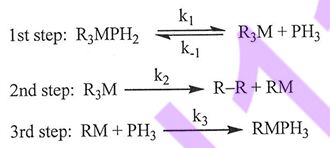 (A) Rate =(k1k3/k-1)R3MPH3[PH3] (B) Rate = R-R/[R3M] (C) Rate = (k2k1/k-1)[R3MPH3]/[PH3] (D) Rate = k2[R3M]/[PH3] (E) Rate = k1[R3MPH3]
 is 41.55 J mol⁻¹ K⁻1. (D) The molar heat capacity at constant pressure
 is 49.60 J mol⁻¹ K⁻1. (E) The internal energy change is 2078 J when the gas is heated from 273 K to323 K at constant pressure
 (A) Theelectronic configuration of the ground state Fe atom is [Ar]3d64s². involves the breaking of a non-polar bond and the formation of (B) Step polar bonds. (C) Electron transfer occurs between iron and oxygen atoms in each step. (D) Radical species are produced during the reaction. (E) The overall reaction shown is CH4 + O2 + 2H⁺ +2
 CH3OH+ H2O


 ? (A) <-1 (B)-1~0 (C) 0~1 (D) > 1 (E)

 (CaCO3) =
 , pM = -log[M] where M =

 , the variation of pM with pH in a cave water body at room temperature is shown on the right. Which of the following is
 (A) represents
 . (B)
 (C) m = 2.75 and n = 4.35 (D) When pH is 10.3,
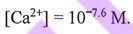 (E) When pH is increased from 4 to 8,
 increases faster than
 .

 , with ky and k, being constants at a given temperature, called the forward and reverse rate constants, respectively, and the equilibrium constant of the reaction, K = 3. Which of the following statements is correct? (A) At this temperature, the conversion of M is 66.7%. (B) As the temperature increases, both
 , increase. (C) At room temperature, N is a gas under 1 atm. (D) M is more stable than N. (E) Heating this reaction increases the equilibrium constant K.
 (A)
 (B)
 (C)
 (D)
 (E)

 . The wavelengths of absorbed electromagnetic radiation for these ions in solution are (in no specific order) 293 nm, 442 nm, and 768 nm. Which of the following statements is correct? (A)
 absorbs 293-nm electromagnetic radiation. (B)
 absorbs 442-nm electromagnetic radiation. (C)
 absorbs 768-nm electromagnetic radiation. (D) The solution of
 is blue. (E) The solution of
 is red.
 (A)10 μC (B) 50 μC (C) 100 μC (D) 200 μC (E) 0
 (C)
 (D) 0.6c (E) (2 - √3)c
 (B)
 (C) R (D) 2R (E) 4R
 , and the molar specific heat at constant pressure is
 . For an ideal gas at a fixed temperature, which of the following statements is true? (A)
 is always greater than
 , because part of the absorbed heat is used to do work to the environment. (B)
 is always greater than
 , because the environment absorbs additional heat. (C)
 is always less than
 , because part of the absorbed heat is used to do work to the environment. (D)
 is always less than
 , because the environment absorbs additional heat. (E) There is no certain relation between
 and
 .
 kg. The de Broglie wavelength is 1.4 ×
 m. What is the velocity of the neutron? (Plank's constant h = 6.63 ×
 J.s) (A) 1.55 × 10² m/s (B) 7.01 × 10² m/s (C) 2.99 × 10⁶ m/s(D) 2.83 × 10³ m/s(E) 3.53 × 10³ m/s
 (A)+a0/3(B)-a0/3(C) +a0/2 (D) -a0/2 (E) 0
 T·m/A (A) 200 mm (B) 40 mm (C) 20 mm (D) 4 mm (E) 1 mm
 under a bias voltage. Also, charge carriers (say, electrons) are used to be treated as free particles like ideal gas molecules that are thermally agitated into random motion with an average velocity
 . In common situations, what the estimated ratio (in the order of magnitude) of
 would be? (A)
 or even more (B) around 105(C) about 1(D) around
 (E)
 or even less

 (A) The sound wave at A, C, and E all possess the largest energy density. (B) Only at point A since its amplitude is the largest. (C) Only at point C since it has the largest curvature. (D) The sound wave at B and E possess the largest energy density. (E) Only at point D since it has the largest slope.
 (A) The resistance of Au and Sn wires has the relation
 = 1:6. (B) The voltage across of Au and Sn wires has the relation
 = 1:15. (C) The electric field in Au and Sn wires has the relation
 = 1:1. (D) The drift velocity of electrons in Au and Sn wires has the relation
 =1:5. (E) None of the above is correct.
 = E0 cos(kx - wt)
 (V/m). Which of the following statements is true? (A) The magnetic field oscillates in the x direction with an amplitude | E0l/c (T). (B) The energy density of the electromagnetic wave is a constant everywhere in space. (C) The radiation pressure due to the electromagnetic wave shinning on a wall does not depend on its frequency. (D) The instantons power per unit area delivered by the electromagnetic wave is a constant. (E) None of the above is correct.
 (A) as the north pole of the magnet approaches the loop (B) when the north pole has passed through the loop, but the south pole has not yet passed through (C) when the north pole has passed through and the south pole is about to pass through the loop (D) as the south pole of the magnet leaves the loop (E) after the south pole of the magnet is several centimeters to the right of the loop
 m²kg/s; c = 3.0 × 10⁸ m/s (A) 1 (B) 10 (C) 100 (D) 1000 (E) 10000
 (A)-Q/ε0 (B)
 (C) 0(D)
 (E) Q/ε₀
 ML²/3 for an axis through one end.)
 (A) 1.50 g (B) 1.0 g (C) 0.75 g (D) 0.50 g (E) 0.25 g
 , (>0), it bounces off the wall without losing velocity. What is the condition that (0 Xw particle 2 collides only twice with particle 1?
 (A) m2 <m1 (B) 1/3 < m1/m2 ≤ 1 (C) 1/3 ≤ m1/m2 ≤1 (D) 1/3 ≤ m1/m2 < 1 (E) None of the above.
 , where the translation, rotational and vibrational motion each contribute equally to the energy
 . (B) The isobaric process requires absorbing more heat to increase its temperature by one unit than the isochoric process. (C) If the pressure of a gas is doubled and the volume is halved, the internal energy of the gas does not change. (D) During a reversible adiabatic process, the ideal gas law PV = nRT still holds. (E) None of the above is false.
 We know that the distance from the point of launch to the point at which the ball strikes the incline, measured along the incline without taking into account air resistance, is
