所屬科目:學士後西醫物理及化學
1. Which statement about sound waves in the air is incorrect? (A) Sound waves can not travel through the vacuum space. (B) Louder sound travels faster than softer sound. (C) Sound waves can undergo interference. (D) The speed of sound depends on temperature. (E) The molecular displacements in the medium are parallel to the wave velocity.
2. Which statement is true for an ideal gas undergoing an quasistatic adiabatic expansion? (A) No work is done by the gas. (B) The temperature of the gas decreases. (C) The temperature of the gas increases. (D) The internal energy of the gas remains constant. (E) The pressure of the gas remains constant.
3. Which of the following statements regarding electromagnetic waves is incorrect? (A) The electric and magnetic field vectors are perpendicular to each other. (B) The electric field vector is perpendicular to the direction of wave propagation. (C) Electromagnetic waves require a material medium, such as air or water, to travel through space. (D) Every electromagnetic wave travels at the same constant speed regardless of its frequency. (E) Electromagnetic waves can be produced by the accelerating electric charges.
4. Which of the following properties is fundamentally defined and rendered measurable by the Zeroth Law of Thermodynamics? (A) Work (B) Temperature (C) Mass (D) Heat (E) Internal energy
5. Which of the following statements is true for a system undergoing a thermodynamically reversible process? (A) The system cannot perform work on its surroundings. (B) The process can only occur at absolute zero. (C) The total entropy of the universe decreases. (D) The internal energy of the system must remain constant. (E) The total entropy of the universe remains unchanged.
6. According to the principles of the photoelectric effect, if the intensity of incident light is doubled while the frequency remains constant and above the threshold, what happens to the maximum kinetic energy of the emitted photoelectrons? (A) It remains unchanged. (B) It doubles. (C) It increases by a factor of four. (D) It decreases slightly. (E) None of the above.
7. Which of the following statements best describes the phenomenon of quantum tunneling? (A) A particle crossing a barrier that it classically lacks the energy to overcome. (B) A particle gaining thermal energy to jump over a physical barrier. (C) A particle disappearing and instantly reappearing on the other side of a gap. (D) A particle absorbing a photon to reach a higher energy level. (E) All of the above.
8. An object is placed in front of a concave spherical mirror at a distance less than the focal length. The resulting image is ________. (A) virtual, erect, and larger than the object (B) real, inverted, and smaller than the object (C) virtual, erect, and smaller than the object (D) real, inverted, and larger than the object (E) none of the above
9. A conducting sphere is charged such that the electric potential on its surface is 100 volt (V) (relative to infinity). If the radius of the sphere were doubled, but the total charge on the sphere remained the same, what would be the new potential on the surface relative to infinity? (A) 400 V (B) 200 V (C) 100 V (D) 50 V (E) 25 V
10. What is the maximum theoretical efficiency of a Carnot heat engine operating between a heat source at 500 K and a heat sink at 300 K? (A) 20% (B) 30% (C) 40% (D) 50% (E) 60%
11. A musician can identify a 2 kilo-Hz pure tone in 8 milli-seconds. How many periods of the sound wave is this? (A) 16 (B) 20 (C) 24 (D) 28 (E) 30
12. A pitcher throws a ball of mass m at an angle such that the ball can travel a maximum distance R. Find the initial kinetic energy K0 of the ball. The gravitational acceleration is denoted as g. (Ignore the height of the pitcher) (A) K0=2mgR (B) K0=mgR (C) K0=(1/2) mgR (D) K0=(1/4) mgR (E) K0=(1/8) mgR
13. The human heart acts as a biological pump, generating pressure to circulate blood throughout the body. The human heart could pump about 80 cm3 of blood per contraction, and this quantity is called the stroke volume. Assume that mean arterial pressure is 120 mm-Hg and the heart beat rate is 70/min. Calculate the average power output of the heart in watt (W). [1 atm=760 mm-Hg= 1.013×10⁵ Pa] (A) 2.7 W (B) 1.5 W (C) 3.2 W (D) 0.8 W (E) 4.2 W
14. Babies are naturally more sensitive to some pitched sounds differently than adults. This is due to the difference in the length of the ear canal. Calculate the fundamental resonant frequency f1 of the 1.27 cm long ear canal of a baby. Calculate the fundamental resonant frequency f2 of the 2.6 cm long ear canal of an adult. The answer is written in the form (f1, f2). The speed of sound in air is 344 m/s. (A) (7343 Hz, 4370 Hz) (B) (3543 Hz, 6880 Hz) (C) (6771 Hz, 3307 Hz) (D) (3443 Hz, 7698 Hz) (E) (9371 Hz, 5890 Hz)
15. A hearing aid increases the sound intensity level by 20 decibels (dB). By what factor does this increase the actual sound intensity? (A) 800 (B) 400 (C) 200 (D) 100 (E) 2
16. Which reagent can reduce 2-butanone to n-butane? (A) NaBH4 (B) LiAlH4 (C) PCC (D) Zn(Hg), HCl (E) KMnO4
17. The ground state term symbol for the neutral oxygen atom (O) is relevant to discussions of reactive oxygen species or atomic oxygen in biochemical contexts. What is the ground state term symbol for O? (A) 1S (B) 1P (C) 1D (D) 3P (E) 3D
18. Which statement about the Hartree-Fock (HF) method is correct? (A) The HF method gives the exact electronic energy because it includes full electron correlation. (B) The HF method approximates the many-electron wavefunction as a single Slater determinant, enforcing antisymmetry. (C) The HF method treats electron-electron repulsion only as a constant and ignores exchange effects. (D) In the HF method, the orbitals are fixed and never optimized; only the total energy is minimized. (E) The HF method is a semi-empirical method because it requires experimental parameters.
19. In a gravimetric determination of nickel using dimethylglyoxime (DMG), a student performed three replicate trials. In each trial, the student weighed the nickel-DMG precipitate before it had reached a constant mass (i.e., the precipitate was still slightly damp with residual solvent). Which of the following statements best describes this error? (A) It is a random error that can be minimized by increasing the number of replicate measurements. (B) It is a systematic error that results in a positive bias, leading to a consistently higher calculated nickel content. (C) It is an indeterminate error that primarily affects the precision of the data set rather than its accuracy. (D) It is a systematic error that results in a negative bias, leading to a consistently lower calculated nickel content. (E) It is a random error caused by the inherent fluctuations in the ambient humidity of the laboratory.
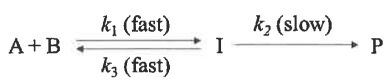
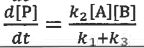
20. Consider the reaction:
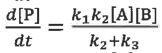
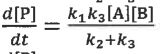
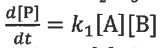
Using the steady-state approximation for the intermediate I, which expression for the rate of product formation is correct? (A) (B)(C)(D) (E)
21. In instrumental analysis, the internal standard method is often preferred over external calibration when sample loss or injection variability is expected. Which of the following statements regarding the properties and selection of an internal standard is correct? (A) The internal standard should be a substance that is already present in the original sample matrix to ensure compatibility. (B) The primary purpose of an internal standard is to compensate for matrix effects that suppress or enhance the analyte's signal. (C) An ideal internal standard should have a chemical structure and physical properties similar to the analyte, but its signal must be well-resolved from the analyte's signal. (D) Adding a higher concentration of the internal standard will directly increase the sensitivity (slope) of the calibration curve for the analyte. (E) If the instrument's sensitivity drops by 20% during a run, the internal standard method will fail because the response factor is no longer constant.
22. In clinical biochemistry and medical imaging, the color of metal-containing species used in diagnostics (e.g., contrast agents, blood analytes) often arises from d-d transitions or charge-transfer (CT) transitions. Which of the following species has a color that is not primarily due to charge-transfer? (A) Mn2+(aq) (B) KMnO4 (C) [Cu(NH3)4]2+ (D) Fe3O4 (E) KFeFe(CN)6
23. In human blood, the bicarbonate buffer system is the primary mechanism for maintaining physiological pH (≈7.40). Which of the following changes would most strongly drive the equilibrium below to the right, increasing blood acidity?
CO2 + H2O ⇌ H2CO3 ⇌ H+ + HCO3- (A) Hyperventilation (rapid breathing) (B) Hypoventilation (slow or shallow breathing) (C) Increased renal excretion of H+ (D) Intravenous administration of bicarbonate (E) Decreased CO2 concentration in blood
24. Assume a (hypothetical) planet where the temperature is so high, so the ground state of an electron in the hydrogen atom is n = 4. What is the ratio of the hydrogen IE on this planet to that on earth? (A) 1:16 (B) 1:4 (C) 4:1 (D) 16:1 (E) 1:1
25. In analytical spectroscopy, different regions of the electromagnetic spectrum interact with matter by inducing specific quantum transitions. Which of the following pairs correctly matches the spectral region with its corresponding quantum transition and reflects the correct energy relationship? (A) X-ray: transitions of valence electrons; higher energy than UV radiation. (B) Ultraviolet-Visible (UV-Vis): transitions of inner-shell electrons; lower energy than Infrared radiation. (C) Infrared (IR): changes in the configuration of nuclear spins; used for functional group identification. (D) Microwave: transitions between rotational energy levels of molecules; longer wavelength than Infrared radiation. (E) Radio wave: vibrational transitions within a molecule; used in Nuclear Magnetic Resonance (NMR) spectroscopy.
26. For an atom with one valence electron in a p-subshell (l = 1, s = 1/2), which statement about spin-orbit coupling is correct? (A) Spin-orbit coupling splits the p-level into j = and j = states. (B) The only allowed total angular momentum is j = 1/2 because s = 1/2. (C) Spin-orbit coupling does not occur unless the atom is placed in an external magnetic field. (D) The degeneracy of the j = level is 4 and the degeneracy of the j = level is 2. (E) Spin-orbit coupling combines n and l into a new quantum number j while leaving s unchanged.
27. How many electrons can be described by the quantum numbers n = 3, l = 1, ml = -1? (A) 14 (B) 6 (C) 10 (D) 0 (E) 2
28. C2H5OH(l) + 3O2(g) → 2CO2(g) + 3H2O(l), ΔH = -1.37 × 10³ kJ Which of the following statement(s) is(are) true for the combustion of ethyl alcohol as described in the above equation?
I. The reaction is exothermic.
II. The enthalpy change would be different if gaseous water were produced.
III. The reaction is not a redox reaction.
IV. The products of the reaction occupy a larger volume than the reactants. (A) I, II (B) I, III, IV (C) I only (D) III, IV (E) I, II, III
29. From the following list of observations, choose the one that most clearly supports the conclusion that the mass of the atom is mainly located in the nucleus. (A) the emission spectrum of hydrogen (B) the photoelectric effect (C) diffraction (D) the scattering pattern of α particles by metal foil (E) cathode "rays"
30. In UV-Vis spectroscopy, the absorption characteristics of a molecule can be altered by the presence of certain functional groups. Which of the following statements correctly describes the roles of chromophores and auxochromes? (A) A chromophore is a saturated functional group that does not absorb radiation but increases the absorption intensity of the entire molecule. (B) An auxochrome is a functional group, such as -OH or -NH2, which does not itself absorb significantly in the UV region but can cause a bathochromic shift and a hyperchromic effect when attached to a chromophore. (C) The addition of an auxochrome to a conjugated system typically leads to a hypsochromic shift (blue shift) because it increases the energy gap between the π and π* orbitals. (D) Chromophores are only capable of undergoing n→σ* transitions, while auxochromes are responsible for π→π* transitions. (E) The intensity of absorption is determined solely by the chromophore, and auxochromes only affect the wavelength of the maximum absorption.
31. The motion of a car can be described by the equation x(t)=15t-2t2, where x and t are in meters and seconds, respectively. What is the acceleration of the car after 3 seconds? (A) 27 m/s2 (B) 12 m/s2 (C) 4 m/s2 (D) -4 m/s2 (E) -12 m/s2
32. A solid cylinder and a thin hoop of the same mass m and radius R are released from rest (at the same moment) at the top of an incline. If they roll without slipping, which object will have a greater translational velocity at the bottom of the incline? (A) The solid cylinder. (B) The thin hoop. (C) They will have the same velocity. (D) The velocity depends on the angle of the incline. (E) None of the above.
33. Two blocks of equal mass m are connected by a spring with the spring constant k and placed on a frictionless surface. If the right block is given an initial velocity v while the left block is at rest, what is the minimum kinetic energy of the system during the subsequent oscillation? (A) 0 (B) (1/8)mv2 (C) (1/4)mv2 (D) (1/2)mv2 (E) mv2
34. An ice cube is floating in a glass of pure water. The system remains at 0°C as the ice melts. How does the water level change? (A) It increases. (B) It decreases. (C) It remains exactly the same. (D) It depends on the size of the ice cube. (E) None of the above.
35. A cylindrical water tank with a height of 1 meter (m) and a base area of 0.1 m2 contains 50 kg of pure water. A mass of 10 kg of salt is added to the water and allowed to dissolve completely. What is the gauge pressure at the bottom of the tank? (Assume gravitational acceleration g = 10 m/s2 for simplicity). [unit: pascal (Pa)] (A) 400 Pa (B) 600 Pa (C) 4000 Pa (D) 5000 Pa (E) 6000 Pa
36. Two people with masses of 60 kg and 80 kg are initially at rest on a frictionless level surface, separated by a distance of 20 meter (m). They both pull on opposite ends of a massless rope to move towards one another. If the total distance between them decreases by 14 m, how far has the 80-kg person traveled? (A) 10 m (B) 8 m (C) 6.4 m (D) 6 m (E) 3.6 m
37. A pulley with a radius of 3.0 cm and a rotational moment of inertia of I = 9.0 × 10⁻³ kg·m2 is suspended from a ceiling. A massless, non-slip rope passes over the pulley, supporting two blocks with masses of 1.0 kg and 3.0 kg. Determine the total kinetic energy of the system at the instant the 1.0 kg block reaches a speed of 1.0 m/s. [unit: joule (J)] (A) 1.0 J (B) 2.0 J (C) 7.0 J (D) 14 J (E) 28 J
38. We would like to estimate the energy consumed to run the left ventricle. Given that the rate at which the left ventricle does mechanical work is 1.046 watt. Nevertheless, the efficiency of converting the metabolic energy into mechanical energy is approximately 25%. Calculate the energy consumed to run the left ventricle per day. [1 calorie (cal) = 4.184 joules (J)] (A) 5.40 × 10⁴ (cal/day) (B) 4.18 × 10⁴ (cal/day) (C) 2.62 × 10⁴ (cal/day) (D) 8.64 × 10⁴ (cal/day) (E) 9.62 × 10⁴ (cal/day)
39. The human brain is approximately 56 cm above the heart. The average blood pressure in the major arteries near the heart is 95 mm-Hg. Assume that the density of blood is the same as that of water. What is the blood pressure in the brain in major arteries? [1mm-H2O = 0.0736 mm-Hg] (A) 136.2 mm-Hg (B) 95.0 mm-Hg (C) 53.8 mm-Hg (D) 42.8 mm-Hg (E) 33.2 mm-Hg
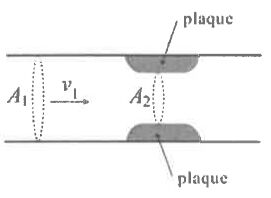
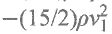
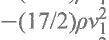
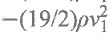
40. Atherosclerosis occurs when a deposit forms on an arterial wall. Suppose that the cross-sectional area becomes A2/A1=1/4, and this leads to a faster blood flow speed. The pressure in the region without plaque is P1, and the pressure in the region with plaque is P2. Use Bernoulli's equation to calculate the pressure drop P2 − P1. The blood density is ρ and the blood speed in the region without plaque is v1.
(A) (B) (C) (D) (E) None of the above
41. A perfect Carnot engine operates between a hot reservoir at 800 K and a cold reservoir at 400 K. If the engine performs 200 joule (J) of work in each cycle, how much heat is exhausted to the cold reservoir in each cycle? (A) 800 J (B) 600 J (C) 400 J (D) 200 J (E) 100 J
42. An ambulance siren emits a frequency of 620 Hz and the speed of sound is 340 m/s. Which statement below is correct? (A) A stationary observer always hears a frequency of 620 Hz. (B) When the ambulance moves towards a stationary observer at 30 m/s, the observer hears a frequency of 310 Hz. (C) When the ambulance moves away from a stationary observer at 30 m/s, the observer hears a frequency of 680 Hz. (D) When the ambulance moves towards a stationary observer at 30 m/s, the observer hears a frequency of 680 Hz. (E) When the ambulance moves away from a stationary observer at 30 m/s, the observer hears a frequency of 310 Hz.
43. A sealed room has a volume of 50 m3 and an initial relative humidity of 90%. How much water vapor must be removed to reduce the relative humidity to 50%? Assume the saturation vapor density is 20 g/m3 and water density 1 kg/L. (Note: 1 L = 1 m3). (A) 20 mL (B) 0.4 L (C) 2 L (D) 8 L (E) 20 L
44. Material A has a specific heat of 0.03 cal/g·°C, and Material B has a specific heat of 0.09 cal/g·°C. A 3-kg block of Material A at 10°C is placed in thermal contact with a 2-kg block of Material B at 100°C. Assuming the system is isolated, what is the final equilibrium temperature? (A) 30 °C (B) 40 °C (C) 50 °C (D) 60 °C (E) 70 °C
45. A laser beam of wavelength λ = 4×10⁻⁷ meter normally incidents on a black plate and produces a force of 1.5×10⁻⁵ N. The mass of the plate is 12 g and its specific heat capacity is 500 (J·kg-1·K-1). Assume that there is no heat loss to the surroundings. Find the rate at which the temperature of the plate rises. [unit: newton (N), kelvin (K)] (A) 572 K/s (B) 682 K/s (C) 750 K/s (D) 823 K/s (E) 912 K/s
46. What happens to the capacitance of a parallel-plate capacitor if the distance between the two plates is doubled while keeping all other factors constant? (A) It is halved. (B) It remains unchanged. (C) It doubles. (D) It quadruples. (E) None of the above.
47. A solid nonconducting sphere of radius R carries a total charge Q distributed uniformly throughout its volume. At a distance r<R from the center, the magnitude of the electric field is E. If the radius of the sphere were doubled to 2R while keeping the total charge Q distributed uniformly and the point r the same, what would be the new magnitude of the electric field? (A) E (B) E/2 (C) E/4 (D) E/6 (E) E/8
48. A circular coil with an area of 0.50 m2 is placed in a uniform magnetic field that is perpendicular to the plane of the coil. The magnetic field magnitude decreases at a constant rate of 0.40 tesla/s. What is the magnitude of the induced electromotive force (EMF) in the coil? (A) 2.00 V (B) 0.20 V (C) 0.40 V (D) 0.80 V (E) None of the above
49. The electrostatic force between two rest point charges q and Q separated by a distance r is f. If the distance between the ions is doubled while the charges remain the same, what is the new force between them? (A) 2f (B) f/2 (C) (q + Q) f/2 (D) 2(q + Q) f (E) None of the above
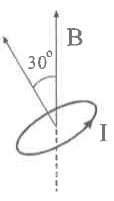
50. A circular loop having a diameter of 10 cm carries a current of 0.1 ampere. The loop is placed in a magnetic field of B = 0.5 tesla with its axis inclined at 30° to the direction of the B-field as shown in the figure. Calculate the torque exerted on the current loop. [unit: newton (N)]
(A) 1.96×10⁻⁴ N·m (B) 3.97×10⁻⁴ N·m (C) 5.43×10⁻⁴ N·m (D) 7.22×10⁻⁴ N·m (E) 9.16×10⁻⁴ N·m
51. During ventricular fibrillation, the myocardial cells do not stop beating; instead, they fall into a state of extreme chaos and rapid twitching, which the heart cannot pump blood effectively. An Automated External Defibrillator (AED) acts to reboot the heart by forcing a powerful electric current through it. The AED must generate high voltage to deliver a current of approximately 20 Amperes into the body within a short duration of about 0.01 seconds. The energy setting for a modern AED is 300 Joules. Estimate the voltage V required for this device and the average chest wall impedance R during a shock. Assuming all processes satisfy Ohm's Law. (A) 2100 Volt, 105 Ohm (B) 1900 Volt, 90 Ohm (C) 1700 Volt, 85 Ohm (D) 1500 Volt, 75 Ohm (E) 1300 Volt, 65 Ohm
52. Which of the following is not a fundamental characteristic of laser light? (A) high monochromaticity (B) high energy conversion efficiency (C) high collimation (D) high directionality (E) high coherence
53. A light beam of wavelength λ is travelling along a direction making an angle of 60° with a positive x-axis and 30° with a positive y-axis. Find the phase difference between two points (√3,1,2) and (0,0,0). (A) √3π/λ (B) 2√3π/λ (C) 3√3π/λ (D) 4√3π/λ (E) 5√3π/λ
54. In the context of the Bohr model of the hydrogen atom, what happens when an electron transitions from a higher energy level to a lower energy level? (A) A photon is emitted. (B) The mass of the atom decreases significantly. (C) The electron stops moving. (D) A photon is absorbed. (E) All of the above.
55. An electron is trapped in an one-dimensional box of finite width whose walls are perfectly rigid (infinite deep square well potential). A photon with energy Ea is emitted when the electron transitions from the n = 4 to n = 2, and a photon with energy Eb is emitted when the electron transitions from the n = 3 to n = 1. What is the ratio of Ea / Eb? (A) 2/3 (B) 3/2 (C) 1 (D) 4/3 (E) It depends on the width of the potential well.
56. A patient is injected with a radioactive tracer that has a physical half-life of 6 hours. If the initial activity of the tracer in the patient's body is 400 MBq, what will the activity be after 24 hours? (Assume no biological clearance occurs during this time). [unit: becquerel (Bq)=1decay/second] (A) 400 MBq (B) 200 MBq (C) 100 MBq (D) 50 MBq (E) 25 MBq
57. A drug has a half-life of 4 hours. The minimum effective concentration is 25 mg and the toxic threshold is 150 mg. If each tablet contains 100 mg, what is the dosing window to ensure the patient stays within the therapeutic range? (A) every 2 to 4 hours (B) every 4 to 8 hours (C) every 8 to 12 hours (D) every 12 to 16 hours (E) every 16 to 24 hours
58. Consider hydrogen-like atoms (atomic number = Z) that are at excited state with some principal quantum number n. It is found that the emission spectrum has 6 different lines. Furthermore, the most energetic photon in the emission spectrum has an energy of 51 eV. Find the atomic number Z. [Hydrogen atom En = -13.6/n2 (eV)] (A) 5 (B) 4 (C) 3 (D) 2 (E) 1
59. According to the Beer-Lambert Law, how many half-value layers are required to reduce the intensity of X-rays to 1/80 of their original intensity? [log10 2 = 0.301] (A) 4 (B) 5 (C) 6 (D) 7 (E) 8
60. Positron Emission Tomography is a highly advanced imaging technology in modern medicine. PET is primarily used to observe cellular metabolism; this is especially useful for cancer. After the isotope in the radiopharmaceutical enters the body, it migrates to the lesion site and emits a positron. As the positron moves through the tissue, it strikes an electron within the body. When the two collide, annihilation occurs, converting matter into energy and emitting two gamma rays of equal energy. The detectors then use these two rays to calculate the precise location of the lesion. Assume that both the electron and the positron carry a kinetic energy K=0.23m0c2, where m0 is the rest mass of an electron and c is the speed of light. What is the wavelength of the gamma rays produced after a head-on collision? [Compton wavelength is λ0=h/(m0c), where h is Planck's constant] (A) λ = 2.83 λ0 (B) λ = 1.62 λ0 (C) λ = 0.81 λ0 (D) λ = 0.40 λ0 (E) λ = 0.25 λ0
61. If (S)-1-bromo-2-methylbutane undergoes radical bromination at the chiral center, is the obtained major product (or mixture of products) optically active? (A) Yes, (S) (B) Yes, (R) (C) No, racemic (D) No, due to symmetry (E) Depends on temperature
62. How many of the following electron configurations for the species in their ground state are correct?
Ca: 1s2 2s2 2p6 3s2 3p6 4s1 Br: 1s2 2s2 2p6 3s2 3p6 4s2 3d10 4p4 V: [Ar] 3s2 3d3
As: [Ar] 4s2 3d10 4p2 P: 1s2 2s2 2p6 3p5 (A) 1 (B) 2 (C) 3 (D) 4 (E) None of the above
63. Which of the following techniques is best for determining the molecular weight? (A) IR (B) UV-Vis (C) Mass Spectrometry (D) NMR (E) CD
64. In the ground state, the diatomic molecule O2 is paramagnetic due to the unpaired electrons in its molecular orbitals. How many unpaired electrons does O2 have in its ground state? (A) 1 (B) 2 (C) 3 (D) 4 (E) None of the above
65. What is the product of the Beckmann Rearrangement? (A) Amine (B) Amide (C) Ketone (D) Carboxylic acid (E) Nitrile
66. Calcium fluoride (CaF2), known as fluorite, is used in dental products (e.g., fluoride treatments and varnishes) to promote enamel remineralization and prevent caries. In its crystal structure (fluorite type), the coordination number for the Ca2+ cations is 8. The coordination number for the F- anions in this crystal is ______. (A) 2 (B) 4 (C) 6 (D) 8 (E) 10
67. What is the rearrangement product of 3,3-dimethyl-1-butene reacting with HCl? (A) 3-chloro-2,2-dimethylbutane (B) 1,2-dichloro-3,3-dimethylbutane (C) 1-chloro-3,3-dimethylbutane (D) 2-chloro-3,3-dimethylbutane (E) 2-chloro-2,3-dimethylbutane
68. Which of the following exhibits the correct (increasing) orders for atomic radius and ionization energy, respectively? (A) Atomic radius: F, S, O; ionization energy: O, S, F (B) Atomic radius: F, O, S; ionization energy: S, O, F (C) Atomic radius: S, O, F; ionization energy: F, O, S (D) Atomic radius: S, F, O; ionization energy: S, F, O (E) None of the above
69. To determine the calcium carbonate (CaCO3) content in a 500.0 mg solid sample, a chemist prepared two identical flasks (sample flask and blank flask), each containing exactly the same volume and concentration of hydrochloric acid (HCl). For sample flask, 500.0 mg sample was added, allowing the CaCO3 to react completely with the HCl. For the blank flask, no sample was added; this flask represents the total initial amount of HCl. After the reaction completed, the acid in both flasks was titrated with 0.1000 M NaOH. The blank flask required 45.00 mL of NaOH, while the sample flask required 25.00 mL of NaOH. What is the mass of CaCO3 in the sample? (Molar mass of CaCO3 = 100.0 g/mol) (A) 50.0 mg (B) 100.0 mg (C) 200.0 mg (D) 250.0 mg (E) 450.0 mg
70. In an E2 reaction, what geometric relationship must exist between the leaving group and the β-hydrogen? (A) Syn-periplanar (B) Gauche (C) Anti-periplanar (D) Forming a 90° dihedral angle (E) Can be randomly oriented
71. A quartet and a triplet (area ratio 2:3) in 1H-NMR most likely indicates the presence of a(n) ______. (A) Ethyl group (B) Isopropyl group (C) tert-Butyl group (D) Propyl group (E) Vinyl group
72. A chemist uses the standard addition method to determine the concentration of copper (Cu2+) in a river water sample to account for matrix interferences. Two 25.0 mL aliquots of the river water are processed as follows: Solution A: 25.0 mL of the sample is diluted to a final volume of 50.0 mL with distilled water. The measured absorbance is 0.25. Solution B: 25.0 mL of the sample plus 1.00 mL of a 500 ppm Cu2+ standard is diluted to a final volume of 50.0 mL. The measured absorbance is 0.50. Assuming the absorbance is directly proportional to the Cu2+ concentration, what is the concentration of Cu2+ in the original river water sample? (A) 5.0 ppm (B) 10.0 ppm (C) 20.0 ppm (D) 25.0 ppm (E) 40.0 ppm
73. At a certain temperature, the half-life of a zero-order reaction is 40.0 minutes. How long will it take for the reactant concentration to be reduced by 75%? (A) 40.0 min (B) 60.0 min (C) 80.0 min (D) 120.0 min (E) 160.0 min
74. Which of the following molecules can undergo the Cannizzaro reaction? (A) Acetaldehyde (B) Benzaldehyde (C) Acetone (D) Cyclohexanone (E) Propionaldehyde
75. An analyst uses a HPLC method to determine a pesticide residue. A 1.00 ppm standard solution of the pesticide produces a peak height (signal) of 40.0 mV. When a blank solution is injected, the standard deviation of the baseline noise is measured to be 0.20 mV. Using the common IUPAC criterion of S/N = 3, what is the Limit of Detection (LOD) for this method (assuming the signal is directly proportional to the analyte concentration)? (A) 0.005 ppm (B) 0.015 ppm (C) 0.045 ppm (D) 0.060 ppm (E) 0.150 ppm
76. A compound with the sum formula C3H6O has an IR peak at 1715 cm-1 and only one singlet in 1H-NMR. The compound is ______. (A) Propionaldehyde (B) Acetone (C) Allyl alcohol (D) Propylene oxide (E) Methyl vinyl ether
77. In mass spectrometry, a molecule with one bromine atom shows M and M+2 peaks in a ratio of approximately ______. (A) 1:1 (B) 3:1 (C) 1:3 (D) 9:6:1 (E) 1:2:1
78. Which of the following statements about the isoelectric point (pI) of amino acids is correct? (A) At pH < pI, it is negatively charged. (B) Solubility is highest at pH = pI. (C) At pH = pI, the net charge is zero. (D) All amino acids have a pI of 7. (E) pI is independent of the side chain.
79. 19F-NMR spectroscopy is increasingly used in medicine for non-invasive imaging and monitoring of fluorinated pharmaceuticals (e.g., fluorinated anesthetics, anticancer drugs like 5-fluorouracil, or perfluorocarbons as artificial blood substitutes/oxygen carriers). Consider the compound PCl2F3 (a model phosphorus chlorofluoride with trigonal bipyramidal geometry, relevant to understanding dynamic processes in fluorinated compounds or analogs in bioinorganic/organofluorine chemistry). In a solution of PCl2F3 in isopentane at -22°C, how many peaks are observed in the 19F-NMR spectrum? (A) 0 (B) 1 (C) 2 (D) 3 (E) 4
80. Consider the reaction CO2(g) + 2H2O(g) → CH4(g) + 2O2(g) with ΔH° = 803 kJ. Which of the following options will increase K? (A) increasing the temperature of system (B) decreasing the number of moles of methane (C) increasing the volume of system (D) increasing the number of moles of CO2 (E) none of the above
81. Metal carbonyl complexes are studied in the context of potential therapeutic CO delivery in medicine as carbon monoxide-releasing molecules (CORMs). Predict which CO ligand in the following complexes has the highest CO stretching frequency (νCO in IR spectroscopy). (A) bridging CO of Fe2(CO)9 (B) [Mn(CO)6]+ (C) (CO)5Cr=C(OMe)Ph (a Fischer carbene complex) (D) [V(CO)6]- (E) fac-Cr(CO)3(NH3)3
82. Bio-organometallic carbonyl complexes can release CO in vivo for therapeutic effects, such as reducing inflammation, pain, and oxidative stress. Which property makes a metal carbonyl complex suitable as a therapeutic CORM? (A) Extreme kinetic inertness, preventing CO release (B) The ability to release CO under physiological conditions (triggered by light or ligand exchange) (C) High toxicity due to rapid metal dissociation (D) Strong irreversible metal-protein binding (E) The presence of only organic ligands and no metal ions
83. Which point group best describes the symmetry of the staggered conformation of ferrocene (an organometallic scaffold sometimes explored in drug design)? (A) D5d (B) D5h (C) S5 (D) C5v (E) D5
84. In medicinal chemistry, the stereochemistry of coordination complexes can strongly influence their biological activity. Consider the complex [Co(en)2Cl2]+, where en = ethylenediamine, a ligand often used in metal-based drug design. How many stereoisomers are possible for the complex [Co(en)2Cl2]+? For this question, treat the chelate ring formed by the en ligand as planar. (A) 1 (B) 2 (C) 3 (D) 4 (E) 5
85. A sample solution is analyzed using a UV-Vis spectrophotometer. Under specific experimental conditions, 80.0% of the incident light is either absorbed or scattered and fails to reach the detector. What is the absorbance ( A ) of this solution (given log2≈ 0.30; log4≈ 0.60; log6≈ 0.78; log8≈0.90)? (A) 0.100 (B) 0.200 (C) 0.700 (D) 0.800 (E) 0.400
86. Rhenium complexes, including those with metal-metal bonds, are widely studied in medicinal inorganic chemistry for applications in nuclear medicine (e.g., 186Re and 188Re radioisotopes for cancer radiotherapy) and as potential redox-active therapeutic agents. When [Re2Cl8]2- is reduced by one electron, what is the metal-metal (Re-Re) bond order of the new complex? (A) 3 (B) 3.5 (C) 4 (D) 4.5 (E) None of the above
87. In infrared (IR) spectroscopy, a specific absorption peak is observed at a wavelength of 2.50 μm. What are the corresponding wavenumber in cm-1 and frequency in Hz for this radiation (Speed of light, c=3.00×10⁸ m/s)? (A) 400 cm-1 and 1.20×10¹³ Hz (B) 4000 cm-1 and 1.20×10¹⁴ Hz (C) 4000 cm-1 and 7.50×10¹⁴ Hz (D) 2500 cm-1 and 1.20×10¹⁴ Hz (E) 40000 cm-1 and 1.20×10¹⁵ Hz
88. Choose the correct statement. (A) Exothermic reactions are always spontaneous. (B) A reaction that exhibits a negative value of ΔS may be spontaneous. (C) Free energy is independent of temperature. (D) At constant pressure and temperature, a decrease in free energy ensures an increase in the entropy of the system. (E) None of the above.
89. EPR spectroscopy is used in medicine to study radical species and metal ions with unpaired electrons. Which metal center is EPR active under physiological conditions? (A) Cu(I) (B) Fe(III) (C) Zn(II) (D) Mg(II) (E) Pt(II)
90. Manganese-based complexes are sometimes studied as potential MRI contrast agents because Mn2+ is paramagnetic. For the [Mn(H2O)6]2+ complex, the ligand field stabilization energy (LFSE) is ______. (A) 0 Dq (B) 2 Dq (C) 4 Dq (D) 6 Dq (E) 8 Dq
 阿摩線上測驗
登入
 is correct? (A)
 (B)
 (C)
 (D)
 (E)
 and j =
 states. (B) The only allowed total angular momentum is j = 1/2 because s = 1/2. (C) Spin-orbit coupling does not occur unless the atom is placed in an external magnetic field. (D) The degeneracy of the j =
 level is 4 and the degeneracy of the j =
 level is 2. (E) Spin-orbit coupling combines n and l into a new quantum number j while leaving s unchanged.
 (A)
 (B)
 (C)
 (D)
 (E) None of the above
 (A) 1.96×10⁻⁴ N·m (B) 3.97×10⁻⁴ N·m (C) 5.43×10⁻⁴ N·m (D) 7.22×10⁻⁴ N·m (E) 9.16×10⁻⁴ N·m