所屬科目:研究所、轉學考(插大)◆普通物理學
1. Which of the following statements regarding the reaction force is false?(A) The reaction force of the centripetal force is the centrifugal force.(B) As to the force that the earth attracts the moon, the reaction force is the one that the moon attracts the earth.(C) The Lorentz force violates Newton's third law without considering the contribution of the field.(D) Newton's third law is compatible with conservation of linear momentum.
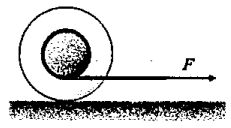
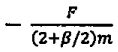
2. Consider a yoyo of mass m and moment of inertia βmR² rolling without slipping on a surface in the figure. The radius of the large disk is 2R. A string wrapping the axis of radius R is pulled by a force to the right. Setting the direction of F to be positive. The linear acceleration of the center of mass of the yoyo is then given by(A)(B)(C) (D)
3. A rocket of mass M (including fuel) in space is accelerating from rest by ejecting the fuel at a velocity -u relative to the rocket. What is the speed of the rocket when its mass becomes M/2?(A) u/2(B) u ln 2(C) 3u/2(D) u ln
4. A billiard ball hits another ball at rest of identical mass on a surface, making the latter to leave at an angle of 37° relative to the incident direction of the first ball. Suppose the incident speed is u. What is the speed of the first ball after collision?(A) 0.36u(B) 0.6u(C) 0.64u(D) 0.8u.
5. A bomb explodes and breaks into two pieces of mass ratio 2:1. Neglect the mass of the explosive chemicals. What is the ratio of the kinetic energy obtained by the two pieces?(A) 1:2(B) 2:1(C) 4:1(D) 1:3.
6. Consider a solar system with a sun of mass two times of our sun. A planet orbiting this sun has a period of one earth year. What is the distance from the sun to the planet? (Hint: au is the average distance from the earth to our sun.)(A) 2⁻¹/² au(B) 2⁻¹/³ au(C) 2¹/² au(D) 2¹/³ au.
7. A sphere of mass m and another sphere of mass 2m are connected by a string of length R. Suppose they are now rotating about their center of mass at an angular velocity ω. Suddenly the string breaks. What is the velocity of the massive one (2m) after the string breaks?(A) Rω(B) Rω/2(C) Rω/3(D) 2Rω/3.
8. Suppose the velocity of a falling sphere of mass m due to the gravity and the air resistance is given by v(t) = v₁(1-e⁻ᵞᵗ) with the condition that the air resistance vanishes when v = 0. The formula of the air drag force is then given by(A) -2mγv(B) -mγv(C) -mγv²(D) -mγv²/2.
9. Which of the following statements is not compatible with other 3 statements? (A) It is impossible for a heat engine that operates in a cycle to convert its heat input completely into work. (B) It is impossible for a cyclical device to transfer heat continuously from a cold body to a hot one without the input of work or other effect on the environment. (C) The change in the internal energy of the system comes from the heat input minus the work done on its surroundings. (D) The entropy change of an isolated system always stays constant or increases.
10. The rate of heat flow through a slab is R. If the slab thickness is doubled, its cross-sectional area is halved, and the temperature difference across it is doubled, then the rate of heat flow becomes (A) 2R (B) R/2 (C) 8R (D) R/8.
11. A molar monatomic ideal gas does adiabatic free expansion from an initial state of pressure P and volume V/2 to volume 2V, and then raise the pressure to 2P while keeping constant volume. Find the change of entropy: (A)Rln2(B)Rln2(C)Rln 2 (D) Rln 2.
12. The temperature of low-pressure hydrogen is reduced from 127°C to 47°C. The rms speed of its molecules decreases by approximately (A) 5% (B) 10% (C) 15 % (D) 20%.
13. Which of the following statements about the Carnot engine is not correct? (A) The efficiency of a Carnot engine operating between temperatures T₁ and T2 (T₁ > T2) is 1 – T2/T1. (B) The efficiency of any reversible engine is identical to that of a Carnot engine for given two heat reservoirs. (C) A Carnot engine has the best efficiency for given two heat reservoirs. (D) The entropy of a Carnot engine during a cycle remains constant.
14. Consider a partial circuit shown in the figure. Suppose every resistor is of identical resistance R. Find the effective resistance between A and B:
(A) R (B) R/2 (C) 2R/3 (D) R/6.
15. A metal sphere of radius 2R stores an amount of charge Q initially.It then connects to another metal sphere of radius R by a conductingwire, which is removed after the charge is redistributed. Suppose the two spheres are far away apart.The ratio of the electric-field strength just outside the surface of the larger sphere to that of the smaller spheres is (A) 2:1 (B) 3:2 (C) 1:3 (D) 1:2.
16. A henry (H) is the same as (A) J/V (B) C/J (C) J/V2 (D) J/A2.
17. A negatively charged particle of mass m and charge q< 0 is restricted to move freely along the axis of a circular ring of radius R. A positive charge is uniformly distributed over the ring with a charge density (charge per unit length) λ> 0. Suppose the vertical coordinate of the particle relative to the center of the circular ring is y and y << R. Find the period of oscillation for small y: (A)2πR (B) 2πR (C) 2πR(D)πR
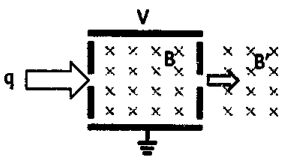
18. Suppose H+ and He2+ particles are injected into the device as shown in the figure from the left hole. Once they come out from the right hole, they immediately enter a region of another 9 uniform magnetic field B'perpendicular to their velocities. What is the ratio of radii of their circular motion rH+/rHe2+ under the field B'? (A) 2 (B) 1/2 (C) 1/(D) 4.
19. In an experiment on Newton's rings as shown in the figure, where we consider a lens of maximum thickness t and refractive index n. The radius of curvature of the spherical surface is R. When a light of wavelength A is incident from the top, the observed radius of the 3th bright fringe is given by (A) (B) (C) (D) 2Rλ/t.
20. A Rydberg atom is an atom with one of its electrons being excited to a state of a very large principle quantum number n, called a Rydberg state. For a Rydberg hydrogen atom whose diameter is approximately 1 µm, estimate the corresponding principle quantum number n: (Hint: For the ground state, n = 1, the diameter of a hydrogen atom is approximately 1 Å.)(A) 80 (B) 100 (C) 120 (D) 140.
21. Alice is initially on the moon and takes a rocket of speed 0.8 c to the earth. How long does it take for Alice to arrive at the earth according to Alice's watch supposing the moon-to-earth distance is approximately 4 × 10⁵ km? (A) 0.01 s (B) 0.1 s (C) 1 s (D) 10 s.
22. Consider an electron contained in a one-dimensional box of size L. What is the wavelength of the emitted photon corresponding to a transition from n = 3 to n = 2?(A)(B) (C)(D)
23. Consider two inertial frames, S and S', with S' moving along the +x axis of frame S at speed v. A particle, when viewed in frame S', travels at speed u' at angle θ' to the +x direction of frame S'. The angle θ of the particle's velocity (viewed by frame S) relative to the +x axis of frame S satisfies (A) tan θ = (B) tan θ' = (C) tan θ =(D) tan θ' =
24. Which of the following statements regarding the photoelectric effect is false? (A) No electrons are emitted if the incident light falls below some cutoff frequency f₀ regardless of intensity. The cutoff frequency is characteristic of the material being illuminated. (B) Electrons are emitted almost instantaneously, even at very low light intensities. (C) As the light intensity incident on the metal is increased, the electrons should be ejected with more kinetic energy. (D) The maximum kinetic energy of the photoelectrons increases with increasing light frequency.
25. Estimate the thermal de Broglie wavelength of a hydrogen atom at 300 K: (A) 10⁻⁸ m (B) 10⁻⁹ m(C) 10⁻¹⁰ m (D) 10⁻¹¹ m.
 阿摩線上測驗
登入



 Rln2(B)
 Rln2(C)
 Rln 2 (D)
 Rln 2.
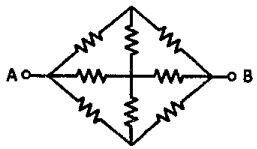 (A) R (B) R/2 (C) 2R/3 (D) R/6.
 (B) 2πR
 (C) 2πR
 (D)πR

 (A) 2 (B) 1/2 (C) 1/
 (D) 4.
 (A)
 (B)
 (C)
 (D) 2Rλ/t.
 (B)
 (C)
 (D)

 (B) tan θ' =
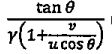 (C) tan θ =
 (D) tan θ' =
