所屬科目:學士後西醫-化學
1.Which of the following choices represent(s) a pair of resonance forms? (A) both (a) and (b) (B) both (b) and (c) (C) both (a) and (c) (D) All of the above
2.Which sequence correctly ranks the following protons in order of increasing acidity? (A)1<2<3(B)2<3<1 (C)3<1<2(D)3<2<1 (E)2<1<3
3.Which of the following statements about π molecular orbitals is/are correct?(A) π molecular orbitals are cylindrically symmetric. (B)Most of the electron density in a π molecular orbital is centered above and below the internuclear axis. (C) When two atoms are connected by a double bond, both of these bonds are π bonds. (D) Both statements B and C are correct. (E) Statements A, B, and C are all correct.
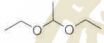
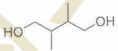
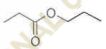
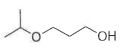
4.Which of the following compounds is not a constitutional isomer of a compound with an empirical formula C3H7O and a formula mass of 118.164?(A)(B)(C)(D)(E)
5. Identify the correct IUPAC name for the following structure. (A) 3-s-Butyl-1-iodo-2-methylhexane (B) 1-lodo-2,4-dimethyl-3-propylhexane (C) 4-(2-1odo-1-methylethyl)-3-methyIheptane (D) 2,4-Dimethyl-1-iodo-3-propylhexane.
6.The structures below are _______. (A) not isomers (B) conformation isomers (C) structural isomers (D) cis-trans isomers (E) both B and D.
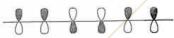
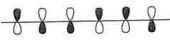
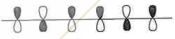
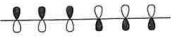
10. Which of the following represents the highest occupied molecular orbital for the conjugated pi system in the structure below? (A)(B)(C)(D)
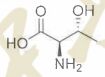
14. The stereochemical configuration of D-Threonine is (2R, 3S). Which of the following structures corresponds to the correct configuration? (A)(B)(C)(D)
16. Provide the structure of the major product in the reaction below. (A)(B)(C)(D)both A and B
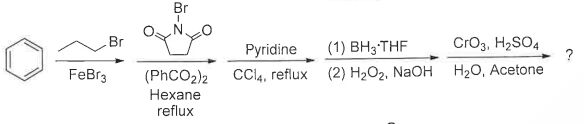
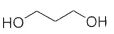
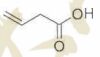
17. Provide the final product of the sequence of steps below? (A)(B)(C)(D)
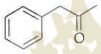
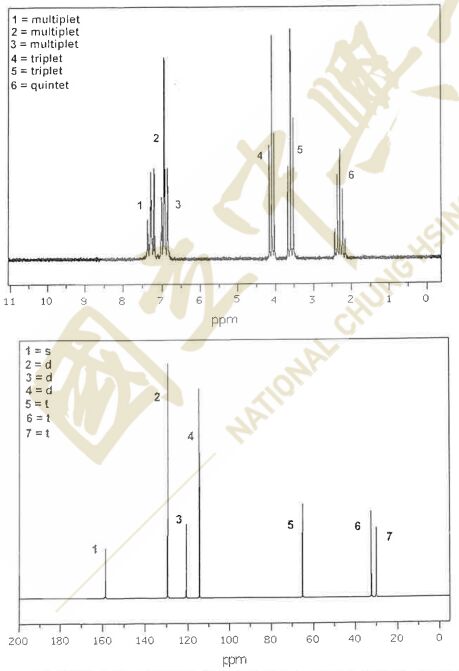
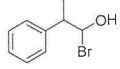
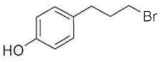
18. Which of the structures shown below is consistent with the C-13 NMR (off resonance splitting for each peak is shown as a table within the figure) and H-NMR spectra? (formula = C9H11OBr) (A)(B)(C)(D)(E)
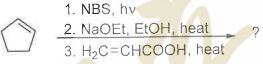
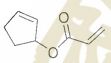
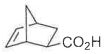
19. Provide the final product of the sequence of steps below? (A)(B)(C)(D)(E)
20. Predict the product of the following reaction, including stereochemistry. (A)(B)(C)(D)
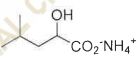
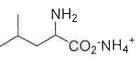
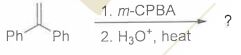
21. Provide the final product of the sequence of steps below? (A)(B)(C)(D)
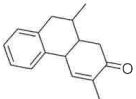
22. Provide the final product of the sequence of steps below? (A)(B)(C)(D)
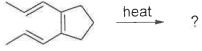
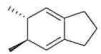
23. Predict the major product of the following reaction? (A)(B)(C)(D)
24. Predict the products of the following reaction.(A) both (a) and (b) (B) both (b) and (c) (C) both (c) and (d) (D) both (b) and (d)
25. Predict the major product of the following reaction? (A)(B)(C)(D)
26. What is the point group of BICIF (chlorofluoroiodoborane)? (A)(B) (C) (D)(E)
29. Consider the structure of bicarbonate ion . Which of the following statements is false? (A) All the charges of three O ions are equivalent. (B) One C-O bond is shorter than the other two at room temperature. (C) The carbon atom possess three sp2 hybridized orbitals. (D) The geometric shape is trigonal planar. (E) More than one Lewis structure is allowed.
31. Calcium is a metal, and sulfur is a nonmetal. They are in a different family of the periodic table. When they become ions, which characteristic of the following would be the correct relation between ions? (A) isomeric(B) isotopic(C)isoelectronic (D)isochromatic (E)isobaric
32.The van't Hoff factor (i) express the effective concentration of particles for a solute. In comparison with NaCl aqueous solution, what properties of the solution of MgSO4 may be lower than those of as these two solutions are identical in concentration? (A) boiling point, osmotic pressure (B) freezing point, osmotic pressure (C) osmotic pressure (D) vapor pressure, osmotic pressure (E) boiling point, freezing point
33.The orbital wavefunction for the state (n =3, l = 1, and = O) of the hydrogen atom, is expressed as Where σ = r/a0 and a0 is the Bohr radius. How many nodal surfaces will appear in the wave function? (A)0(B)1 (C)2 (D)3 (E) 4
34. Redox reaction includes oxidation and reduction simultaneously. Balance the following redox reaction in the basic solutionIndicate how many water molecules will exist in the balanced ionic equation (A) 14 (B) 7 (C) 12 (D) 6 (E) none
40.Consider the following reactions, which one of the following will have the smallest equilibrium constant at 298 K? (A) CaO(s) + CO2(g)→CaCO3(s) △G°=-131.1kJ (B) 2Hg(g) + O2(g)→ 2HgO(s) △G°=-180.8 kJ (C) 3O2(g)→2O3(g) △G°= +326 kJ (D) 2H2O(aq)→2H2(s) + O2(g) △G°=+ 475.4 kJ (E) More information is needed to determine.
42. Which one of the following statements is incorrect for "Kinetics"? (A) The orders for the reactions in Kinetics have nothing to do with the coefficient of the reaction. (B) It is possible that a non-integer reaction order can be found in a reaction. (C) The derivation of the first-order reaction leads to C= (Co: intial concentration;C: concentration at moment t; t: reaction time) (D) A rather useful concept of "half-life " can be derived from the concept of the zero-order reaction. (E) The relative stabilities of the reactant and product have nothing to do with the reaction rate.
43. Pick the correct molecular structure(s) as predicted by the VSEPR theory? (A)I(B)I,I(C)I,II,III(D)I,II,III,IV(E)I,II,III,IV,V
44. Pick the correct one from the following statements about the electrochemical cell described below? (A) The cell reaction is spontaneous with a standard cell potential of 3.18 V. (B) The cell reaction is spontaneous with a standard cell potential of -2.90 V. (C) The cell reaction is nonspontaneous with a standard cell potential of -2.90 V. (D) The cell reaction is nonspontaneous with a standard cell potential of -3.18 V. (E) The cell is at equilibrium.
45. When pure water (pH = 7 at 25℃) is heated, it will induce: (A) [H+]>[OH-] (B) The water is not neutral. (C) pH is still 7 (D) [H+]<[OH-] (E) None of these.
46. Which of the following statements about the 1H NMR (Nuclear Magnetic Resonance) experiment is incorrect? (A)The energy difference between the two spin states ( = +1/2 and =-1/2) depends on the strength of the magnetic field. (B)When energy absorption takes place, the electrons are excited by the electromagnetic radiation to obtain the NMR signal. (C) When aligned with the magnetic field, the energy of a proton with spin of mi = +1/2 is lower than that with mi = -1/2 when aligned against it. (D) The relative population of the upper spin state, Nupper, and of the lower spin state, Nlower, is given by the Boltzmann equation (Nupper / Nlower = e-△E/kT). (E) The energy needed to flip the spin of a proton is within the radio frequency range of the electromagnetic spectrum.
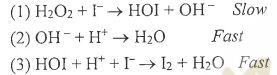
49.The proposed mechanism for the reaction of H2O2 +2H++2I-→I2 +2H2O is as follows.:Based on the proposed mechanism, determine the order of H+ in this reaction by identifying the rate lawthat is consistent with it.(A) 4 (B) 3 (C) 2 (D)1 (E)0
 阿摩線上測驗
登入
 (A) both (a) and (b) (B) both (b) and (c) (C) both (a) and (c) (D) All of the above
 (A)1<2<3(B)2<3<1 (C)3<1<2(D)3<2<1 (E)2<1<3
 (A)
 (B)
 (C)
 (D)
 (E)
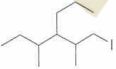 (A) 3-s-Butyl-1-iodo-2-methylhexane (B) 1-lodo-2,4-dimethyl-3-propylhexane (C) 4-(2-1odo-1-methylethyl)-3-methyIheptane (D) 2,4-Dimethyl-1-iodo-3-propylhexane.
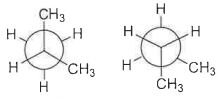 (A) not isomers (B) conformation isomers (C) structural isomers (D) cis-trans isomers (E) both B and D.
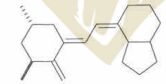 (A)
 (B)
 (C)
 (D)
 (B)
 (C)
 (D)

 (A)
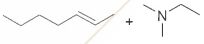 (B)
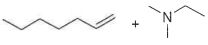 (C)
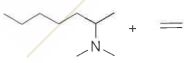 (D)both A and B
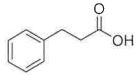
 (A)
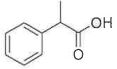
 (B)
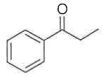
 (C)
 (D)
 (A)
 (B)
 (C)
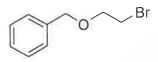 (D)
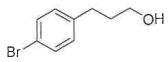 (E)
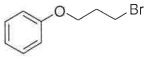
 (A)
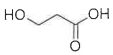 (B)
 (C)
 (D)
 (E)

 (A)
 (B)
 (C)
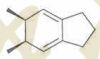 (D)
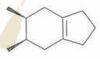
 (A)
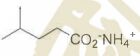 (B)
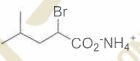 (C)
 (D)
 (A)
 (B)
 (C)
 (D)

 (A)
 (B)
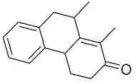 (C)
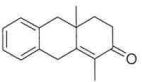 (D)
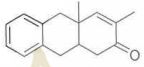
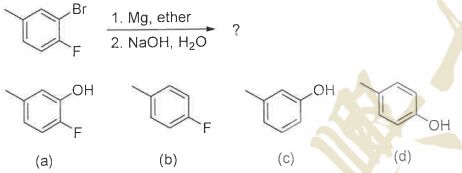 (A) both (a) and (b) (B) both (b) and (c) (C) both (c) and (d) (D) both (b) and (d)
 (A)
 (B)
 (C)
 (D)
 (B)
 (C)
 (D)
 (E)

 . Which of the following statements is false? (A) All the charges of three O ions are equivalent. (B) One C-O bond is shorter than the other two at room temperature. (C) The carbon atom possess three sp2 hybridized orbitals. (D) The geometric shape is trigonal planar. (E) More than one Lewis structure is allowed.
 which characteristic of the following would be the correct relation between
 ions? (A) isomeric(B) isotopic(C)isoelectronic (D)isochromatic (E)isobaric
 as these two solutions are identical in concentration? (A) boiling point, osmotic pressure (B) freezing point, osmotic pressure (C) osmotic pressure (D) vapor pressure, osmotic pressure (E) boiling point, freezing point
 = O) of the hydrogen atom, is expressed as


 (Co: intial concentration;C: concentration at moment t; t: reaction time) (D) A rather useful concept of "half-life
 " can be derived from the concept of the zero-order reaction. (E) The relative stabilities of the reactant and product have nothing to do with the reaction rate.
 (A)I(B)I,I(C)I,II,III(D)I,II,III,IV(E)I,II,III,IV,V
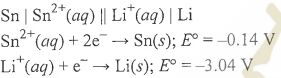 (A) The cell reaction is spontaneous with a standard cell potential of 3.18 V. (B) The cell reaction is spontaneous with a standard cell potential of -2.90 V. (C) The cell reaction is nonspontaneous with a standard cell potential of -2.90 V. (D) The cell reaction is nonspontaneous with a standard cell potential of -3.18 V. (E) The cell is at equilibrium.
 = +1/2 and
 =-1/2) depends on the strength of the magnetic field. (B)When energy absorption takes place, the electrons are excited by the electromagnetic radiation to obtain the NMR signal. (C) When aligned with the magnetic field, the energy of a proton with spin of mi = +1/2 is lower than that with mi = -1/2 when aligned against it. (D) The relative population of the upper spin state, Nupper, and of the lower spin state, Nlower, is given by the Boltzmann equation (Nupper / Nlower = e-△E/kT). (E) The energy needed to flip the spin of a proton is within the radio frequency range of the electromagnetic spectrum.