所屬科目:學士後西醫-化學
1. Please determine the more stable anion in each of the following cases: (i), (ii), and (iii). (A) a, c, f (B) a, d, f (C) b, d, f (D) b, d, e (E) a, c, e
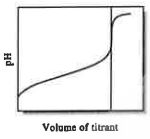
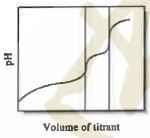
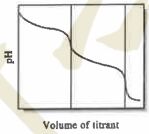
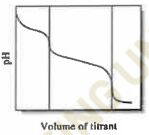
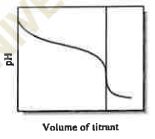
2. When a solution of 0.1 M Na2CO3/0.1 M NaHCO3 (H2CO3: Ka1 = 4.2 x I0-7 and Ka2 = 4.69 x I0-11) is titrated with 0.1 M HCl. Which one is the titration curve?(A)(B)(C)(D)(E)
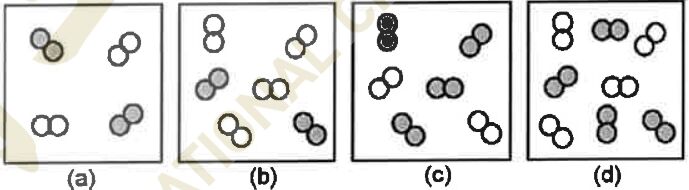
3.The relative initial rates of the reaction X2 + Y2 →products in vessels (a)-(d) follow a ratio of 1:8:2:16. Unshaded spheres depict X2 molecules, while shaded spheres represent the presence ofY2? molecules at the start of the reaction. What is the overall order of reaction? (A)l (B)2 (C)3 (D)4 (E)5
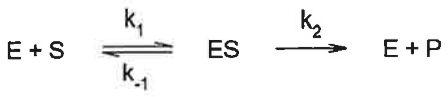
4. Michaelis and Menten assumed that the overall reaction for an enzyme-catalyzed reaction could be expressed as:
Based on above reaction, the rate of breakdown of the enzyme-substrate complex can be described by the expression: (A) k1([Et]-[ES]) (B) k1([Et]-[ES])[S] (C)k2[ES] (D) k-1[ES]+k2[ES] (E)k-1[ES]
6. Please identify the meso compound(s) in the given chemical structures (I), (II) and (III). (A) I only (B) II only (C) III only (D) I and III only (E) I, II, and III
8. Please write the IUPAC name for the compound presented below. (A) 2-propy 1-3-methylbutane (B) 4-isopropylpentane (C) 2-isopropylpentane (D) 5,6-dimethylhexane (E) 2,3-dimethylhexane
10. In the following energy diagram illustrating the progression of a reaction, please identify the location(s) indicating the presence of an intermediate? (A) Only I, III, and V (B) Only II and IV (C) Only I (D) Only IV (E) I, II, III, IV, and V
11. Which one would result in an endothermic AHsoiution? (A) When |△Hlattice| < |△Hhydration| (B) When I△Hlatticel is close to |△Hhydration| (C) When |△Hlatticel >|△Hhydration|(D) When |△Hsolvent|>|△Hsolute|(E) When |△Hsolven|<|△Hsolute|
12. Which description best represents the change in entropy for the given reaction?(A)△S = 0 (B) △S = 1 (C) △S > 0 (D) △S < 0 (E) None of the above
13. When 3-Chloro-3-methylhexane undergoes treatment with a strong base, how many distinct alkenes will be generated? (A)1 (B)2 (C)3 (D)4 (E)5
14. The following are the two pKa values for serine. What is the isoelectric point (pl) of serine? (A) 9.15 (B) 6.94 (C) 5.68 (D) 2.21 (E) None of the above
15. Based on the provided bond energies, what is the △H°rxn for the reaction below? (A) -564 kJ (B) +564 kJ (C) +270 kJ (D) -270 kJ (E) -612 kJ
16.What is the solubility of La(IO3)3 (Ksp = 1.0✖10-11) in a solution prepared by mixing 1.0 L of0.0040 M La(NO3)3 with 1.0 L of 0.20 M NaIO3? (A) 1.0✖10-4 M (B)1.0✖10-6M (C)1.0✖10-8 M (D) 1.0✖10-9 M (E)1.0✖10-10M
18. Consider the acid-catalyzed hydration reaction provided below:Which cations and anions among the following are intermediates according to the approved mechanism for the above reaction? (A) Only I and II (B) Only I, II, and III (C) Only III (D) Only IV (E) None of the above. The process is concerted
21. Place the following in order of decreasing radius. (A)Te2- >F- >O2- (B) Te2- > O2-> F-(C) O2->F->Te2- (D) F- > Te2- > O2- (E)F- >O2- >Te2-
23. Among the following, which radical is the most stable?(A) I (B) II (C)III (D)IV (E)V
26. What is the rate law for the given reaction and its mechanism? (A) Rate = k[HgCl2][C2O42-] (B) Rate = k[HgCl2]2[C2O42-] (C) Rate = k[Hg2Cl2] (D) Rate = k[HgCl2][C2O42-]2 (E) Rate = k[HgCl2]2[C2O42-]2
29.Which option below outlines an effective method for relocating the position of a π bond? (A) Substitution, followed by addition (B) Addition, followed by substitution (C) Elimination, followed by addition (D) Addition, followed by elimination (E) None of the above
34. Which of the following structures represent aromatic compounds?(A) Only I, II and III (B) Only I, III and IV (C) Only I, II, and IV (D) Only II, III and IV (E) I, II, III and IV
35. Based on the molecular orbital diagram shown below, which one is the most stable species? (A) NO2- (B)NO- (C)NO (D)NO+ (E) NO2+
37. Displayed below is a step in the catalytic cycle of the Suzuki reaction, with 'L' representing a ligand. Which term from the provided options best describes this step?(A) Oxidative addition (B) Reductive elimination (C) Transmetallation (D) Nucleophilic substitution (E) None of the above
38. Which carbon atom is referred to as the anomeric carbon? (A)l (B)2 (C)3 (D)4 (E)5
43. In the illustrated resonance form of ozone below, what is the formal charge on the central oxygen atom? (A)+2 (B)+1 (C)0 (D)-1(E)-2
45. Which solution has the highest pH? (A) 0.1 M KCN, Ka of HCN = 4.0 x I0-10 (B) 0.1 M NaHS, Kb of HS- = 1.8 x 10⁻⁷ (C) 0.1 M NaOAc, Ka of HOAc = 1.8✖10-5 (D) 0.1 M NaClO, Ka of HClO = 3.2 x 10⁻⁸ (E) 0.1 M NH4NO3, Kb of NH3 = 1.8 x I0-5
49. How many of the following species are paramagnetic? (A)1(B)2 (C)3 (D)4 (E)5
 阿摩線上測驗
登入
 (A) a, c, f (B) a, d, f (C) b, d, f (D) b, d, e (E) a, c, e
 (B)
 (C)
 (D)
 (E)
 (A)l (B)2 (C)3 (D)4 (E)5
 (A) I only (B) II only (C) III only (D) I and III only (E) I, II, and III
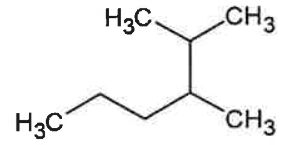 (A) 2-propy 1-3-methylbutane (B) 4-isopropylpentane (C) 2-isopropylpentane (D) 5,6-dimethylhexane (E) 2,3-dimethylhexane
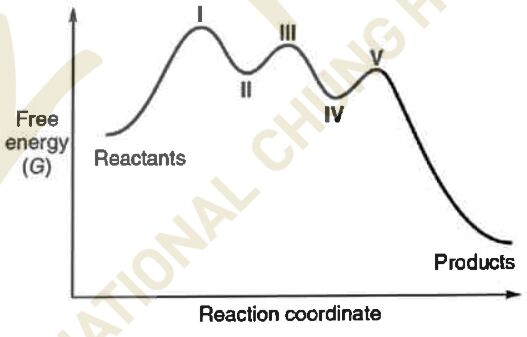 (A) Only I, III, and V (B) Only II and IV (C) Only I (D) Only IV (E) I, II, III, IV, and V
 (A)△S = 0 (B) △S = 1 (C) △S > 0 (D) △S < 0 (E) None of the above
 (A)1 (B)2 (C)3 (D)4 (E)5
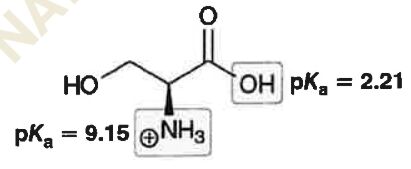 (A) 9.15 (B) 6.94 (C) 5.68 (D) 2.21 (E) None of the above
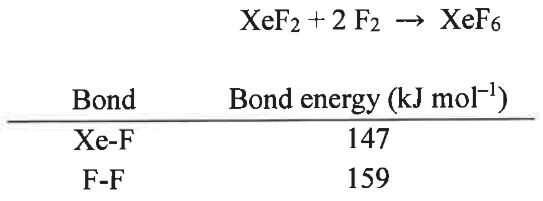 (A) -564 kJ (B) +564 kJ (C) +270 kJ (D) -270 kJ (E) -612 kJ
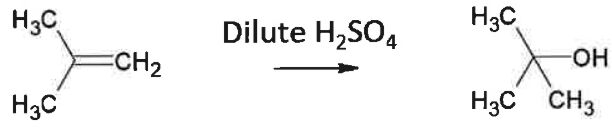
 (A) Only I and II (B) Only I, II, and III (C) Only III (D) Only IV (E) None of the above. The process is concerted
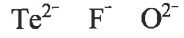 (A)Te2- >F- >O2- (B) Te
 (A) I (B) II (C)III (D)IV (E)V
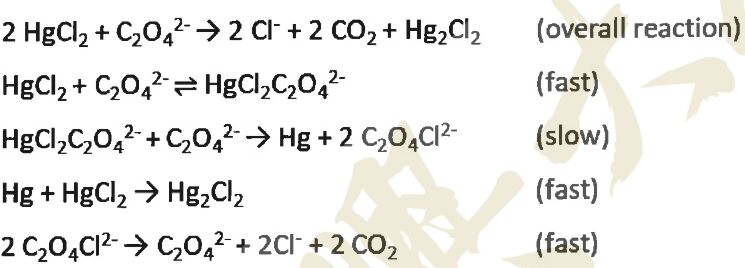 (A) Rate = k[HgCl2][C2O42-] (B) Rate = k[HgCl2]2[C2O42-] (C) Rate = k[Hg2Cl2] (D) Rate = k[HgCl2][C2O42-]2 (E) Rate = k[HgCl2]2[C2O42-]2
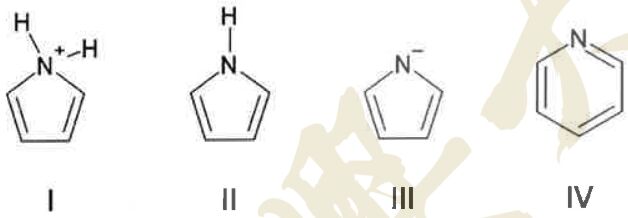 (A) Only I, II and III (B) Only I, III and IV (C) Only I, II, and IV (D) Only II, III and IV (E) I, II, III and IV
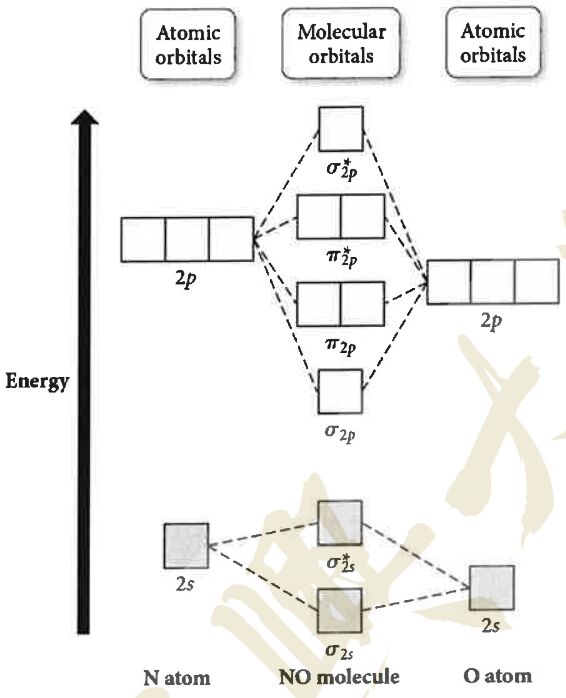 (A) NO2- (B)NO- (C)NO (D)NO+ (E) NO2+
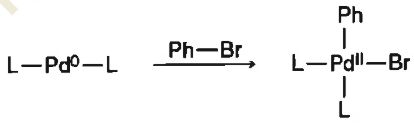 (A) Oxidative addition (B) Reductive elimination (C) Transmetallation (D) Nucleophilic substitution (E) None of the above
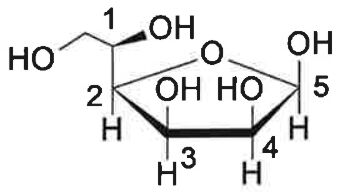 (A)l (B)2 (C)3 (D)4 (E)5
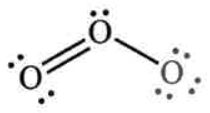 (A)+2 (B)+1 (C)0 (D)-1(E)-2
 (A)1(B)2 (C)3 (D)4 (E)5