所屬科目:學士後西醫-普通生物及生化概論
4.Which two DNA bases are held together by the hydrogen bonds below? (from left to right) (A) G and C. (B)Aand T. (C)TandA﹒ (D) Cand G. (E)Aand C.
6.Phototropism allows the plant to optimize photosynthetic light capture in the aerial portion. Which of the following descriptions of phototropism is correct? (A) The light on the left is red light; the concentration of auxin is higher on the R side (B) The light on the left is red light the concentration of auxin is higher on the F side (C) The light on the left is red light; the concentration of cytokinin is higher on the R side (D) The light on the left is blue light; the concentration of cytokinin is higher on the E side (E) The light on the left is blue light; the concentration of auxin is higher on the R side
24. Which of the following statements about the mechanisms and characteristics of CD4+ regulatory T (Treg) cellsis NOT correct? (A) Treg cells are primarily known for their role in immune suppression through cytokine secretion and cell-cell interactions. (B) Treg cells express high levels of CD28, which competes with CD28 on effector cells for binding to B7 molecules on antigen-presenting cells, thereby inhibiting T cell activation. (C) Treg cells secrete perforin and granzyme A/B to kill target cells. (D) The stability and suppressive function of Treg cells in peripheral tissues can be influenced by the local cytokine environment including the presence of IL-6 and TGF-β. (E) Treg cells can convert into effector T cells under certain inflammatory conditions, contributing to immune responses.
45.ClpB is an ATPase, functioning as a chloroplastic disaggregase. Biochemical characterization, including the SDS-PAGE and gel filtration chromatography of the purified ClpB, was performed to understand this enzyme better. Which of the following statements is most likely? (A) The functional form of ClpB is a hexamer. (B) ClpB is 2 monomer in solution. (C) Mg+2 and ATP disaggregate ClpB. (D) The molecular weight ofCIpB monomer is 200 kDa. (E) In the presence of Mg+2 and ATP, CIpB displays an ordered tertiary structure.
50.The Xenopus melanocyte contains melanosomes, the site for the synthesis and storage of melanin, the most common light-absorbing pigment found in animals. As illustrated in the following diagram, these melanosomes aggregate around the perinuclear region upon hormonal stimulation. What kind of cytoskeletal motor is responsible for the movement of melanosomes from the diffusive pattern to the aggregated pattern near the perinuclear region? (A) ATP-driven Kinesin 1 moving on microtubules. (B) GTP-driven Kinesin 5 moving on actin filaments. (C) ATP-driven Myosin 4 moving on actin filaments. (D) ATP-driven Dynein moving on microtubules. (E) ATP-driven KIF2A moving on intermediate filaments.
51. Which of the following descriptions of the reaction shown in the figure is correct? (A) The enzyme catalyzes a peptidyl-transferring reaction. (B) The enzyme conforms to a single-displacement mechanism. (C) The cofactor of the enzyme is a pyridoxal phosphate. (D) Oxaloacetate is a competitive inhibitor of the enzyme. (E) Substrate A is a glutamine.
52. This enzyme reaction plot reflects most likely a mechanism of_____. (A) competitive inhibition (B) uncompetitive inhibition (C) pure non-competitive inhibition (D) mixed noncompetitive inhibition (E) irreversible inhibition
56. Glutamate dehydrogenase catalyzes the reaction shown below. In a reaction mixture containing a saturated quantity of glutamate and NAD+, how many units (U) of glutamate dehydrogenase should be added to increase the absorption at 340 nm by 1.0 OD in one minute? Please note that the molar extinction coefficient (ε) of NADH is 6220 liter/mol/cm at 340 nm, and the volume ofthe reaction mixture is 1 ml.
(A)16U (B)1.6U (C)0.16 U (D) 0.016 U (E) 0.0016 U
58. The bacterium Corynebacterium diphtheriae produces a potent toxin to block host cell translation. Which of the following descriptions is NOT a property of diphtheria toxin? (A) The toxin modifies a histidine residue on ¢EF-2 to form diphthamide. (B) The toxin catalyzes an ADP-ribosylation reaction on eEF-2. (C) One of the substrates of the toxin is NAD", and one nicotinamide is released in the reaction. (D) The modified eEF-2 retains the ability to bind GTP but cannot function in protein synthesis. (E) One toxin can catalytically modify many eEF-2 molecules.
 阿摩線上測驗
登入
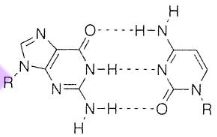 (A) G and C. (B)Aand T. (C)TandA﹒ (D) Cand G. (E)Aand C.
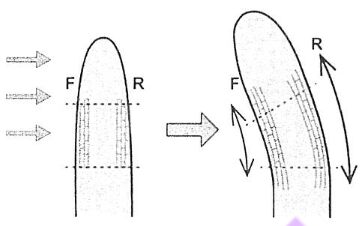 (A) The light on the left is red light; the concentration of auxin is higher on the R side (B) The light on the left is red light the concentration of auxin is higher on the F side (C) The light on the left is red light; the concentration of cytokinin is higher on the R side (D) The light on the left is blue light; the concentration of cytokinin is higher on the E side (E) The light on the left is blue light; the concentration of auxin is higher on the R side
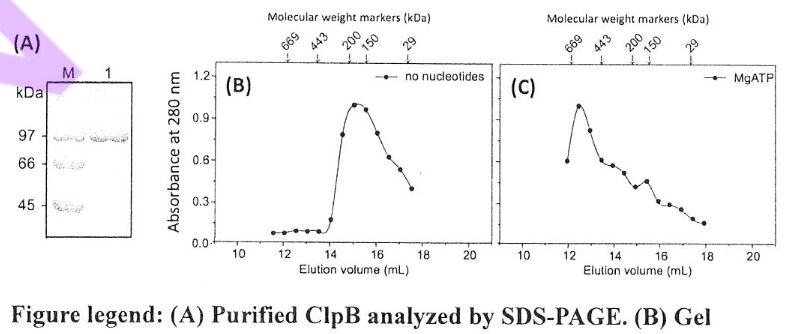
 (A) The functional form of ClpB is a hexamer. (B) ClpB is 2 monomer in solution. (C) Mg+2 and ATP disaggregate ClpB. (D) The molecular weight ofCIpB monomer is 200 kDa. (E) In the presence of Mg+2 and ATP, CIpB displays an ordered tertiary structure.
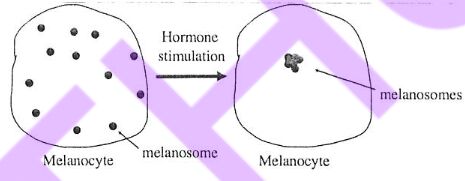 (A) ATP-driven Kinesin 1 moving on microtubules. (B) GTP-driven Kinesin 5 moving on actin filaments. (C) ATP-driven Myosin 4 moving on actin filaments. (D) ATP-driven Dynein moving on microtubules. (E) ATP-driven KIF2A moving on intermediate filaments.
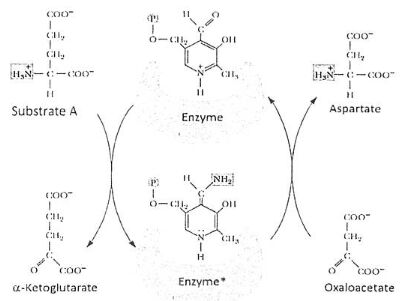 (A) The enzyme catalyzes a peptidyl-transferring reaction. (B) The enzyme conforms to a single-displacement mechanism. (C) The cofactor of the enzyme is a pyridoxal phosphate. (D) Oxaloacetate is a competitive inhibitor of the enzyme. (E) Substrate A is a glutamine.
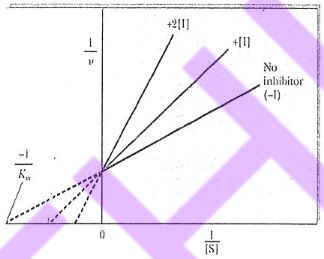 (A) competitive inhibition (B) uncompetitive inhibition (C) pure non-competitive inhibition (D) mixed noncompetitive inhibition (E) irreversible inhibition
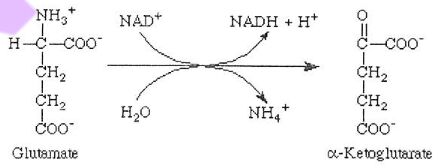 (A)16U (B)1.6U (C)0.16 U (D) 0.016 U (E) 0.0016 U