所屬科目:學士後西醫-普通生物及生化概論
1. The Nobel Prize in Physiology or Medicine 2014 was awarded for discoveries concerning peripheral immune tolerance. Which of the following statements is NOT correct? (A) Peripheral immune tolerance mechanisms restrain self-reactive T cells that escape clonal deletion during thymic maturation. (B) Defects in peripheral immune tolerance may cause systemic lupus erythematosus. (C) CD4+CD25+ regulatory T cells contribute to the maintenance of peripheral immune tolerance. (D) FOXP3 is a master regulator of cytotoxic T cells that destroy self-reactive effector T cells. (E) Immune dysregulation, polyendocrinopathy, enteropathy, X-linked syndrome (IPEX) are caused by mutations in the FOXP3 gene.
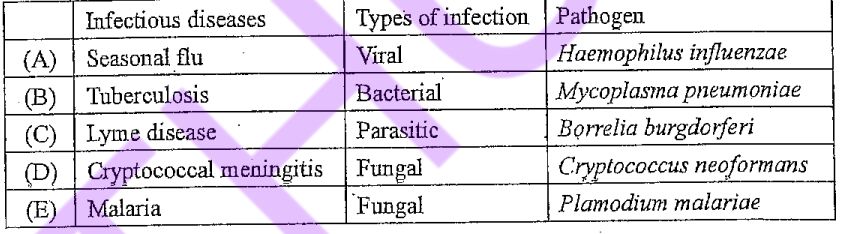
2. Which of the following pathogen - infectious disease pairings is CORREСТ?
3. During embryonic neurulation, which of the following statements is NOT correct? (A) Neurulation begins as cells from the dorsal ectoderm form the notochord. (B) Sonic hedgehog (SHH) secreted by the notochord is involved in the formation of the neural plate. (C) Neural plate curves inward to form the neural tube. (D) Spina bifida is a type of neural tube defect. (E) Vitamin B9deficiency is associated with neural tube defects.
4. Which of the following functions is NOT primarily regulated by quorum sensing? (A) Population control (B) DNA repair (C) Biofilm formation (D) Virulence factor secretion (E) Bioluminescence production
5. Homeobox-containing genes (Hox genes) play important roles in animal embryonic development by regulating the expression of many other genes that influence morphology. Which of the following statements about Hox genes is NOT correct? (A) The Hox proteins contain a helix-turn-helix structure that is responsible for DNA binding. (B) The subcellular localization of Hox proteins is primarily on the cell membrane. (C) Gain-of-function of Hox genes often results in developmental defects. (D) Loss-of-function of Hox genes often results in developmental defects. (E) Hox genes regulate the development of the anterior-posterior axis in most animals.
6. Which ofthe following materials is NOT primarily involved in mediating communication between cells? (A) Tunneling nanotubes (B) Exosomes (C) Inositol triphosphate (IP3) (D) Hormones (E) Cytokine
7. According to current knowledge of microorganisms, which of the following statements is CORRECT? (A) All bacteria have a cell wall. (B) All viruses use DNA as their genetic material. (C) All algae contain chloroplasts. (D) All fungal cell membranes contain cholesterol. (E) All parasites have a nucleus.
8. Bacteriophages, or simply phages, are the viruses that infect bacteria. Which of the following statements about current knowledge of phages is NOT correct? (A) The viral genome is enclosed by a protein-based structure called the capsid. (B) During the lysogenic cycle, phage DNA and viral structures are synthesized and assembled into prophages. (C) During the lytic cycle, bacterial cells lyse and release phages. (D) Bacterial cells defend against phage infection using the CRISPR-Cas system. (E) Phages provide an alternative strategy for treating antibiotic-resistant bacterial infections.
9. Which of the following options correctly identifies three evolutionary adaptations that enable some animals to directly exchange matter (such as gases, nutrients, and wastes) between their body cells and the environment? (A) A gastrovascular cavity, a body with only two cell layers, and a flat body shape. (B) An external respiratory surface, a small body size, and a complex circulatory system. (C) A large body volume, a long tubular body, and a thick protective cuticle. (D) An unbranched internal surface, a microscopic body size, and a thick skin. (E) A high surface area-to-volume ratio, a flattened body shape, and a branched internal digestive tract.
10. If an unfertilized egg (oocyte) is treated with a chelating agent (such as EDTA) that binds and sequesters free calcium (Ca2+) and magnesium (Mg2+) ions, which of the following processes will be specifically blocked after sperm entry? (A) The acrosomal reaction in the sperm head. (B) The initial depolarization of the egg plasma membrane. (C) The fusion of the sperm and egg plasma membranes. (D) The formation of the fertilization envelope through the cortical reaction. (E) The completion of Meiosis II within the oocyte.
11. During the knee-jerk reflex in a seated individual, as the lower leg moves from a vertical to a horizontal position, what happens to the muscles of the quadriceps (located on the front of the thigh) and the hamstring muscles (located on the back of the thigh)? (A) Both the quadriceps and hamstrings are excited and contracting. (B) Both the quadriceps and hamstrings are inhibited and relaxed. (C) The quadriceps are excited, while the hamstrings are inhibited. (D) The quadriceps are inhibited, while the hamstrings are excited. (E) The quadriceps and hamstrings alternate between excitation and inhibition in a rhythmic cycle.
12. A person who can only perceive low-frequency sounds but has lost the ability to hear high-frequency sounds likely has a structural abnormality in which part of the auditory system? (A) Damage or scarring of the tympanic membrane (eardrum) due to chronic infections. (B) Uniform stiffening of the entire basilar membrane. (C) Abnormal thickening of the auditory ossicles (malleus, incus, and stapes). (D) Detachment of the tectorial membrane from the organ of Corti. (E) Loss of hair cell function in all regions of the basilar membrane except the apex.
13. Which characteristic of herpesviruses best explains why people experience recurring outbreaks of mouth or genital blisters throughout their lives? (A) Frequent reinfection occurs from exposure to different but closely related strains of the virus. (B) The virus remains active in the bloodstream, with symptoms appearing only when the viral load exceeds a specific threshold. (C) The viral genome is permanently maintained in a latent state within host cell nuclei and periodically reactivates. (D) Intact virus particles persist in the interstitial fluid, evading immune detection until favorable environmental conditions allow them to infect new cells. (E) The virus integrates its DNA into the host's germ cells, causing the infection to renew every time the host cells divide.
14. A patient is diagnosed with a bacterial infection and is prescribed penicillin. However, the bacteria are resistant to the antibiotic and continue to grow. Which structural feature most likely enables these bacteria to survive despite the presence of penicillin? (A) A Gram-negative cell wall with an outer membrane that protects a thin peptidoglycan layer. (B) A thick peptidoglycan layer in the bacterial cell wall. (C) High concentrations of lipopolysaccharides stored inside the cytoplasm. (D) A cell wall composed primarily of long polypeptides instead of peptidoglycan. (E) The absence of a plasma membrane, which prevents the drug from entering the cell.
15. Rose-picker's disease," caused by the fungus Sporothrix schenckii, occurs when the fungus enters the body and transitions into a hyphal form, growing along the inside of lymphatic vessels. This infection can damage lymph nodes where many phagocytes and lymphocytes are located. Which of the following is the most likely consequence or characteristic of this infection? (A) The hyphae release powerful antibiotics, which unexpectedly help the human host tolerate the fungal infection. (B) The hyphal form enables rapid and invasive growth, temporarily overwhelming NTHU115 the immune defenses in the affected area. (C) The human immune system fails to recognize the fungus because its cell walls are made of cellulose, a material treated as "self" by the body. (D) Since most fungal pathogens primarily infect plants, the human immune system lacks receptors to detect fungal cell wall components. (E) Damage to the lymph nodes reduces fluid drainage and weakens the ability to mount an adaptive immune response.
16. Parasitism is one of the most successful and widespread lifestyles on Earth. Which of the following characteristics best explains why parasitism has been so successful across many different lineages of organisms? (A) Parasites typically predigest their hosts' tissues, reducing the need for complex digestive or structural adaptations. (B) Unlike traditional predators, parasites often exploit almost all tissues of their host simultaneously to maximize energy gain. (C) Parasites generally do not kill their hosts immediately, allowing them to use a single host as a long-term resource while avoiding direct competition with decomposers. (D) Parasites usually kill their hosts quickly but require very little biomass to sustain themselves due to their small size. (E) Parasites often have complex life cycles involving multiple hosts, enabling them to occupy diverse ecological niches and improve their chances of dispersal.
17. Which of the following statements about human evolution is most consistent with current scientific understanding? (A) Humans and other modern apes evolved from a shared common ancestor along separate evolutionary lineages. (B) Humans represent the peak of biological evolution and are no longer subject to natural selection. (C) Modern humans evolved directly from modern chimpanzees or gorillas. (D) Humans and other apes arose due to disruptive selection acting on a single ancestral species of chimpanzee. (E) The high genetic similarity between humans and chimpanzees demonstrates that one species is the direct ancestor of the other. NTHU115
18.Which of the following conditions MOST strongly shifts λ phage infection toward lysogeny rather than the lytic cycle? (A) Early accumulation of Cro inhibits repressor CI synthesis. (B) Efficient early antitermination enables stable activation of repressor CI synthesis. (C) Rapid degradation of CII prevents repressor CI synthesis. (D) High Cro levels enhance repressor CI expression by blocking operator binding. (E) Repressor CI synthesis relies solely on maintenance promoters due to failure of initial activation.
19. Which mechanism BEST explains how antisense RNA can inhibit gene expression through RNA-RNA duplex formation? (A) The antisense RNA recruits general transcription factors to block RNA polymerase binding at the promoter. (B) The RNA-RNA duplex formation interferes with splicing by masking splice sites on the DNA template within the intron. (C) RNA-RNA duplex formation increases RNA polymerase II processivity, leading to increased transcription of the target gene. (D) The RNA-RNA duplex recruits Argonaute proteins to trigger endonucleolytic cleavage of the sense mRNA in the nucleus. (E) Duplex formation blocks the ribosome-binding site or start codon on the sense mRNA, preventing translation initiation.
20. Which of the following statements MOST accurately describes the process of translation initiation? (A) In both prokaryotes and eukaryotes, the small ribosomal subunit binds directly to the mRNA, followed by the recruitment of the initiator tRNA. (B) In prokaryotes, the 30S small subunit binds the Shine-Dalgarno sequence on the mRNA and then recruits the initiator tRNA; in eukaryotes, the small ribosomal subunit binds the 5' cap and then loads the initiator tRNA. (C) Prokaryotes and eukaryotes assemble a pre-initiation complex containing the initiator tRNA, and then locate the AUG codon through a scanning mechanism. (D) In prokaryotes, the 30S ribosomal subunit binds the mRNA via Shine-Dalgarno pairing and then the initiation factor IF-2 delivers the initiator tRNA into the P site. (E) In eukaryotes, the 60S subunit binds the eIF2, which subsequently binds the mRNA 5' cap and scans for the start codon. NTHU115
21.Which of the following correctly describes a key regulatory mechanism of lipid Boxidation? (A) Malonyl-CoA inhibits carnitine acyltransferase I (CPT I), preventing long-chain fatty acids from entering the mitochondrial matrix. (B) Insulin directly activates β-oxidation by increasing CPT I activity and promoting mitochondrial fatty acid import. (C) Elevated NADH levels enhance the activity of β-hydroxyacyl-CoA dehydrogenase, accelerating B-oxidation. (D) Fatty acid β-oxidation occurs primarily in the cytosol rather than in mitochondria. (E) Activation of AMP-activated protein kinase (AMPK) suppressesβ-oxidation by inhibiting fatty acid transport into mitochondria.
22. Which of the following statements about the urea cycle is correct? (A) The urea cycle begins with ornithine transcarbamylase (OTC), which transfers a carbamoyl group from carbamoyl-CoA to ornithine within the mitochondrial matrix. (B) The nitrogens in urea originate from two sources: one nitrogen comes from ammonia (NH3), and the other nitrogen comes from asparagine. (C) Citrulline is synthesized from pyruvate during the urea cycle and acts as a direct precursor for urea formation in the cytoplasm. (D) The urea cycle is tightly linked to the TCA cycle through fumarate, which is produced in the cytoplasm and can be recycled directly back into the TCA cycle. (E) The urea cycle produces urea as its final product, which is transported from the liver to the kidneys for excretion in the urine.
23. Which of the following statements BEST integrates the structural and physiological function of human skin as an organ? (A) The epidermis is a vascularized epithelial layer composed primarily of fibroblasts that provide tensile strength and thermal insulation. (B) Melanocytes located in the dermis synthesize keratin, which forms the main waterproof barrier of the skin. (C) The hypodermis is derived from ectoderm and is responsible for forming the stratified squamous epithelium of the skin. (D) Adipocytes in the epidermis secrete collagen fibers that anchor the skin to underlying muscle tissue. NTHU115 (E) The dermis contains connective tissue, blood vessels, sensory receptors, and glands, enabling skin to function in protection, sensation, and thermoregulation.
24. During skeletal muscle contraction, which of the following statements BEST supports the sliding filament theory? (A) The length of the thick (myosin) filaments shortens as ATP is hydrolyzed, resulting in a decreased A band length. (B) The thin (actin) filaments are depolymerizing during contraction, allowing for sarcomere shortening. (C) An increase in the width of the I band due to reduced overlap between actin and myosin filaments. (D) The distance between Z-dises decreases while the A band remains constant in length. (E) The H zone becomes larger as myosin heads detach during contraction.
25.Which of the following statements BEST explains how increased CO₂ production contributes to the regulation of breathing rate? (A) Increased CO₂ directly binds to hemoglobin, preventing oxygen transport and mechanically stimulating lung expansion to increase ventilation. (B) CO2 dissolves in plasma and is rapidly exhaled without chemical conversion, and breathing rate increases in response to decreased blood O2 levels. (C) Increased CO₂ is converted to carbonic acid by carbonic anhydrase in red blood cells. Carbonic acid dissociates leading to an increase in H+ concentration and a decrease in pH, which is detected by chemoreceptors. (D) CO2 produced during exercise remains primarily in gaseous form within tissues, directly activating stretch receptors in the lungs to increase breathing frequency. (E) Elevated CO2 suppresses respiratory center activity by stabilizing blood pH, thereby reducing the need for increased ventilation during exercise.
26. Which of the following statements BEST explains how glucose is absorbed by intestinal epithelial cells and subsequently transported into the bloodstream? (A) Glucose enters intestinal epithelial cells by passive diffusion across the apical membrane and is actively transported into the blood by GLUT2. (B) Glucose uptake across the apical membrane occurs via facilitated diffusion through GLUT transporters, driven by a glucose concentration gradient. (C) Glucose is transported into intestinal epithelial cells by secondary active transport coupled to the Na+ gradient at the apical membrane. (D) Both apical and basolateral glucose transport in intestinal epithelial cells require direct ATP hydrolysis to move glucose against its concentration gradient. (E) Glucose exits intestinal epithelial cells through the basolateral membrane by coupling to Na+ efflux generated by the Na+/K+-ATPase, allowing GLUT2 to function as an ATP-driven transporter.
27. Which statement BEST explains hormonal regulation of ovulation, including the hormones involved in ovulation induction? (A) GnRH (Gonadotropin-Releasing Hormone) secretion stimulates estrogen release by the pituitary gland, directly inducing ovulation and supporting formation of the corpus luteum. (B) GnRH stimulates the secretion of follicle-stimulating hormone (FSH) from the posterior pituitary, thereby promoting follicular growth in the ovary. (C) Progesterone secreted from the corpus luteum enhances luteinizing hormone (LH) secretion and thereby directly triggers ovulation. (D) Progesterone increases GnRH secretion from the hypothalamus during the follicular phase, thereby enhancing FSH release and triggering ovulation. (E) Ovulation is triggered by a surge of LH released from the anterior pituitary following sustained high estrogen levels.
28. A synthetic nucleic acid lacking a 2'-OH group but containing uracil instead of thymine would most likely exhibit which property? (A) High mutation rate due to U-G wobble (B) Increased susceptibility to alkaline hydrolysis (C) Stability comparable to DNA despite using uracil (D) Inability to form double helices (E) Loss of complementarity
29. Which experimental observation most strongly implies that genetic information resides in base sequence rather than backbone chemistry? (A) Uniformity of phosphodiester bonds (B) Complementary hydrogen bonding (C) Negative charge of nucleic acids (D) Species-specific base composition (E) Helical geometry
30. DNA polymerases synthesize DNA exclusively in the 5'3' direction because: (A) Phosphodiester bond formation requires ATP hydrolysis. (B) Proofreading exonuclease acts only 3'→5'. (C) The ẞ-clamp enforces strand polarity. (D) Primase can only extend 5' ends. (E) The 3'-OH performs nucleophilic attack on the a-phosphate of incoming dNTP.
31.Which statement best predicts the consequence of histone acetylation at promoterproximal nucleosomes? (A) Tightened DNA wrapping via increased histone positive charge (B) Recruitment of chromatin remodelers and increased transcriptional competence (C) Direct inhibition of RNA polymerase II elongation by blocking carboxy-terminal domain (CTD) phosphorylation (D) Preferential increase of RNA polymerase III transcription (E) Stabilization ofnucleosome core leading to reduced transcription factor binding
32. What is the primary biochemical basis for the fidelity of amino acid incorporation? (A) Codon-anticodon hydrogen bonding (B) Ribosomal peptidyl transferase selectivity (C) Editing (proofreading) by aminoacyl-tRNA synthetases (D) EF-Tu GTP hydrolysis timing (E) Initiation factor discrimination
33. If the Shine-Dalgarno sequence were mutated but AUG remained intact, the most likely outcome would be: (A) Perfeetly normal translation (B) Increased initiation at incorrect downstream AUGs (C) Frameshifting during elongation (D) Failure of termination (E) Increased tRNA mischarging
34. Which kinetic parameter best reflects catalytic efficiency at low substrate concentrations? (A) Vmax (B) Km (C) kcat (D) Kcat/Km (E) 1/Km
35. A hypothetical organism uses DNA but replaces all cytosines with 5- methylcytosine. What major risk would increase? (A) Loss of replication (B) Higher mutation rate via deamination (C) Frameshift instability (D) Reduced transcription (E) Loss of helicity
36. Which combination of defects would be synthetically lethal (cell survives with either alone but dies with both)? (A) Proofreading exonuclease + mismatch repair (B) Ligase + helicase (C) Primase + ligase (D) Gyrase + helicase (E) Clamp + polymerase
37. Which defect would most strongly increase frameshift mutations in repetitive DNA? (A) Helicase defect (B) Ligase defect (C) Mismatch repair defect (D) Gyrase defect (E) Primase defect
38. An enzyme exhibits normal Michaelis-Menten kinetics at pH 7 but displays sigmoidal kinetics at pH 9. Which explanation is most plausible? (A) Enzyme concentration doubled (B) Competitive inhibitor formed (C) Product inhibition dominates (D) Substrate precipitation occurred (E) Subunit ionization alters allosteric cooperativity NTHU115
39. A researcher subjects four distinct biological structures (a functional globular protein, a segment of DNA, a cellulose fiber, anda molecule of amylopectin) to an environment where all non-covalent interactions (hydrogen bonds, ionic bonds, van der Waals forces, and hydrophobic interactions) are completely disrupted, but all covalent bonds (peptide bonds, glycosidic linkages, and phosphodiester linkages) remain intact. Which resulting observation is the LEAST accurate regarding the stable molecular components remaining after this treatment? (A) The globular protein, such as transthyretin, would be converted into a nonfunctional, linear polypeptide chain, retaining its unique amino acid sequence. (B) The secondary structure elements (such as a-helices and β-pleated sheets) within the polypeptide backbone of the globular protein would no longer exist. (C) The two complementary strands of the DNA double helix would separate entirely, resulting in two distinct, single polynucleotide strands. (D) The amylopectin molecule (a storage polysaccharide) would be cleaved into hundreds of individual glucose monomers. (E) A cellulose molecule would retain its straight, unbranched configuration, although it would no longer be grouped into strong microfibrils.
40. The Na+/K+ pump is a critical electrogenic transport protein that uses ATP to actively move ions against their concentration gradients, contributing to the membrane potential of animal cells. This integral protein is synthesized in the Endoplasmic Reticulum (ER) and modified through the Golgi apparatus before insertion into the plasma membrane. The completed pump moves 3 Nat ions out of the cell and 2 K+ ions into the cell. Considering the required sidedness of the plasma membrane, which component of the Na+/K+ pump is exposed to the ER lumen during the initial stages of synthesis? (A) The segment of the protein that releases the terminal phosphate group derived from ATР. (B) The region of the protein that initially binds the three Nat ions. (C) The binding domain that triggers the release of the two K+ ion into the cytoplasm. (D) The nonpolar a-helical stretches that span the lipid bilayer. (E) The binding site that has a high affinity for K+ ions when the pump has been phosphorylated.
41. A highly active muscle cell is subjected to extreme mechanical work, causing a sharp, sustained acceleration in the rate of ATP hydrolysis. The initial free energy released by this process is used primarily for mechanical work, such as muscle contraction. Considering the subsequent shift in the concentrations of ATP, ADP, and inorganic phosphate (Pi) within the cell, which statement best describes the immediate, self-regulating response mediated by allosteric control mechanisms? (A) The accumulation of inorganic phosphate (Pi) acts as a competitive inhibitor, competing with substrate molecules for the active sites of catabolíc enzymes, thus slowing down ATP synthesis. (B) The reduction in ATP concentration stabilizes the inactive form of key catabolic enzymes, causing the overall pace of catabolism to decrease. (C) The remaining ATP binds to its specific regulatory sites on anabolic enzymes, inhibiting them, while simultaneously promoting the activity of catabolic enzymes. (D) The rising concentration of ADP functions as an allosteric activator, stabilizing the active conformations of key catabolic enzymes and thereby accelerating the overall rate of ATP regeneration. (E) The decrease in ATP concentration forces the cell's metabolic pathways closer to equilibrium, which increases the amount of work the cell can perform, according to the Free Energy principle (AG).
42. Pepsin is a digestive enzyme that functions optimally at a pH of 2, an environment highly concentrated with H* ions. In contrast, most enzymes found in the human body have optimal pH values ranging from 6 to 8. The extreme acidity of pH 2 would typically cause most enzymes to denature, leading to a sharp drop in activity, because the high concentration of H+ ions disrupts the weak interactions crucial for stabilizing the protein's functional shape. Which statement below best describes the mechanism by which Pepsin is specifically adapted to maintain its maximum catalytic activity in the stomach environment? (A) Pepsin uses strong covalent bonds (peptide bonds) to form its active site, which cannot be broken by H+ ions, unlike the weak bonds found in other enzyme active sites. (B) Pepsin's △G (Free Energy change) for its specific catabolic reaction shifts to a highly negative value at pH 2, thereby increasing the spontaneous rate of the reaction independent of structure. (C) The structure of Pepsin minimizes the use of the most electronegative elements. (Oxygen and Nitrogen) in its regulatory sites, making it insensitive to competitive inhibition by H+ ions. (D) Pepsin has evolved to significantly raise the overall activation energy (EA) barrier of its substrate at neutral pH, forcing the reaction to only proceed effectively when thermal energy is supplied by the acidic environment. (E) The amino acid sequence of Pepsin results in a unique three-dimensional configuration that prevents the high concentration of H+ ions from disrupting the crucial weak interactions (such as ionic bonds and hydrogen bonds) necessary for its active shape.
43. During the mitotic phase, the enzyme separase is responsible for cleaving the cohesin proteins that hold sister chromatids together, a step crucial for the initiation of anaphase. If a cell possesseda dominant mutation causing separase to be constitutively active and begin cleaving all cohesins prematurely during prometaphase (before the M checkpoint criteria were met), which outcome is the most likely and immediate consequence? (A) The resulting daughter cells would skip the G1 phase and immediately enter the S phase due to premature activation of maturation-promoting factor (MPF). (B) The cell would successfully complete mitosis, but the spindle poles would fail to move apart due to inactive non-kinetochore microtubules. (C) The M checkpoint would fall, and the liberated chromatids would segregate randomly, resulting in genetically unequal daughter cells. (D) The nuclear envelope would reform immediately, triggering early telophase and preventing the remaining spindle microtubules from attaching to kinetochores. (E) Cytokinesis would initiate during prophase, leading to the formation of multiple, small nuclei within a single parent cell.
44. In an E. coli cell undergoing rapid replication, a newly identified chemical agent completely and specifically inhibits the function of DNA ligase. Assuming all other replication proteins (Helicase, Primase, DNA pol I, and DNA pol III) are fully functional, what structural consequence would be immediately observable following the completion of the first round of DNA synthesis? (A) Both parental DNA strands would remain permanently associated, halting the replication process before the replication fork could open fully. (B) The leading strand would fail to elongate beyond the initial RNA primer because DNA pol III requires DNA ligase to begin continuous synthesis. (C) The lagging strand would consist of multiple Okazaki fragments that are fully synthesized DNA segments but lack covalent bonds between them. NTHU115 (D) The ends of the circular bacterial chromosome would shorten significantly because the replication machinery cannot replace the terminal RNA primers. (E) The concentration of thymine dimers would increase dramatically due to the inability of the DNA replication complex to proofread mismatched bases.
45. A eukaryotic cell synthesizes an mRNA molecule where the poly-A tail is normal, but a specific mutation prevents the 5' cap from binding the necessary translation initiation factors. Assuming the mRNA is successfully exported to the cytoplasm, which step of protein synthesis would be most immediately and severely affected? (A) The formation of peptide bonds in the P site would cease, halting elongation. (B) The mRNA would be rapidly degraded by hydrolytic enzymes in the cytoplasm. (C) tRNA molecules would fail to be charged with their corresponding amino acids. (D) Release factors would prematurely bind to the AUG codon, causing early termination. (E) The small ribosomal subunit would fail to bind to the mRNA or scan for the AUG start codon.
46. Which of the following statements most accurately reflects the known composition and mobility mechanisms of the repetitive DNA sequences that account for the largest proportion of the human genome? (A) Transposons (DNA intermediate) are the most abundant mobile element, responsible for 44% of the genome, moving via the cut-and-paste mechanism. (B) Simple sequence DNA (short tandem repeats, STRs) constitute 17% of the genome and primarily facilitate unequal crossing over to drive gene duplication. (C) The Alu elements (10% of the genome) are the largest type of retrotransposon and encode their own reverse transcriptase for movement. (D) Retrotransposons are the most abundant category, and unlike transposons, their movement inherently involves synthesizing a complementary DNA strand from an RNA intermediate, thus leaving a copy at the original location. (E) Transposable elements are included in the 1.5% of the genome that codes for proteins because they all encode the transposase or reverse transcriptase enzymes necessary for their own movement.
47. The evolutionary adaptation of C4 photosynthesis minimizes the photorespiratory deficit by ensuring a high local concentration of CO2 near the enzyme rubisco. This mechanism relies on the spatial segregation of tasks, primarily in the bundle-sheath cells, whose chloroplasts are specialized to contain Photosystem I (PS I) but often lack functional Photosystem II (PS II). How does the absence of Photosystem II (PS II) in the bundle-sheath chloroplasts contribute to minimizing photorespiration, even though the cell is operating under conditions of intense light? (A) The resulting reliance on cyclic electron flow generates the low ratio of ATP to NADPH required to drive the reduction of CO2 and outcompete the photorespiration pathway. (B) The four-carbon compound (e.g., malate) delivered from the mesophyll cells is designed to directly activate PS I, allowing it to generate the necessary high-energy electrons without relying on water. (C) The inhibition of H₂O splitting, which normally occurs at PS II, prevents the release of O2 gas directly into the local environment where the Calvin cycle and rubisco are confined. (D) The PS I-only system utilizes an alternate terminal electron acceptor, which binds to O2 and converts it into water, thus chemically removing the substrate for photorespiration. (E) The bundle sheath cells primarily serve to regenerate the enzyme PEP carboxylase, a process that is independent of O2 concentration and requires only the minimal ATP produced by cyclic flow.
48. A specific locus in a large, sexually reproducing deer mouse population is analyzed. Researchers find that the locus exhibits high nucleotide variability (many base-pair differences across individuals) but extremely low gene variability (less than1% heterozygosity). Assuming this population is large and mating is random, which explanation best accounts for the coexistence of these two variability measurements? (A) The high nucleotide variability is solely maintained by directional selection favoring one homozygous genotypе. (B) Genetic drift has caused the rapid fixation of the most common allele, simultaneously eliminating all new nucleotide mutations. (C) The majority of the nucleotide differences occur in noncoding regions (introns) or represent silent substitutions, resulting in few distinct functional alleles (low gene variability). (D) Balancing selection is actively maintaining two or more forms in the population, contradicting the observed low heterozygosity. (E) Gene flow is consistently introducing new alleles that are immediately selected against before they can be replicated within the population. NTHU115
49. Which of the following statement about glycine is NOT correct? (A) is a glucogenic amino acid that can be converted directly to pyruvate (B) is an important neurotransmitter (C) is degraded by glycine cleavage system to produce CO2 and NH3 (D) is a component of glutathione (E) is a precursor for heme and purines
50. Which of the following branched-chain amino acids (BCAAs) is classified as glucogenic but not ketogenic? (A) Leucine (B) Tyrosine (C) Isoleucine (D) Proline (E) Valine
51. In the photoreceptor of rhodopsin, which of the following is the light-sensitive chromophore that absorbs photons of light and initiates the phototransduction cascade? (A) 11-cis-retinol (B) 11-tran-retinol (C) 11-cis-retinal (D) 11-tran-retinal (E) 11-cis retinoic acid
52. Which of the following post-translational modifications (PTMs) or process is NOT involved in collagen biosynthesis? (A) Glycosylation (B) Disulfide bond formation (C) Acetylation (D) Hydroxylation (E) Folding and assembly
53. Which of the following statements about glycogen metabolism is NOT correct? (A) Glycogen synthesis requires glycogen synthase, UDP-glucose, and the a-1,4 → α1,6 branching enzyme. (B) Complete degradation of glycogen requires glycogen phosphorylase, transferase, and a-1,6 glucosidase. (C) Glycogen breakdown directly produces glucose-6-phosphate (G-6-P). (D) Abnormal glycogen metabolism can result in glycogen storage diseases (GSDs). (E) The nonreducing ends of the glycogen molecule form the surface of the glycogen granule, where degradation takes place.
54. Which of the following statements about the roles of peroxisome in fatty acid metabolism is NOT correct? (A) Peroxisomes are responsible for the initial steps in the breakdown of very long chain fatty aeids, usually with chains longer than 22 carbons. (B) Peroxisomes can metabolize certain polyunsaturated fatty acids that cannot be processed in mitochondria through ẞ-oxidation. (C) Peroxisomes are the organelles where a-oxidation occurs, which is required to metabolize branched-ehain fatty acids. (D) Omega oxidation also occurs in the peroxisome of cells. (E) During fatty acid oxidation in peroxisomes, hydrogen peroxide (H₂O2) is usually produced as a byproduct.
55. Which of the following molecules are the key components required to form sphingosine, the backbone of sphingolipids? (A) glycine and ceramide (B) serine and palmitate (C) threonine and phosphatidic acid (D) cysteine and glycerol (E) methionine and pantothenic acid
56. In purine biosynthesis, which of the following folic acid derivatives serves as the one-carbon donor required for the formation of the purine ring? (A) N5,N10-methylene-tetrahydrofolate (B) N5-formimino-tetrahydrofolate (C) N5-formyl-tetrahydrofolate (D) N10-formyl-tetrahydrofolate (E) N¹0-methyl-tetrahydrofolate
57. Which of the following reactions requires vitamin B12 as a cofactor? (A) Conversion of pyruvate to oxaloacetate (B) Conversion of homocysteine to methionine (C) Conversion of succinyl-CoA to methylmalonyl-CoA (D) Conversion of fumarate to malate (E) Conversion of glucose-6-phosphate to glucose-1-phosphate
58. Which of the following second messengers is NOT directly involved in acetylcholine-induced vascular relaxation? (A) inositol 1,4,5-triphosphate (IP3) (B) Ca2+ (C) nitric oxide (NO) (D) CAMP (E) cGMP
59. Which of the following enzymes does NOT require tetrahyrobiopterin (BH4) as a cofactor? (A) Phenylalanine hydroxylase, which converts phenylalanine to tyrosine. (B) Tyrosine hydroxylase, which converts tyrosine to 3,4-dihydroxyphenylalanine (DOPA). (C) Tryptophan hydroxylase, which converts tryptophan to 5-hydroxytryptophan (5- HTP). (D) Nitrie oxide synthase (NOS), which eatalyzes the production of nitric oxide (NO). (E) 25-Hydroxylase, which converts cholecalciferol (vitamin D3) to 25- hydroxycholecalciferol
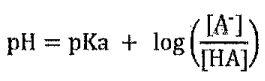
60. The Henderson-Hasselbalch equation (below) is widely used in biochemistry to calculate the pH of buffer solutions. When 100 mL of a 0.1 mM buffer solution made from acetic acid (pKa is 4.76.) and sodium acetate with pH 5.0 is diluted to 1 liter, what is the pH of the diluted solution? (A) 4.50 (B) 4.76 (C) 5.00 (D) 5.32 (E) 5.54
 阿摩線上測驗
登入
 (A) 4.50 (B) 4.76 (C) 5.00 (D) 5.32 (E) 5.54