所屬科目:研究所、轉學考(插大)◆普通物理學
1. A gas is enclosed in a container fitted with a piston of cross-sectional area 0.10 m². The pressure of the gas is maintained at 5000 Pa, while heat is slowly added; as a result, the piston is pushed up a distance of 4.0 cm. If 42 J of heat is added to the system during the expansion, what is the change in the internal energy of the system? (A) 20 J (B) 22 J (C) 24 J (D) -20 J (E) -22 J
2. Blood flows through the coronary artery that is partially blocked by deposits along the artery wall (as shown in the figure). Through which part of the artery is the flux (volume of blood per unit time) is largest?
(A) the narrow part (B) the left wide part (C) the right wide part (D) the flux is the same in all parts (E) not enough information
3. The volume of an ideal gas is doubled while the temperature is increased from 100 K to 400 K. What is the final pressure in terms of its initial pressure pᵢ? (A) pᵢ (B) 2 pᵢ (C) 3 pᵢ (D) 4 pᵢ (E) 5 pᵢ
4. A 100-g cube of ice at 0°C is dropped into 1.0 kg of water that was originally at 80°C. What is the final temperature of the water after the ice melts? You may find the following information useful: cwater = 4186 J/kg·°C, Lf water = 3.33 × 10⁵ J/kg. (A) 0 °C (B) 18 °C (C) 32 °C (D) 44 °C (E) 65 °C
5. A 50.0-g object is attached to a horizontal spring with a spring constant of 10.0 N/m and released from rest with an amplitude of 25.0 cm. What is the speed of the object when it is halfway to the equilibrium position if the surface is frictionless? (A) 4.21 m/s (B) 8.42 m/s (C) 3.06 m/s (D) 6.12 m/s (E) 9.68 m/s
6. A person swings on a swing. When the person sits still, the swing oscillates back and forth at its natural frequency. If, instead, two people sit on the swing, the new natural frequency of the swing is (A) four times greater (B) twice greater (C) the same (D) twice smaller (E) impossible to determine
7. A 70-kg log falls from a height of 25 m into a lake. Suppose the log, the lake, and the air are all at 300 K. What is the change in the entropy of the Universe for this process, assuming that all of the log's potential energy is converted into heat? (A) 57 J/K (B) 29 J/K (C) 13 J/K (D) 7 J/K (E) 0 J/K
8. A heat engine operates in a Carnot cycle between 80.0°C and 350°C. It absorbs 21,000 J of energy per cycle from the hot reservoir. The duration of each cycle is 1.0 s. What is the mechanical power output of this engine? (A) 21.0 kW (B) 91.0 kW (C) 9.10 kW (D) 16.2 kW (E) not enough information
9. A 1.5-kg copper block is given an initial speed of 3.0 m/s on a rough horizontal surface. Because of friction, the block finally comes to rest. If the block absorbs 85% of its initial kinetic energy as internal energy, calculate its increase in temperature. You may find this information useful: ccopper = 387 J/kg·°C. (A) 1.1 °C (B) 11 °C (C) 5.5 °C (D) 3.3×10⁻³ °C (E) 9.9×10⁻³ °C
10. A copper telephone wire has essentially no sag between poles 35.0 m apart on a winter day when the temperature is -20.0°C. How much longer is the wire on a summer day when Tc = 35.0°C? Assume that the thermal coefficient of copper is constant throughout this range at its room temperature value. The average coefficient of linear expansion for copper is 17 × 10⁻⁶ (°C)⁻¹. (A) 3.27 cm (B) 4.12 cm (C) 1.00 cm (D) 12.04 cm (E) 8.40 cm
11. A car is stopped for a traffic signal. When the light turns green, the car accelerates, increasing its speed from 0 to 5.20 m/s in 0.832 s. What are the magnitudes of the linear impulse and the average total force experienced by a 70.0-kg passenger in the car during this time? (A) 245 kg m/s² and 438 N (B) 364 kg m/s² and 438 N (C) -245 kg m/s² and 4.38 N (D) 2.45 kg m/s² and 4.38 N (E) 245 kg m/s² and 4.38 N
12. A frog in a hemispherical pod finds that he just floats without sinking in a fluid of density 1.35 g/cm³. (The pod is dry inside.) If the pod has a radius of 6.00 cm and negligible mass, what is the mass of the frog?
(A) 0.611 g (B) 0.611 kg (C) 0.350 kg (D) 1.010 kg (E) 1.010g
13. An inductor has a 54 Ohm reactance at 60 Hz. What will be the peak current if this inductor is connected to a 50 Hz source that produces 100 V rms voltage? (A) 0.69 A (B) 1.41 A (C) 2.71 A (D) 3.14 A (E) 1.73 A
14. An inductor and a resistor are connected in series. When connected to a 60 Hz, 80 V source, the voltage drop across the resistor is found to be 35 V rms and the power dissipated in the circuit is 11 W. What is the value of the resistance? (A) 134 Ω (B) 151 Ω (C) 123 Ω (D) 97 Ω (E) 111 Ω
15. At what distance from a long straight wire carrying a current of 5.0 A is the magnetic field due to the wire equal to the strength of the earth's field, 5.0 × 10⁻⁵ T? (A) 0.02 m (B) 0.2 m (C) 2 m (D) 20 m (E) 200 m
16. The phasor diagrams on the right represent three oscillating emfs having different amplitudes and frequencies at a certain instant of time t = 0. As t increases, each phasor rotates counterclockwise and completely determines a sinusoidal oscillation. At the instant of time shown, the magnitude of ε associated with each phasor given in ascending order by diagrams is
(A) a, b, c (B) b, c, a (C) a, c, b (D) c, b, a (E) need more information
17. A 2.0 microcoulomb particle with a kinetic energy of 0.10 J is fired into a uniform magnetic field of magnitude 0.10 T. If the particle moves in a uniform circular path of radius 3.0 m, determine its mass. (A) 1.3 × 10⁻¹² kg (B) 1.8 × 10⁻¹² kg (C) 3.1 × 10⁻¹² kg (D) 3.7 × 10⁻¹² kg (E) 4.2 × 10⁻¹² kg
18. Consider blackbody radiation. Suppose the intensity spectrum peaks at the wavelength λ for temperature T. According to Wien's Displacement Law, where would the spectrum reach its maximum when the temperature is increased to 2T? (A) λ/32 (B) λ/16 (C) λ/8 (D) λ/4 (E) λ/2
19. John presents a wedding ring to Mary. To impress her, he spins the ring about a vertical axis at a frequency of 60 Hz in a magnetic field of B = 0.5 T as shown. If the area of the ring is 2.0 × 10⁻⁴ m², calculate the maximum emf induced in the ring.
(A) 0.038 V (B) 0.046 V (C) 0.052 V (D) 0.060 V (E) not enough information
20. An emf of 12.0 mV is induced in a 500 turn coil when the current is changing at a rate of 10.0 A/s. What is the magnetic flux through each turn of coil at the instant when the current is 3.00 A? (A) 1.4 × 10⁻⁶ T·m² (B) 2.2 × 10⁻⁶ T·m² (C) 5.4 × 10⁻⁶ T·m² (D) 7.2 × 10⁻⁶ T·m² (E) 8.8 × 10⁻⁶ T·m²
21. In which of the following materials does the light travel the fastest? (A) vacuum (B) water (n = 1.33) (C) glass (n = 1.50) (D) diamond (n = 2.42) (E) light travels at the same speed through all of the above materials
22. The importance of the Compton scattering experiment is that (A) it indicates that light has interference effects; (B) it shows that the speed of light is a constant in all directions; (C) it provides an accurate means to measure the speed of light; (D) it illustrates that the electron has wave nature; (E) it confirms the particle nature of radiation.
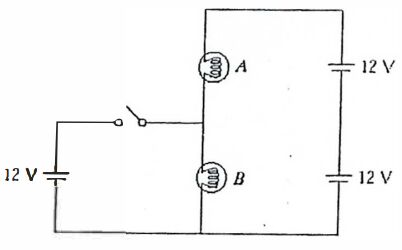
23. The light bulbs in the circuit (shown on the right) are identical. Ignore the internal resistance of the batteries. When the switch is closed,
(A) nothing changes (B) both go out (C) the intensity of light bulb A increases (D) the intensity of light bulb A decreases (E) the intensity of light bulb B increases
24. A beam of light of wavelength 550 nm, traveling in air, is incident on a slab of transparent material. The incident beam makes an angle of 60° with the normal, and the refracted beam makes an angle of 30.0° with the normal. Find the index of refraction of the material. (A) 1.21 (B) 1.53 (C) 2.52 (D) 1.73 (E) 2.73
25. An object is placed in front of a convex mirror at the distance of 30.0 cm. Find the distance between the image and the mirror and the lateral magnification if the focal distance of the mirror is 20.0 cm. (A) 12 cm and +0.4 (B) 12 cm and -0.4 (C) 60 cm and +2.0 (D) 60 cm and -2.0 (E) 15 cm and +0.5
 阿摩線上測驗
登入
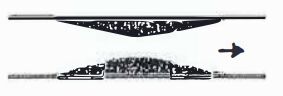 (A) the narrow part (B) the left wide part (C) the right wide part (D) the flux is the same in all parts (E) not enough information
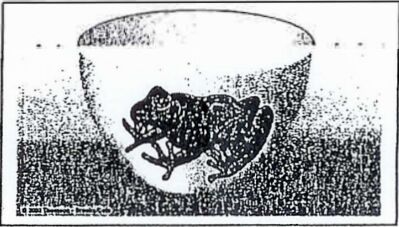 (A) 0.611 g (B) 0.611 kg (C) 0.350 kg (D) 1.010 kg (E) 1.010g
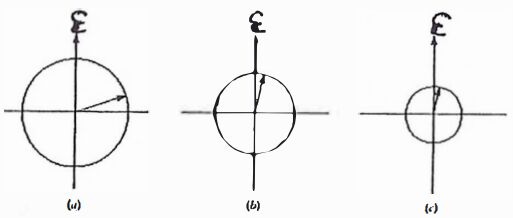 (A) a, b, c (B) b, c, a (C) a, c, b (D) c, b, a (E) need more information
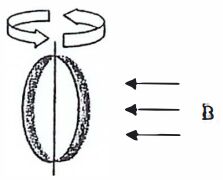 (A) 0.038 V (B) 0.046 V (C) 0.052 V (D) 0.060 V (E) not enough information
 (A) nothing changes (B) both go out (C) the intensity of light bulb A increases (D) the intensity of light bulb A decreases (E) the intensity of light bulb B increases