阿摩線上測驗
登入
首頁
>
研究所、轉學考(插大)◆機率統計
>
106年 - 106 國立嘉義大學_碩士班(乙組)招生考試試題_應用數學系:機率統計#146505
> 申論題
題組內容
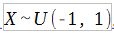
3. If
, and let an r.v. Y be defined as
(b) Calculate the E(Y). (5 %)
相關申論題
1. 貨幣政策在穩定經濟體系扮演重要角色,然而我們必須先了解貨幣供給如何在中央銀行、存款機構與存款戶間進行,請以數學推導與詳細說明貨幣乘數。(25%)
#599384
2. 請以經濟模型詳細說明實質景氣循環之內涵。(25%)
#599385
3. Migration is a central issue for the 2024 US presidential election, with debates focusing on its economic, social, and political impacts. Suppose that there are two countries, Country 1 and Country 2, each with two types of labor: high-skilled (H) and low-skilled (L). Both countries have the same amount of physical capital, high-skilled labor and low-skilled labor but differ in how labor inputs contribute to production. The production functions for the two countries are:$Y_1 = A K_1^\alpha L_1^\beta H_1^{1-\alpha-\beta},$$Y_2 = A K_2^\alpha (L_2 + \eta H_2)^{1-\alpha}.$where $K_1$ and $K_2$ are physical capital in Country 1 and Country 2, $\eta > 1$ is the relative productivity of high-skilled labor to low-skilled labor in Country 2, and $0 < \alpha < 1$, $0 < \beta < 1$. Assume all markets are competitive. Answer the following questions.(a) Derive the marginal product of high-skill and low-skill labor, express the high-to-low skilled wage ratio in terms of the parameters, and discuss whether high-skilled labor and low-skilled labor are complements or substitutes in production for both Country 1 and Country 2. (10%)
#599386
(i) How does the influx of illegal low-skilled migrants affect the high-to-low-skilled wage ratio in each country? Which group of workers (high-skilled or low-skilled, or both) is more adversely affected in each country?
#599387
(ii) Based on your analysis, which country's workers are more likely to oppose the influx of illegal low-skilled migrants? Explain with economic reasoning.
#599388
(a) Derive the expression for total GDP in this economy. Solve for \( w_{Y} \) and \( w_{LTC} \), i.e., the marginal product of labor in both the sectors. Also, write down the condition for both sectors to coexist in equilibrium. (10%)
#599389
(b) Now assume workers live for two periods: young and old. Each worker is endowed with one unit of labor time when young, supplies labor to the market inelastically during their youth, retires and consumes LTC services when old. The lifetime utility of a worker born in period \( t \) is$U^t = \ln(c_t^y) + \beta \ln(x_{t+1}),$where $c_t^y$ is consumption when young, $x_{t+1}$ is LTC service purchased when old, and $\beta > 0$ is the discount factor or the preference for old-age utility. Denote the saving of a worker when young by $s_t$. A worker's budget constraint when young and when old are:$c_t^y + s_t = w_t,$$p_{t+1}x_{t+1} = R_{t+1}s_t.$where $R_{t+1}$ is the gross return on savings, and $w_t \in \{w_{Y,t}, w_{LTC,t}\}$. Capital fully depreciates after one period of use. Let $k_t \equiv K_t/L_{Y,t}$ denote the capital intensity in the goods sector. Solve for the steady-state values for $k^*$, $p^*$ and the fractions of labor allocated to the goods sector ($L_Y/L$) and the LTC sector ($L_{LTC}/L$). Analyze how the steady-state values of $k^*$, $p^*$, $L_Y^*/L$ $L_{LTC}^*/L$ respond to an increase in $B$, $\beta$ and $\alpha$. Explain your results with economic intuition. (10%)
#599390
(c) In reality, wage disparities across sectors are common. In aging economies like Taiwan, the LTC sector faces a persistent labor shortage, creating significant challenges in meeting the growing demand for care services. Explain what could be the possible reasons to the shortage, and propose policies to address the shortage. (10%)
#599391
1. 裁判
#599392
2. 機会
#599393
相關試卷
114年 - 114 國立嘉義大學_碩士班(乙組)招生考試試題_應用數學系:機率統計#144147
114年 · #144147
113年 - 113 國立嘉義大學_碩士班(乙組)招生考試試題_應用數學系:機率統計#144169
113年 · #144169
112年 - 112 國立嘉義大學_碩士班(乙組)招生考試試題_應用數學系:機率統計#144168
112年 · #144168
111年 - 111 國立嘉義大學_碩士班(乙組)招生考試試題_應用數學系:機率統計#145446
111年 · #145446
110年 - 110 國立嘉義大學_碩士班(乙組)招生考試試題_應用數學系:機率統計#146105
110年 · #146105
110年 - 110 國立臺灣大學_碩士班招生考試_應用數學科學研究所數理統計組:機率統計#102196
110年 · #102196
109年 - 109 國立嘉義大學_碩士班(乙組)招生考試試題_應用數學系:機率統計#145663
109年 · #145663
108年 - 108 國立嘉義大學_碩士班(乙組)招生考試試題_應用數學系:機率統計#146113
108年 · #146113
107年 - 107 國立嘉義大學_碩士班(乙組)招生考試試題_應用數學系:機率統計#146100
107年 · #146100
106年 - 106 國立嘉義大學_碩士班(乙組)招生考試試題_應用數學系:機率統計#146505
106年 · #146505
 , and let an r.v. Y be defined as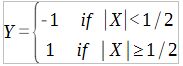
 阿摩線上測驗
登入
, and let an r.v. Y be defined as
阿摩線上測驗
登入
, and let an r.v. Y be defined as