所屬科目:研究所、轉學考(插大)◆生物化學
1. Which one of the following amino acids would be considered most hydrophobic? (A) Methionine (B) Cysteine (C) Isoleucine (D) Tryptophan (E) Proline
2. Globular protein are characterized by (A) Glycine at every third residue (B) High concentrations of hydrophobic amino acids on the outside of the molecule (C) Many polar and charged amino acids on the outside of the molecule (D) Large amounts of hydroxyproline (E) High concentrations of hydrophobic amino acids both in the interior of the molecule and on its surface
3. The octapeptide AVGWRVKS was digested with the enzyme chymotrypsin. Which method would be most appropriate for separating the products. (A) Ion exchange chromatography (B) Gel filtration chromatography (C) Affinity chromatography (D) Ammonium sulfate precipitation (E) None of the above
4. Some patients with sickle cell disease have relatively mild symptoms because they also have (A) Bone marrow depression (B) Elevated ẞ-chain synthesis (C) Reduced a-chain synthesis (D) Reduced y-chain synthesis (E) Iron overload
5. Some cytoskeletal fibers are formed from globular protein subunits. This type of fiber includes the (A) Intermediate filaments and actin microfilaments. (B) Thick and thin filaments of skeletal muscle. (C) Microtubules and the thick filaments of skeletal muscle. (D) Keratin filaments in the skin and the thick filaments of skeletal muscle. (E) Actin microfilaments and microtubules.
6. Which molecule(s) can cross the inner mitochondrial membrane? (A) ATP (B) NADH (C) NADPH (D) Acetyl-CoA (E) All of the above.
7. Which mechanism is not part of the reason why a bond is in the status of "high energy"? (A) Electrostatic repulsion is relieved upon cleavage. (B) Products of its cleavage are unstable and tautomerizing to a more stable form. (C) The bond is very stable and requires large energy to cleave it. (D) The bond is strained. (E) Products of its cleavage are more resonance stabilized.
8. Which enzyme has its activity negatively regulated by glucagon? (A) Hexokinase (B) 6-phsophfructo-2-kinase (C) Fructose-1,6-bisphosphatase (D) Adenylyl cyclase (E) Aconitase
9. Glucose-6-phosphatase is required for the production of blood glucose from: (A) Fructose (B) Liver glycogen (C) Lactose (D) Alanine (E) All of the above.
10. The first step in fructose metabolism in the liver is: (A) Cleavage by aldolase (B) Isomerization to glucose (C) Phosphorylation to fructose-1-phosphate (D) Phosphorylation to fructose-6-phosphate (E) Phosphorylation to fructose-1,6-bisphosphate
11. Enzymes usually display highest affinity toward (A) substrate (B) substrate analog (C) reaction intermediate (D) product (E) transition state analog
12. The of an enzyme are 1 mM and 10000 , respectively. Based on this information, please calculate the "rate constant" of this enzymatic reaction at very low substrate concentration ([S] << )? (A) 10000 ) (B) 10000 (C) 10000 (D) 0.00001 (sec mM) (E) 0.00001
13. Which of the statements regarding enzymes is NOT correct? (A) Enzymes are stereospecific in the reactions they catalyze. (B) Some enzymes are made of RNA. (C) Enzymes reduce activation energy to accelerate chemical reactions. (D) Most allosteric enzymes are monomeric. (E) Mutation of active site residues usually reduces catalytic activity of an enzyme.
14. Which of the following factors may modulate enzyme activity by causing enzyme conformational change:
1. pH 2. temperature
3. allosteric effectors
4. substrate concentration (A) 1,2 (B) 1,3 (C) 1, 2, 3 (D) 2, 3, 4 (E) 1, 2, 3, 4
15. The production of recombinant DNA (DNA cloning) involves the following 4 steps.
Step 1: Preparation of fragments of foreign DNA.
Step 2: Insertion of foreign DNA fragment into a cloning plasmid.
Step 3: Introduction of recombinant DNA into a recipient cell for replication.
Step4: Selection of cells containing the correct recombinant DNA.
Among them, step (A) involves PCR reaction and step (B) usually requires the use of antibiotics. (A) and (B) correspond to (A) 1 and 3 (B)2 and 4 (C) 1 and 4 (D) 2 and 3 (E) 3 and 4
16. Which of the following is responsible for the principal regulatory step in the biosynthesis of cholesterol? (A) HMG-CoA lyase (B) HMG-CoA reductase (C) Acetyl-CoA carboxylase (D)Cholesterol 7a-hydroxylase (E)Acyl-CoA-cholesterol acyltransferase
17. Chylomicron remnant binds to cell surface receptor(LRP and LDL-receptor) via (A) Apo-AI (B) Apo-B48 (C) Apo-B100 (D)Apo-CII (E) Apo-E
18. Which of the following is on the surface of a lipoprotein particle? (A) cholesterol and phospholipids (B) cholesterol and triacylglycerol (C) cholesteryl ester and phospholipids (D) cholesteryl ester and triacylglycerol (E) phospholipids and triacylglycerol
19. Which of the following produces more energy when fully oxidized? (A) stearic acid (C18:0) (B) oleic acid (@9, C18:1) (C) linoleic acid (w6, C18:2) (D) y-linolenic acid (06, C18:3) (E) a-linolenic acid (03, C18:3)
20. Which of the following can be synthesized from stearic acid(C18:0)? (A) a-linolenic acid (03, C18:3) (B) linoleic acid (w6, C18:2) (C) y-linolenic acid (06, C18:3) (D) arachidonic acid (w6, C20:4) (E) oleic acid (@9, C18:1)
21. What is not a source for direct generation of ATP in a living cell? (A) Succinyl-CoA (B) Phosphoenolpyruvate (C) 1,3-Bisphosphoglycerate (D) Glucose 1,6-Bisphosphate (E) Creatine-phosphate.
22. What is not a member of oxidoreductases? (A) Oxidase (B) Dehydrogenase (C) Transketolase (D) Hydroperoxidase (E) Oxygenase.
23. What carbon number of a sugar cannot be found in the whole pentose phosphate pathway? (A) 3C sugar (B) 4C sugar (C) 6C sugar (D) 7C sugar (E) 8C sugar.
24. What following enzyme can catalyze a reversible reaction? (A) Glutamate dehydrogenase (B) Glutaminase (C) Asparagine synthetase (D) Glutamate y-semialdehyde dehydrogenase (E) Methionine adenosyltransferase.
25. Which following product cannot be generated or derived from carbohydrate metabolism in human being? (A) Glycine (B) tyrosine (C) lactate (D) NADH (E) Glutamine.
26. Where is the binding site of formyl-methionine-tRNA on prokaryotic ribosome? (A) A site (B) C site (C) E site (D) P site (E) Q site
27. What kind of mutation does not change the coding amino acid? (A) deletion (B) frame shift mutation (C) insertion (D) nonsense mutation (E) silent mutation
28. What is the predicted molecular size of protein for a gene with coding region composed of 1200 base pairs? (A) 132 kDa (B) 66 kDa (C) 44 kDa (D) 33 kDa (E) 22 kDa
29. Which one listed below is not an organic compound? (A) ethanol (B) HCN (C) glucose (D) glycerol (E) protein
30. Which antibiotic has a chemical structure similar to tyrosinyl-tRNA so that it can function as a protein synthesis inhibitor? (A) tetracycline (B) streptomycin (C) puromycin (D) gentamycin (E) erythromycin
31. Which of the following amino acids is NOT the source of the nitrogen or carbon atoms of the purine ring? (A) aspartate (B) glycine (C) glutamine (D) glutamate (E) all of them
32. Phosphoribosylation of hypoxanthine forms (A) AMP (B) IMP (C) GMP (D) TMP (E) CMP
33. CH3(CH2)5CH=CH(CH2)9COOH is an unsaturated fatty acid, which of the following nomenclature names is right for it? (A)ω3, C18:1 (B) ω5, C18:1 (C) 7, C18:1 (D) 9, C18:1 (E) ω11, C18:1
34. In terms of catabolism of the carbon skeletons of amino acids, which of the following descriptions is right? (A) Arg is converted to Succinyl-CoA (B) Ile is converted to Fumarate (C) Asn is converted to Acetyl-CoA (D) Lys is converted to Oxaloacetate (E) Cys is converted to Pyruvate
35. Which of the following statements as for the glucose-alanine cycle is WRONG? (A) Alanine is synthesized in liver by transamination of glucose-derived pyruvate (B) Alanine is a key gluconeogenic amino acid (C) The rate of hepatic gluconeogenesis from alanine is far higher than from all other amino acids (D) All of them (E) None of them
36. Which one of the followings is the likely cause for the disease “hyperargininemia”? (A) Deficiency in cabomoyl phosphate synthase (B) Absent argininosuccinase (C) lacking detectable argininosuccinate synthetase (D) Low arginase level (E) Defective ornithine transcarbamoylase (X-linked)
37. Which one of the followings is the likely cause for the disease "hyperammonemia"? (A) Deficiency in cabomoyl phosphate synthase (B) Absent argininosuccinase (C) lacking detectable argininosuccinate synthetase (D) Low arginase level (E) Km of argininosuccinate synthetase for citrulline is 25 times higher.
38. Arginine is considered (A) Glycogenic (B) Ketogenic (C) Glycogenic and ketogenic (D) Neither glycogenic nor ketogenic (E) None of above
39. Tryptophan is considered (A) Glycogenic (B) Ketogenic (C) Glycogenic and ketogenic (D) Neither glycogenic nor ketogenic (E) None of above
40. An amino acid that yields acetoacetyl CoA during the catabolism of its carbon skeleton would be considered (A) Glycogenic (B) Ketogenic (C) Glycogenic and ketogenic (D) Neither glycogenic nor ketogenic (E) None of above
41. Which of the following proteins have build-in enzyme activity? (A) rodopsin (B) G proteins (C) PPAR receptor (D) estrogen receptor (E) growth hormone receptor
42. Which of the following compounds could served as the precursor of a ligand that involved in ion flux? (A) lysine (B) threonine (C) glycerol (D) inositol (E) dolichol
43. Please select one suitable probe for exploring sodium channels in the membrane. (A) actinomycin (B) puromycin (C) bungarotoxin (D) cholera toxin (E) saxitoxin
44. Which of the following assays can be used to determine protein-protein interaction in cell? (A) polymerase chain reaction (B) scatchard analysis (C) polyacrylamide gel electrophoresis (D) radioimmunoassay (E) fluorescence resonance energy transfer
45. Which of the following polysaccharides has the highest density of negative charge in one molecule at pH 7? (A) keratin (B) heparin (C) chitosan (D) hyaluronate (E) chondroitin
46. Please describe what type of polymer of this gel? (A)SDS-PAGE (B) Reduced SDS-PAGE (C) Agarose gel (D)All of above (E) None of above
47. What is the molecular weight of the expression vector (A)~4.7 kb (B) 5.4 kb (C)~6.2 kb (D)~6.8 kb (E) ~ 8.0 kb
48. What is the molecular weight of the cDNA insert (A)~3.0 kb (B)~4.0 kb (C)~400bp (D) ~600bp (E)~1.5kb
49. How many repeated inserts in this construct: (A) 0 (B) 1 (C) 2 (D) 3 (E) 4
50. Which glycosaminoglycan are the highest level found in mast cells? (A) heparan sulfate (B) heparin sulfate (C) chondroitin sulfate (D) keratin sulfate (E) hyaluronic acid
 阿摩線上測驗
登入
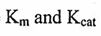 of an enzyme are 1 mM and 10000
 , respectively. Based on this information, please calculate the "rate constant" of this enzymatic reaction at very low substrate concentration ([S] <<
 )? (A) 10000
 ) (B) 10000
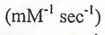 (C) 10000
 (D) 0.00001 (sec mM) (E) 0.00001
