所屬科目:學士後西醫-化學
1.What is the final product for the following reaction sequence?
2.Please give the correct name for the following structure. (A)(R,S)-2,3-dichlorobutane (B)(2R,3S)-2,3-dichlorobutane (C)(2S,3S)-2,3-dichlorobutane (D)(2R,3R)-2,3-dichlorobutane (E)1,2-dichloroethane
3.Which of the following reagents can be used to carry out the following transformation? (A)H2O/H+ (B)1.KmnO4, 2.H2O (C)1.Br 2, hv, 2.H2O (D)1.Na, 2.H2O/H+ (E)NaOH
4.The final product for the reaction sequence below is (A)PhCH2OEt (B)PhCH2OH (C)Ph(CH2)2Br (D)Ph(CH2)2OEt (E)Ph(CH2)3OH
5.Which of the following compounds does not undergo both SN1 and SN2 reaction? (A) (B) (C) (D) (E)
6.What is the final product for the following sequence of reaction below? (A)2-methyl-1-pentanol (B)2-methylpentaneitrile (C)acetonitrile (D)2-pentanamine (E)2-bromo-2-cyano-pentanol
8.Calculate the DG for the reaction, 2SO2(g)+O2→2SO3(g)
:SO2=- 300.4kJ /mol;SO3= 370.4kJ /mol (A)-70.0kJ (B)+70.7kJ (C)-670.8kJ (D)-140.0kJ (E)+140.0kJ
9.Which of the following terms best describes the pair of compound shown: (A)enantiomers (B)diastereomers (C)meso compounds (D)same compound (E)threo-erythro isomer
10.For the following reactions the major products are shown: (A)kinetic thermodynamic (B)thermodynamic kinetic (C)kinetic kinetic (D)thermodynamic thermodynamic (E)none of these
14.All the following groups are activating ortho, para directors when attached to a benzene ring EXCEPT O (A) (B)-OCH3 (C)-C1 (D)-N(CH3)2 (E)None of these
18.An infrared spectrum exhibits a broad band in the 3000 to 3500cm-1 region and a strong peak at 1710cm-1 . Which of the following substances best fits the data? (A)C6H5CH2CH2OH (B)C6H5CH2COOH (C) (D) (E)
20.Rank the following species in order of increasing polarity of the carbon-metal bond (lest®most polar): (A)C < A < B (B)B < A < C (C)A < C < B (D)B < C < A (E)A < B < C
25. Suppose the hypothetical set of quantum numbers:n = 1, 2, 3, ……l = 0, 1, 2, 3, …… , n–1mₗ = 1s = 1/2, –1/2then which of the following statements is not correct?(A) There is one s orbital, one p orbital, and one d orbital.(B) The atomic number of the first element in the d orbital-filler is 12.(C) There are two transition elements in the first period.(D) The atomic number of the first inert gas is 2.(E) If one element has the atomic number 14, then its electron configuration is 1s²2s²2p³3s²3p².
42.Rank the transition states which occur during the following reaction steps in order of increasing stability (least→most stable): (a)CH3 - OH2+→CH3 + +H2O (b)(CH3)3C - OH2+→(CH3)3C + + H2O (c)(CH3)2CH - OH2+→(CH3)2CH+ + H2O (A)a < b < c (B)b < c < a (C)a < c < b (D)b < a < c (E)c < b < a
51.The bimolecular subsittution reaction CH3Br + OH- →CH3OH + Br-is represented by the kinetic equation: (A)Rate = k[CH3Br]2 (B)Rate = k[CH3Br][OH- ] (C)Rate = k[CH3Br] + k[OH- ] (D)Rate = k/[CH3Br][OH- ] (E)Rate = k[CH3Br]2 + k[OH- ]
56.Referring to the following equilibrium (R=alkyl group)(A)K < 1 ; the equilibrium would lie the left. (B)K > 1 ; the equilibrium would lie the right. (C)K = 1 ; equal amounts of all species would be present. (D)Not enough information is given; the structure of R must be known. (E)None of these
60.Arrange the following intermediates in order of decreasing basicity (strongest→weakest): (A)B > A > D > (B)D > A > B > C (C)C > D > A > B (D)C > B > D >A (E)D > C >B >A
61.Give the major product of the following reaction: [E]-2-pentence+ CH2I2/Zn(Cu)→ ? (A)cis-1-Ethyl-2-methylcyclopropane (B)trans-1-Ethyl-2-methylcyclopropane (C)1-Ethyl-1-methylcyclopropane (D)An equimolar mixture of product {A} and {B}(E)None of these
64.For the following reaction, select the statement which best describes the situaton.
RCH2OH + (C5H5N)2CrO3→
(A)The alcohol is oxidized to an acid, and the Cr (VI) is reduced. (B)The alcohol is oxidized to an aldehyde, and the Cr (VI) is reduced. (C)The alcohol is reduced to an aldehyde, and the Cr (III) is oxidized (D)The alcohol is oxidized to a ketone, and the Cr (VI) is reduced. (E)The alcohol is oxidized to an acid, and the Cr (III) is reduced.
80.Which of the following conditions will result in a spontaneous reaction at all temperatures? (A)△H < 0, △S < 0 (B)△H > 0, △S < 0 (C) △H < 0, △S > 0 (D)△H > 0,△S > 0 (E)△H > 0, △S = 0
 阿摩線上測驗
登入

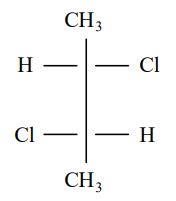 (A)(R,S)-2,3-dichlorobutane (B)(2R,3S)-2,3-dichlorobutane (C)(2S,3S)-2,3-dichlorobutane (D)(2R,3R)-2,3-dichlorobutane (E)1,2-dichloroethane
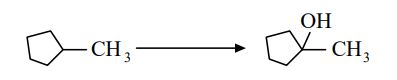 (A)H2O/H+ (B)1.KmnO4, 2.H2O (C)1.Br 2, hv, 2.H2O (D)1.Na, 2.H2O/H+ (E)NaOH
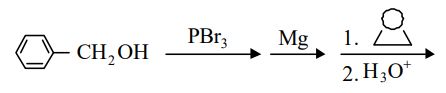 (A)PhCH2OEt (B)PhCH2OH (C)Ph(CH2)2Br (D)Ph(CH2)2OEt (E)Ph(CH2)3OH
 (B)
 (C)
 (D)
 (E)

 (A)2-methyl-1-pentanol (B)2-methylpentaneitrile (C)acetonitrile (D)2-pentanamine
(E)2-bromo-2-cyano-pentanol
 :SO2=- 300.4kJ /mol;SO3= 370.4kJ /mol (A)-70.0kJ (B)+70.7kJ (C)-670.8kJ (D)-140.0kJ (E)+140.0kJ
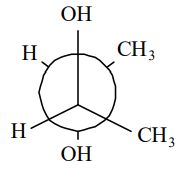
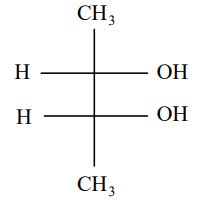 (A)enantiomers (B)diastereomers (C)meso compounds (D)same compound
(E)threo-erythro isomer
 (A)kinetic thermodynamic
(B)thermodynamic kinetic
(C)kinetic kinetic
(D)thermodynamic thermodynamic
(E)none of these
 (B)-OCH3 (C)-C1 (D)-N(CH3)2 (E)None of these
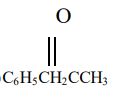 (D)
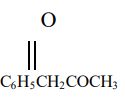 (E)
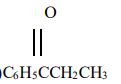
 (A)C < A < B (B)B < A < C (C)A < C < B (D)B < C < A (E)A < B < C
 (A)K < 1 ; the equilibrium would lie the left. (B)K > 1 ; the equilibrium would lie the right. (C)K = 1 ; equal amounts of all species would be present. (D)Not enough information is given; the structure of R must be known. (E)None of these
 (A)B > A > D > (B)D > A > B > C (C)C > D > A > B (D)C > B > D >A (E)D > C >B >A