阿摩線上測驗
18. The figure shows a thin film (in the middle) with different materials on either side: n₁ = 1.40, n₂ = 1.50, and n₃ = 1.60. We send in a ray of light that is perpendicular to the two parallel surfaces. In air, that light has a wavelength of 800 nm. For some values of thickness L, the reflections to the left undergo fully destructive interference. What is the second smallest value of L that gives that result? Answer in nanometers.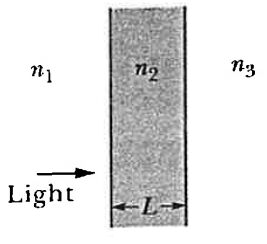
(A) 1200,
(B) 180,
(C) 400,
(D) 75,
(E) 533.
答案:登入後查看
統計: 尚無統計資料
統計: 尚無統計資料
詳解 (共 2 筆)

助人為本
#7388999
所以這題考薄膜干涉
要解這種題目要先知道光反射時有沒有翻轉(相位角改變)
所以第一道光在n1碰到n2的時候就會直接反射
然後第二道光往前走了L的距離然後n2碰到n3,再往回走L的距離,所以共2L的距離
所以要記得這個準則就是光從折射率小的地方打到折射率大的地方時,會發生相位反轉(改變pi)
小打到大會反轉
大打到小不會反轉
因兩道光都翻轉了,大家又回到同一個起跑線上,也就是說反射沒有造成相位差異
題目設定說要破壞性干涉
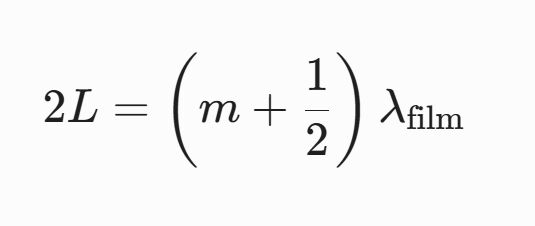
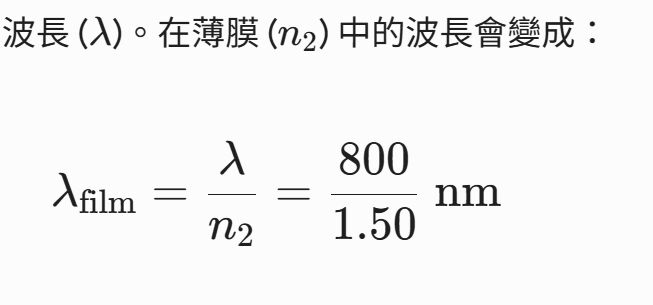
然後計算薄膜中的波長
光在進入不同介質時會被壓縮
然後找出第二小的厚度
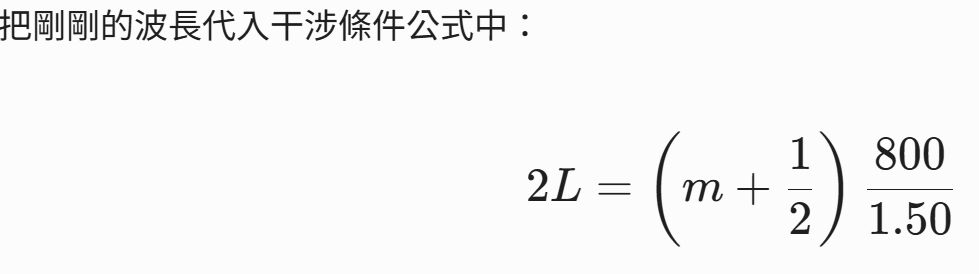
m=0是最小
m=1是第二小
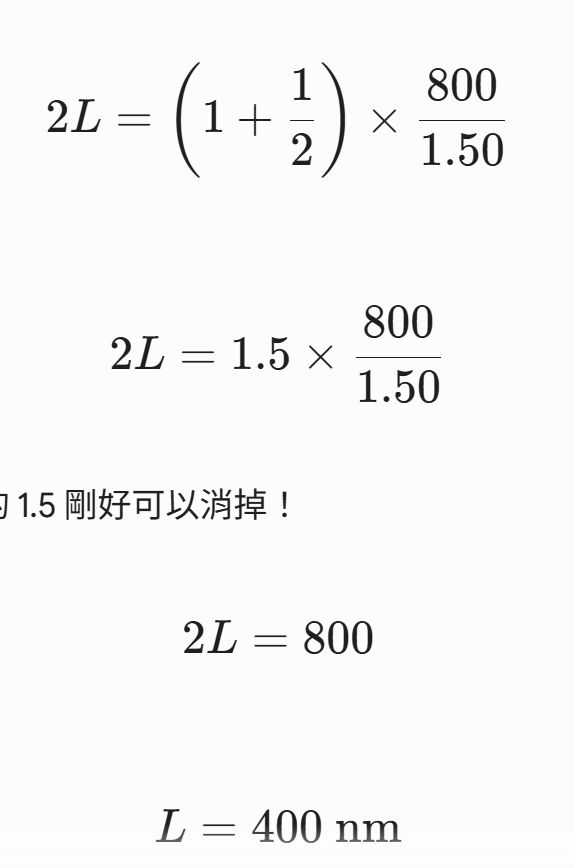 算出來是400nm
ㅤㅤ
0
0