所屬科目:研究所、轉學考(插大)◆普通物理學
1. The Kepler's second law of planetary motion is that the line joining the sun to a planet sweeps out equal areas in equal times. Which one of the following principles is the fundamental of the Kepler's second law? (A) conservation of energy (B) conservation of charge (C) conservation of momentum (D) conservation of angular momentum (E) superposition principle
2. A block of mass m is hanged from a vertical spring of spring constant k. It is initially held with no extension of the spring and then released. What is the maximum kinetic energy of the block? (g is the gravitational acceleration.) (A) (B)(C) (D)(E)
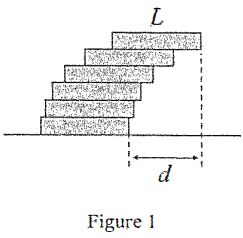
3. Many identical blocks of length L are stacked as shown in Fig. 1. If the number of the blocks is unlimited, what is the maximum value of the distance d such that the stack does not topple down?
(A) L/2 (B) L (C) 2L (D) 3L (E) ∞
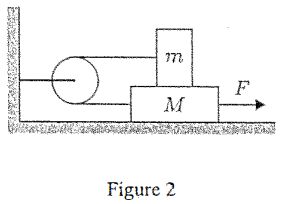
4. A block of mass m is placed on a block of mass M as shown in Fig. 2. The coefficient of kinetic friction for all surfaces is μk. Ignore the pulley and the rope. For what value of the horizontal force F will the blocks move at constant speed?
(A) (m+M)gμk (B) (m+2M)gμk (C) (2m+M)gμk (D) (m-M)gμk (E) (3m+M)gμk
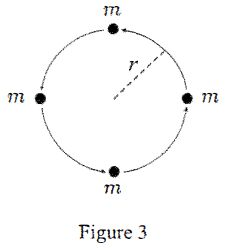
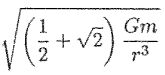
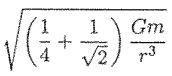
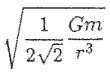
5. Four stars of equal mass m rotate in a circular path of radius r about their center of mass, as shown in Fig. 3. Their connection lines form a square shape. What is the angular frequency of this rotation motion? (G is the gravitational constant.)
(A) (B) (C) (D) (E)
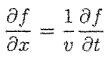
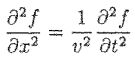
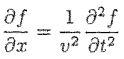
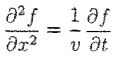
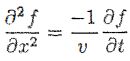
6. What is the correct form of the 1-dimensional wave equation?
where f is dynamic variable, x is position, t is time, and v is wave velocity.(A)(B)(C)(D) (E)
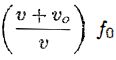
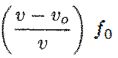
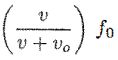
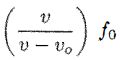
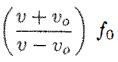
7. Assume v is the speed of sound and f₀ is its frequency. If an observer moves towards the sound source at speed v₀. What is the frequency heard by the observer? (A)(B) (C) (D)(E)
8. Which one of the following statements of the second law of thermodynamics is correct? (A) In a reversible process the entropy of an isolated system stays constant; in an irreversible process the entropy decreases. (B) In a reversible process the entropy of an isolated system increases; in an irreversible process the entropy stays constant. (C) It is impossible for a cyclical device to transfer heat continuously from a cold body to a hot body without the input of work or other effect on the environment. (D) It is possible for a heat engine that operates in a cycle to convert its heat input completely into work. (E) Every cyclical heat engine has a greater efficiency than a reversible engine operating between the same two temperatures.
9. Consider the adiabatic free expansion of an ideal gas system. The initial volume, pressure, and temperature are Vᵢ, Pᵢ, and Tᵢ, respectively. The final volume, pressure, and temperature are Vf, Pf, and Tf, respectively. What is the change in entropy ΔS of the gas? (Assume N is the number of molecules and k_B is Boltzmann's constant.) (A) ΔS = Nk_B ln(Vf/Vᵢ) (B) ΔS = Nk_B ln(Pf/Pᵢ) (C) ΔS = Nk_B ln(Tf/Tᵢ) (D) ΔS = Nk_B (Pf/Pᵢ) (E) ΔS = Nk_B (Tf/Tᵢ)
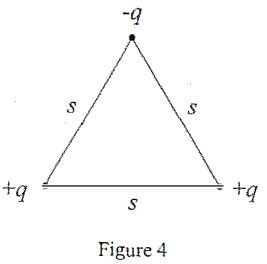
10. As shown in Fig. 4, three charges of -q, +q, and +q are situated at the corners of a regular triangle with side length s. How much work does it take to assemble the whole configuration of these charges?
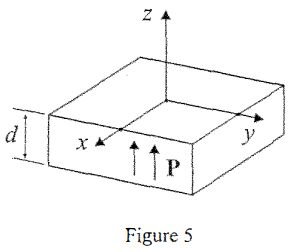
11. There is an infinite dielectric slab lying on the x-y plane, which has an uniform polarization P along the z-direction, as shown in Fig. 5. The thickness of the slab is d. What is the electric field inside the dielectric slab?
where P = |P| is the magnitude of the polarization, and eₓ, eᵧ, and eₓ are the unit vectors along x, y, and z-axes.
(A) -Pdε₀eₓ (B) (C) (D) (E)
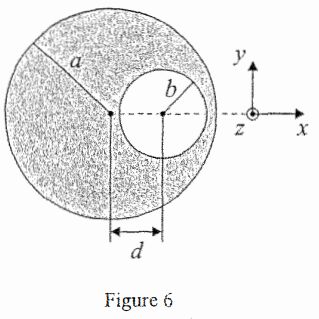
12. The Fig. 6 shows the cross section of a long cylindrical conductor with radius a, which contains a long cylindrical hole of radius b. The central axes of the cylinder and the hole are parallel and are distance d apart. Current density j is uniformly distributed in the conductor with its direction along the z-axis. What is the magnetic field B in the hole?
where j = |j| is the magnitude of the current density, and eₓ, eᵧ, and eₓ are the unit vectors along x, y, and z-axes.
13. A parallel plate capacitor has rectangular plates of area A = 5 (cm²) separate by distance d = 0.5 (mm). If the potential difference between the plates changes at a rate of 10⁴ (volt/sec), what is the displacement current? (permittivity of vacuum ε₀ = 8.854 × 10⁻¹² (F/m)) (A) 8.854 × 10⁻⁴ (amp) (B) 4.427 × 10⁻⁸ (amp) (C) 1.771 × 10⁻⁷ (amp) (D) 4.427 × 10⁻⁷ (amp) (E) 8.854 × 10⁻⁸ (amp)
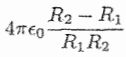
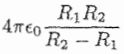
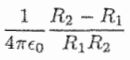
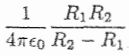
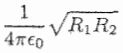
14. Consider a spherical capacitor which consists of two concentric conducting spheres. The radii of the inner and outer spheres are R₁ and R₂, respectively. What is its capacitance? (A) (B) (C)(D)(E)
15. A 10-kW radio antenna transmits at 100 MHz. Assume it radiates as a point source. Find the radiation pressure at a distance of 20 km. (A) 1.5 × 10⁻¹⁶ (Nt/m²) (B) 4.8 × 10⁻¹⁶ (Nt/m²) (C) 1.5 × 10⁻¹⁵ (Nt/m²) (D) 3.3 × 10⁻¹⁵ (Nt/m²) (E) 6.6 × 10⁻¹⁵ (Nt/m²)
16. An observer A stands on the ground with clock CA and an observer B sits on an airplane with clock CB. The airplane moves with a velocity v with respect to the ground. Consider the relativistic time dilation effect, which one of the following descriptions is correct? (A) The observer A finds that Cₐ counts faster than CB, but the observer B finds that CB counts faster than CA. (B) The observer A finds that CA counts slower than CB, but the observer B finds that CB counts slower than CA. (C) Both A and B find that CA counts faster than CB. (D) Both A and B find that CA counts slower than CB. (E) Both A and B find that CA counts as fast as CB.
17. Which one of the following physical quantities is associated with the electron spin? (A) kinetic energy (B) angular momentum (C) electric charge (D) temperature (E) magnetic moment
18. Which one of the following descriptions of the matter wave Ψ(x, t) is correct? (A) The mass distribution of a particle at position x and time t is proportional to the value of Ψ(x, t). (B) The mass distribution of a particle at position x and time t is proportional to the value of |Ψ(x, t)|. (C) The mass distribution of a particle at position x and time t is proportional to the value of |Ψ(x, t)|². (D) The probability of finding the particle at position x and time t is proportional to the value of |Ψ(x, t)|. (E) The probability of finding the particle at position x and time t is proportional to the value of |Ψ(x, t)|².
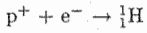
19. Which one of the following reactions is nuclear fusion? (A) (B) (C) (D) (E)
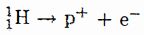
20. Which one of the following reactions is β-decay? (A) (B) (C) 2 H₂O + O₂ → 2 H₂O (D) (E)
 阿摩線上測驗
登入
 (B)
 (C)
 (D)
 (E)

 (A) L/2 (B) L (C) 2L (D) 3L (E) ∞
 (A) (m+M)gμk (B) (m+2M)gμk (C) (2m+M)gμk (D) (m-M)gμk (E) (3m+M)gμk
 (A)
 (B)
 (C)
 (D)
 (E)
 (B)
 (C)
 (D)
 (E)
 (B)
 (C)
 (D)
 (E)
 (A)
 (B)
 (C)
 (D)
 (E)

 (C)
 (D)
 (E)

 (B)
 (C)
 (D)
 (E)

 (B)
 (C)
 (D)
 (E)
 (B)
 (C)
 (D)
 (E)

 (B)
 (C) 2 H₂O + O₂ → 2 H₂O (D)
 (E)
